
Spices are the soul of flavor in any kitchen, but their potency fades quickly when exposed to heat, light, and moisture. Most home cooks store them on open shelves or crowded countertops—prime real estate for degradation. A better solution? Repurpose an underused file drawer into a climate-smart, highly organized spice hub. With consistent temperature, low light exposure, and easy access, a file drawer offers ideal microclimate conditions for preserving spice quality. The challenge lies in maximizing vertical space and ensuring visibility, labeling, and accessibility. This guide delivers ten professional-grade storage solutions that transform a standard drawer into a high-efficiency spice system. These hacks combine culinary best practices with smart organizational design, helping you preserve flavor, reduce waste, and streamline meal prep.
Why Store Spices in a File Drawer?
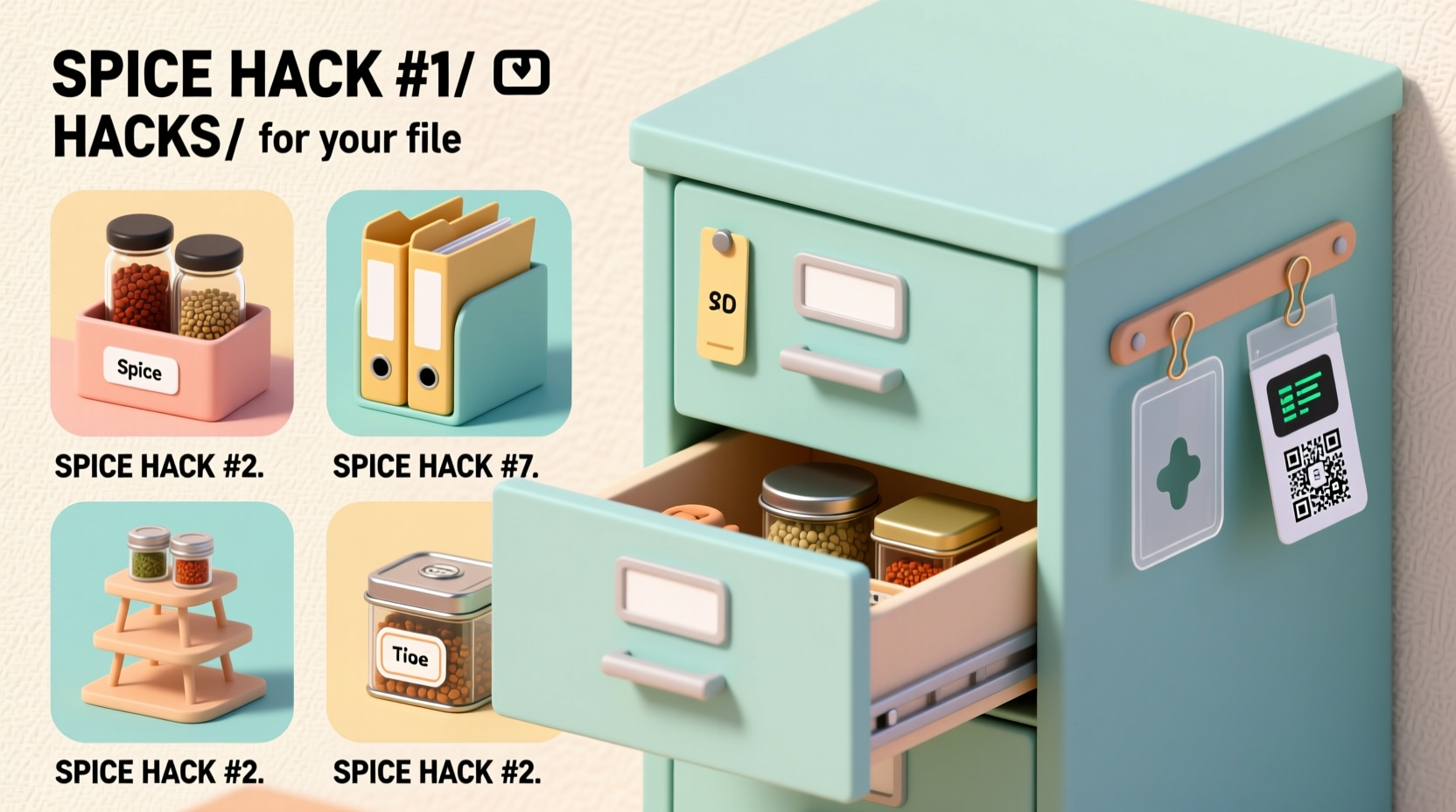
Kitchen drawers—especially deep file drawers originally intended for paperwork—are often overlooked as viable storage zones. Yet they provide several advantages over traditional cabinet or countertop storage:
- Consistent Temperature: Drawers remain cooler than countertops near stoves or ovens, minimizing thermal degradation.
- Low Light Exposure: Closed drawers block UV rays, which break down essential oils in spices.
- Dust and Moisture Protection: When sealed properly, drawers limit airborne contaminants and humidity.
- Space Efficiency: Vertical organization allows more bottles in less footprint.
- Aesthetic Minimalism: Hidden storage maintains clean kitchen lines without sacrificing access.
The key is overcoming the inherent limitations: poor visibility, awkward access angles, and potential disorganization. The following hacks address these challenges with precision-engineered solutions suitable for renters, homeowners, and small-kitchen dwellers alike.
Hack #1: Use Magazine Files as Upright Spice Racks
Repurpose desktop magazine files—or purchase slim acrylic or metal versions—to stand spice jars upright in rows. Align them lengthwise along the drawer for maximum visibility.
TIP: Choose clear acrylic files so you can see label colors at a glance. For uniformity, decant spices into identical glass jars with standardized labels.
Arrange by category (e.g., baking spices, savory herbs, global blends) or alphabetically. If your drawer is deeper than 6 inches, place two rows—one facing forward, one backward—to double capacity without blocking access.
Hack #2: Install Pull-Out Tiered Shelves
Pull-out acrylic or bamboo tiered shelves elevate rear bottles, mimicking pharmacy-style displays. These slide forward when opened, bringing every jar into view.
Available in adjustable widths, they fit most standard drawers. Secure them with adhesive pads or screws (if permitted). Ideal for larger collections (30+ spices), this system eliminates digging and reduces spill risk.
| Material | Pros | Cons |
|---|---|---|
| Acrylic | Clear, lightweight, affordable | Can scratch; static attracts dust |
| Bamboo | Durable, eco-friendly, warm aesthetic | Heavier; may require anchoring |
| Stainless Steel | Strong, sleek, long-lasting | Expensive; industrial look |
Hack #3: Label Everything Vertically with Chalkboard Tape
Visibility equals usability. Wrap chalkboard tape around the necks of spice jars and label them vertically so names are readable when stored face-down in shallow trays.
This technique works especially well when using flat storage trays where only the top of the jar is visible. Rotate jars so labels face upward, then write boldly with oil-based chalk markers. Labels can be updated seasonally—for example, switching from “paprika” to “smoked paprika” during winter months.
\"If I can’t see it in two seconds, I won’t use it.\" — Chef Elena Ruiz, culinary organizer and author of *The Minimal Pantry*
Hack #4: Decant Into Uniform Mini Jars with Magnetic Bases
Transfer bulk or oversized spice containers into 2-ounce glass jars with magnetic bottoms. Attach a thin steel strip along the inside front lip of the drawer, then mount jars directly onto the metal for secure, removable placement.
Magnetic mounting keeps jars stable during drawer operation and allows repositioning based on frequency of use. Place daily essentials (salt, pepper, garlic powder) at the front; seasonal or specialty items toward the back.
TIP: Use a label maker with weatherproof tape for durability. Include both spice name and purchase date to track shelf life.
Hack #5: Create a Rotating Carousel from a Cutlery Tray
Adapt a rectangular cutlery organizer by gluing a lazy Susan bearing underneath. Once installed, the entire tray rotates 360 degrees, granting access to all sides without removing jars.
Ideal for square or wide file drawers, this hack maximizes corner space. Customize compartments with foam inserts to prevent rattling. Group spices by cuisine—Italian, Indian, Mexican—for thematic cooking efficiency.
Hack #6: Stackable Drawer Inserts for Vertical Layering
Use modular, stackable bins designed for desk organization. Two-tier systems allow you to place frequently used spices on the upper level and backups or infrequently used items below.
Choose low-profile bins (under 3 inches tall per layer) to maintain clearance. Some models feature pull tabs or finger grooves for smooth retrieval. This method is particularly effective for storing spice blends alongside individual components (e.g., cumin next to chili powder for taco seasoning).
Hack #7: Adhesive Velcro Strips for Securing Small Vials
For tiny jars or sample-sized spices, attach hook-and-loop (Velcro) strips to the drawer base and jar bottoms. This prevents migration during opening and closing.
Best suited for pre-ground exotics like saffron, grains of paradise, or rare chilies. Arrange in grids like a laboratory tray for visual appeal and precision access. Pair with a magnifying glass mounted on the drawer’s underside for reading fine print labels.
Hack #8: DIY Fold-Down Front Panel with Hanging Clips
Transform the drawer’s front panel into functional real estate. Attach a thin wooden or acrylic flap with hinges so it folds downward when opened. On its inner surface, fix mini clothespins or binder clips to hold recipe cards or spice reference guides.
Alternatively, install small S-hooks to suspend measuring spoons or micro-tongs. This turns passive space into active utility, reducing countertop clutter and keeping tools within reach.
Hack #9: Color-Coded Caps for Instant Recognition
Assign color families to spice categories using interchangeable plastic caps or rubber bands:
- Red: Heat-inducing spices (cayenne, chipotle, red pepper flakes)
- Yellow/Gold: Warm aromatics (turmeric, mustard seed, saffron)
- Green: Herbs (oregano, thyme, dill)
- Brown: Earthy roots and barks (cinnamon, nutmeg, ginger)
- White: Neutral or versatile (salt, white pepper, coriander)
This system supports rapid identification, especially useful during fast-paced cooking. Combine with braille-like texture dots for tactile recognition if desired.
Hack #10: Integrate Desiccant Packs and Oxygen Absorbers
Even in closed drawers, ambient humidity threatens spice integrity. Insert food-safe desiccant packs (silica gel) or reusable clay beads in breathable cotton sachets along the drawer’s back wall.
Place oxygen absorbers beneath storage trays to inhibit mold and rancidity in high-fat spices like paprika or fenugreek. Replace or recharge monthly. Monitor effectiveness with a mini hygrometer taped discreetly inside the drawer.
TIP: Never use open bowls of rice as moisture traps in enclosed spaces—they can grow aflatoxins. Opt for commercial-grade, non-toxic drying agents instead.
Best Practices for Long-Term Spice Preservation
Storage method matters, but so does handling. Follow these expert-backed principles to extend shelf life and maintain potency:
- Buy Whole When Possible: Whole spices (cinnamon sticks, cumin seeds, peppercorns) retain essential oils up to three times longer than ground forms.
- Grind On Demand: Use a dedicated electric or manual grinder just before cooking for peak aroma.
- Avoid Refrigeration: Cold environments encourage condensation upon removal, accelerating clumping and spoilage.
- Keep Away from the Stove: Heat from burners degrades volatile compounds rapidly—even inside closed cabinets.
- Check Dates Regularly: Ground spices last 1–2 years; whole spices 3–4 years. Label jars with purchase and opening dates.
Common Mistakes to Avoid
- Overfilling the Drawer: Crowding impedes airflow and makes retrieval difficult. Leave ½ inch between rows.
- Mixing Old and New Batches: Adding fresh turmeric to an old container dilutes overall potency. Always start fresh.
- Using Non-Airtight Containers: Thin plastic lids allow oxidation. Opt for glass with tight-sealing, gasket-lined lids.
- Neglecting Cleanliness: Wipe down trays monthly to remove spilled powders that attract pests.
FAQs: Spice Storage in File Drawers
Can I store salt and pepper in the same drawer as other spices?
Yes, but ensure containers are airtight. Salt absorbs moisture and odors easily, which can lead to caking or flavor transfer. Consider storing salt in a separate compartment with a shaker lid.
What size jars work best for drawer storage?
Two-ounce (60ml) round or square glass jars are optimal. They’re large enough to hold sufficient volume yet small enough to fit multiple units per row. Prioritize low-profile lids to prevent jamming.
How do I prevent spices from losing potency?
Limit exposure to air, light, heat, and moisture. Use dark glass jars if possible, keep the drawer closed when not in use, and avoid placing near dishwashers or sinks.
Are plastic organizers safe for spice storage?
Only if made from food-grade, BPA-free materials. Avoid cheap plastics that may leach chemicals over time. Acrylic, bamboo, or stainless steel are safer long-term choices.
Can I use these hacks in a rental kitchen?
Absolutely. Most solutions—including magazine files, adhesive shelves, and magnetic jars—require no permanent modifications. They’re renter-friendly and portable.
Summary & Key Takeaways
Transforming a file drawer into a functional spice repository combines practicality with preservation science. By leveraging vertical space, improving visibility, and controlling environmental factors, you significantly extend the life and efficacy of your spice collection.
The ten hacks presented here—from magnetic mounting to color-coded caps—offer scalable solutions for kitchens of all sizes. Whether you manage a modest five-spice lineup or a global pantry of 50+, strategic organization ensures every jar remains accessible, identifiable, and potent.
Remember: the goal isn't just neatness—it's flavor integrity. A well-stored spice retains its aromatic complexity, enhancing dishes with precision and depth. With these methods, your file drawer becomes more than storage; it becomes a curated toolkit for culinary excellence.
Final Tip: Audit your spice collection every six months. Discard anything past its prime, consolidate duplicates, and update labels. A living system evolves with your cooking habits.




 浙公网安备
33010002000092号
浙公网安备
33010002000092号 浙B2-20120091-4
Comments
No comments yet. Why don't you start the discussion?