
Bean and vegetable soup is a cornerstone of home cooking—nourishing, economical, and endlessly adaptable. Yet too often, it falls flat: one-note, muddy, or lacking in dimension. The difference between a good soup and an exceptional one lies not in the vegetables or legumes, but in how spices are used. Most cooks treat spices as afterthoughts—tossed in at the end or measured with vague intuition. But when applied with intention, spices can deepen flavor, brighten aroma, and create layers that unfold with every spoonful.
The foundation of great soup seasoning rests on understanding not just which spices to use, but when, how, and why. This guide reveals ten professional-level spice techniques that go beyond the basics, transforming humble ingredients into something resonant and memorable. These are not arbitrary suggestions—they are culinary principles drawn from global traditions and kitchen-tested precision, designed to bring clarity, warmth, and complexity to your pot.
Understanding Spices in Soup Context
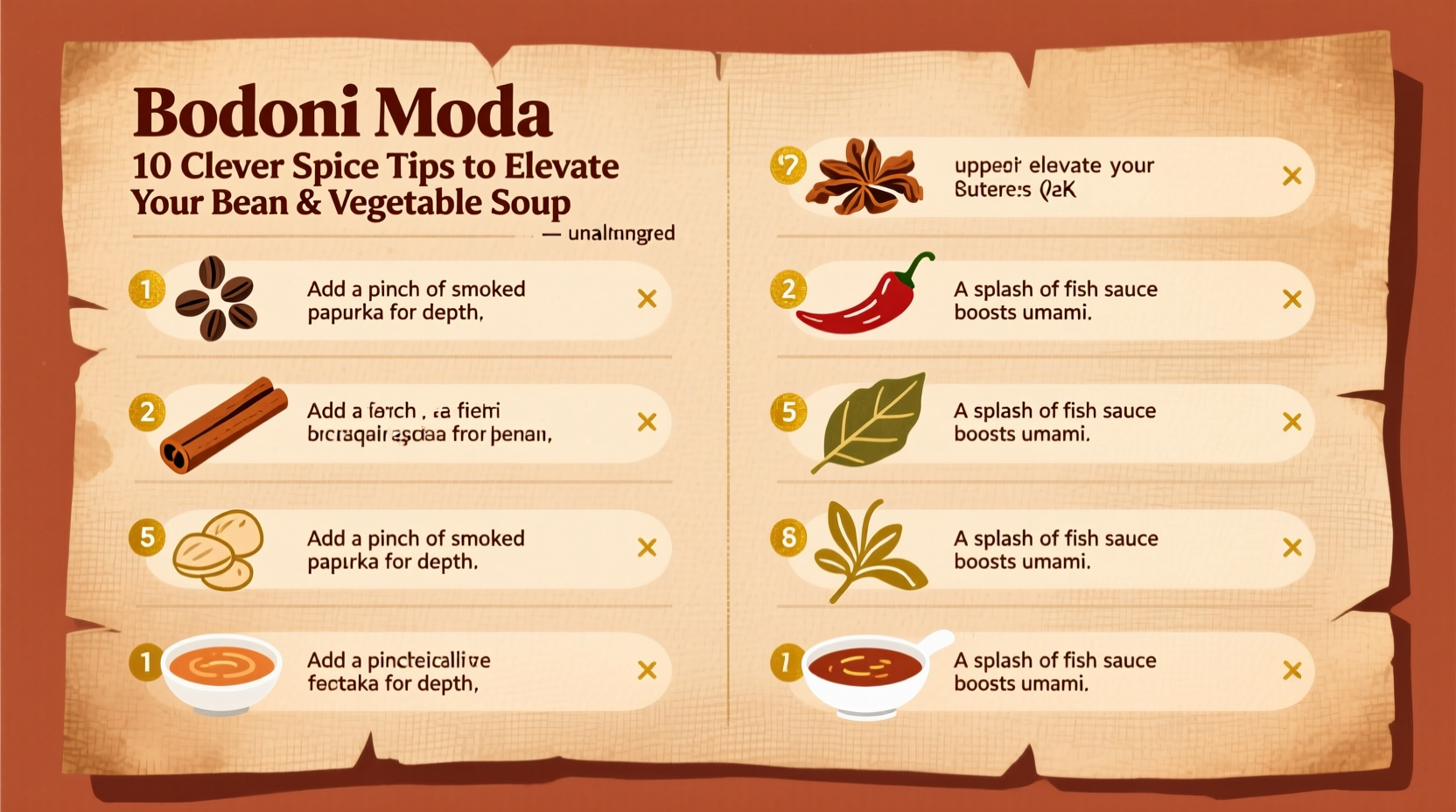
Spices are concentrated plant materials—typically seeds, bark, roots, or fruits—that deliver intense flavor, aroma, and sometimes color or heat. In bean and vegetable soups, where natural flavors can be earthy or subdued, spices act as both enhancers and correctors. They cut through heaviness, lift dullness, and bind disparate ingredients into a cohesive whole.
Unlike herbs, which are often leafy and more delicate (like parsley, thyme, or cilantro), spices are generally bolder and more resilient to long cooking. Their chemical compounds—such as essential oils, alkaloids, and resins—are fat-soluble and heat-stable, meaning they benefit from early introduction or pre-treatment to unlock full potential. When used thoughtfully, spices don’t dominate; they orchestrate.
Key Characteristics of Common Soup Spices
| Spice | Flavor Profile | Aroma | Heat Level | Culinary Function | Shelf Life (Whole) |
|---|---|---|---|---|---|
| Cumin | Earthy, nutty, slightly smoky | Toasted, warm, pungent | Low | Base layering, depth builder | 3–4 years |
| Smoked Paprika | Sweet, smoky, charred | Rauchy, barbecue-like | Varies (sweet to hot) | Color and aroma infusion | 2–3 years |
| Bay Leaf | Bitter, floral, herbal | Woody, tea-like | None | Background complexity | 4+ years |
| Fennel Seed | Sweet, licorice-like, anise | Fragrant, fresh | Low | Balance for acidity and richness | 3 years |
| Black Pepper (whole) | Pungent, sharp, citrusy | Peppery, bright | Medium | Finishing warmth | 5+ years |
| Coriander | Citrusy, floral, mild | Lemony, sweet | Low | Round out earthy notes | 3 years |
| Mustard Seed | Nutty, tangy, sharp | Pungent when heated | Low-Medium | Texture and pop | 3–4 years |
| Star Anise | Strong anise, sweet | Intense licorice | None | Infusion depth | 3 years |
| Garlic Powder | Concentrated garlic, umami | Roasted allium | Low | Consistent background note | 2–3 years |
| Crushed Red Pepper Flakes | Sharp, spicy, fruity | Hot, aromatic | High | Controlled heat accent | 2 years |
1. Bloom Spices in Oil Before Adding Liquids
The single most transformative technique in soup spicing is blooming—or tempering—dry spices in oil before introducing broth or water. Heat unlocks volatile oils in spices like cumin, coriander, and smoked paprika, converting raw, dusty flavors into rich, rounded aromatics.
To do this, sauté onions and carrots in olive oil or butter until softened. Push them aside, add 1–2 teaspoons of ground spices (e.g., cumin, coriander, paprika), and stir constantly for 30–60 seconds until fragrant. You’ll notice the color deepens and the air fills with a toasted scent. Only then should you add liquid. This step ensures even dispersion and prevents clumping or bitterness.
Pro Tip: Use a neutral oil with high smoke point (like avocado or grapeseed) if using high heat, or extra virgin olive oil at moderate temperatures for added fruitiness.
2. Toast Whole Spices First, Then Grind
Pre-ground spices lose potency quickly. For maximum impact, toast whole spices—such as cumin seeds, fennel seeds, or coriander seeds—in a dry skillet over medium heat until they crackle and release fragrance (about 1–2 minutes). Cool slightly, then grind in a mortar and pestle or spice grinder.
Freshly ground spices have brighter, more complex flavors than store-bought powders. A teaspoon of freshly toasted and ground cumin adds a vibrant, almost citrusy note to white bean soup, while pre-ground versions can taste flat or musty.
3. Layer Aromatics: Combine Fresh, Dried, and Ground Forms
Depth comes from layering, not overdosing. Instead of relying on one form of a flavor, combine multiple expressions. For example:
- Add a crushed garlic clove during sauté (fresh).
- Incorporate garlic powder with bloomed spices (dried, concentrated).
- Finish with minced roasted garlic just before serving (cooked, mellow).
This triad approach creates a sustained garlic presence without harshness. The same principle applies to onion (fresh vs. granulated), chili (fresh jalapeño, flakes, smoked chipotle powder), or ginger (fresh root, dried powder, preserved).
4. Use Bay Leaves Strategically—and Remove Them
Bay leaves are subtle but structurally important. They contribute a faint bitterness and eucalyptus-like note that balances sweetness in carrots, tomatoes, or sweet potatoes. Add one or two whole dried bay leaves early in cooking—during the simmer phase—to allow slow infusion.
Crucially, remove bay leaves before serving. They remain tough and can pose a choking hazard. Their work is done after 30–60 minutes of simmering; leaving them in longer doesn’t improve flavor and may impart excessive bitterness.
\"A bay leaf is like a tuning fork for soup—it sets the harmonic base. But leave it in too long, and it turns sour.\" — Chef Elena Ruiz, culinary instructor at San Francisco Cooking School
5. Add Warm Spices Early, Bright Ones Late
Timing determines function. Warm, earthy spices (cumin, coriander, turmeric) benefit from long exposure to heat and should be added early to meld into the broth. In contrast, bright, volatile spices—especially citrusy ones like sumac or lemon zest—should be stirred in at the end to preserve their freshness.
For instance, a pinch of sumac added just before serving lifts a black-eyed pea stew with tart brightness, cutting through the legumes’ density. Similarly, a grating of nutmeg over finished minestrone enhances creaminess without tasting overtly “spicy.”
6. Balance Earthiness with Sweet or Floral Notes
Beans and root vegetables are inherently earthy—a quality that can tip toward dullness if unchecked. Counterbalance with sweet or floral spices such as fennel seed, anise, or cinnamon.
Fennel seed, lightly crushed and added at the start, lends a subtle sweetness that complements lentils and kale. In Tuscan ribollita, a single cracked star anise pod simmers with cannellini beans, adding intrigue without dominating. Cinnamon, used sparingly (⅛ teaspoon), deepens Moroccan-style vegetable tagines without making them taste dessert-like.
Try This: Add three crushed fennel seeds and a pinch of ground cinnamon to your next pot of chickpea and spinach soup. Taste before and after—you’ll notice improved roundness and reduced metallic aftertaste.
7. Control Heat with Crushed Red Pepper—But Apply It Twice
Heat shouldn’t be monolithic. For balanced spice, apply crushed red pepper in two stages: half during blooming (for infused warmth), half at the end (for bright, immediate kick).
The first addition integrates slowly, warming the background. The second provides a perceptible spark on the palate. This layered heat mimics restaurant-style complexity and allows diners to feel progression in each bite.
8. Finish with Acid-Infused Spice Blends
Acidity wakes up dormant flavors. Instead of plain salt and pepper at the end, finish soups with a compound spice blend that includes acid—such as za’atar (with sumac), lemon-pepper, or amchur (dried mango powder).
Stirring in a teaspoon of za’atar just before serving introduces herbal, tangy, and nutty notes simultaneously. Amchur works especially well in Indian-inspired dal soups, enhancing sourness without adding moisture.
9. Simmer with a Parmesan Rind—Then Add Black Peppercorns
Umami and spice are allies. A Parmesan rind simmered in bean soup contributes savory depth, but its saltiness can mute spice perception. To compensate, add 5–6 whole black peppercorns during the last 15 minutes of cooking.
Whole peppercorns release slowly, providing a gentle, rounded heat that complements the cheese’s richness. Unlike ground pepper, which can turn bitter, whole peppercorns infuse cleanly and can be strained out easily.
10. Adjust Salt Last—After Spices Have Bloomed
Salt amplifies everything—including mistakes. Adding salt too early can exaggerate bitterness in underbloomed spices or make a soup taste one-dimensionally salty.
Wait until the final 10 minutes of cooking to season with salt. By then, spices have fully integrated, and you can accurately assess the overall balance. Taste, adjust, then let the soup rest off heat for 5–10 minutes—the flavors will continue to harmonize.
Variants & Forms: Choosing the Right Spice Type
Not all forms of a spice behave the same. Understanding the differences ensures proper application.
| Spice | Whole Form Best For | Ground Form Best For | When to Avoid |
|---|---|---|---|
| Cumin | Toasting and grinding fresh, infusing oil | Blooming, blending into spice mixes | Using old ground cumin (loses flavor in 6 months) |
| Paprika | Smoked varieties for color and depth | All types; never whole | Exposing to high heat alone (burns easily) |
| Peppercorn | Infusions, finishing blends | Quick seasoning, rubs | Over-grinding (releases bitter compounds) |
| Fennel | Crushed in soups, pickling brines | Baking, doughs | Using in large quantities (can dominate) |
Comparison: Common Confusions in Soup Spicing
Many spices are mistaken for one another, leading to imbalanced results.
- Cumin vs. Caraway: Both are seeds, but cumin is warmer and earthier; caraway is sharper and more medicinal. Caraway dominates in rye bread; cumin belongs in chili or harissa-based soups.
- Smoked Paprika vs. Cayenne: Smoked paprika adds flavor and color with mild heat; cayenne is pure heat with little aroma. Substituting one for the other drastically changes outcome.
- Ground Mustard vs. Mustard Seeds: Ground mustard dissolves into liquid, offering tang; mustard seeds pop and release pungency when heated in oil. They serve different textural and flavor roles.
Practical Tips & FAQs
How much spice should I use for a standard 6-quart pot?
Start conservatively: 1 tsp ground cumin, ½ tsp smoked paprika, 1 bay leaf, ¼ tsp black pepper, 1 crushed garlic clove. Adjust upward after blooming and tasting. Remember, you can add more, but you can’t remove it.
Can I use fresh herbs instead of spices?
Fresh herbs (like thyme, rosemary, or sage) are excellent, but they function differently. Add woody herbs early; tender ones (parsley, cilantro) at the end. Herbs complement spices but don’t replace their structural role.
Do spices lose potency over time?
Yes. Ground spices degrade within 6–12 months. Whole spices last 2–4 years if stored in airtight containers away from light and heat. Label your jars with purchase dates.
What’s the best way to store spices?
Keep in opaque, airtight glass jars in a cool, dark cabinet. Avoid storing above the stove—heat and light accelerate degradation.
Are there vegan umami boosters besides Parmesan rinds?
Yes. Try dried shiitake mushrooms, soy sauce (1 tsp), miso paste (stirred in at the end), or tomato paste (browned during sauté). Each adds depth without animal products.
Summary & Key Takeaways
Elevating bean and vegetable soup isn’t about exotic ingredients—it’s about mastering the timing, form, and synergy of common spices. The ten techniques outlined here are foundational tools used by professional kitchens worldwide:
- Bloom ground spices in oil to activate flavor.
- Toast and grind whole spices for peak freshness.
- Layer fresh, dried, and ground forms for complexity.
- Use bay leaves as background tonics—remove before serving.
- Add warm spices early, bright ones late.
- Counteract earthiness with sweet or floral notes.
- Apply heat in two stages for dynamic spiciness.
- Finish with acid-spice blends like za’atar or amchur.
- Pair umami sources (Parmesan rind) with whole peppercorns.
- Season with salt only after spices have bloomed.
Great soup is built, not stirred. Treat spices as active participants in flavor development—not passive garnishes. With these methods, even the simplest pot of beans and vegetables can become deeply satisfying, aromatic, and worthy of a second bowl.




 浙公网安备
33010002000092号
浙公网安备
33010002000092号 浙B2-20120091-4
Comments
No comments yet. Why don't you start the discussion?