
Peppercorns are among the most essential and widely used spices in global cuisine. While black pepper is a staple on nearly every dining table, few realize that \"pepper\" encompasses a diverse family of berries from the *Piper nigrum* vine—each with distinct processing methods, flavor nuances, and culinary applications. Understanding the differences between peppercorn varieties empowers cooks to elevate dishes with precision, depth, and authenticity. From the familiar heat of Tellicherry black pepper to the floral tang of Sichuan pink berries, this guide explores ten notable peppercorns, detailing their origins, sensory profiles, and best uses in both home and professional kitchens.
Definition & Overview
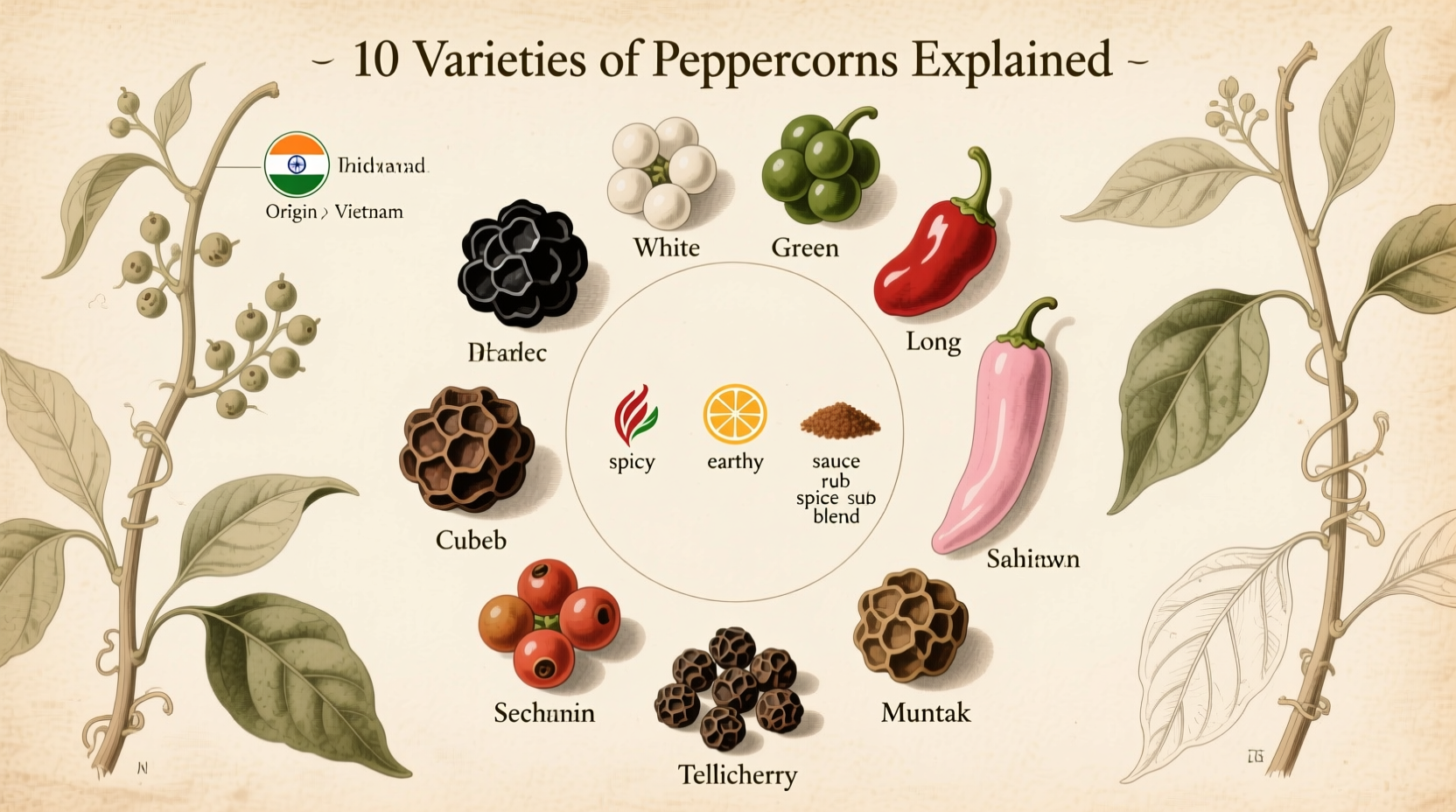
True peppercorns come from the fruit of the tropical flowering vine *Piper nigrum*, native to South India but now cultivated across equatorial regions including Indonesia, Vietnam, Madagascar, and Brazil. The color and character of peppercorns depend primarily on harvest timing and post-harvest treatment—such as drying, fermenting, or pickling—rather than botanical variety. Green peppercorns are unripe berries preserved early; black ones are cooked and sun-dried; white versions are ripe fruits soaked to remove the outer layer; and red types are fully mature berries dried in their natural state. Beyond *Piper nigrum*, some spices marketed as “peppercorns” belong to entirely different plant families but share aromatic or pungent qualities. These include Sichuan and Tasmanian peppers, which produce tingling, numbing sensations rather than pure heat.
The universal appeal of peppercorns lies in their ability to enhance savory dishes without overpowering them. Their volatile oils contain piperine, the compound responsible for both pungency and enhanced bioavailability of nutrients—a functional benefit long recognized in Ayurvedic and traditional Chinese medicine. When used thoughtfully, each peppercorn variety contributes not just spice but complexity: earthiness, fruitiness, floral notes, or citrus brightness.
Key Characteristics
| Peppercorn Type | Origin | Flavor Profile | Heat Level (1–5) | Color & Form | Shelf Life (Whole) |
|---|---|---|---|---|---|
| Black Tellicherry | Kerala, India | Rich, woody, complex with hints of pine and raisin | 4 | Oval, dark brown to black | 3–4 years |
| Black Malabar | Karnataka, India | Bold, sharp, moderately spicy | 3.5 | Medium-sized, wrinkled black | 3 years |
| White Muntok | Sumatra, Indonesia | Mellow, earthy, slightly fermented | 2.5 | Creamy white, smooth | 2–3 years |
| Green Kampot | Kampot, Cambodia | Herbaceous, fresh, faintly tart | 2 | Small, bright green | 1–2 years (brined) |
| Red Lampong | Lampung, Indonesia | Fruity, sweet, mildly spicy | 2 | Rounded, deep red when dried | 2 years |
| Pink Peppercorn (Brazilian) | Brazil/Peru | Floral, resinous, mildly sweet | 1 | Pale pink, soft berry | 1 year |
| Sichuan Peppercorn | Sichuan, China | Citrusy, numbing, tingling (not hot) | N/A (numbing effect) | Red-brown, husks | 1–2 years |
| Tasmanian Mountain Pepper | Tasmania, Australia | Berry-like, smoky, lingering heat | 4 | Deep burgundy, small | 2 years |
| Vietnamese Sarawak | Vietnam/Borneo | Balanced, floral, mild citrus | 3 | Dark brown, medium size | 3 years |
| Long Pepper (Pippali) | India/Nepal | Complex: sweet, spicy, cinnamon-like finish | 4.5 | Elongated spike, dark brown | 3 years |
Practical Usage
Using peppercorns effectively begins with understanding their role beyond mere seasoning. Whole peppercorns release flavor gradually when heated, making them ideal for infusions, brines, stocks, and slow-cooked dishes. Ground pepper delivers immediate pungency but loses aroma within months due to oxidation of essential oils. For optimal results, invest in a high-quality mill and grind only what you need.
Black Tellicherry peppercorns shine in steak au poivre, dry rubs, and creamy sauces where their boldness can stand out. Toast lightly before grinding to unlock deeper notes. Use at a ratio of 1 teaspoon freshly ground per pound of meat for balanced seasoning.
White Muntok is preferred in light-colored dishes such as béchamel, mashed potatoes, or seafood risotto, where visible black specks would be undesirable. Its subtle warmth enhances without dominating delicate flavors.
Green Kampot peppercorns, often sold in brine, add freshness to sauces like sauce Robert or compound butter for grilled fish. Simmer gently—excessive heat turns them bitter. Drain and pat dry before sautéing.
Sichuan peppercorns
Long pepper, once prized in medieval Europe, works beautifully in braised meats, spiced stews, and even chocolate desserts. Substitute half the black pepper with long pepper in garam masala for added dimension.
Pro Tip: Bloom whole peppercorns in warm oil or dry toast before grinding. This intensifies aroma and rounds out harsh edges. Cool slightly before milling to preserve volatile compounds.
Variants & Types
1. Black Tellicherry Peppercorns
Grown in Kerala’s Malabar Coast, these are the largest grade of black pepper (minimum 4.25 mm). Harvested at peak ripeness, they undergo minimal fermentation before sun-drying. Their size correlates with oil content, yielding a more aromatic and layered heat compared to standard black pepper.
2. Black Malabar Peppercorns
A more common and affordable black pepper, harvested slightly earlier than Tellicherry. Still robust and reliable, it forms the backbone of everyday pepper blends and commercial grinders.
3. White Muntok Peppercorns
Made by soaking ripe red berries in water for a week, then removing the outer pericarp to reveal the inner seed. The result is a milder, less complex pepper favored in European cuisine for its clean appearance and subtle bite.
4. Green Kampot Peppercorns
Harvested while still unripe and preserved in brine, freeze-dried, or sulfur-treated to retain color. Brined versions have a tangy, almost caper-like quality. Kampot, a protected geographical indication (PGI) region in Cambodia, produces some of the world’s finest green pepper due to mineral-rich soil and sustainable farming practices.
5. Red Lampong Peppercorns
Ripe red berries dried naturally in the sun. Sweeter and fruitier than black pepper, with lower piperine content. Often blended into gourmet pepper mixes or used decoratively in pickling jars.
6. Pink Peppercorns (Brazilian)
Not a true pepper but the berry of *Schinus terebinthifolia*, a member of the cashew family. Mildly sweet and perfumed, with a soft crunch. Use sparingly—high quantities may cause allergic reactions in those sensitive to cashews. Adds visual and flavor contrast in salads, duck breast, or fruit salsas.
7. Sichuan Peppercorns
From the prickly ash tree (*Zanthoxylum simulans* or *bungeanum*), these husks create a unique trigeminal sensation known as *ma*—a buzzing, numbing feeling that complements chili heat (*la*). Essential in Sichuan cuisine, they’re used in dry pot, dan dan noodles, and five-spice powder variations.
8. Tasmanian Mountain Pepper
An Australian native (*Tasmannia lanceolata*) with deep red berries and intense heat. Contains polygodial, which delivers a slow-building, warming burn similar to horseradish. Used by Indigenous communities for centuries, now embraced in modern fine dining for its wine-pairing versatility and sustainability profile.
9. Vietnamese Sarawak
Cultivated in Vietnam’s Central Highlands and Malaysian Borneo, Sarawak pepper is known for its floral top notes and balanced piquancy. Often considered more refined than Indian counterparts, it's popular in French-influenced Southeast Asian dishes and artisanal salt blends.
10. Long Pepper (Pippali)
Resembling tiny pinecones, long pepper (*Piper longum*) was more valuable than black pepper in ancient Rome. It offers a multi-layered heat with hints of clove, nutmeg, and dried fruit. In Ayurveda, it’s used to stimulate digestion and combined with honey or ghee for respiratory health.
Comparison with Similar Ingredients
Many so-called “peppercorns” are botanically unrelated yet function similarly in cooking. Understanding distinctions prevents misuse and ensures desired outcomes.
- Sichuan vs. Black Pepper: Sichuan does not provide conventional heat. Instead, it induces a tingling numbness due to hydroxy-alpha-sanshool, whereas black pepper’s piperine creates sharp, linear spiciness.
- Pink Peppercorn vs. True Pepper: Brazilian pink peppercorns are softer, sweeter, and allergenic to some. They lack piperine and should not replace black pepper in recipes requiring heat.
- Tasmanian vs. Black Pepper: Though visually similar, Tasmanian mountain pepper has a slower, more persistent burn and pairs exceptionally well with fatty foods like lamb or duck fat-roasted vegetables.
- Long Pepper vs. Cayenne: Both are hot, but long pepper’s warmth is aromatic and digestive, not searing. It enhances depth in spice blends without overwhelming.
“The difference between good pepper and great pepper isn’t just heat—it’s story, terroir, and timing. A single Tellicherry berry can carry the scent of monsoon winds and volcanic soil.” — Chef Meera Sodha, author of East
Practical Tips & FAQs
Should I buy whole peppercorns or pre-ground?
Always choose whole peppercorns. Pre-ground pepper loses up to 70% of its volatile oils within four months. A burr grinder preserves flavor far better than blade models.
How should I store peppercorns?
Keep in an airtight container away from light, heat, and moisture. Whole peppercorns last 3+ years; ground pepper diminishes after 6 months. Avoid refrigeration, which introduces condensation.
Can I substitute one peppercorn for another?
Substitutions are possible but alter dish character. Replace white pepper with finely ground black pepper minus the skins (blend and sift), though the flavor will be sharper. Never substitute Sichuan pepper 1:1 for black pepper—it changes the entire sensory experience.
Are pink peppercorns safe to eat?
In moderation, yes. However, they contain urushiol analogs (like poison ivy) and may trigger reactions in people with tree nut or cashew allergies. The FDA restricts import volumes for safety.
What dishes highlight each peppercorn best?
- Tellicherry: Steak au poivre, mushroom ragù, peppercorn cream sauce
- White Muntok: Velouté, chicken piccata, white wine sauce
- Green Kampot: Seafood stew, herb-crusted salmon, aioli
- Red Lampong: Fruit chutneys, spiced nuts, holiday ham glaze
- Sichuan: Mapo tofu, kung pao chicken, dry-fried eggplant
- Tasmanian: Dark chocolate tart, venison, grilled stone fruit
- Long Pepper: Braised short ribs, mulled wine, spiced pear cake
Is organic peppercorn worth it?
Yes, especially for green and pink varieties, which may be treated with sulfites or pesticides during preservation. Organic certifications ensure cleaner processing and support sustainable farms, particularly in regions like Kampot or Sarawak.
Storage Checklist:
✓ Use glass or stainless steel containers
✓ Label with purchase date
✓ Store in a cool, dark pantry
✓ Refresh stock every 18 months for peak potency
Summary & Key Takeaways
Peppercorns are not a monolithic spice but a spectrum of flavors shaped by origin, ripeness, and processing. True culinary mastery involves selecting the right variety for the right purpose—not just for heat, but for aroma, texture, and cultural authenticity.
- Black peppercorns (Tellicherry, Malabar) offer bold, woody heat ideal for robust dishes.
- White and green peppercorns provide subtlety and visual neutrality in delicate preparations.
- Red and pink peppercorns contribute fruitiness and color, best used in moderation.
- Sichuan and Tasmanian peppers deliver unique sensory experiences beyond conventional spiciness.
- Long pepper brings historical depth and complex warmth to both savory and sweet applications.
- Always use whole peppercorns, grind fresh, and store properly to maximize shelf life and flavor impact.
Exploring these ten varieties transforms a basic seasoning into a tool for nuance and creativity. Whether crafting a classic French sauce or experimenting with global fusion, the right peppercorn can define a dish’s character. Begin with one new type—toast it, crush it, taste it—and discover how a single berry can change everything.
Ready to upgrade your spice rack? Start with Tellicherry black, Sichuan, and Tasmanian peppercorns—they offer the broadest range of culinary expression.




 浙公网安备
33010002000092号
浙公网安备
33010002000092号 浙B2-20120091-4
Comments
No comments yet. Why don't you start the discussion?