
Fresh rosemary is a fragrant, resilient herb prized for its piney aroma and savory depth, but too often it wilts in the crisper drawer before it’s fully used. Many home cooks buy a bunch for one recipe—perhaps roasted potatoes or grilled lamb—then toss the rest days later, unaware of how easily rosemary can be preserved and creatively repurposed. With proper handling, a single bundle can last weeks or even months, delivering consistent flavor across soups, breads, cocktails, and marinades. These 10 professional-grade hacks go beyond basic storage: they integrate preservation with practical culinary application, turning surplus rosemary into a kitchen asset rather than an afterthought.
Definition & Overview
Rosemary (Rosmarinus officinalis) is a woody perennial herb native to the Mediterranean region, belonging to the Lamiaceae family, which includes mint, thyme, and oregano. Its name derives from the Latin ros marinus, meaning “dew of the sea,” reflecting its natural coastal habitat. The plant features narrow, needle-like leaves with a silvery underside and emits a potent, camphoraceous fragrance reminiscent of pine forests and sun-baked earth. In culinary use, fresh rosemary offers a bold, resinous flavor profile—slightly peppery, with notes of lemon, eucalyptus, and evergreen—that stands up well to long cooking times and high heat.
Chefs value rosemary not only for its taste but also for its ability to enhance fat-rich dishes by cutting through richness and adding aromatic complexity. It plays a dual role as both a seasoning and a functional ingredient, contributing structure and scent during roasting, braising, and infusion. Unlike delicate herbs such as basil or cilantro, rosemary thrives when exposed to dry heat, making it ideal for slow-cooked meats, hearty stews, and rustic breads. However, its intensity demands careful handling; overuse can dominate a dish, while improper storage leads to rapid desiccation or mold.
Key Characteristics
| Attribute | Description |
|---|---|
| Flavor Profile | Piney, camphorous, slightly peppery with citrus and herbal undertones |
| Aroma | Resinous, woody, reminiscent of pine needles and dried thyme |
| Color/Form | Dark green needle-like leaves on woody stems; silvery undersides |
| Heat Level | None – purely aromatic, not spicy |
| Culinary Function | Flavor base, aromatic enhancer, meat tenderizer (via enzymatic action), infusion agent |
| Shelf Life (Fresh) | 3–7 days at room temperature; 2–3 weeks refrigerated with proper care |
Practical Usage: How to Use Fresh Rosemary in Cooking
Rosemary's strength lies in its compatibility with robust ingredients. It pairs exceptionally well with lamb, pork, chicken, root vegetables, beans, olive oil, garlic, lemon, and aged cheeses like pecorino or Parmesan. Because of its fibrous texture, whole sprigs are often added during cooking and removed before serving, much like bay leaves. When finely chopped, it integrates seamlessly into rubs, doughs, and compound butters.
For optimal flavor release, bruise the sprigs lightly with the back of a knife before adding them to liquids or dry rubs. This ruptures the essential oil cells in the leaves, releasing volatile compounds like cineole and camphor that carry the signature aroma. In roasting, tuck sprigs under or around meat to infuse fat and juices gradually. For soups and stews, add early in the cooking process so the flavor mingles thoroughly with other ingredients.
Pro Tip: Always remove woody stems before eating unless they're being used as skewers (see Hack #9). Chopped leaves should be minced finely to avoid tough, unpleasant bits in finished dishes.
Variants & Types of Rosemary
While all culinary rosemary shares core characteristics, several cultivars offer subtle differences in growth habit, leaf size, and aroma intensity:
- 'Tender' or 'Non-Woody' Rosemary: A newer hybrid bred for softer stems, suitable for raw applications like salads or garnishes.
- 'Arp' Rosemary: Cold-hardy variety with a slightly sweeter, less medicinal note; excellent for drying.
- 'Prostrate' or Creeping Rosemary: Grows horizontally, often used as ground cover; milder flavor, best for light infusions.
- Dried Rosemary: More concentrated and brittle; use at a 1:3 ratio compared to fresh (e.g., 1 tsp dried ≈ 1 tbsp fresh).
- Ground Rosemary: Rare but available; best mixed into spice blends due to uneven potency.
- Liquid Extracts & Essential Oils: Not for direct consumption; used in trace amounts for flavorings or syrups.
When selecting fresh rosemary at market, look for vibrant green leaves without browning or yellowing. Stems should be firm, not brittle. Avoid bunches with visible moisture or slime, signs of imminent spoilage.
Comparison with Similar Ingredients
Rosemary is often confused with thyme, sage, and pine needles due to overlapping aromas. Understanding distinctions ensures accurate substitution and balanced seasoning.
| Ingredient | Similarities | Differences | Substitution Advice |
|---|---|---|---|
| Thyme | Both are Mediterranean herbs used in roasts and stews | Thyme is floral and earthy; rosemary is sharper and more pungent | Use ½ amount of rosemary when replacing thyme; never vice versa without adjustment |
| Sage | Woody texture; common in poultry and pork dishes | Sage is mustier, slightly bitter; rosemary more citrus-forward | Not interchangeable in equal measure; sage dominates faster |
| Pine Needles | Shared terpene profile gives similar pine aroma | Pine needles are not food-safe; may contain toxic resins | Never substitute raw pine needles for rosemary |
| Bay Leaf | Used whole and removed post-cooking | Bay is floral and tea-like; rosemary is assertive and resinous | Can complement each other but not replace |
10 Fresh Rosemary Storage and Usage Hacks That Transform Cooking
Hack #1: Store in a Damp Paper Towel + Perforated Bag
Wrap fresh rosemary loosely in a slightly damp paper towel, then place inside a perforated plastic produce bag or reusable mesh bag. Store upright in the refrigerator’s high-humidity drawer. The moisture prevents desiccation while airflow inhibits mold. This method extends shelf life to 2–3 weeks. Check every 5 days and re-dampen the towel if needed.
Hack #2: Freeze Whole Sprigs in Olive Oil
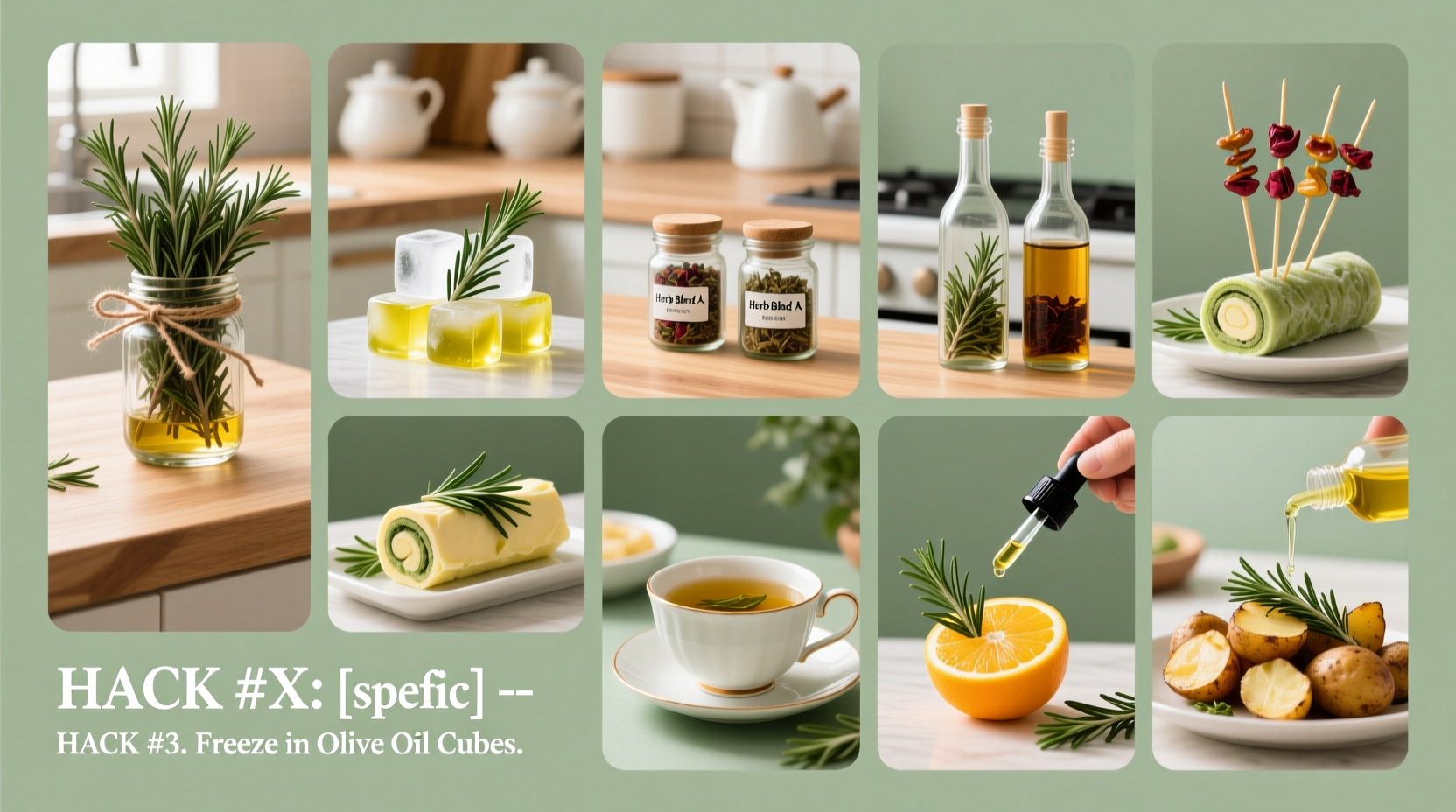
Place individual sprigs into compartments of an ice cube tray, cover with extra-virgin olive oil, and freeze. Once solid, transfer cubes to a labeled freezer bag. These serve dual purposes: thawed cubes flavor sautés directly, while frozen sprigs can be dropped into simmering soups or sauces. The oil preserves volatile oils and prevents freezer burn.
Hack #3: Create Rosemary-Infused Salt
Blend ¼ cup coarse sea salt with 2 tbsp finely chopped fresh rosemary and 1 crushed garlic clove. Spread on parchment and air-dry for 24 hours, then store in an airtight jar. Use as a finishing salt on grilled meats, roasted vegetables, or focaccia. Lasts up to 6 months. The salt draws out moisture from the herb, preserving flavor while preventing microbial growth.
Hack #4: Dry Using a Microwave (Fast Method)
For quick drying, place clean sprigs between two paper towels and microwave on medium power for 1-minute intervals, checking after each. After 2–3 minutes, leaves will be brittle. Strip from stems, crush, and store in a dark glass jar. While faster than oven or air-drying, this method risks overheating, so monitor closely.
Hack #5: Infuse Vinegar or Alcohol
Steep 4–5 sprigs in 1 cup of white wine vinegar, apple cider vinegar, or vodka for 1–2 weeks in a sealed jar, shaking daily. Strain and use rosemary vinegar in vinaigrettes or deglazing; use alcohol extract as a base for syrups or cocktail bitters. This captures full-spectrum flavor and creates multipurpose pantry staples.
Hack #6: Chop & Freeze in Portion-Sized Packs
Finely chop excess rosemary, portion into 1-teaspoon clusters on parchment, freeze solid, then transfer to a zip-top freezer bag. Label with date and quantity. Ideal for stirring into soups, stews, or compound butter without thawing. Prevents clumping and allows precise dosing.
Hack #7: Use Stems as Aromatic Skewers
Soak thicker rosemary stems in water for 30 minutes, then thread small pieces of meat, vegetables, or fruit onto them for grilling. As they char, the stems release smoky, herbal notes into the food. Discard after cooking. Works especially well with shrimp, cherry tomatoes, or peaches.
Hack #8: Add to Bread Dough During Kneading
Incorporate 1–2 tsp finely chopped rosemary into pizza dough, focaccia, or dinner rolls. The herb distributes evenly and becomes tender during baking. For stronger flavor, pair with garlic confit or grated cheese. The low moisture environment of baked goods preserves rosemary’s integrity better than moist dishes.
Hack #9: Make Rosemary Simple Syrup for Cocktails & Desserts
Simmer 1 cup sugar, 1 cup water, and 4–5 sprigs of rosemary for 10 minutes. Cool, strain, and bottle. Use in lemonades, gin tonics, or drizzled over panna cotta. The syrup lasts 2 weeks refrigerated. Add a splash of lemon juice to preserve color and brightness.
Hack #10: Layer Flavor in Slow-Cooked Dishes
Use rosemary at multiple stages: add a whole sprig early for deep infusion, then stir in a small amount of fresh-chopped herb in the last 10 minutes for bright top notes. This technique, borrowed from professional kitchens, creates dimensionality—earthy depth from prolonged heat, plus a lift of fresh aroma.
Practical Tips & FAQs
How long does fresh rosemary last?
Unrefrigerated, it dries out within 3–4 days. Properly stored in the fridge using the damp-towel method, it lasts 2–3 weeks. Frozen sprigs maintain quality for 6–8 months.
Can I substitute dried rosemary for fresh?
Yes, but adjust ratios: use 1 teaspoon dried for every tablespoon of fresh. Dried rosemary is more concentrated and slower to rehydrate, so add it earlier in cooking.
Why does my rosemary turn black?
Black spots indicate moisture buildup or fungal growth. Always dry rosemary thoroughly after washing and avoid sealing wet herbs in plastic. Trim affected parts immediately.
Is woody stem rosemary safe to eat?
No. Mature stems are too fibrous for consumption. They are meant to be removed before serving, though they can be used as skewers or infused and discarded.
What dishes benefit most from rosemary?
Lamb roasts, roasted potatoes, tomato sauces, bean stews (like cassoulet), sourdough bread, grilled vegetables, citrus desserts, and herbal cocktails.
Can I grow rosemary indoors?
Yes, in a sunny south-facing window with well-draining soil. Water only when the top inch of soil is dry. Indoor plants grow slower but provide year-round harvests. Trim regularly to encourage bushiness.
\"Rosemary isn’t just an accent—it’s a foundation. In Provence, we start ragus with a sprig tied in cheesecloth so it flavors the entire pot, then finish with a sprinkle of fresh leaf. That contrast is everything.\" — Chef Élodie Marin, Le Jardin Secret, Marseille
Storage Checklist:
☐ Inspect for mold or sliminess
☐ Rinse only if visibly dirty (excess water shortens life)
☐ Wrap in damp paper towel
☐ Place in ventilated container
☐ Store in high-humidity drawer
☐ Check every 5 days
Summary & Key Takeaways
Fresh rosemary is a powerhouse herb whose longevity and versatility are often underestimated. By applying these 10 hacks—ranging from strategic freezing and infusion to creative reuse of stems—home cooks can eliminate waste and deepen flavor in everyday meals. The key principles are moisture control, timely processing, and understanding rosemary’s dual role as both background note and aromatic highlight.
Whether you’re preserving a garden harvest or maximizing a grocery-store bunch, treat rosemary not as a single-use garnish but as a foundational ingredient. With proper storage, it becomes a silent partner in your kitchen, ready to elevate roasts, breads, drinks, and condiments with minimal effort. Master these techniques, and you’ll never again throw away wilted sprigs—or settle for bland, dried substitutes.
Try Hack #2 (Freeze in Olive Oil) with your next batch of rosemary. Notice how the frozen herb enriches a simple pan sauce or lentil soup. Share your results in the comments below.




 浙公网安备
33010002000092号
浙公网安备
33010002000092号 浙B2-20120091-4
Comments
No comments yet. Why don't you start the discussion?