
The final season of \"13 Reasons Why\" left fans with a mix of closure, emotional weight, and lingering questions. After four intense seasons that explored trauma, mental health, and systemic failures in high school environments, the series concluded with a finale that aimed to provide resolution while honoring its most controversial character: Hannah Baker. Understanding the ending requires unpacking not just plot points but also thematic arcs, character development, and production decisions. Below are 13 crucial reasons that explain how the story reached its conclusion, what happened to each major character, and why there will be no Season 4.
1. Narrative Closure Was the Primary Goal
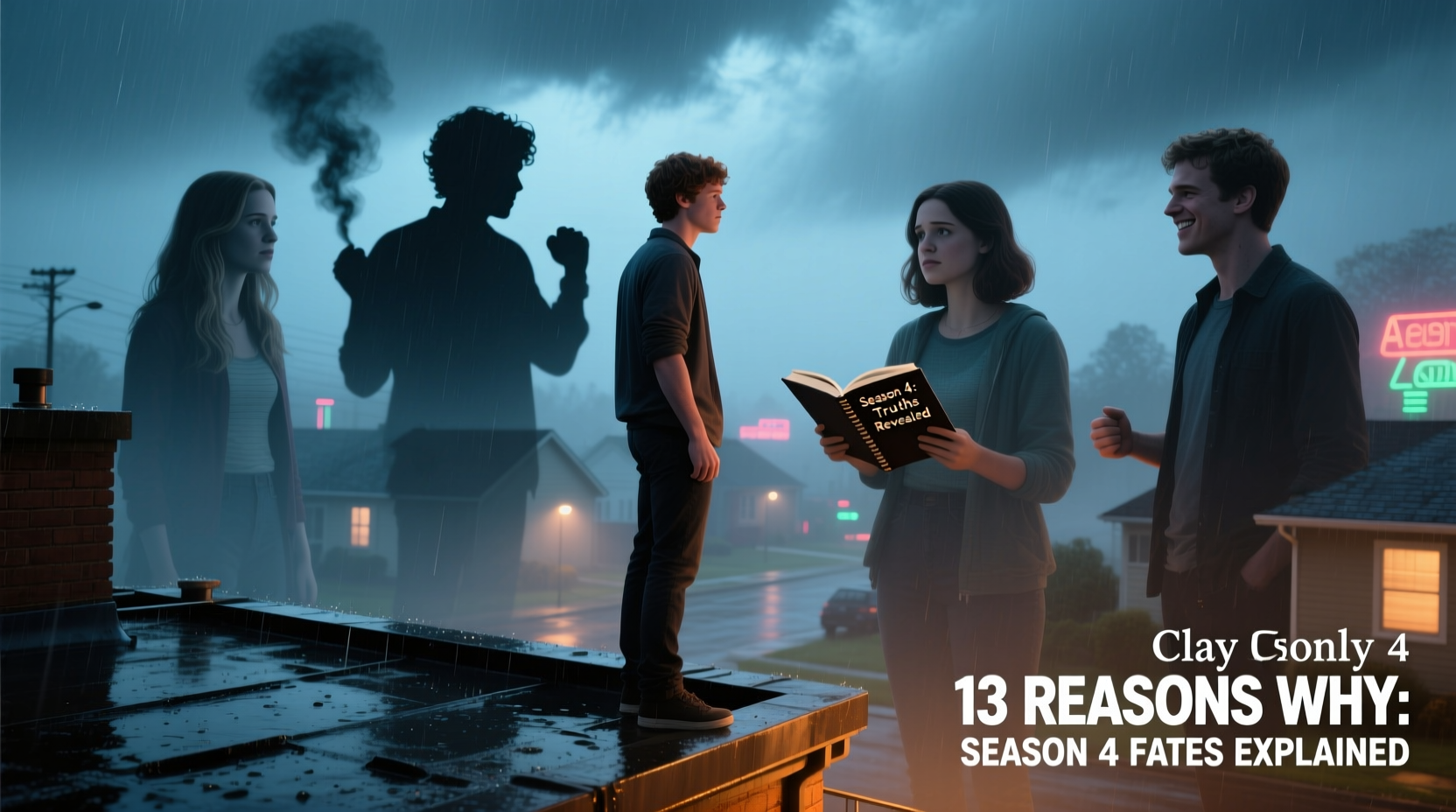
From the outset of Season 3, it became clear that the showrunners intended to wrap up the story within four seasons. The decision wasn’t abrupt—it was planned. Brian Yorkey, the series creator, stated that the arc was always meant to span four years of high school, mirroring real-life progression. This structure allowed each season to represent one academic year, culminating in graduation as a natural endpoint.
“We always envisioned this as a four-season journey through high school. Ending after senior year felt authentic.” — Brian Yorkey, Series Creator
This framing gave the writers space to resolve long-standing conflicts while emphasizing growth over tragedy—though not without cost.
2. Hannah’s Final Message Shifted the Show’s Purpose
Hannah Baker (Katherine Langford), though deceased since Season 1, remained a spiritual presence throughout the series. In the final season, her voice returns in a symbolic epilogue where she delivers a message of hope. Standing on the edge of a cliff—not as a prelude to suicide, but as a metaphor for choice—she encourages viewers to seek help, connect with others, and believe change is possible.
This moment reframed the entire series. Instead of being solely about the aftermath of suicide, the ending emphasized resilience, healing, and second chances. It was an intentional pivot from despair to cautious optimism.
3. Key Character Fates Were Resolved Symbolically
Each main character received a closing beat that reflected their journey:
- Claire Downey – Found confidence and began opening up emotionally, seen volunteering at a crisis center.
- Tony Padilla – Became a guardian figure, mentoring younger students and preserving Hannah’s legacy.
- Alex Standall – Survived his injuries and started rebuilding his life, symbolizing recovery from internalized pain.
- Skylar Downey – Continued advocating for truth and justice, hinting at a future in law or activism.
- Zach Dempsey – Made peace with rejection and embraced vulnerability, joining a support group.
- Mrs. Baker – Founded a youth outreach program, turning grief into purpose.
These resolutions weren’t fairy-tale endings but realistic steps forward—small victories in ongoing battles with trauma.
4. Clay Jensen’s Arc Reached Emotional Exhaustion
Dylan Minnette’s portrayal of Clay Jensen anchored the series. His journey—from guilt-ridden bystander to overwhelmed advocate—culminated in a breakdown during the school board hearing. He screamed truths no one wanted to hear, then vanished from Liberty High after graduation.
His fate? Ambiguous, but implied. A postcard sent to Tony reads: “I’m okay. Still figuring things out.” This reflects the reality for many trauma survivors: healing isn’t linear, and sometimes stepping away is necessary.
Why Clay Had to Leave
Clay carried the emotional burden of nearly every storyline. By Season 3, he was experiencing hallucinations of Hannah—a sign of unresolved PTSD. The finale acknowledges that he needs time and distance to heal. His departure isn’t failure; it’s self-preservation.
5. Production Challenges Influenced the Timeline
The show faced increasing scrutiny over its depiction of suicide and self-harm, especially after Season 1. Netflix eventually removed the infamous suicide scene in response to mental health advocacy. These pressures shaped later seasons, pushing the narrative toward prevention and recovery.
Rising costs, actor availability, and the need to maintain sensitivity all contributed to concluding the series at four seasons rather than stretching it further.
6. The Legacy of Bryce Walker Was Fully Explored
Bryce (Justin Prentice) died in Season 3, but his impact lingered. Season 4 delved into how institutions protected him and how his actions continued to ripple through relationships. His father’s arrest and mother’s public shaming completed a cycle of accountability.
Notably, the show avoided glorifying redemption for Bryce. Unlike earlier seasons that teased a reform arc, Season 4 confirmed: some harms cannot be undone, even if partially addressed.
7. Jessica Davis Embraced Leadership and Healing
Jessica (Alisha Boe) emerged as one of the strongest characters by the end. She testified against the school cover-up, supported other survivors, and pursued higher education with determination. Her final scene shows her speaking at a rally, saying, “We don’t have to stay broken.”
This moment encapsulates the show’s evolved mission: empowerment through shared experience.
8. No Season 4: What Fans Need to Know
There will not be a Season 4. Despite the numbering, the fourth season was announced as the final one. Confusion arose because earlier seasons were released years apart, leading some to assume more would follow.
Netflix confirmed the conclusion in 2020. All storylines were designed to end with Season 3 being the penultimate chapter and Season 4 serving as the epilogue.
“The story we set out to tell is complete. We’re proud of how we honored these characters’ journeys.” — Netflix Statement, June 2020
Do’s and Don’ts: Understanding the Final Season
| Do | Don’t |
|---|---|
| View the finale as a message of hope | Expect every loose end to be tied neatly |
| Appreciate character growth over plot twists | Assume the show endorses vigilante justice |
| Recognize the educational intent around mental health | Watch without preparation if sensitive to trauma themes |
9. Real-World Impact Shaped Story Decisions
\"13 Reasons Why\" sparked global conversations about teen suicide, bullying, and school responsibility. While criticized for risky portrayals, it also led to increased funding for youth mental health programs.
In countries like Australia and the UK, schools incorporated discussions of the show into wellbeing curricula—with guidance. The finale’s emphasis on resources (like helplines shown during credits) reinforced this educational role.
Mini Case Study: School District Response
In Denver, Colorado, a high school reported a 40% increase in students seeking counseling after Season 1 aired. Counselors attributed this to students recognizing their own symptoms through the characters. As one teacher noted, “Kids said, ‘That’s how I feel too.’ And they finally asked for help.”
This real-world effect influenced later seasons to include more proactive messaging and fewer graphic depictions.
10. Thematic Completion Over Plot Expansion
Unlike typical teen dramas that extend for ratings, \"13 Reasons Why\" prioritized thematic closure. Core ideas—accountability, silence vs. speaking up, intergenerational trauma—were revisited and resolved.
The final season showed new freshmen entering Liberty High, suggesting cycles can be broken. One girl picks up a cassette tape labeled “To Whoever Finds This”—a nod to Hannah’s method—but instead of hiding it, she takes it to a counselor. Full circle, but different outcome.
11. Cast Readiness to Move On
Many cast members had been with the show since adolescence. By Season 4, actors like Dylan Minnette and Christian Navarro were in their early twenties. Personal growth, new projects, and emotional fatigue made continuation impractical.
Katherine Langford’s reduced role post-Season 1 also signaled a shift—the show was never truly *about* Hannah anymore, but about those left behind.
12. Checklist: Reflecting on the Series’ Impact
To fully appreciate the ending, consider these reflective actions:
- Re-watch the final monologue with headphones and full attention.
- Research mental health resources mentioned in the credits.
- Discuss the ethical dilemmas with a trusted friend or counselor.
- Compare Season 1 and Season 4 tones—notice the evolution from shock to empathy.
- Write a letter to your younger self, inspired by the characters’ regrets and hopes.
13. The Ending Was Never About Continuation—It Was About Release
The finale didn’t tease a sequel. It offered release. Characters let go of grudges, secrets, and guilt. Viewers were invited to do the same.
No more tapes. No more investigations. Just people trying to live—with scars, yes, but also strength.
Frequently Asked Questions
Did any main characters die in the final season?
No major character deaths occurred in Season 4. The closest was Alex, who survived his Season 3 shooting. The focus shifted from loss to survival and rebuilding.
Is there a hidden post-credits scene or Easter egg?
There is no traditional post-credits scene, but the final shot of a new student finding a tape—and choosing to report it—is widely interpreted as a hopeful callback. It suggests progress, not repetition.
Can I still watch the show safely if I struggle with mental health?
If you're vulnerable, proceed with caution. Use viewer discretion tools on Netflix, watch with a support person, and keep crisis numbers accessible. Many therapists recommend skipping Season 1 entirely due to triggering content, starting instead from Season 2 or 3.
Final Thoughts: Carry the Message Forward
The ending of \"13 Reasons Why\" isn’t just a TV conclusion—it’s an invitation. An invitation to listen better, speak up sooner, and treat pain with compassion rather than judgment. The characters’ fates remind us that healing takes time, systems must change, and no one should suffer in silence.
Whether you loved or criticized the series, its cultural footprint is undeniable. Now, the responsibility passes to viewers: to turn awareness into action, empathy into policy, and stories into prevention.




 浙公网安备
33010002000092号
浙公网安备
33010002000092号 浙B2-20120091-4
Comments
No comments yet. Why don't you start the discussion?