
In a world where minimalism meets functionality, the debate between using a 2-in-1 wallet keychain versus keeping your cards and keys separate has gained traction. As urban lifestyles demand efficiency and portability, many consumers are reevaluating what they carry every day. The appeal of consolidating essentials into a single compact device is strong—but does that convenience come at a cost?
This isn’t just about saving pocket space. It’s about balancing accessibility, security, durability, and long-term usability. Whether you're a commuter, traveler, or someone who values sleek design, understanding the real trade-offs can help you make a smarter decision.
The Rise of the All-in-One Carry Solution
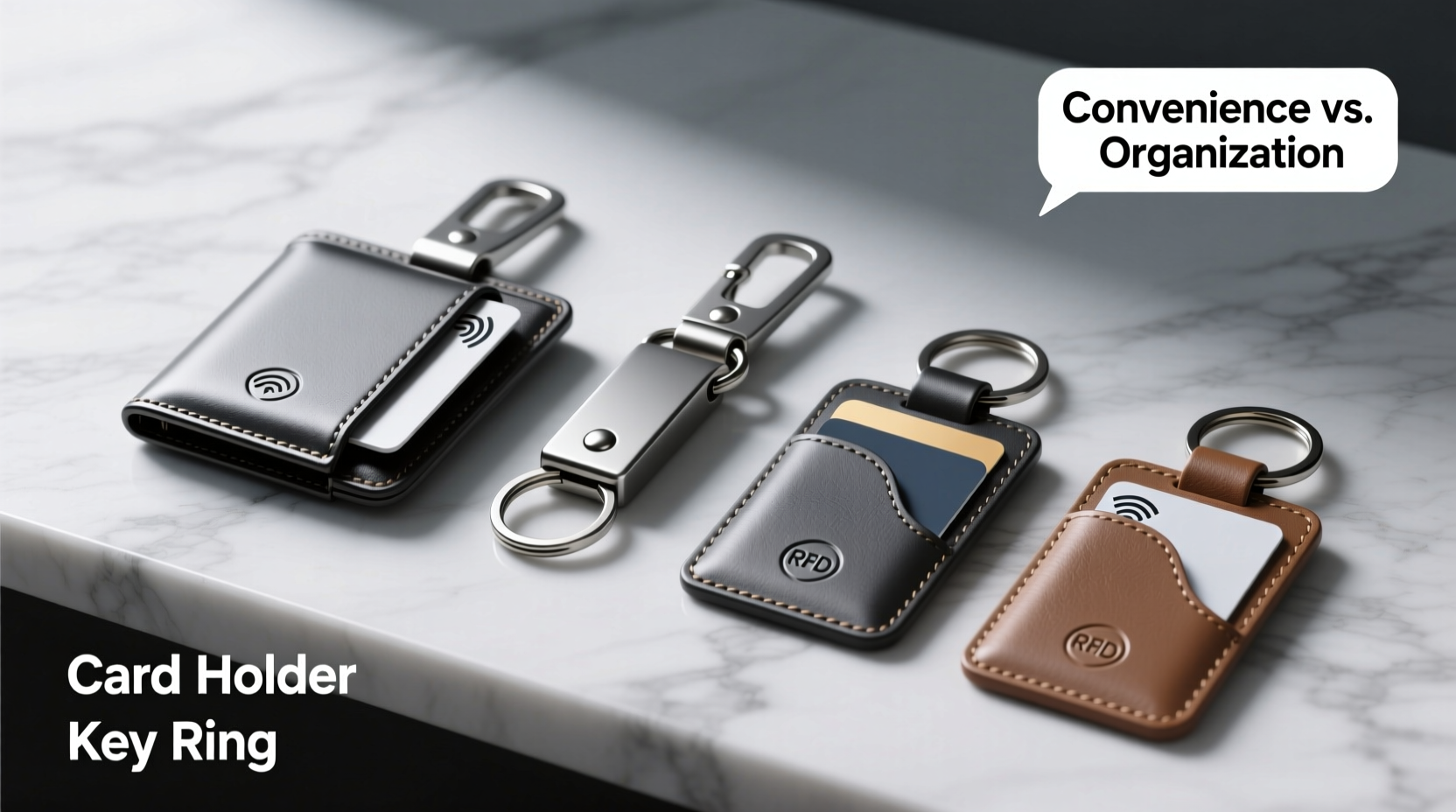
Over the past decade, minimalist carry culture has grown significantly. Inspired by designers and productivity experts advocating for \"less is more,\" products like titanium wallets, RFID-blocking sleeves, and multi-tool key organizers have entered mainstream use. At the center of this trend is the 2-in-1 wallet keychain—a hybrid gadget designed to hold credit cards, IDs, and house or car keys on one compact frame.
Manufacturers market these devices as revolutionary: no more digging through pockets, reduced bulk, and enhanced organization. But how do they perform in daily life compared to traditional setups—like a slim cardholder paired with a standalone keyring?
Breaking Down the Trade-Offs
To assess whether the convenience of a 2-in-1 wallet keychain is truly worth it, we need to examine several core factors: accessibility, durability, security, weight, and personal habits.
- Accessibility: With everything in one place, retrieval speed increases—for some. However, if both cards and keys are needed simultaneously, fumbling may increase due to tangled components.
- Durability: Metal-based models often last longer than leather cardholders but can scratch phones or other items when carried together.
- Security: Keeping cards attached to keys means losing one means losing both—an inherent risk not present with separation.
- Weight & Bulk: While consolidated, the combined unit can be thicker or heavier than individual pieces, especially with multiple cards and large keys.
- Lifestyle Fit: Frequent travelers might appreciate fewer loose parts; those working in physical jobs may find protruding keys uncomfortable.
“Convenience should never override contingency planning. If your keys and wallet go missing together, you’re facing double trouble.” — Daniel Reeves, Urban Gear Analyst
Comparison: 2-in-1 Wallet Keychains vs Separate Systems
| Feature | 2-in-1 Wallet Keychain | Separate Card Holder + Keyring |
|---|---|---|
| Pocket Space Used | One compact unit | Two distinct items |
| Risk of Loss | High (both lost if misplaced) | Lower (can lose one without losing the other) |
| Durability | Generally high (especially metal builds) | Varies (leather wears faster than metal) |
| Card Access Speed | Moderate to slow (depending on mechanism) | Fast (direct pull from sleeve) |
| Key Noise/Rattle | Often minimized (integrated silencing) | Potentially higher (loose rings) |
| Repair/Replacement Cost | Higher (entire unit may fail) | Lower (replace only damaged part) |
| Customization | Limited (fixed design) | High (mix brands, styles, materials) |
A Real-Life Scenario: Commuter Dilemma
Take James, a software developer living in Chicago. He walks to the train station daily, often carrying a backpack and wearing slim-fit jeans. His old setup—a bifold leather wallet and jangling keychain—would constantly shift in his back pocket, causing discomfort and bulging.
He switched to a titanium 2-in-1 wallet keychain that holds two cards and clips directly to his belt loop. Initially thrilled by the streamlined feel, he noticed issues after three months: his phone screen developed micro-scratches from being stored nearby, and when he dropped the unit near a storm drain, he lost access to his apartment, office, and debit card all at once.
After replacing everything, James reverted to a minimalist front-pocket cardholder and a silent silicone-covered keyring on a lanyard. “I missed the ultra-minimalist look,” he said, “but I sleep better knowing my backup key is at home and my wallet isn’t chained to my keys.”
When a 2-in-1 Makes Sense (And When It Doesn’t)
The ideal user for a 2-in-1 wallet keychain prioritizes simplicity over redundancy and operates within controlled environments. For example:
- Students moving between classrooms with minimal belongings.
- Fitness enthusiasts who carry only essentials during runs.
- Minimalists who own few cards and rarely travel alone.
On the flip side, professionals, parents, or frequent travelers benefit more from separation. Losing access to identification, payment, and transportation simultaneously creates cascading problems—from missed flights to locked-out emergencies.
Actionable Checklist: Choosing Your Carry System
- Evaluate how many cards you use daily (more than three favors separate storage).
- Assess your risk tolerance: would losing keys and wallet together disrupt your week?
- Test carry comfort: try both systems for five days each, noting irritation or inconvenience.
- Check material quality—avoid flimsy metals or poorly secured card slots.
- Ensure emergency access: do you have backups for locks, IDs, and payments?
- Consider social settings: will clipped-on gear snag coats or appear unprofessional?
Frequently Asked Questions
Can I add RFID protection to a 2-in-1 wallet keychain?
Some models include built-in RFID shielding, particularly those made with layered metal composites. However, many compact designs lack space for proper blocking materials. If you carry sensitive cards (e.g., corporate ID or passport), verify the product specifications before assuming protection.
Do 2-in-1 wallet keychains damage other items?
Yes, especially metal versions. Sharp edges or rough finishes can scratch smartphones, glasses, or tablet screens when carried together. Using lined pockets or protective pouches mitigates this risk. Silicone-coated variants reduce abrasion but may wear down over time.
Are there durable alternatives to full integration?
Absolutely. Many users opt for a middle ground: a slim cardholder with a small attachment loop, allowing them to clip keys temporarily when needed. This offers flexibility—keeping items connected during active use but separable for storage or travel.
Final Thoughts: Convenience vs. Resilience
The allure of the 2-in-1 wallet keychain lies in its promise of simplicity. In theory, merging two essential tools into one eliminates clutter and speeds up routine tasks. In practice, however, it introduces a single point of failure that many underestimate until it's too late.
True convenience isn't just about reducing item count—it's about designing a system that supports your lifestyle reliably. Sometimes, separating functions increases resilience more than it adds friction. A well-organized pocket with two thoughtfully chosen items can outperform a flashy hybrid that sacrifices practicality for novelty.
If you value peace of mind, adaptability, and long-term usability, consider keeping your card holder and keys apart. But if you thrive on extreme minimalism and operate in low-risk environments, a high-quality 2-in-1 might be your perfect match—just make sure you’ve planned for what happens if it goes missing.




 浙公网安备
33010002000092号
浙公网安备
33010002000092号 浙B2-20120091-4
Comments
No comments yet. Why don't you start the discussion?