
Car keys are more than just tools—they’re essential, expensive, and increasingly vulnerable. Modern key fobs contain sophisticated electronics that can be damaged by drops, moisture, or even digital theft via signal relay attacks. A high-quality leather keychain isn’t just a fashion statement; it’s a functional safeguard. When used wisely, it can extend the life of your keys, reduce the risk of loss, and even enhance security. Below are five practical, real-world strategies to protect your car keys using a leather keychain—backed by expert insights and everyday usability.
1. Choose Full-Grain Leather for Maximum Durability
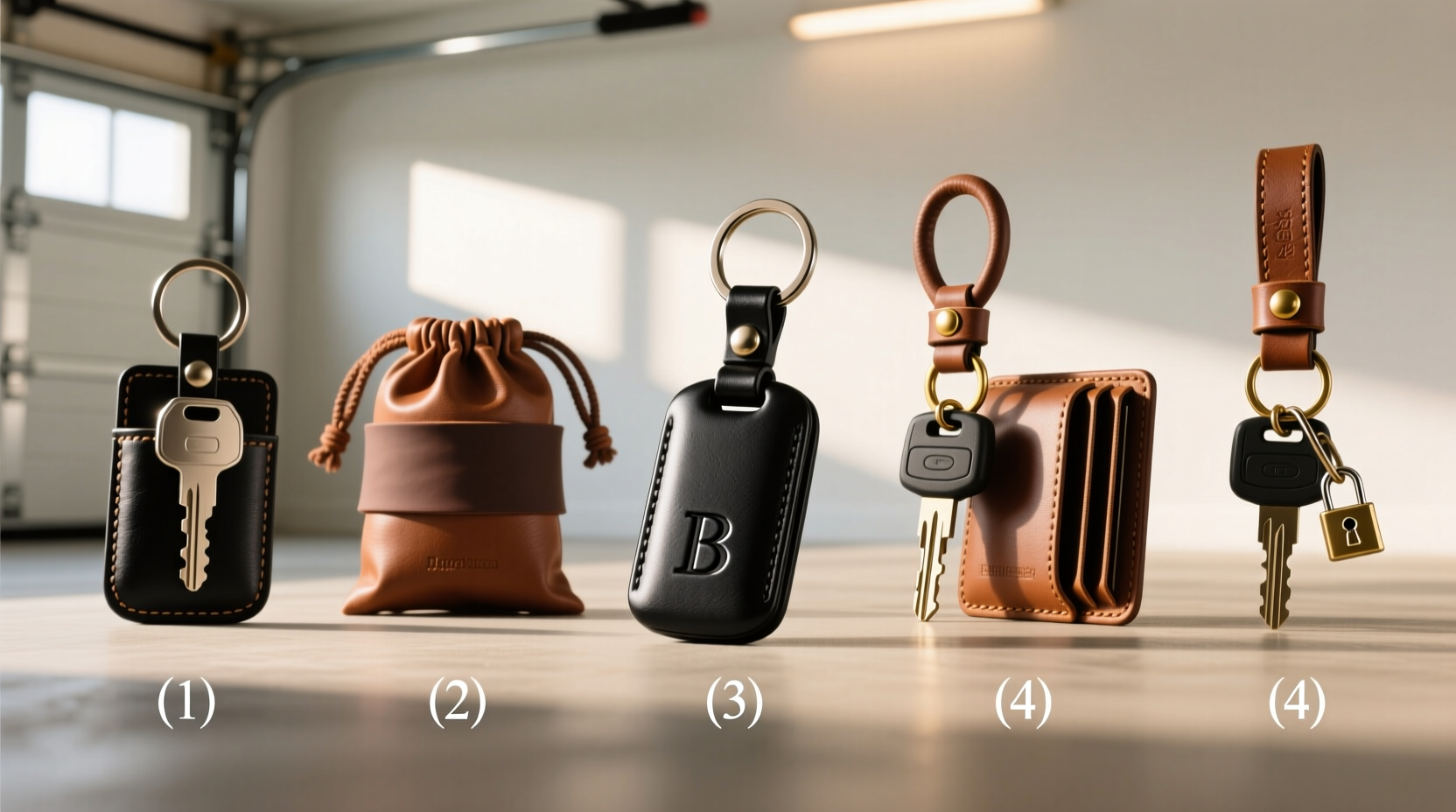
The first step in protecting your keys starts with selecting the right material. Not all leather is created equal. Full-grain leather, the highest quality available, retains the natural grain and fibers of the hide, making it exceptionally strong and resistant to wear. Over time, it develops a rich patina rather than cracking or peeling.
When attached to your keyring, a full-grain leather keychain absorbs impact from drops and prevents metal-on-metal contact between keys. This reduces scratches on both the fob casing and internal circuitry components. Additionally, thick leather acts as a buffer against moisture, minimizing corrosion risk when keys are exposed to rain or sweat.
“Leather isn’t just about aesthetics. High-density materials like full-grain absorb shock and protect sensitive electronics inside modern key fobs.” — Daniel Reeves, Automotive Security Consultant
2. Use a Key Wrap Design to Prevent Signal Theft
One of the most overlooked threats today is relay attack theft. Thieves use devices to amplify the signal from your key fob through walls or pockets, tricking your car into thinking the key is nearby. While Faraday pouches are common fixes, a well-designed leather key wrap offers a discreet, mechanical alternative.
Some leather keychains feature a snug wrap-around flap with a snap or magnetic closure. When properly closed, this creates a physical barrier that muffles the fob’s radio frequency signal. Though not as absolute as a metal-lined Faraday box, the layered thickness of quality leather (especially when combined with a fabric liner) can significantly reduce signal range—making relay attacks far less likely.
How It Works: Step-by-Step Protection
- Insert your key fob into the designated slot or sleeve of the leather wrap.
- Ensure no part of the fob protrudes beyond the enclosure.
- Secure the flap with the closure mechanism.
- Test the protection by attempting to unlock your car while the fob is wrapped—if it fails, the shielding is effective.
- Unwrap only when ready to use.
This method combines convenience with passive security, ideal for homeowners who leave keys near doors or windows.
3. Reduce Clutter with an Organized Keychain Layout
Most people carry too many items on one keyring: house keys, office access cards, USB drives, bottle openers. This clutter increases the chances of damage through friction and impact. A structured leather keychain often includes split rings, D-rings, or dedicated loops that allow you to separate your car keys from other items.
By isolating your car fob in its own compartment, you minimize contact with sharp edges and heavy objects. This organization also speeds up access—no more digging through a tangled mess when you're rushing to start the engine in cold weather.
| Key Organization Method | Pros | Cons |
|---|---|---|
| All keys on one ring | Simple, familiar | High wear, noise, risk of damage |
| Leather key leash with multiple loops | Separates items, reduces friction | Slightly bulkier |
| Fold-over leather wallet-style holder | Protects fob, blocks signal, neat | Slower access |
| Magnetic leather clip | Quick release, compact | May detach if bumped hard |
A minimalist approach—car key only, secured in a dedicated leather loop—is optimal for longevity and ease of use.
4. Prevent Loss with a Secure Attachment System
Losing your car keys is more than inconvenient—it can cost hundreds in replacement and programming fees. A leather keychain with a secure attachment system drastically reduces this risk. Look for models with double-stitched anchor points, reinforced rivets, or locking clasps instead of basic split rings.
Many users attach their keychain to a belt loop, bag strap, or waistband using a built-in clip or carabiner. This ensures that even if the keys slip out of a pocket, they remain tethered to your person. The flexibility of leather means it moves naturally with your body, reducing snagging while maintaining reliability.
Mini Case Study: Preventing Daily Loss in Urban Commuting
Mark, a project manager in Chicago, commuted daily via train and walked several blocks each way. He lost three key fobs in 18 months—each time during transit. After switching to a full-grain leather key leash with a steel-reinforced O-ring and a spring-loaded carabiner, he clipped his keys to his backpack strap. Over the next two years, he never misplaced them. “It’s simple,” he said. “I could feel the weight if it swung loose. The leather didn’t break, and the clip held firm even when I rushed through turnstiles.”
5. Maintain Your Leather to Extend Protection
A leather keychain only works if it remains intact. Exposure to water, sunlight, and dirt degrades leather over time. To keep your key protector functional and attractive, follow a basic maintenance routine:
- Wipe down monthly with a dry, soft cloth to remove dust and oils.
- Condition every 2–3 months using a leather-specific balm to prevent drying and cracking.
- Avoid prolonged exposure to direct sunlight or humid environments (like gym bags).
- Never soak or machine wash—spot clean only with minimal water if needed.
“The lifespan of a leather key accessory doubles when conditioned regularly. Think of it like skincare for your gear.” — Lena Torres, Artisan Leathercraft Designer
Checklist: How to Maximize Car Key Protection with Leather
- ✅ Choose full-grain or top-grain leather for strength and aging resilience
- ✅ Select a design that isolates your car key from other metal objects
- ✅ Opt for a wrap-style cover to dampen wireless signals from relay attacks
- ✅ Use a secure attachment point (clip, carabiner, or loop) to prevent loss
- ✅ Condition the leather every few months to maintain integrity
- ✅ Test signal blocking by wrapping the fob and checking if your car unlocks
- ✅ Replace the keychain if stitching loosens or leather cracks deeply
FAQ
Can leather really block key fob signals?
While leather alone isn’t a complete RF shield like metal, thick, dense layers—especially in wrap designs—can attenuate the signal enough to make relay attacks impractical. For maximum security, combine a leather wrap with storing the keys away from exterior walls.
How long does a quality leather keychain last?
With proper care, a full-grain leather keychain can last 5–7 years or more. Some users report over a decade of use, especially when maintained with regular conditioning and kept out of extreme conditions.
Are leather keychains worth it for smart keys?
Absolutely. Smart keys are more delicate and costly to replace. A leather keychain protects against physical damage, reduces signal vulnerability, and adds organizational benefits—all while being durable and stylish.
Conclusion
Your car keys represent a significant investment—not just monetarily, but in time, access, and peace of mind. A thoughtfully chosen leather keychain does more than hold your keys; it shields them from damage, deters theft, and keeps them organized. From material selection to daily habits, each decision plays a role in extending the life and function of your key fob. Don’t wait until you’ve lost or damaged a key to take action. Invest in a quality leather solution today and enjoy smarter, safer key management every day.




 浙公网安备
33010002000092号
浙公网安备
33010002000092号 浙B2-20120091-4
Comments
No comments yet. Why don't you start the discussion?