
In April 1985, Coca-Cola made a decision that would echo through business history: they replaced their flagship product—Coca-Cola—with a new formula called “New Coke.” Market research had shown that consumers preferred a sweeter taste, and blind taste tests consistently favored New Coke over both original Coke and Pepsi. Armed with data, executives believed they were making a bold, progressive move. Instead, they ignited a firestorm of public outrage, alienated loyal customers, and within three months, were forced to bring back the original formula as “Coca-Cola Classic.”
The failure of New Coke wasn’t just a product misstep—it was a masterclass in underestimating emotional brand loyalty, misreading customer sentiment, and over-relying on flawed data interpretation. Here are five fundamental reasons why New Coke failed, backed by historical context, expert insights, and lasting business lessons.
1. Underestimating Emotional Brand Loyalty
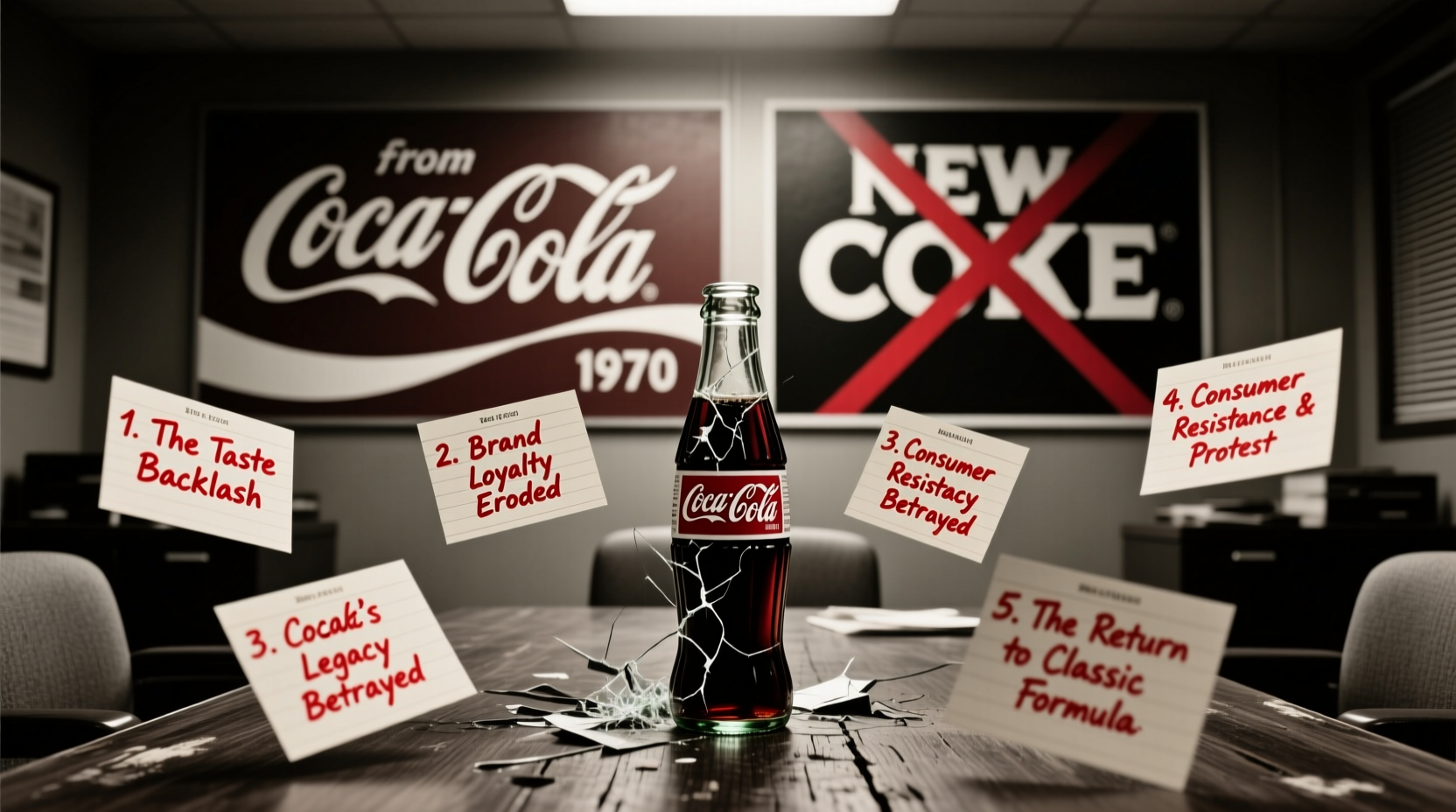
Coca-Cola wasn’t just a beverage; for millions, it was a symbol of tradition, nostalgia, and American identity. The company focused heavily on sensory data—taste preferences—but overlooked the deep emotional connection people had with the original formula. When New Coke launched, consumers didn’t just reject a drink—they felt betrayed.
Letters flooded the company’s headquarters. One read: “You’ve taken my childhood away.” Another declared, “I feel like I’ve lost a member of my family.” These weren’t isolated reactions. Over 400,000 complaints poured in during the first few months—a staggering number for pre-internet era feedback.
“People don’t buy Coca-Cola because of how it tastes. They buy it because of what it means.” — Al Ries, Marketing Strategist and Co-author of Positioning: The Battle for Your Mind
The emotional bond between consumer and brand proved stronger than any blind taste test. Coca-Cola assumed preference equaled purchase behavior, but they ignored the symbolic weight of the original product. Identity, memory, and routine played a far greater role than sweetness levels.
2. Flawed Interpretation of Taste Test Data
Coca-Cola’s decision was rooted in extensive market research, including the infamous “Pepsi Challenge,” where consumers often chose Pepsi in blind taste tests due to its sweeter profile. Executives concluded that a sweeter cola would win the market. But these tests were limited in scope.
Blind taste tests measure immediate sensory response—not long-term consumption habits or brand attachment. Drinking a few sips in isolation is fundamentally different from consuming a full can daily or associating a drink with family meals, holidays, or personal rituals.
Moreover, the tests didn’t account for satiety. Sweeter drinks can become cloying over time, while the sharper bite of original Coke provided balance across a full serving. Consumers might prefer Pepsi in a sip test, but many still reached for Coke when buying by the case.
| Test Type | What It Measured | Limitations |
|---|---|---|
| Blind Taste Test | Immediate flavor preference | Ignores branding, context, and long-term satisfaction |
| Purchase Behavior | Actual buying decisions | Not conducted at scale before launch |
| Brand Association | Emotional and cultural meaning | Undervalued in pre-launch analysis |
The lesson? Data matters—but only when interpreted in the right context. Relying solely on short-term preference metrics without considering behavioral psychology led to a catastrophic miscalculation.
3. Ignoring Core Customers in Favor of Competitors
In an effort to beat Pepsi, Coca-Cola shifted focus toward winning over Pepsi drinkers rather than protecting its own loyal base. This strategic pivot alienated the very people who had sustained the brand for nearly a century.
Instead of enhancing the existing product or launching a sweeter variant as a separate option (like “Coke Plus” or “Coke Gold”), the company eliminated the original entirely. That sent a message: your loyalty doesn’t matter. We know better than you what you should drink.
A mini case study illustrates this perfectly: In Atlanta, a group of retirees who met weekly for lunch at a local diner refused to order anything with New Coke. When asked why, one replied, “We’ve been drinking Coke since we came home from the war. You don’t replace a friend.” Their boycott spread locally, influencing suppliers and small vendors to stop carrying the new version.
This grassroots resistance showed that core customers aren’t just revenue—they’re advocates. And when brands ignore them, those advocates become vocal opponents.
4. Poor Crisis Communication and Rollout Strategy
The announcement of New Coke was framed as a modernization—a bold step forward. But the messaging lacked empathy. There was no acknowledgment of the emotional significance of the original formula, no transitional phase, and no opt-in period.
Consumers woke up to a changed product overnight. No warning. No choice. The abruptness amplified the sense of loss. Had Coca-Cola introduced New Coke as a limited edition or alongside the original, reactions might have been more measured.
When backlash erupted, the company was slow to respond. Initial statements defended the decision, doubling down on taste test results. It wasn’t until July 1985—just 79 days after launch—that CEO Roberto Goizueta announced the return of the original formula, now renamed “Coca-Cola Classic.”
“We did not understand the emotional attachment to the old Coke. We thought we were improving the taste. We didn’t realize we were tampering with a national icon.” — Roberto Goizueta, Former CEO of Coca-Cola
The reversal was unprecedented. While it restored goodwill, it also exposed internal indecision and damaged executive credibility. The rollout wasn’t just flawed—it was tone-deaf.
5. Failure to Anticipate Cultural Symbolism
Coca-Cola had become more than a soft drink—it was embedded in American culture. From World War II soldiers requesting “a Coke” to holiday ads featuring Santa Claus, the brand carried decades of shared meaning. By changing the formula, Coca-Cola inadvertently touched a cultural nerve.
Media coverage turned the story into a national drama. News outlets ran segments titled “The Day America Cried” and “The Great Cola War.” Talk shows debated the change. Comedians mocked it. Even Soviet officials commented, noting that if the U.S. couldn’t preserve its own traditions, what hope was there for global stability?
The symbolism extended beyond taste. For many, New Coke represented corporate arrogance—the idea that distant executives could override personal memories and collective heritage in the name of efficiency or competition.
Checklist: Avoiding a “New Coke” Moment in Your Business
- Evaluate emotional equity before changing a legacy product
- Test changes in real-world contexts, not just controlled environments
- Engage loyal customers early in the development process
- Launch variants instead of replacements when possible
- Prepare a crisis communication plan for unexpected backlash
- Monitor social sentiment continuously post-launch
Frequently Asked Questions
Did New Coke actually taste better?
In blind taste tests, many consumers preferred New Coke’s sweeter profile over the original. However, taste is only one factor in consumer choice. Long-term enjoyment, brand association, and habit play larger roles. Most people found the original formula more balanced over time, especially with meals.
Is New Coke still available today?
No, New Coke was officially discontinued in 2002. However, a closely related formula reappeared briefly in 2017 as “Coca-Cola Zero Sugar,” though it was not marketed as New Coke. Limited runs and collector versions occasionally surface, but the original New Coke is no longer in production.
Did the New Coke failure hurt Coca-Cola long-term?
Surprisingly, no. After reintroducing Coca-Cola Classic, sales surged. The episode generated massive publicity, and within a year, both Classic and the remaining New Coke (later renamed Coke II) contributed to increased market share. Ironically, the failure strengthened brand loyalty and became a cautionary tale that improved future decision-making.
Conclusion: A Lesson in Listening
The story of New Coke isn’t just about a soda that flopped. It’s about the danger of prioritizing data over humanity, competition over loyalty, and innovation over identity. Coca-Cola learned the hard way that customers don’t just buy products—they buy meaning.
Today, the New Coke debacle is taught in business schools as one of the most expensive mistakes in marketing history—and yet, also one of the most instructive. It reminds us that even the most data-driven decisions must be filtered through empathy, cultural awareness, and respect for the people who keep a brand alive.




 浙公网安备
33010002000092号
浙公网安备
33010002000092号 浙B2-20120091-4
Comments
No comments yet. Why don't you start the discussion?