
The Devil’s Eye pendant—a deep red gemstone often associated with protection, vitality, and spiritual insight—has surged in popularity among collectors and jewelry enthusiasts. However, its rising demand has also led to a flood of imitations made from dyed glass, synthetic materials, or low-grade stones passed off as genuine. Whether inherited, gifted, or purchased, confirming the authenticity of your Devil’s Eye is essential to understanding its true value and energetic properties. Below are seven expert-recommended methods to help you distinguish a real Devil’s Eye from a counterfeit.
1. Examine the Color and Inclusions Under Magnification
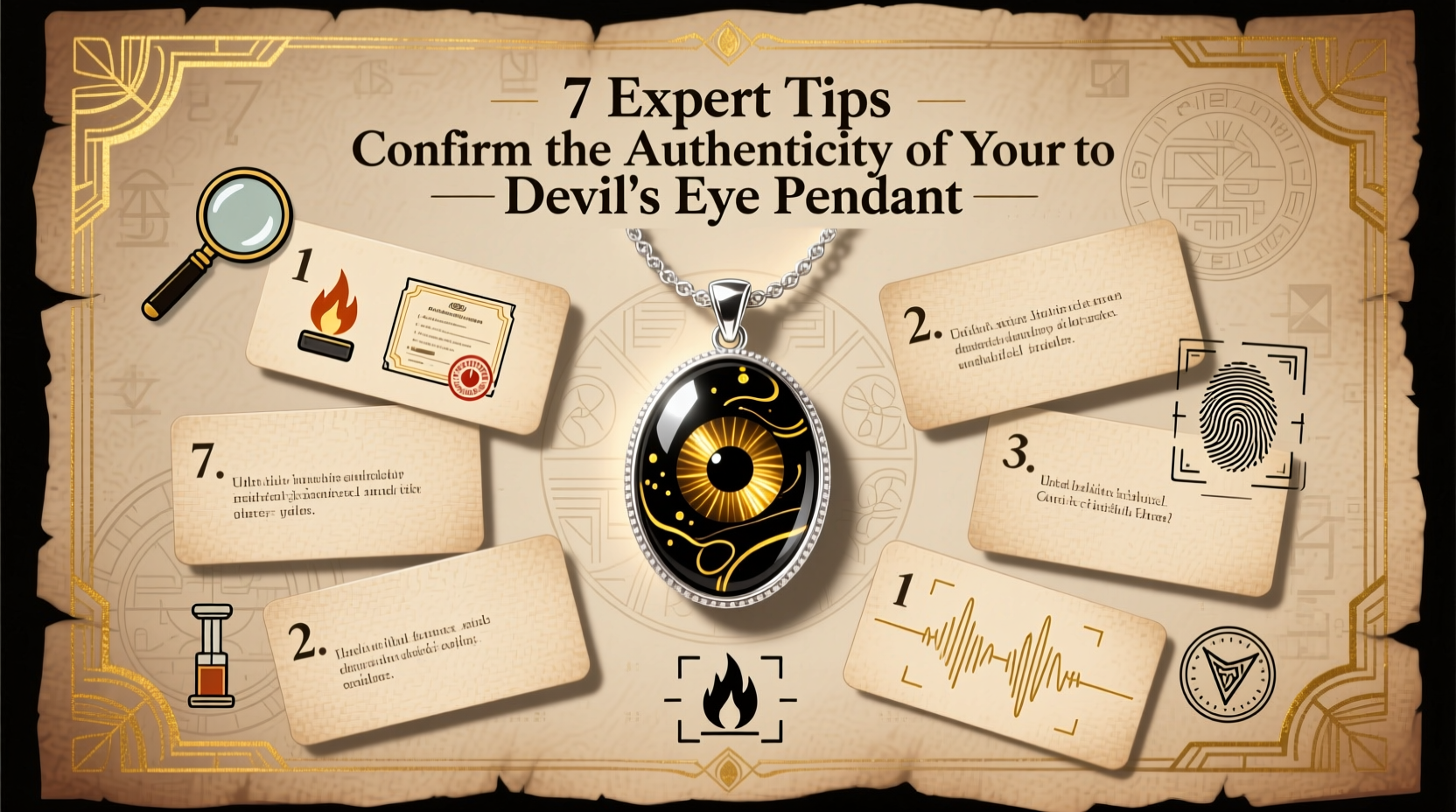
Genuine Devil’s Eye pendants, typically carved from natural red jasper or sometimes red agate, display subtle variations in color and internal patterns. These stones form over millennia, resulting in unique banding, veining, or cloud-like inclusions. Counterfeits, especially those made from glass or plastic, often have unnaturally uniform coloration and lack depth.
Use a 10x jeweler’s loupe or magnifying glass to inspect the surface and subsurface of the stone. Look for:
- Natural color zoning—slight shifts from crimson to maroon or brownish-red.
- Microscopic mineral inclusions or fine crystalline structures.
- Bubbles or swirl marks, which may indicate glass casting (a red flag).
2. Perform a Thermal Conductivity Test
One of the most reliable at-home tests involves assessing how the stone reacts to temperature. Natural gemstones like red jasper have higher thermal mass than glass or plastic, meaning they retain coolness longer when touched.
- Hold the pendant in your hand for 30 seconds.
- Place it against your cheek or forehead.
- Observe whether it feels cool for several seconds.
A real Devil’s Eye will remain cool briefly due to its density. Glass or plastic imitations warm up almost instantly. This test isn’t foolproof but serves as a quick preliminary indicator.
3. Check for Hardness Using the Scratch Test (With Caution)
The Mohs hardness scale measures a mineral’s resistance to scratching. Red jasper, commonly used in authentic Devil’s Eye pendants, ranks between 6.5 and 7, making it harder than common metals like copper or knife blades (which are around 5.5). Glass typically falls between 5.5 and 6.5, while plastic is much softer.
To perform the scratch test safely:
- Find an inconspicuous area on the pendant (e.g., the back or edge).
- Attempt to scratch it gently with a steel pin or knife blade.
- If the stone scratches easily, it’s likely glass or plastic.
- If the blade slides off without marking, the stone is probably genuine.
4. Analyze Light Transmission and Luster
Hold the pendant under a bright light source and observe how light passes through the edges. While most Devil’s Eye stones are opaque, thin edges may allow faint red light to pass through. A completely dark or pitch-black appearance could suggest a non-mineral material.
Also, assess the luster:
| Material | Luster Type | Observation Clue |
|---|---|---|
| Natural Jasper | Vitreous to waxy | Soft glow with slight sheen, not overly reflective |
| Colored Glass | Highly vitreous | Excessively shiny, mirror-like reflection |
| Synthetic Resin | Dull or greasy | Flat appearance, lacks depth |
A stone that sparkles like a diamond or reflects light sharply like a mirror is likely not a true Devil’s Eye.
5. Consult a Certified Gemologist for Professional Verification
While home tests offer clues, only a qualified gemologist can provide definitive authentication. Professionals use advanced tools such as refractometers, spectrometers, and polariscopes to analyze optical properties, specific gravity, and chemical composition.
When seeking verification:
- Choose a lab accredited by organizations like GIA (Gemological Institute of America) or IGI.
- Request a full gemological report, including origin analysis if possible.
- Expect to pay $50–$150 depending on complexity and location.
“Many so-called 'Devil’s Eyes' brought to us turn out to be dyed quartz or even molded plastic. Only proper instrumentation can rule out fakes.” — Dr. Lena Torres, GIA-Certified Gemologist
6. Review Provenance and Seller Credibility
Authenticity isn’t just about the stone—it’s also about history and sourcing. Ask questions before purchasing or validating ownership:
- Was the pendant sold by a reputable dealer with verifiable credentials?
- Does it come with certification, invoices, or export documentation?
- Is there a known origin? (True red jasper Devil’s Eyes are often sourced from India, Brazil, or Madagascar.)
A lack of provenance significantly increases the risk of forgery. Be wary of online sellers offering “rare” Devil’s Eyes at suspiciously low prices.
Mini Case Study: The Heirloom That Wasn’t
Sarah inherited a striking red pendant from her grandmother, believed to be a centuries-old protective talisman. Excited, she took it to a local appraiser who immediately noticed air bubbles beneath the surface. Upon closer inspection using a microscope, the stone showed no crystalline structure and exhibited conchoidal fractures typical of glass. Further testing revealed it was a mid-20th-century Czech glass imitation. Though not geologically authentic, the piece held emotional value—and Sarah now displays it with a note explaining its true nature.
7. Use UV Light to Detect Dyes and Treatments
Many fake Devil’s Eye pendants are created by soaking porous stones or glass in red dyes. These treatments often fluoresce under ultraviolet (UV) light. To test:
- Darken the room completely.
- Shine a long-wave UV flashlight (365 nm) on the pendant.
- Look for unnatural glowing patches, especially near cracks or edges.
While some natural minerals fluoresce faintly, bright pink or orange flashes usually indicate dye infiltration. Note that not all dyed stones react strongly, so this test should be combined with others.
Checklist: How to Verify Your Devil’s Eye Pendant
- Inspect color variation and inclusions with a magnifier.
- Test thermal response—should stay cool briefly.
- Assess luster: natural waxy/vitreous, not mirror-bright.
- Conduct a cautious scratch test (optional).
- Check for UV fluorescence indicating dyes.
- Verify seller reputation and request documentation.
- Consult a certified gemologist for final confirmation.
Frequently Asked Questions
Can a Devil’s Eye pendant be recharged or cleansed like other crystals?
Yes, but only if it’s a genuine natural stone. Common methods include placing it under moonlight, burying it in earth, or smudging with sage. Avoid water cleansing for dyed or composite stones, as they may degrade.
Is there a difference between a Devil’s Eye and a Dragon’s Eye pendant?
Yes. While both are red protective stones, Dragon’s Eye usually refers to a green-and-red orbicular jasper with serpent-like patterns. Devil’s Eye is predominantly deep red with concentric bands. Confusion arises due to overlapping marketing terms.
Are all red gemstone pendants called Devil’s Eye?
No. The term should refer specifically to carvings made from red jasper or similar cryptocrystalline quartz varieties. Many sellers misuse the name for any red stone, including garnet, ruby glass, or red calcite. Authenticity depends on material, not marketing.
Final Thoughts: Trust, But Verify
The allure of the Devil’s Eye pendant lies in its rich hue and legendary symbolism. But in a market rife with reproductions, relying solely on appearance or sentiment can lead to misidentification. By combining observational techniques, simple physical tests, and professional evaluation, you empower yourself to make informed decisions about your collection.
Whether you wear it for spiritual reasons, aesthetic appreciation, or family heritage, knowing your pendant’s true nature enhances its worth far beyond monetary value.




 浙公网安备
33010002000092号
浙公网安备
33010002000092号 浙B2-20120091-4
Comments
No comments yet. Why don't you start the discussion?