
Pure silver jewelry carries a timeless elegance, but its popularity has also led to a surge in counterfeit pieces. Silver-plated or base-metal imitations can look nearly identical to genuine .925 sterling silver, especially in small items like earrings. Without proper verification, you could be wearing something that tarnishes quickly, causes skin irritation, or holds little value. Fortunately, you don’t need a professional jeweler or expensive tools to verify authenticity. With a few household items and careful observation, you can confidently determine whether your silver earrings are truly made of pure silver.
Understanding Silver Purity: What “Pure Silver” Really Means
When people refer to \"pure silver,\" they often mean sterling silver, which is 92.5% pure silver and 7.5% alloy (usually copper). This blend provides durability while maintaining the luster and hypoallergenic qualities associated with silver. Pure elemental silver (99.9%) exists but is too soft for most jewelry applications and rarely used in earring construction.
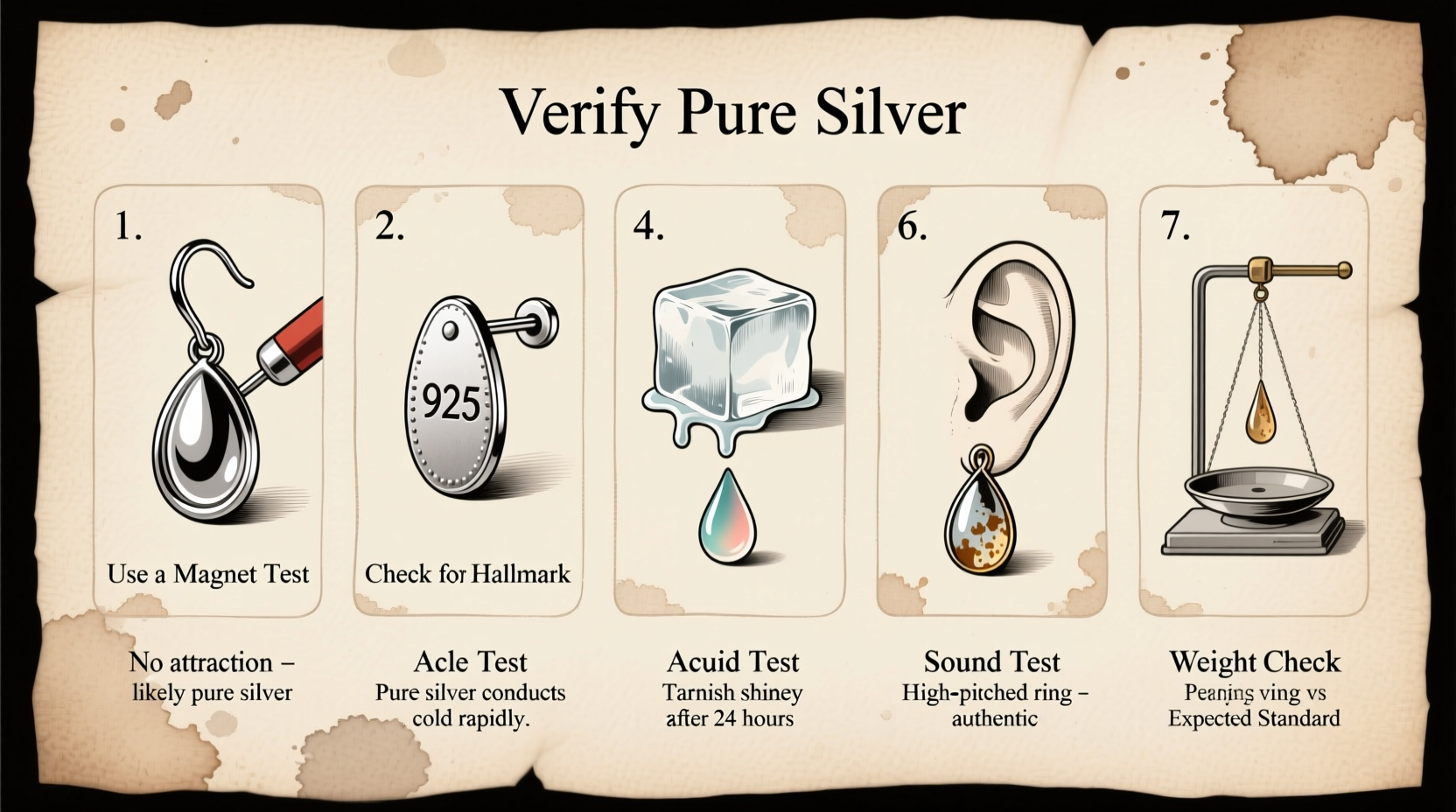
Look for hallmarks such as “925,” “Sterling,” “.925,” or “SS” on the back of the earring posts or clasps. These stamps indicate the metal meets international standards for sterling silver. However, not all authentic pieces are stamped—especially vintage or handmade designs—and some fakes carry counterfeit engravings. That’s why relying solely on markings isn’t enough. A combination of physical and chemical tests offers more reliable confirmation.
“Always cross-check hallmarking with at least one physical test. Stamps can be faked; reactions cannot.” — Daniel Reeves, Master Jeweler & Appraiser with over 30 years of experience
Method 1: The Magnet Test – Quick First Screening
Silver is not magnetic. If your earrings are attracted to a strong magnet, they contain ferromagnetic metals like iron or nickel and are not pure silver.
To perform this test:
- Use a rare-earth magnet (neodymium), available online or from hardware stores.
- Hold the magnet close to the earring.
- Observe any pull or attraction.
No movement means the piece passes this initial check. Slight attraction may suggest a silver-plated item over a magnetic base. Strong pull confirms it’s not silver.
Method 2: The Tarnish Observation Test
Silver naturally reacts with sulfur compounds in the air, forming a dark tarnish over time. While this might seem like a downside, it's actually a sign of authenticity. Non-silver metals either don’t tarnish or do so differently.
Examine your earrings closely:
- Genuine silver develops a yellowish, then brownish, and eventually black patina.
- Tarnish appears uneven and can be polished off with a silver cloth.
- Fake silver may corrode green or flake off, indicating copper or base metal oxidation.
If your earrings have never tarnished despite months of wear, especially in humid environments, they may be plated or fake. Conversely, rapid green discoloration suggests low-quality alloys.
Method 3: The Ice Cube Test – Thermal Conductivity Check
Silver has the highest thermal conductivity of any common metal. This means it transfers heat faster than almost all other materials. You can use this property to test authenticity.
Step-by-step guide:
- Place an ice cube directly on the silver earring (ensure hands are dry).
- Hold it in place or set the earring on a surface with the ice resting on it.
- Time how long it takes for the ice to begin melting significantly.
Real silver will melt the ice noticeably faster than fake metals. On average, a .925 silver surface melts ice within 10–20 seconds under room temperature conditions. Imitations like stainless steel or aluminum react much slower.
“I once tested two seemingly identical studs—one melted ice in 12 seconds, the other took over a minute. Only one was real.” — Lila Chen, Jewelry Authenticity Consultant
Method 4: The Smell Test (Yes, Really)
Unlike many base metals, pure silver is odorless. When rubbed vigorously between clean fingers, silver should produce no smell. Metals like brass, copper, or nickel alloys often emit a metallic or slightly acidic odor due to oxidation and skin contact.
This test works best when comparing multiple pieces side by side. Rub each earring for 15–20 seconds and sniff carefully. A distinct “metallic” scent indicates non-silver content.
Method 5: The Ring Test – Sound Vibration Analysis
Genuine silver produces a clear, high-pitched ringing sound when tapped lightly against glass or another metal. This resonance occurs due to silver’s density and elasticity.
To try it:
- Hold the earring by its post.
- Gently tap it with another piece of metal (like a key).
- Listen for a sustained, bell-like tone.
Fake silver tends to make a dull thud or short clink. The ring should last at least 1–2 seconds for real sterling silver. Practice with known silver coins (e.g., pre-1964 U.S. dimes) to train your ear.
Method 6: The Bleach Test – Caution Advised
Bleach accelerates tarnishing in real silver due to its high chlorine content. Within minutes, genuine silver exposed to household bleach will darken dramatically. Most fake silvers won’t react the same way.
Important: This test can damage your earrings. Only proceed if you’re willing to risk discoloration.
- Dip a cotton swab in household bleach (sodium hypochlorite).
- Touch it briefly to an inconspicuous part of the earring (e.g., back of post).
- Wait 2–3 minutes.
If the area turns black quickly, it’s likely real silver. No change suggests plating or imitation. Always rinse thoroughly afterward and polish gently.
Method 7: The Nitric Acid Test – Most Accurate (But Destructive)
Nitric acid testing is a standard method used by jewelers. It requires purchasing a testing kit (available online), but delivers near-certain results.
How it works:
- Make a small, discreet scratch on the earring (preferably on the back).
- Apply a drop of nitric acid to the scratch.
- Observe color changes:
| Reaction | Interpretation |
|---|---|
| Creamy white or light gray | Pure or sterling silver |
| Green fizzing | Base metal (not silver) |
| Reddish-brown | Silver-plated over copper |
This test is definitive but alters the metal surface. Use only on pieces you're certain about or when resale/valuation is needed.
Mini Case Study: Sarah’s Suspicious Studs
Sarah bought a pair of “sterling silver” butterfly studs online for $12—a price that should’ve raised red flags. They looked shiny and elegant, but after three weeks, one earring left a green mark on her earlobe. She tried the magnet test: slight attraction. The ice test showed slow melting. No ring when tapped. And no tarnish, even after daily wear.
She performed a discreet scratch test with a nail file and applied nitric acid from a $15 kit. The spot turned bright green with bubbling. Result? Base metal with thin silver plating. She returned the earrings and now uses the ice and ring tests before buying online.
Checklist: How to Verify Your Silver Earrings at Home
- ✅ Look for a “925” or “Sterling” stamp
- ✅ Perform the magnet test – no attraction expected
- ✅ Observe natural tarnish over time
- ✅ Try the ice cube test – fast melting = likely real
- ✅ Listen for a clear ring when tapped
- ✅ Smell after rubbing – no odor from real silver
- ✅ Consider bleach or acid tests (with caution)
FAQ
Can silver earrings be pure 100% silver?
Technically yes, but 99.9% fine silver is extremely soft and rarely used in earring posts or fasteners due to durability concerns. Most “pure silver” jewelry is actually 92.5% sterling silver.
Do all real silver earrings tarnish?
Yes, eventually. Even with anti-tarnish coatings, prolonged exposure to air, moisture, and sulfur will cause tarnish. Lack of tarnish after months of wear may indicate plating.
Is it safe to wear unverified silver earrings?
Not always. Fake silver often contains nickel, which can cause allergic reactions, itching, or infections. Always verify before extended wear, especially if you have sensitive skin.
Conclusion
Verifying your silver earrings doesn’t require a gemologist’s degree—just attention to detail and a few smart techniques. By combining hallmark inspection with physical tests like magnet response, thermal conductivity, and sound resonance, you gain confidence in what you wear. Whether you're building a jewelry collection, gifting a sentimental piece, or protecting your health from allergens, knowing your silver is real matters.




 浙公网安备
33010002000092号
浙公网安备
33010002000092号 浙B2-20120091-4
Comments
No comments yet. Why don't you start the discussion?