
A well-fitted jacket can elevate an entire outfit, but not every jacket comes off the rack looking perfectly tailored. Whether it’s a slightly oversized blazer, a boxy denim jacket, or a structured trench that skews bulky, the right styling techniques can transform how it drapes on your body. You don’t need a tailor or a new wardrobe—just a few smart adjustments. These seven practical, no-sew hacks help you refine proportions, enhance silhouette, and create a more polished appearance using what you already own.
1. Cinch with a Belt at the Waist
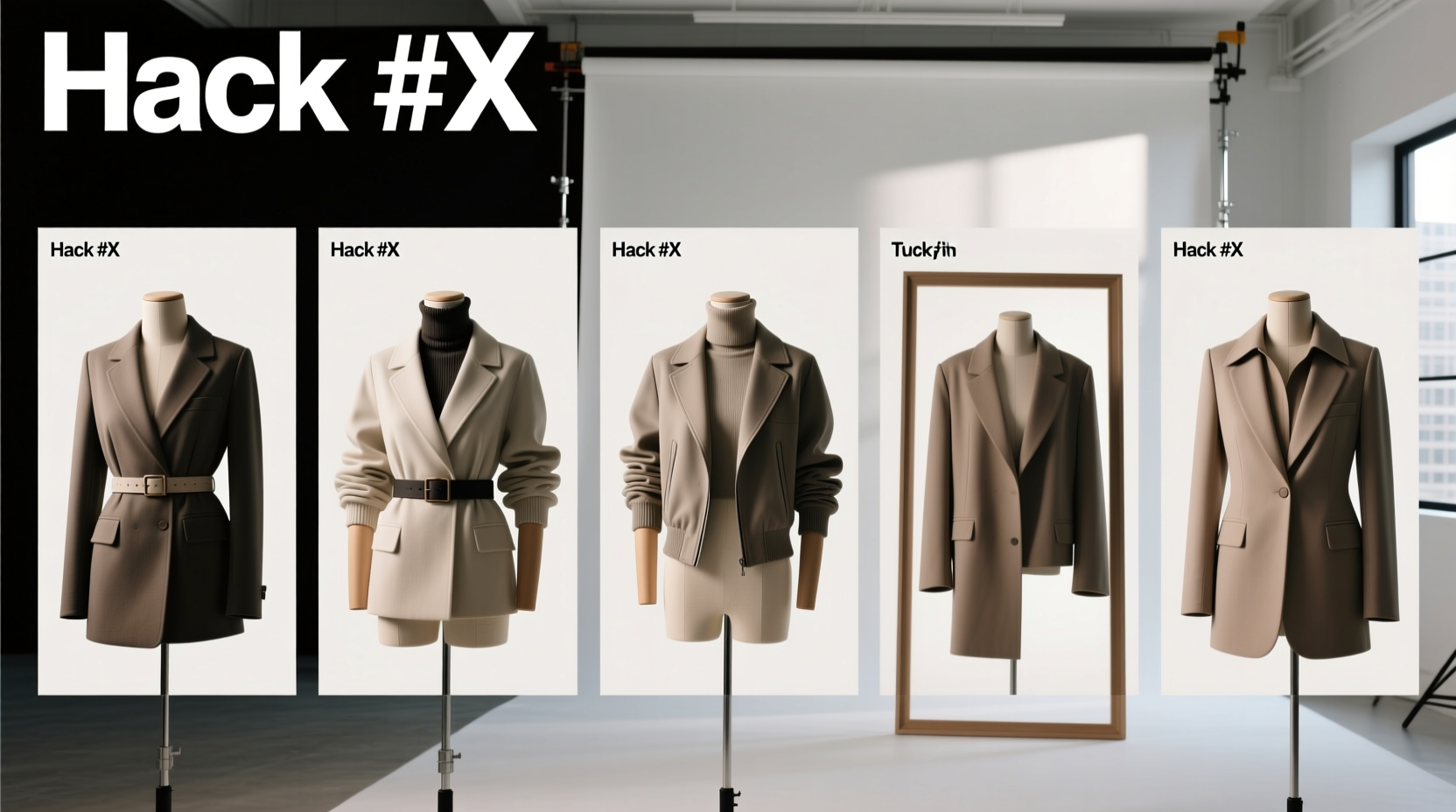
One of the most effective ways to add shape to an otherwise loose or straight-cut jacket is to introduce definition at the narrowest part of your torso. A belt pulls fabric inward, creating a waistline and balancing volume elsewhere.
This technique works especially well with longline blazers, trench coats, wool overcoats, and even oversized shackets. Choose a slim belt in a neutral tone for subtle refinement, or go bold with a statement buckle to anchor the look.
For double-breasted jackets or coats with hidden buttons, fastening only the middle closure and belting over it adds structure without distorting the original design.
2. Roll or Adjust the Sleeves Strategically
The length and fit of sleeves dramatically affect how tailored a jacket appears. Too-long sleeves swallow the hands; too-short ones look sloppy. But with precise rolling, you can correct both issues while adding a touch of intentional style.
Start by unbuttoning the cuff and folding it back once—about 1 to 1.5 inches—for a clean single roll. This exposes the shirt cuff underneath and creates visual interest. For casual jackets like denim or chore coats, two rolls work better, ending just above the wrist bone.
“Sleeve length is one of the first things people notice. A properly rolled cuff signals attention to detail.” — Marcus Tran, Menswear Stylist & Fit Consultant
Avoid bulky, uneven folds. If your jacket has functional button cuffs, consider having them altered later—but until then, rolling gives immediate improvement.
3. Layer with Fitted Inner Pieces
What you wear beneath your jacket influences its overall drape. Baggy T-shirts, thick sweaters, or ill-fitting dress shirts push fabric outward, making even a well-sized jacket appear boxy.
Opt for slim or semi-fitted base layers: a merino wool turtleneck, a tailored oxford shirt, or a lightweight mock-neck top. These keep bulk minimal and allow the jacket to fall smoothly along the body’s contours.
In colder months, use thin thermal layers instead of piling on heavy knits. The goal is warmth without distortion. Think of your jacket as the final sculptural layer—not something fighting against excess volume underneath.
Do’s and Don’ts: Layering for a Cleaner Silhouette
| Do | Don't |
|---|---|
| Wear a slim crewneck under a blazer | Layer multiple thick hoodies under a pea coat |
| Tuck in your shirt to define the waist | Leave long shirts untucked, adding bulk below |
| Use a vest or gilet as mid-layer insulation | Wear oversized flannel shirts that puff at the shoulders |
4. Use Shoulder Pads (or Remove Them)
Shoulder fit defines the foundation of a jacket’s silhouette. Too wide, and it looks borrowed from someone larger; too narrow, and it sags unflatteringly. While permanent padding adjustments require tailoring, temporary solutions exist.
If your jacket’s shoulders droop, insert removable foam shoulder pads available at craft or sewing stores. These slide into the sleeve head and lift the line for a sharper profile. Choose thickness based on fabric weight—light for cotton, medium for wool.
Conversely, if the jacket feels rigid or “square,” removing existing pads can soften the look. Many modern wearers prefer a more natural shoulder line, especially with relaxed tailoring trends. Simply open the small seam inside the shoulder (often hand-stitched), remove the pad, and resew loosely.
5. Master the Art of Tucking and Hemming (Without Sewing)
Even when a jacket fits well across the chest and shoulders, excess length in the body can ruin proportion. Instead of letting it hang like a tent, use strategic tucking to shorten the visual impact.
For casual styles like field jackets or chore coats, fold a small section of the hem up once (about 2–3 inches) and secure discreetly with small safety pins inside the lining. This mimics a cropped silhouette without altering the garment.
Alternatively, pair longer jackets with high-waisted pants or skirts and partially tuck a slim shirt at the front. This draws the eye upward and reduces the lower bulk of the jacket.
Step-by-Step: Create a Clean Temporary Hem
- Put on the jacket and identify where you’d like the new hem to sit (ideally at hip bone level).
- Turn the jacket inside out.
- Fold the excess fabric upward evenly around the circumference.
- Use two small safety pins at side seams to hold the fold in place—hidden from view.
- Adjust until the drape looks balanced from all angles.
6. Add Structure with a Waist-Cinching Top
When wearing open jackets—especially long or A-line styles—the absence of waist definition can flatten your shape. Counteract this by wearing a piece underneath that nips in at the waist.
Examples include corset-style tops, ribbed bodysuits with elastic waists, or cropped vests with buckled sides. Even a fitted knit dress with a built-in belt works. The contrast between the snug midsection and looser outer layer creates dimension.
This method is particularly useful for women’s fashion but applies across genders—anyone seeking more shape can benefit from internal structure beneath a flowing jacket.
Mini Case Study: Transforming an Oversized Denim Jacket
Sophia, a 28-year-old graphic designer, loved her vintage boyfriend-style denim jacket but felt it made her look shapeless. She paired it with high-waisted jeans and added a black ribbed crop top that hugged her waist. By leaving the jacket open and ensuring the crop top was visible, she created contrast. She also rolled the sleeves twice and added a slim silver chain necklace to draw eyes upward. The result? A balanced, intentionally styled look that made the jacket appear part of a curated ensemble rather than an afterthought.
7. Play with Proportions Using Accessories
Accessories don’t just complement an outfit—they can redirect attention and alter perceived proportions. When a jacket lacks perfect fit, use accessories to guide the eye toward your strongest features.
A long pendant necklace elongates the torso, minimizing boxiness. A scarf tied neatly at the collar fills space and adds vertical lines. Belts, again, serve dual purpose: function and focus. Even bag placement matters—a crossbody worn higher on the hip reinforces waist definition.
The key is intentionality. Avoid random accessorizing; instead, choose one focal point—like a belt or necklace—and build around it to create harmony.
Checklist: Quick Fixes for a More Fitted Jacket Look
- ✅ Add a belt to define the waist
- ✅ Roll sleeves to hit just above the wrist
- ✅ Wear slim-fitting layers underneath
- ✅ Align shoulder seams with your natural shoulder edge
- ✅ Temporarily hem too-long jackets with hidden pins
- ✅ Use structured innerwear to shape the silhouette
- ✅ Accessorize to draw eyes to your best proportions
FAQ
Can I use these hacks on any type of jacket?
Absolutely. These techniques apply across materials and styles—from leather moto jackets to wool overcoats and casual windbreakers. The principles of proportion, structure, and layering are universal.
Will rolling my sleeves damage the fabric?
Not if done gently. Avoid forcing stiff fabrics. For delicate materials like silk-blend blazers, opt for slight cuff adjustments instead of full rolls. Cotton, denim, and wool tolerate folding well.
Do I need special tools for temporary hems?
No. Small safety pins or even magnetic clasps (for non-abrasive hold) work. Always place them inside the lining so they’re invisible when worn.
Final Thoughts
Perfect fit doesn’t always come off the rack—but it doesn’t have to. With thoughtful styling, even the most ill-fitting jacket can be refined into a sharp, flattering piece. These seven hacks empower you to take control of silhouette, proportion, and presentation using simple, reversible methods. No sewing machine required, no expense incurred. Just creativity and attention to detail.




 浙公网安备
33010002000092号
浙公网安备
33010002000092号 浙B2-20120091-4
Comments
No comments yet. Why don't you start the discussion?