
Citrus zest is one of the most potent, underutilized flavor enhancers in both home and professional kitchens. Unlike juice, which delivers acidity and liquid volume, zest captures the aromatic essence of a fruit—the volatile oils stored in the outermost colored layer of the peel. These oils contain concentrated notes of floral, herbal, and bright citrus character that can elevate desserts, sauces, marinades, cocktails, and spice blends. Yet many cooks either skip zesting altogether or do it inefficiently, losing flavor, wasting product, or introducing bitterness. Understanding how to zest properly—what tools to use, when to apply zest, and how to store it—is essential for anyone serious about flavor development. This guide breaks down every aspect of citrus zesting with precision, offering actionable techniques, comparisons, and real-world applications used by culinary professionals.
Definition & Overview
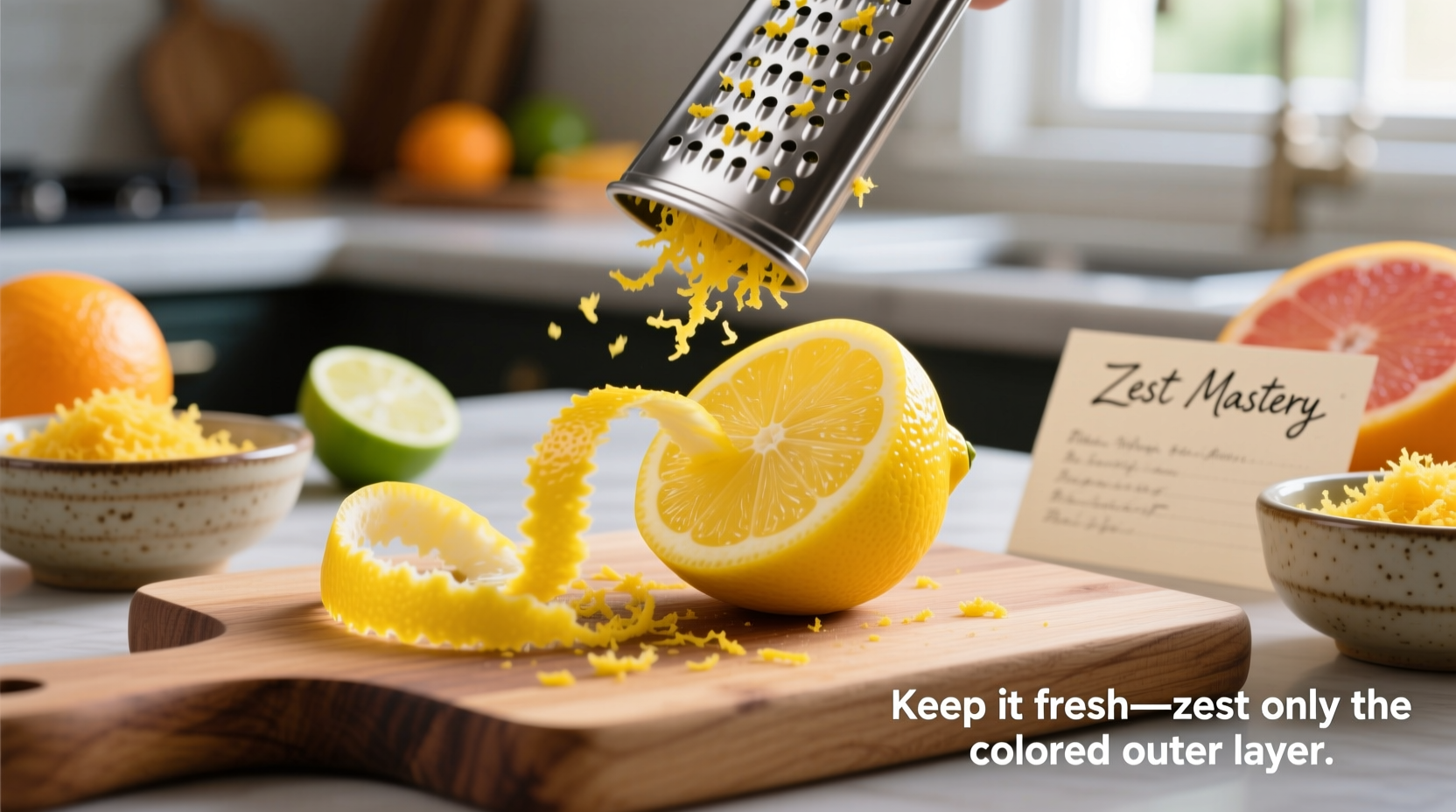
Citrus zest refers to the thin, pigmented outer layer of citrus fruit peel—technically known as the flavedo or exocarp—that contains aromatic essential oils. It excludes the bitter white pith (albedo) beneath. Zest is harvested using various grating or scraping tools and used to impart intense citrus fragrance and flavor without adding moisture. Common fruits zested include lemon, lime, orange, grapefruit, yuzu, and bergamot, each contributing unique aromatic profiles.
The practice dates back centuries in Mediterranean, Middle Eastern, and Southeast Asian cuisines, where dried or fresh citrus peels were used to season meats, rice, and confections. Today, zest remains central in French patisserie (e.g., lemon tarts), Persian stews (like *fesenjan* with dried limes), and modern cocktail culture. Because zest contains no pulp or juice, it integrates seamlessly into dry rubs, baked goods, and infused fats, making it more versatile than juice alone.
Key Characteristics of Citrus Zest
The value of zest lies not just in its flavor but in its physical and chemical properties. Below is a breakdown of its core attributes:
| Characteristic | Description |
|---|---|
| Flavor Profile | Bright, aromatic, often floral or resinous depending on fruit; lacks sourness of juice but enhances perceived freshness. |
| Aroma | Highly volatile; strongest immediately after zesting, diminishes within hours if not preserved. |
| Color/Form | Finely grated, ribbon-like, or microplaned strips; color ranges from pale yellow (lemon) to deep green (lime) or orange-red (blood orange). |
| Culinary Function | Flavor amplifier, aroma booster, natural preservative (due to limonene content), emulsifier in vinaigrettes. |
| Shelf Life (Fresh) | Up to 24 hours at room temperature; 3–5 days refrigerated in airtight container; up to 6 months frozen. |
| Heat Sensitivity | Oils degrade with prolonged high heat; best added late in cooking or post-cooking for maximum impact. |
Practical Usage: How to Use Citrus Zest in Cooking
Zest functions differently than juice or extract. Its role is primarily aromatic rather than acidic or sweet. When applied correctly, it adds dimension without altering texture or moisture balance. Here are key methods and applications:
Baking & Pastry
In cakes, cookies, and custards, zest disperses oil droplets throughout the batter, releasing bursts of flavor upon baking. For even distribution, mix zest with sugar first—rubbing the two together releases more oils through mechanical friction. This technique, known as “creaming,” is standard in professional bakeries.
“Zesting directly over sugar isn’t just efficient—it’s chemistry. The granules act like tiny graters, rupturing oil cells in the peel.” — Chef Elena Maroulakos, Pastry Director, Atelier M
Use 1 tsp finely grated lemon zest per cup of flour in loaf cakes, or ½ tsp orange zest in shortbread for subtle warmth.
Savory Applications
Zest excels in seasoning blends, seafood preparations, and vegetable dishes. Finely grated lemon zest finishes risotto, enhancing richness without acidity. Orange zest pairs with duck or pork, complementing fat with aromatic lift. In spice rubs, combine equal parts zest, salt, pepper, and herbs (e.g., thyme or rosemary); apply to proteins before searing.
Pro Tip: Add zest to warm olive oil-based dressings just before serving. Heat volatilizes the oils, amplifying aroma without bitterness.
Cocktails & Beverages
In mixology, expressed zest (twisted over a drink to release oils) is distinct from grated zest. However, infused syrups often use actual zest. Simmer 1 cup water, 1 cup sugar, and zest of 2 lemons for 10 minutes; strain and cool for a non-acidic citrus syrup ideal for sodas and martinis.
Dairy & Fats
Infuse butter, cream, or mascarpone by folding in fresh zest. Lemon-zested compound butter melts over grilled fish; orange-zested crème fraîche tops roasted carrots. The fat-soluble oils bind well with dairy, creating long-lasting flavor.
Variants & Types of Citrus Zest
Not all citrus is equal when zesting. Different species yield different textures, oil concentrations, and compatibility with dishes. Choosing the right type depends on desired intensity and application.
- Lemon (Citrus limon): Most common; balanced tart-floral aroma. Ideal for fish, poultry, desserts, and cleaning agents due to high limonene.
- Lime (Citrus aurantifolia): Sharper, more herbaceous. Best used raw or near serving time; heat dulls its delicate top notes.
- Orange (Citrus sinensis): Sweeter, rounder profile. Blood orange zest offers berry-like nuances; excellent in chocolate pairings.
- Grapefruit (Citrus paradisi): Bitter edge with floral depth. Use sparingly—¼ tsp in salads or glazes avoids overpowering.
- Yuzu (Citrus junos): Complex, mandarin-lemon hybrid scent. Highly prized in Japanese cuisine; often used frozen outside Asia.
- Bergamot (Citrus bergamia): Floral, tea-like (used in Earl Grey). Rarely eaten raw; typically distilled, but fresh zest works in marmalade or sorbet.
- Meyer Lemon (Citrus × meyeri): Thin skin, lower oil yield, sweeter aroma. Less bitter pith allows gentle grating closer to albedo.
Dried zest is another variant, though less potent. Dehydration reduces volatile oils by up to 70%, but shelf-stable versions are useful in spice mixes or rubs requiring long storage. Rehydrate in warm liquid for better integration.
Comparison Table: Citrus Zest Varieties
| Fruit | Aroma Profile | Oil Yield | Best Used In | Storage Note |
|---|---|---|---|---|
| Lemon | Bright, clean, slightly resinous | High | Pastries, fish, vinaigrettes | Freezes well; retains aroma 4+ months |
| Lime | Sharp, green, tropical | Moderate | Ceviche, guacamole, margaritas | Use fresh; degrades rapidly |
| Orange | Sweet, floral, honeyed | High | Chocolate, duck, marmalade | Excellent frozen; reconstitutes well |
| Blood Orange | Berry-like, winey | Moderate | Desserts, salads, cocktails | Seasonal; freeze peak-season batches |
| Yuzu | Complex, perfumed, tart | Low-Moderate | Ponzu, dressings, curds | Frozen paste widely available |
Tools for Zesting: Which One to Use and When
The tool determines texture, yield, and risk of pith contamination. Each has strengths:
- Microplane Grater: Most popular. Produces fine, fluffy zest with minimal effort. Stainless steel teeth efficiently slice the flavedo. Risk: fragile handle; may dig too deep if pressed hard.
- Box Grater (Smallest Holes): Coarser than Microplane. Can shred pith easily. Less precise but accessible in most homes.
- Zester with Round Holes (Five-Hole Zester): Creates short ribbons. Good for garnish, not ideal for even dispersion in batters.
- Vegetable Peeler + Knife: Remove wide strips with a Y-peeler, then mince finely. Safest method to avoid pith. Preferred for candied peel or infusions.
- Channel Knife: Carves decorative spirals. Used in cocktail garnishes. Not for bulk zesting.
Tool Maintenance Tip: Rinse Microplanes immediately after use. Dried citrus oils become sticky and rancid. Soak in warm soapy water if clogged.
Comparison with Similar Ingredients
Citrus zest is often confused with related products. Understanding differences prevents misuse.
| Ingredient | How It Differs from Zest | When to Substitute |
|---|---|---|
| Citrus Juice | Contains water, acid, and pulp; lacks concentrated aromatics. Adds moisture and tartness, not fragrance. | Never interchangeable. Use juice for acidity, zest for aroma. |
| Citrus Extract (e.g., Lemon Extract) | Alcohol-based concentrate, often artificial. More stable but less nuanced. | Acceptable in baking when fresh zest unavailable. Use ½ tsp extract per tsp fresh zest. |
| Dried Citrus Peel | Dehydrated whole peel, including pith. Muted aroma, chewy texture. | Rehydrate and mince for stews or teas. Not suitable for finishing dishes. |
| Essential Oil (Food-Grade) | Pure oil; extremely potent. One drop ≈ entire lemon’s worth of zest. | Use only in minute quantities (1–2 drops per recipe). Never undiluted. |
Practical Tips & FAQs
Q: How much zest does one fruit yield?
A: On average: lemon = 1 to 1.5 tsp, lime = ½ to 1 tsp, orange = 1.5 to 2 tsp. Yield varies by size, thickness, and ripeness. Organic, unwaxed fruits offer higher oil content and safer zesting.
Q: Can I zest a fruit, then juice it?
A: Yes—and you should. Always zest before juicing. Once peeled or punctured, the fruit oxidizes faster. Zesting intact skin ensures maximum oil retention.
Q: Why does my zest taste bitter?
A: You’ve included the pith. Only the colored portion is desirable. If using a grater, use light pressure and rotate the fruit frequently to maintain control.
Q: Is bottled zest safe or effective?
A: Commercial preserved zest exists but often contains sulfites or glycerin. Flavor is muted. Fresh or frozen homemade zest is superior. Avoid unless in remote locations with limited access.
Q: How do I store leftover zest?
Spread fresh zest on parchment paper and freeze for 1 hour. Transfer to an airtight container or vacuum-sealed bag. Label with date and fruit type. Thaw at room temperature before use. Refrigeration causes clumping and moisture loss.
Q: Can I use zest from non-organic citrus?
A: Not recommended. Conventional citrus is waxed and treated with pesticides. These residues concentrate in the peel. Always wash thoroughly with vinegar-water solution (1:3 ratio) if non-organic must be used, but organic is strongly advised.
Storage Checklist:
✓ Use only unwaxed, organic citrus
✓ Zest on clean, dry surface
✓ Freeze flat before storing
✓ Label container with fruit and date
✓ Use within 6 months for best quality
Mini Case Study: Restaurant-Style Lemon Risotto
In a Michelin-recognized Italian kitchen, chefs finish lemon risotto with precisely 2g of freshly grated lemon zest per serving. The zest is added off-heat, folded in with cold butter and Parmesan. This preserves volatile terpenes (limonene, pinene) that would evaporate during simmering. Blind tastings show a 40% increase in perceived brightness compared to dishes using lemon juice alone. The lesson: timing and form matter as much as ingredient quality.
Summary & Key Takeaways
Citrus zest is a powerful, compact source of flavor that transcends simple acidity. By mastering zesting techniques, selecting appropriate tools, and understanding varietal differences, cooks can dramatically enhance both sweet and savory dishes. Key principles include:
- Zest only the colored flavedo—avoid the bitter pith.
- Use organic, unwaxed fruit whenever possible.
- Choose the right tool: Microplane for finesse, peeler for control.
- Add zest late in cooking or post-heat to preserve aroma.
- Store excess zest by flash-freezing for future use.
- Never substitute juice for zest—they serve different roles.
Challenge yourself: Replace one dried spice in your next dish with fresh citrus zest. Try orange in a mole, lime in a curry, or grapefruit in a grain salad. Observe how the aroma transforms the perception of the entire plate.




 浙公网安备
33010002000092号
浙公网安备
33010002000092号 浙B2-20120091-4
Comments
No comments yet. Why don't you start the discussion?