
Introduced with iOS 17, Apple’s Check In feature is a thoughtful addition to personal safety tools. Designed to keep friends and family informed about your well-being during or after trips, Check In leverages location, time, and device status to automatically notify trusted contacts if something goes wrong. Whether you’re walking home late at night, hiking in remote areas, or simply want peace of mind during everyday outings, this feature bridges communication gaps without constant texting.
Unlike traditional check-in messages that rely on manual follow-ups, Check In operates intelligently—only reaching out if you don’t arrive as expected or fail to confirm your safety. It respects privacy while offering meaningful reassurance, making it one of the most practical safety tools available on modern smartphones.
How Check In Works: The Technology Behind the Feature
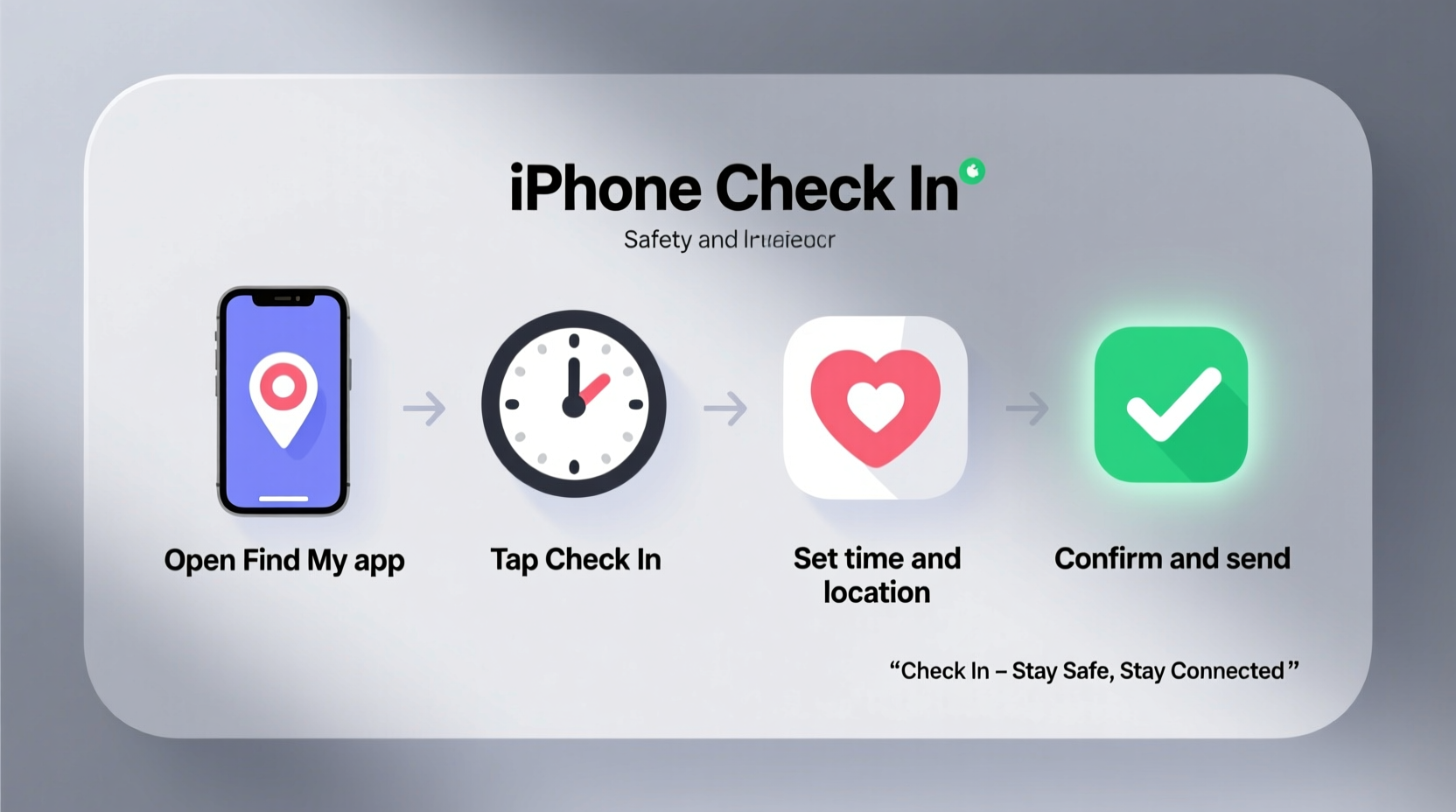
Check In functions by combining several elements of your iPhone’s capabilities: GPS location, cellular connectivity, motion sensors, and end-to-end encryption. When activated, it shares your status with selected contacts based on predefined conditions such as arrival time, battery level, or lack of interaction with the device.
Here’s what triggers a notification to your contact:
- You don’t reach your destination within the expected timeframe.
- Your iPhone’s battery dies before you confirm arrival.
- You disconnect from Wi-Fi or cellular service and remain offline past the estimated arrival window.
- You manually cancel the check-in without confirming safety.
The system sends a gentle reminder first. If there’s still no response, it automatically shares your last known location, route, and details about your phone (e.g., model, carrier) with your chosen contact—unless you disable data sharing preferences.
“Features like Check In represent a shift toward proactive digital safety. They empower users to stay connected without compromising autonomy.” — Dr. Lena Patel, Digital Wellness Researcher at Stanford University
Setting Up Check In: A Step-by-Step Guide
Activating Check In is simple and built directly into the Messages app. Follow these steps to enable it before your next trip:
- Open the Messages app and start a new conversation or select an existing one with someone you trust.
- Type a message indicating you’re heading somewhere, such as “I’m on my way home” or “Leaving the office now.”
- Tap the Apps button (the square icon with an arrow) below the text field.
- Select the Check In app (it looks like a location pin inside a circle).
- Choose whether to share until arrival, for a set duration, or indefinitely.
- Confirm by tapping Send.
Once sent, your contact receives a preview of the message along with an interactive prompt. Your iPhone then begins monitoring your journey in the background.
When to Use Check In: Practical Scenarios
While Check In is useful in emergencies, its real strength lies in everyday reliability. Consider these common situations where enabling Check In adds value:
| Situation | Why Use Check In? |
|---|---|
| Walking alone at night | Automatically alerts someone if you don’t arrive safely, especially helpful in low-signal areas. |
| Hiking or outdoor adventures | Shares location if battery dies or trail takes longer than expected. |
| Traveling to unfamiliar cities | Gives family peace of mind when navigating public transit or rideshares. |
| Post-medical appointments | Ensures someone knows you’ve returned safely, particularly after sedation or stress. |
| Dating or meeting new people | Provides discreet safety coverage without awkward explanations. |
Mini Case Study: Sarah’s Late-Night Commute
Sarah works late at a downtown design studio and often walks 15 minutes to her apartment. One evening, her phone battery dropped to 5% during her commute. She hadn’t charged it fully and lost signal near a subway tunnel. Because she had used Check In in her Messages thread with her sister, the system detected she hadn’t arrived and triggered an alert.
Her sister received a notification with Sarah’s last known location, route, and iPhone details. She called the building security, who found Sarah nearby, slightly disoriented but safe. Thanks to the precise location data, help arrived quickly. Sarah now uses Check In every night without fail.
Privacy and Control: Managing What You Share
Apple emphasizes user control and encryption across all safety features. With Check In, you decide exactly what information is shared and with whom. Importantly, location data is not stored on Apple servers—it remains between you and your contact.
To adjust your settings:
- Go to Settings > Privacy & Security > Safety Check.
- Review which contacts can receive Check In notifications.
- Disable automatic sharing of iPhone details if desired.
You can also stop a Check In session at any time by opening the Messages thread and tapping “Stop Sharing.” This immediately ends monitoring and notifies your contact that everything is fine.
“Safety tools should enhance freedom, not create dependency. Check In strikes the right balance between awareness and autonomy.” — Mark Chen, Senior UX Designer at a leading mobile security firm
Best Practices and Common Mistakes
To get the most out of Check In, avoid these pitfalls and adopt these habits:
Do’s and Don’ts of Using Check In
| Do | Don’t |
|---|---|
| Use it consistently for solo trips | Rely on it as your only safety measure |
| Pick contacts who are responsive and trustworthy | Enable it with someone who might panic unnecessarily |
| Test it once with a friend to understand the flow | Forget to charge your phone before activating it |
| Combine it with other safety apps or routines | Assume it works perfectly in zero-service zones |
Frequently Asked Questions
Does Check In work without Wi-Fi or cellular service?
No, Check In requires network connectivity to function. If your phone loses service and doesn’t reconnect before the timer expires, the system will assume you haven’t arrived and send your last known location—provided the device was online long enough to establish one.
Can I schedule a Check In in advance?
Not natively. Check In must be initiated manually through Messages. However, you can set calendar reminders to activate it before regular commutes or events.
Is Check In available on older iPhones?
Check In requires iOS 17 or later. It works on iPhone XS and newer models. Devices running earlier versions of iOS do not support this feature.
Conclusion: Make Safety Seamless
The Check In feature transforms how we think about personal safety in the digital age. Instead of relying on awkward texts or worrying calls, it offers a quiet, intelligent way to stay connected. By automating routine check-ins and responding only when necessary, it reduces anxiety for both you and your loved ones.
Integrating Check In into your daily routine takes seconds but could make a critical difference in moments of need. Whether you're commuting, traveling, or stepping into uncertain situations, let technology quietly watch your back.




 浙公网安备
33010002000092号
浙公网安备
33010002000092号 浙B2-20120091-4
Comments
No comments yet. Why don't you start the discussion?