
Walking into a local soup shop is more than just grabbing a meal—it’s stepping into a culinary tradition shaped by community, seasonality, and craftsmanship. Unlike chain restaurants or fast-casual concepts, neighborhood soup kitchens and independent soup shops prioritize fresh ingredients, daily preparation, and regional flavors passed down through generations. For food lovers and home cooks alike, understanding this ecosystem unlocks not only better meals but deeper insight into how food connects people. Whether you're seeking comfort on a cold day, exploring cultural cuisine, or looking to refine your own cooking with restaurant-inspired techniques, the local soup shop offers an accessible gateway to authentic flavor and technique.
These establishments—often modest in size and unassuming in appearance—are frequently run by families or chefs who treat soup not as a side dish but as a centerpiece. Their menus shift with the seasons, respond to ingredient availability, and reflect personal or regional heritage. From Vietnamese pho joints to New England clam chowder counters, West African groundnut stews to Eastern European borscht bars, the diversity within this niche is vast. What ties them together is a shared commitment to slow-simmered broths, layered seasoning, and service that values warmth as much as taste.
Definition & Overview
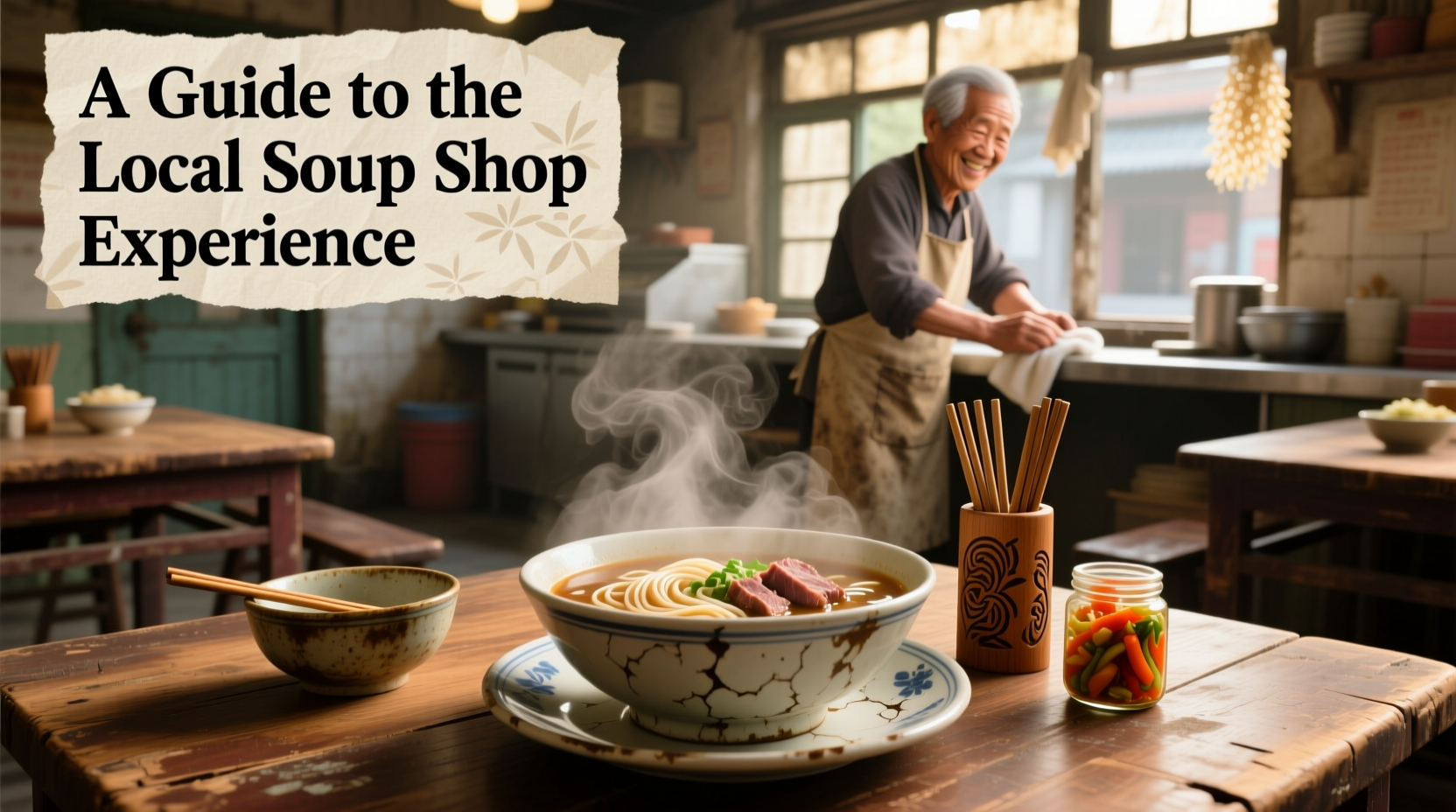
A local soup shop is an independent eatery specializing in soups as the primary offering, typically prepared fresh daily using whole ingredients and traditional methods. These businesses may operate as standalone storefronts, market stalls, café counters, or part of a larger deli or sandwich operation. While some offer a rotating seasonal menu, others focus on one signature preparation executed with precision and consistency.
Soups served in these environments generally fall into two broad categories: clear-broth based (such as consommé, miso, or chicken noodle) and thick/stewed preparations (like gumbo, lentil stew, or cream-based bisques). The defining feature of a quality local soup shop is its reliance on time-intensive processes—bone broths simmered for 12 to 24 hours, vegetables roasted before puréeing, spices toasted and bloomed in fat—that elevate simple ingredients into deeply satisfying dishes.
Geographically, soup shops thrive in climates where cooler temperatures make warm meals desirable for much of the year, but they also flourish in urban centers with diverse immigrant populations who bring regional soup traditions—from Korean seolleongtang to Turkish tarhana çorbası—with them. Increasingly, health-conscious consumers are drawn to these venues for their low-processed, nutrient-dense options, especially when gluten-free, vegetarian, or allergen-aware preparations are available.
Key Characteristics
What sets the local soup shop apart from other dining experiences? Several core attributes define the model:
- Broth Quality: Richness, clarity, and depth of flavor indicate proper extraction techniques; gelatinous texture when cooled suggests long simmering of collagen-rich bones.
- Ingredient Freshness: Vegetables are rarely pre-cut or frozen; herbs are often added at the end for brightness.
- Menu Rotation: Daily specials reflect seasonal produce—think squash in autumn, asparagus in spring, tomato in summer.
- Cultural Authenticity: Many shops specialize in a specific national or regional style, preserving traditional recipes and serving customs.
- Speed & Simplicity: Despite complexity behind the scenes, service is usually quick—ideal for lunch breaks or light dinners.
- Customization: Common options include spice level adjustments, protein add-ons, dietary substitutions (e.g., coconut milk instead of dairy), and condiment bars.
| Attribute | Description | Why It Matters |
|---|---|---|
| Broth Depth | Layered umami, balanced salt, no artificial enhancers | Indicates skilled technique and ingredient synergy |
| Seasonal Ingredients | Fresh, locally sourced vegetables and proteins | Enhances flavor and supports sustainability |
| Handcrafted Preparation | No canned bases or powdered mixes used | Promotes superior mouthfeel and aroma |
| Dietary Flexibility | Gluten-free, vegan, low-sodium options clearly labeled | Accommodates modern eating needs without compromise |
| Portion Efficiency | Balanced size—substantial but not excessive | Reduces waste and aligns with mindful consumption |
Practical Usage: How to Navigate the Soup Shop
Entering a local soup shop can be intimidating if you’re unfamiliar with the format. Unlike full-service restaurants, many operate on a counter-order system with limited seating. Knowing how to approach the experience ensures you get the best possible meal.
- Observe the Menu Board: Look beyond the listed names. Note descriptors like “slow-simmered,” “house-made broth,” or “grass-fed beef.” These signal care in preparation.
- Ask About the Special: If there’s a daily special not featured prominently, inquire. It often uses peak-season ingredients and may not appear on digital menus.
- Consider Pairings: Most soup shops offer sides—crusty bread, rice, pickles, or salads. A slice of sourdough or bowl of jasmine rice can transform a light soup into a complete meal.
- Use Condiments Strategically: Many shops provide chili oil, lime wedges, fish sauce, or fresh herbs. Add gradually to enhance, not overwhelm, the original flavor profile.
- Take Notes for Home Cooking: Pay attention to ingredient combinations. A well-balanced Thai coconut curry soup, for example, teaches how galangal, lemongrass, kaffir lime, and palm sugar interact—a lesson easily adapted to your kitchen.
Pro Tip: Visit later in the afternoon if possible. By then, the morning rush has passed, and staff may have more time to explain ingredients or offer samples. Additionally, broths have had longer to develop flavor after hours of simmering.
For culinary enthusiasts, treating the soup shop as a learning lab is invaluable. Watch how servers layer ingredients—noodles on the bottom, hot broth poured last to preserve texture. Notice plating details: a swirl of herb oil, a sprinkle of crispy shallots, or a single sprig of cilantro placed deliberately. These touches are replicable at home and elevate even simple preparations.
Variants & Types of Local Soup Shops
Not all soup shops are created equal. They vary widely by specialization, scale, and cultural focus. Understanding the types helps set expectations and guides selection based on your goals—comfort, exploration, nutrition, or convenience.
1. Regional Specialty Shops
These focus on one national or ethnic soup tradition. Examples include ramen-ya in Japanese neighborhoods, matzo ball soup counters in Jewish delis, or pozole vendors in Mexican communities. The narrow scope allows mastery of technique and authenticity of flavor. Diners benefit from deep expertise—knowing exactly how long pork should simmer for menudo or what type of seaweed gives miso its briny finish.
2. Seasonal Farm-to-Table Kitchens
Found in farmers’ markets or upscale urban districts, these emphasize hyper-local sourcing. Menus change weekly based on harvests. A late-summer tomato-and-basil gazpacho might give way to a roasted cauliflower and turmeric soup in October. These shops appeal to health-focused diners and those interested in sustainable agriculture.
3. Hybrid Soup-and-Sandwich Concepts
Common in business districts, these combine hearty soups with artisanal sandwiches. Think clam chowder with a grilled sourdough crab melt or French onion soup paired with a baguette half. Portion sizes tend to be larger, and pricing reflects a full lunch offering.
4. Health-Focused Clean-Eating Outlets
Marketed toward wellness audiences, these shops highlight nutritional data, organic certification, and functional ingredients like turmeric, ginger, or bone broth touted for gut health. While convenient, scrutinize labels—some use stock powders or added sugars despite “clean” claims.
5. Mobile or Pop-Up Soup Vendors
Operating from food trucks or weekend markets, these offer flexibility and experimentation. Chefs test new recipes here before opening brick-and-mortar locations. Ideal for adventurous eaters wanting to try fusion concepts like jerk-spiced pumpkin soup or miso-peanut butter ramen.
| Type | Best For | Price Range | Home-Cook Takeaway |
|---|---|---|---|
| Regional Specialty | Cultural authenticity, technique study | $$ | Learn spice blends, broth methods |
| Farm-to-Table | Seasonal cooking inspiration | $$$ | Adapt recipes to local produce |
| Soup-and-Sandwich | Full meal, office workers | $–$$ | Pair textures and temperatures |
| Wellness-Oriented | Nutritional balance, dietary needs | $$ | Incorporate anti-inflammatory ingredients |
| Mobile/Pop-Up | Innovation, limited-time flavors | $–$$ | Experiment with bold combinations |
Comparison with Similar Dining Experiences
The local soup shop is sometimes confused with other casual dining formats. Clarifying distinctions helps identify where true value lies.
- Fast-Casual Chains (e.g., Panera Bread): While convenient, most chain soups rely on centralized production, preservatives, and standardized formulas. Flavor is consistent but lacks nuance. Local shops win on freshness and uniqueness.
- Deli Counters: Some grocery stores offer fresh soup, but volume demands often lead to batch cooking and reheating. Local shops typically prepare smaller batches throughout the day.
- Asian Noodle Houses: Though they serve soups, their focus is broader—entrees, rice bowls, appetizers. Soup shops center the broth as the star, allowing greater refinement.
- Meal Prep Services: Delivered soups may be healthy but are often frozen, compromising texture. Local shops serve immediately, preserving integrity of ingredients.
“A great soup doesn’t shout—it resonates. You taste it once and remember the balance, the warmth, the way it settles in your chest. That only happens when someone cares enough to stir the pot every hour.” — Maria Tran, chef and owner of Saigon Spoon, Portland, OR
Practical Tips & FAQs
How do I know if a soup shop uses homemade broth?
Ask directly. Reputable shops will proudly confirm it. Visual cues include slight cloudiness (from emulsified fat in bone broth), gel-like consistency when cool, and absence of excessive foam or artificial sheen.
Can I buy soup in bulk for home freezing?
Many local shops offer quarts or gallons for take-home use. Freeze in portion-sized containers, leaving space for expansion. Thaw overnight in the fridge and reheat gently to preserve texture—especially important for dairy-based or pureed soups.
Are vegetarian soups at local shops truly meat-free?
Not always. Some use chicken or fish stock as a base even for vegetable-labeled soups. Always ask about the broth source if strict dietary adherence is required.
What’s the best way to reheat takeout soup?
On the stove over medium-low heat, stirring occasionally. Avoid boiling vigorously, which can break down delicate ingredients like tofu or noodles. Microwaving is acceptable but riskier—use short intervals and stir frequently.
How long does fresh soup last in the refrigerator?
Typically 3–4 days. Cream-based and seafood soups spoil faster (2–3 days); acidic soups like tomato or lentil may last up to 5 days. When in doubt, smell and inspect—discard if there’s off odor, mold, or separation that doesn’t reincorporate upon stirring.
Can I substitute ingredients when recreating soup shop recipes at home?
Yes, but understand the role of each component. For example, fish sauce adds umami—not just saltiness—so substituting soy sauce changes flavor depth. Use coconut aminos for a closer match in vegan versions. Similarly, ghee can replace butter in dairy-free applications while maintaining richness.
Storage Checklist:
✔ Cool soup quickly (within 2 hours of cooking)
✔ Store in airtight glass or BPA-free plastic containers
✔ Label with date and contents
✔ Keep fridge at or below 40°F (4°C)
✔ Reheat to internal temperature of 165°F (74°C)
Summary & Key Takeaways
The local soup shop represents a vital thread in the fabric of community dining—one that values craft, seasonality, and nourishment over speed and scalability. By choosing these small businesses, consumers support sustainable practices, cultural preservation, and culinary innovation.
From a practical standpoint, engaging with a soup shop goes beyond eating. It provides real-world lessons in broth development, ingredient pairing, and efficient kitchen workflow—all transferable skills for home cooks aiming to improve their repertoire. Observing how professionals layer flavors, manage consistency, and present dishes offers more education than any cookbook alone.
To get the most from the experience:
- Visit regularly to observe seasonal shifts and build rapport with staff.
- Take notes on ingredients and techniques to adapt at home.
- Support shops that disclose sourcing and preparation methods transparently.
- Encourage others to explore local options—word-of-mouth sustains these businesses.
Final Thought: The next time you pass a small storefront with steam rising from its windows and the scent of simmering onions in the air, step inside. Order a bowl. Taste the effort. Remember the flavor. Then bring that inspiration back to your own kitchen—because great cooking begins not just with ingredients, but with experience.




 浙公网安备
33010002000092号
浙公网安备
33010002000092号 浙B2-20120091-4
Comments
No comments yet. Why don't you start the discussion?