
Water resistance is one of the most misunderstood features in wristwatches. Many owners assume their timepiece can handle swimming or showering because it’s labeled “water resistant,” only to discover later that moisture has seeped inside, fogging the crystal or corroding internal components. While professional pressure testing remains the gold standard, there are practical, low-risk methods you can use at home to assess potential issues and determine whether your watch needs servicing. This guide walks through safe, effective techniques, what the ratings actually mean, and how to interpret signs of failure before irreversible damage occurs.
Understanding Water Resistance Ratings
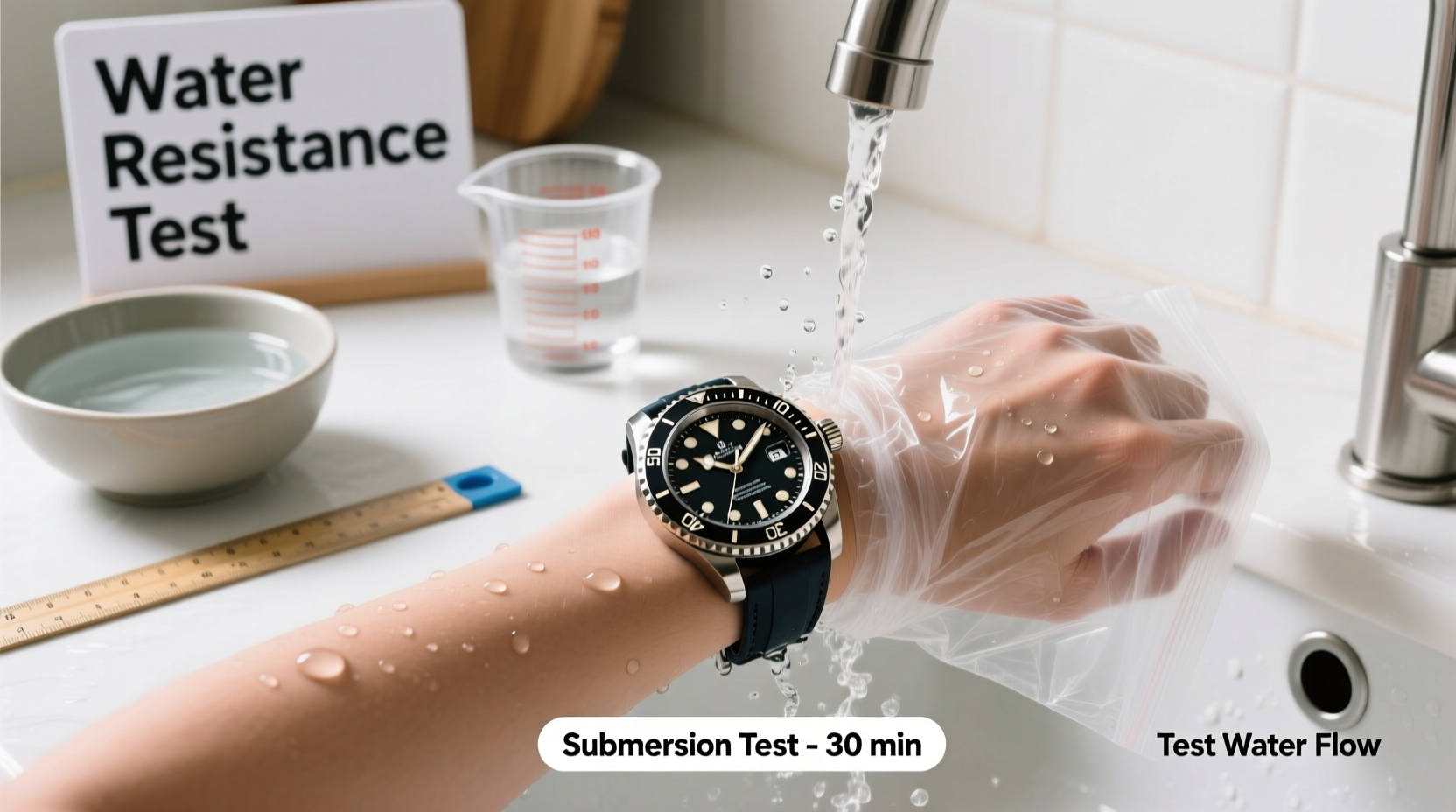
Before attempting any test, it’s essential to understand what water resistance labels signify. These ratings—typically marked in meters (30m, 50m, 100m, etc.)—do not indicate the depth at which a watch can be safely used. Instead, they reflect laboratory-tested static pressure levels under controlled conditions. Real-world activities like diving, jumping into water, or even turning a faucet create dynamic pressure far exceeding these values.
| Rating | Meaning | Suitable For |
|---|---|---|
| 30 meters | Resists splashes and rain | Daily wear, handwashing |
| 50 meters | Withstands brief immersion | Swimming (non-snorkeling) |
| 100 meters | Safe for recreational swimming | Snorkeling, pool use |
| 200+ meters | Designed for scuba diving | Professional diving |
A 30-meter rating does not make a watch suitable for swimming. Most manufacturers consider anything below 100 meters unfit for submersion beyond accidental exposure. Over time, gaskets degrade, crowns loosen, and case backs warp slightly, reducing effectiveness—even if the original rating was high.
“Water resistance isn’t permanent. Seals degrade with age, temperature changes, and mechanical stress. Annual inspection is critical for dive watches.” — Daniel Reyes, Watchmaker & Horology Instructor
Step-by-Step: How to Conduct a Condensation Test at Home
The condensation test is the safest way to detect existing moisture ingress without applying external pressure. It leverages thermal differences to reveal compromised seals.
- Cool the watch: Place it in a sealed plastic bag and leave it in the refrigerator for 15–20 minutes. This ensures the internal temperature drops evenly.
- Prepare warm water: Fill a bowl with lukewarm water (around 30–40°C / 86–104°F). Do not use hot water, as extreme heat may further stress weakened seals.
- Submerge briefly: Remove the watch from the fridge, take it out of the bag, and immediately dip it into the water for no more than 30 seconds. Keep the crown fully pushed in.
- Inspect for fogging: Pull the watch out and examine the crystal within seconds. If fog appears on the inside surface, moisture has entered the case.
- Dry thoroughly: Wipe the watch completely with a soft cloth and let it air-dry in a warm, dry place for several hours.
This method detects current breaches but won’t predict future failures. Fogging means immediate service is required. No fog doesn’t guarantee full water resistance—it only confirms no active leak exists at this moment.
Pressure Simulation Using Vacuum Methods (Advanced)
For those seeking a more diagnostic approach, a rudimentary pressure differential test can simulate real-world stress. This requires a vacuum chamber and a hygrometer (humidity sensor), tools some enthusiasts keep for maintaining vintage pieces.
- Place the watch inside the chamber with a small digital hygrometer.
- Seal and slowly evacuate air to about 0.5 atm (equivalent to ~5 meters of depth).
- Observe humidity readings over 5 minutes. A sudden rise indicates air (and potentially moisture) entering the case.
- Release vacuum slowly and inspect the crystal again for fogging.
This technique mimics negative pressure scenarios—like when removing a watch underwater—which can draw water past failing gaskets. However, it should only be attempted by users familiar with vacuum equipment. Incorrect use risks collapsing crystals or damaging movements.
Do’s and Don’ts of Home Testing
To avoid accidental damage while evaluating water resistance, follow these guidelines:
| Do’s | Don’ts |
|---|---|
| Check crown position before any water exposure | Test a watch with a loose or damaged crown |
| Use lukewarm water, never hot or icy | Expose chronographs to water while buttons are pressed |
| Dry the watch thoroughly after testing | Assume stainless steel = waterproof |
| Log test dates and results annually | Submerge vintage watches unless recently serviced |
Remember: home tests are indicators, not certifications. They help identify obvious problems but cannot replicate ISO 22810 or ISO 6425 standards used by professionals.
Real Example: The Weekend Diver That Failed Quietly
Mark, an avid snorkeler, owned a 200-meter rated dive watch he’d worn for three years without servicing. He assumed the rating meant long-term reliability. After noticing slight fogging post-swim, he conducted a condensation test at home. Despite passing initially, he placed the watch in a sealed container with damp paper towel and left it overnight. The next morning, a tiny droplet appeared beneath the crystal. A local watchmaker confirmed degraded case back and crown seals. The movement hadn’t been damaged—yet—but repair cost $180. Mark now schedules annual pressure checks and logs every water exposure.
This case illustrates how silent degradation occurs. Without proactive testing, failure often strikes during actual use, risking both function and sentimental value.
Frequently Asked Questions
Can I test my watch’s water resistance without getting it wet?
Yes. Non-invasive options include using a helium leak detector (rare for home use) or placing the watch in a sealed container with silica gel and monitoring for moisture absorption over days. However, these lack sensitivity. The most accessible dry method is visual inspection: check for cracked crystals, recessed crowns, or visible gasket wear around the case back.
How often should I have my watch professionally tested?
Every 1–2 years for regular wear; annually if frequently exposed to water. Gaskets degrade faster with exposure to chlorine, salt, soap, and temperature swings. Even unworn watches lose seal integrity over time due to material aging.
Why did my watch pass a home test but fail later?
Home tests apply limited stress. A watch might resist brief immersion but fail under prolonged exposure, button actuation underwater, or rapid pressure changes (e.g., diving headfirst into a pool). True water resistance involves multiple factors: crown seals, case back integrity, crystal adhesion, and pusher gaskets (for chronographs).
Maintenance Checklist for Long-Term Water Resistance
Follow this checklist to preserve and monitor your watch’s ability to withstand moisture:
- ✅ Ensure the crown is fully screwed down (if applicable) before any water contact
- ✅ Rinse with fresh water after swimming in salt or chlorinated pools
- ✅ Avoid adjusting the time or date underwater
- ✅ Inspect gaskets annually for brittleness or deformation
- ✅ Record last pressure test date and re-test schedule
- ✅ Store in a cool, dry environment away from chemicals
- ✅ Never expose leather straps to prolonged moisture
Final Thoughts: Prevention Beats Repair
Testing your watch’s water resistance at home isn’t about replacing professional service—it’s about staying ahead of invisible threats. Small lapses in maintenance can lead to costly repairs or irreversible damage to irreplaceable timepieces. By combining periodic home assessments with disciplined care habits, you extend not just functionality but legacy. Whether it’s a vintage heirloom or a modern diver, every watch deserves respect for its engineering and craftsmanship.
Start today: pull out your timepiece, verify the crown, and perform a quick visual inspection. If it sees regular water exposure, schedule a professional test within the next six months. Your future self—and your watch—will thank you.




 浙公网安备
33010002000092号
浙公网安备
33010002000092号 浙B2-20120091-4
Comments
No comments yet. Why don't you start the discussion?