
Many watch owners assume that a \"50m water resistant\" rating means their timepiece can withstand swimming or snorkeling. In reality, this designation only indicates the watch can endure static pressure equivalent to 50 meters of depth under controlled conditions—not dynamic movement, temperature shifts, or aging seals. Over time, gaskets degrade, crowns loosen, and impacts compromise integrity, making even a brand-new-looking watch vulnerable to moisture damage.
Professional pressure testing is the gold standard for verifying water resistance, but not everyone has access to a watchmaker’s lab. This guide provides a realistic, at-home approach to assess whether your watch likely maintains its 50m rating—using observable signs, environmental responses, and cautious experimentation—all without risking irreversible damage.
Understanding What 50m Water Resistance Actually Means
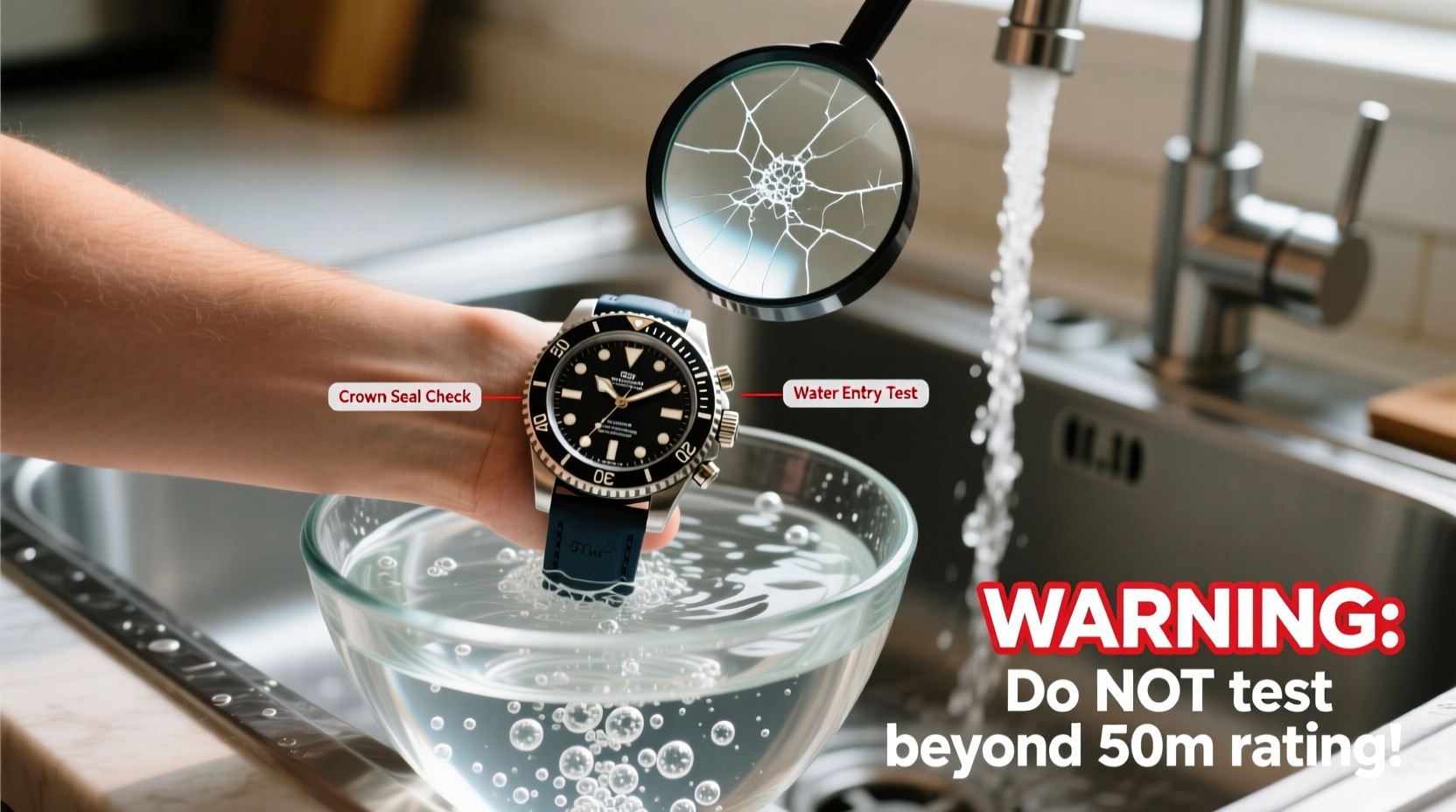
The term “50 meters water resistant” is often misunderstood. It does not mean the watch is suitable for diving to 50 meters. Instead, it refers to the result of a factory test conducted under static, non-moving conditions with no thermal variation. According to ISO 22810 standards, a 50m-rated watch must survive:
- 10 minutes under 5 bar (approximately 50m) of static pressure
- Repeated immersion in 10cm of water
- Temperature changes between 40°C and 5°C
- Resistance to condensation after rapid cooling
In daily use, activities like jumping into a pool, showering, or even handwashing create dynamic pressure far exceeding static ratings. A splash may exert momentary force equivalent to 30 meters or more. Therefore, knowing whether your watch still meets its original specs is crucial—even if you never plan to submerge it.
“Water resistance isn’t permanent. Seals wear out, crowns get bumped, and temperature cycles fatigue materials. A watch rated for 50m today might only be safe up to 10m next year.” — Daniel Reeves, Master Watchmaker & Horology Instructor
Step-by-Step: How to Conduct a Safe At-Home Evaluation
You cannot replicate laboratory pressure tests at home, but you can perform a series of observational checks and low-risk environmental trials to gauge the condition of your watch’s water resistance. Follow this sequence carefully:
- Visual Inspection: Examine the crystal, case back, and crown for cracks, misalignment, or visible gaps. Look closely around the crown and pushers (if chronograph). Any sign of fogging inside the crystal indicates prior moisture intrusion.
- Crown Function Test: Pull the crown out to its time-setting position. It should move smoothly and snap back firmly. If it feels loose, wobbly, or doesn’t seal tightly, water resistance is compromised.
- Condensation Check: Breathe onto the crystal from about 5 cm away. If fog lingers for more than 2–3 seconds, there may already be internal moisture or poor sealing.
- Cold-to-Warm Transition: Place the watch in a sealed plastic bag and refrigerate for 30 minutes. Remove and place in a warm room. If condensation forms *inside* the crystal, the seal has failed.
- Shallow Immersion Trial (Optional): Submerge the watch in room-temperature water (in a glass or bowl) for 10–15 minutes. Keep it face-up and motionless. After removal, dry thoroughly and monitor for any fogging over the next hour.
Do’s and Don’ts of Home Testing
| Do’s | Don’ts |
|---|---|
| Inspect the crown and case regularly | Assume water resistance lasts forever |
| Test after impact or battery replacement | Use hot water or steam (e.g., showers) |
| Dry the watch completely after water exposure | Press buttons underwater unless explicitly rated for it |
| Store in a cool, dry place when not worn | Submerge vintage or non-diver watches labeled 50m |
| Monitor for internal fogging monthly | Rely on home tests as proof of full compliance |
Real Example: When a “Safe” Swim Turned Costly
Mark, an avid swimmer, owned a 5-year-old automatic watch labeled 50m water resistant. He used it weekly in the pool, assuming the rating covered lap swimming. After two years, he noticed slight fogging after a workout but dismissed it. Six months later, the dial developed rust spots and the second hand began skipping.
He took it to a watchmaker who found a degraded gasket and microscopic crack near the crown stem—neither visible to the naked eye. The repair cost exceeded $200, and the movement required cleaning. Mark learned too late that regular activity had fatigued the seals, and his assumption about 50m capability led to preventable damage.
This scenario is common. Watches lose water resistance gradually, often without obvious warning until failure occurs.
Checklist: Monthly Water Resistance Health Check
Perform this quick routine once per month to catch early signs of degradation:
- ✅ Inspect the crystal and case for scratches or lifting edges
- ✅ Ensure the crown screws down tightly (if applicable)
- ✅ Perform a breath test for external fog retention
- ✅ Check for internal condensation after temperature shifts
- ✅ Avoid pressing pushers while wet, even briefly
- ✅ Wipe the watch dry after any moisture contact
- ✅ Note any changes in timekeeping after water exposure
Frequently Asked Questions
Can I swim with a 50m water-resistant watch?
You can swim casually—such as wading or light paddling—but avoid diving, jumping in, or vigorous strokes. Dynamic pressure during swimming can exceed 50m momentarily. For regular swimming, consider a watch rated at least 100m.
How often should I have my watch tested professionally?
Every 1–2 years, especially if exposed to water frequently. Gaskets degrade over time, and even minor impacts can dislodge seals. Battery changes also require resealing and pressure testing to maintain integrity.
My watch fogs up sometimes—does that mean it’s not water resistant?
Temporary external fogging from breath or humidity is normal. However, persistent fogging *under* the crystal indicates internal moisture and seal failure. If it doesn’t clear within hours, seek professional inspection.
Final Thoughts: Prevention Beats Repair
Verifying water resistance at home isn't about passing a certification—it's about awareness. By understanding the limitations of a 50m rating and conducting regular, thoughtful checks, you protect both the function and longevity of your watch. No DIY method replaces professional testing, but vigilance helps you recognize when it’s time to act.
Water damage is one of the most common—and preventable—causes of watch failure. A few minutes each month spent inspecting your timepiece can save hundreds in repairs and preserve sentimental value. Treat water resistance as a temporary condition, not a permanent feature, and your watch will serve you reliably for years.




 浙公网安备
33010002000092号
浙公网安备
33010002000092号 浙B2-20120091-4
Comments
No comments yet. Why don't you start the discussion?