
Alloy earrings offer an affordable, stylish alternative to precious metals, but their quality can vary dramatically. With so many options on the market—from fashion boutiques to online marketplaces—it’s easy to end up with pieces that tarnish quickly, cause irritation, or break after minimal wear. The key to making smart purchases lies in knowing how to assess quality with precision. This guide equips you with actionable insights, real-world examples, and expert-backed methods to evaluate alloy earrings like a seasoned buyer.
Understanding Alloy Composition in Jewelry
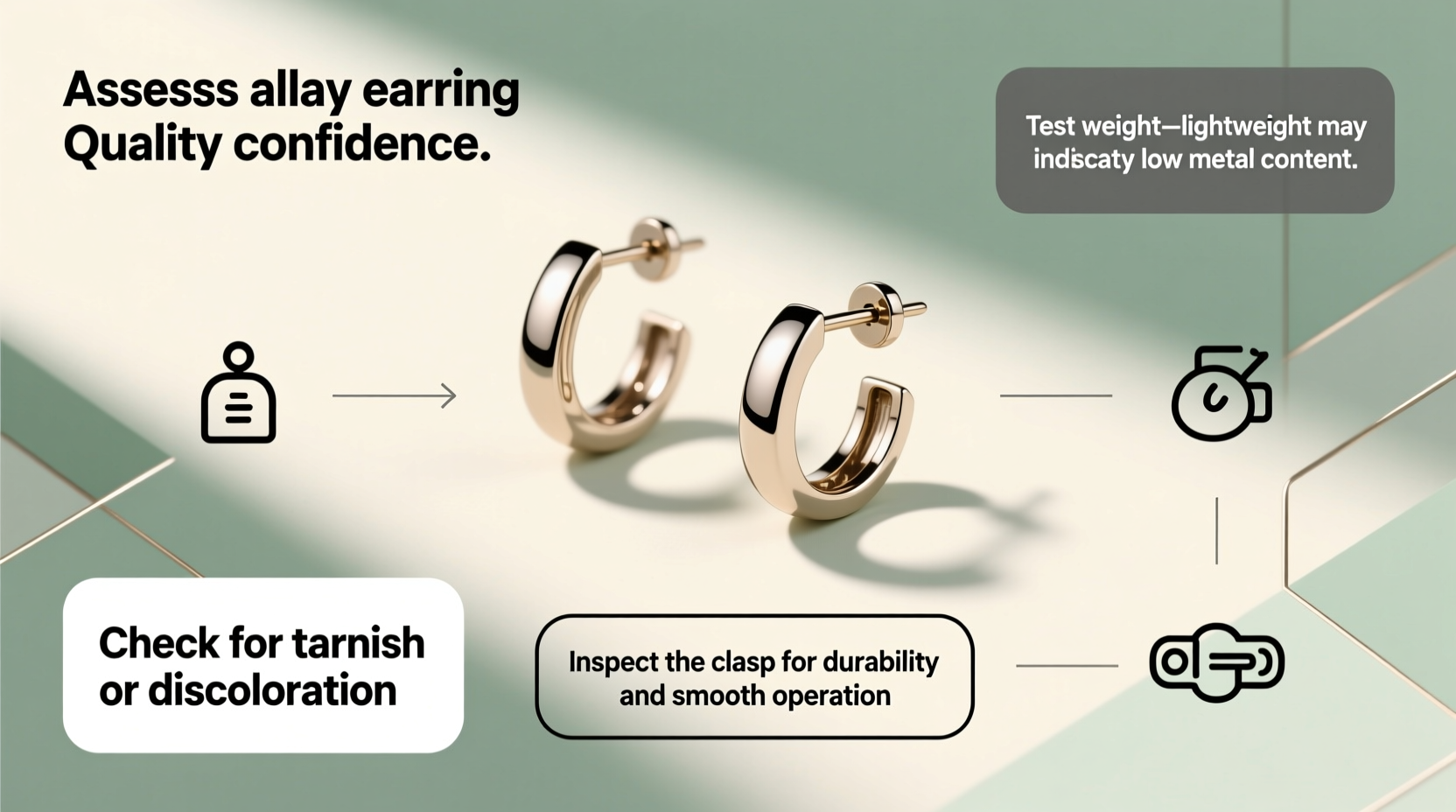
“Alloy” refers to a blend of two or more metals, often created to enhance strength, appearance, or cost-efficiency. In earrings, common base alloys include brass, stainless steel, zinc alloy, and nickel silver. Each has distinct properties that influence durability, color retention, and skin compatibility.
Brass, for instance, is a mix of copper and zinc. It’s durable and takes well to plating, making it a popular choice for high-end fashion jewelry. Stainless steel resists corrosion and is generally hypoallergenic, ideal for sensitive ears. Zinc alloy is lightweight and moldable but can be brittle if poorly cast. Nickel silver contains no actual silver but offers a silvery sheen—though it may contain nickel, a common allergen.
“Not all alloys are created equal. A well-made brass earring with thick plating will outlast a cheap zinc piece by years.” — Lila Nguyen, Jewelry Materials Specialist
Step-by-Step Guide to Evaluating Earring Quality
Assessing quality doesn’t require lab tools—just careful observation and a few simple tests. Follow this step-by-step process before purchasing or accepting a new pair of alloy earrings.
- Inspect the Surface Finish: Hold the earrings under natural light. Look for smoothness, uniform color, and absence of pits, bubbles, or rough edges. A high-quality finish indicates precise manufacturing.
- Check for Plating Thickness: Many alloy earrings are plated with gold, silver, or rhodium. Gently rub a cotton swab along seams or backs—if color transfers, the plating is likely thin and prone to chipping.
- Examine the Clasps and Posts: These small components reveal a lot. Push and pull the butterfly back or lever closure. It should snap securely without wobbling. The post should be straight and firmly attached.
- Test Weight and Density: Compare similar styles. A heavier earring (within reason) often means denser metal and better casting. Extremely light pieces may be hollow or porous.
- Smell the Metal: Believe it or not, low-grade alloys sometimes emit a sour or metallic odor due to impurities. High-quality alloys are typically odorless.
Do’s and Don’ts When Buying Alloy Earrings
| Do | Don’t |
|---|---|
| Buy from sellers who disclose alloy type and plating details | Assume “hypoallergenic” means safe for all skin types |
| Choose earrings with protective coatings like enamel or lacquer | Purchase items with visible solder marks or uneven joins |
| Look for third-party reviews mentioning long-term wear | Ignore customer complaints about discoloration or itching |
| Opt for stainless steel posts if you have sensitive ears | Store earrings in humid environments like bathrooms |
Real Example: How One Buyer Avoided a Costly Mistake
Sophie, a boutique buyer in Portland, once ordered a batch of rose-gold hoop earrings from a new supplier. The photos looked flawless—shiny, symmetrical, and modern. But upon arrival, she noticed the hinges were slightly misaligned, and the inner curve had tiny bumps. She performed a bend test: gently flexing the hoop at the weakest point. It snapped cleanly in half.
She contacted the manufacturer, who admitted using recycled zinc alloy with inconsistent melting temperatures. Sophie returned the order and switched to a supplier using die-cast brass with triple-layer plating. The new batch lasted over two years in her store with zero returns. Her takeaway? “Never skip the tactile inspection—even if the price seems too good to pass up.”
Essential Checklist for Confident Purchasing
- ✅ Verify the alloy type (e.g., brass, stainless steel)
- ✅ Confirm whether the piece is plated and, if so, the thickness (look for terms like “heavy electroplating”)
- ✅ Inspect clasps, posts, and hinges for sturdiness and alignment
- ✅ Check for a smooth, even surface with no pitting or flaking
- ✅ Review customer feedback focused on longevity and skin reaction
- ✅ Ensure the seller offers a return policy for defective materials
- ✅ Test for magnetism—some low-grade alloys contain iron and will attract magnets, indicating lower purity
Frequently Asked Questions
Are alloy earrings safe for sensitive ears?
It depends on the alloy and plating. Stainless steel, titanium, and medical-grade alloys are safest. Avoid nickel-containing metals. Even with plating, microscopic scratches can expose allergenic bases over time. For sensitive skin, look for nickel-free certifications or solid stainless steel posts.
How long should a quality alloy earring last?
With proper care, well-made alloy earrings can last 1–3 years of regular wear. Factors like plating thickness, exposure to moisture, and frequency of use affect lifespan. Pieces with thick plating and protective finishes often exceed expectations.
Can I repair tarnished alloy earrings?
Minor tarnish on plated earrings can sometimes be cleaned with a soft cloth and non-abrasive polish, but deep oxidation or peeling plating cannot be restored at home. Re-plating is possible through professional services, though it may cost nearly as much as replacement.
Protecting Your Investment After Purchase
Quality assessment doesn’t end at purchase. Longevity depends heavily on aftercare. Store earrings in a dry, lined jewelry box separated from other pieces to prevent scratching. Remove them before swimming, showering, or applying skincare products. Wipe them gently with a microfiber cloth after each wear to remove oils and residue.
For plated earrings, consider occasional reapplication of a clear nail sealant on high-contact areas like clasps to preserve the finish. Rotate pairs regularly to reduce wear on any single set.
“Jewelry is worn, not displayed. If it’s meant to be part of daily life, it must be built—and maintained—for motion, moisture, and time.” — Marcus Reed, Sustainable Fashion Designer
Conclusion: Make Every Pair Count
Assessing the quality of alloy earrings isn’t about chasing perfection—it’s about making informed choices that align with your lifestyle, budget, and values. Whether you’re a consumer, stylist, or retailer, the ability to distinguish well-crafted pieces from fragile imitations saves money, reduces waste, and enhances personal style. By applying these practical steps—inspecting materials, testing construction, and prioritizing reputable sources—you gain confidence in every selection.




 浙公网安备
33010002000092号
浙公网安备
33010002000092号 浙B2-20120091-4
Comments
No comments yet. Why don't you start the discussion?