
Whether you're visiting England for business or leisure, staying connected through mobile calls is essential. However, unfamiliar dialing formats, country codes, and mobile network nuances can make simple communication confusing. Unlike many countries, the UK uses a unique numbering structure and calling conventions that may surprise first-time callers. Understanding how to make successful calls—from within England or from abroad—ensures smooth coordination with hotels, contacts, and emergency services.
This guide breaks down everything you need to know: standard dialing formats, using mobiles on UK networks, calling internationally, avoiding roaming charges, and navigating landline vs. mobile distinctions. With clear examples and real-world advice, you’ll be able to call confidently across England without confusion or unexpected costs.
Understanding UK Phone Number Structure
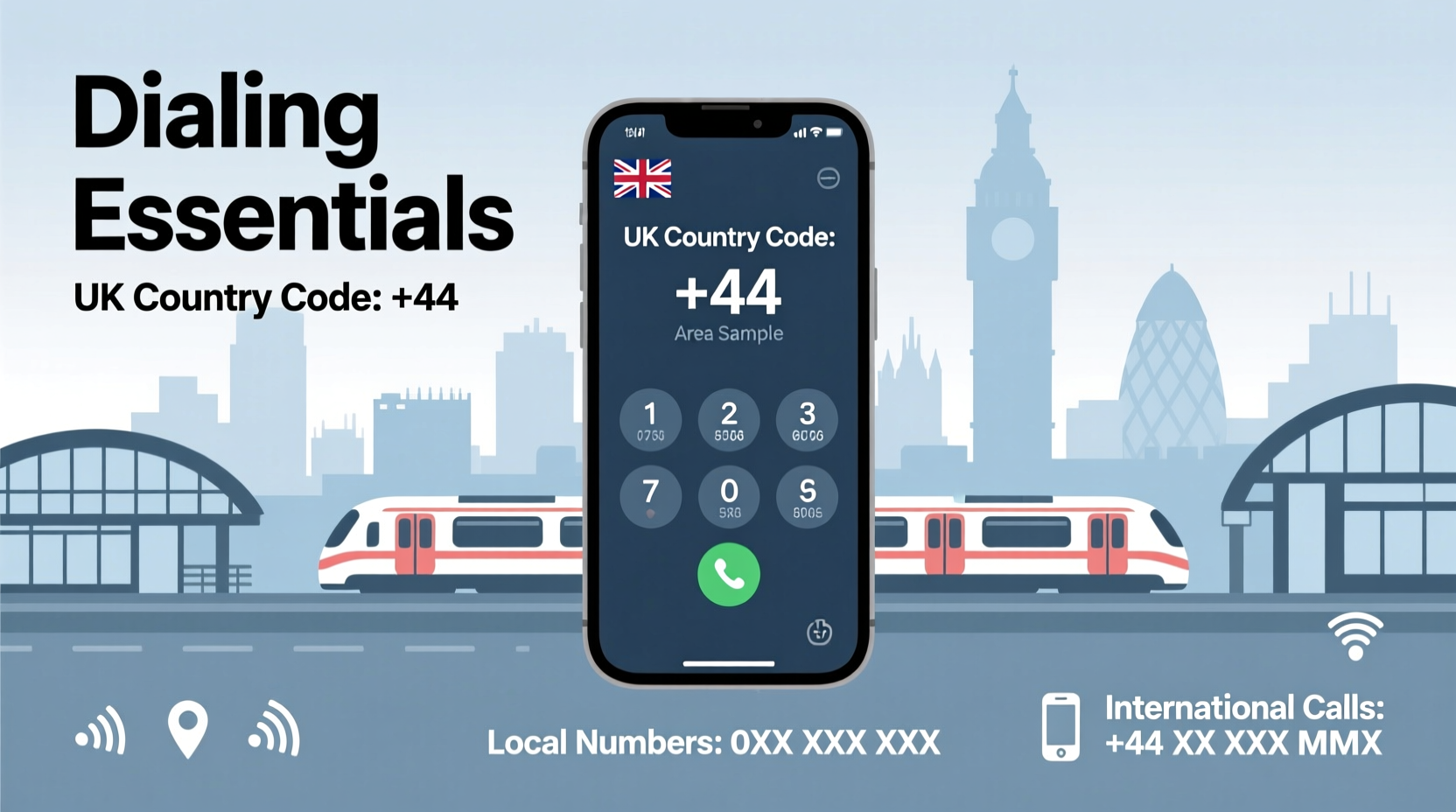
UK phone numbers follow a standardized format governed by Ofcom, the national communications regulator. All numbers are typically 10 or 11 digits long, including the area code. Mobile numbers always start with '07' when dialed domestically, while landlines begin with geographic area codes such as 020 (London), 0161 (Manchester), or 0121 (Birmingham).
When calling from outside the UK, you must replace the leading '0' with the UK’s country code: +44. For example, a London number listed as 020 7946 0958 becomes +44 20 7946 0958 internationally.
| Type of Number | Domestic Format (from within UK) | International Format |
|---|---|---|
| Mobile | 07XXX XXX XXX | +44 7XXX XXX XXX |
| London Landline | 020 XXXX XXXX | +44 20 XXXX XXXX |
| Manchester Landline | 0161 XXX XXXX | +44 161 XXX XXXX |
| Freephone | 0800 XXX XXXX | +44 800 XXX XXXX |
How to Make Calls Within England
Making local or national calls in England is straightforward once you understand the format. Whether using a mobile or landline, all domestic calls require the full number, including the area code—even when calling locally.
For example, if you're in Manchester and want to call another Manchester number starting with 0161, you still need to dial all 11 digits. There is no abbreviated \"local\" dialing anymore due to number portability and network routing.
Mobile-to-mobile calls follow the same pattern. Dial the full 11-digit number beginning with 07. Most UK mobile plans include unlimited calls to other UK numbers, so cost is rarely an issue for residents.
“Unlike some countries where local calls omit area codes, the UK requires full dialing for all calls—even within the same city.” — Sarah Thompson, Telecommunications Analyst at Ofcom Insights
Step-by-Step Guide: Making a Call from a Mobile in England
- Unlock your phone and open the dialer app.
- Enter the full UK number, starting with 07 for mobiles or 01/02 for landlines.
- Press the call button.
- Wait for connection—most calls connect within 5 seconds.
- End the call by pressing the red hang-up icon.
Calling England from Abroad
To reach someone in England from another country, use the international format. First, dial your country’s international access code (e.g., 011 from the US, 00 from most European countries), followed by 44 (the UK country code), then the rest of the number without the leading zero.
For instance, to call a mobile number listed as 07700 900123 from the United States:
- Dial 011 (US exit code)
- Then 44 (UK country code)
- Then 7700 900123 (drop the leading '0')
The complete sequence: 011 44 7700 900123
Alternatively, saving the number as +44 7700 900123 in your contacts allows one-tap calling from any country, as modern smartphones automatically adjust dialing based on location.
Avoiding Roaming Charges While in England
Visitors often assume their home mobile plan works seamlessly in England, but this can lead to high roaming fees. Many carriers charge per minute for calls made or received abroad, even on “unlimited” plans.
To stay connected affordably:
- Purchase a local SIM card from providers like EE, O2, Vodafone, or Three upon arrival.
- Choose a pay-as-you-go plan with inclusive calls and data (e.g., £10 for 10GB and unlimited calls).
- Use VoIP apps like WhatsApp, Telegram, or Google Voice over Wi-Fi instead of traditional voice calls.
- Enable airplane mode and only use Wi-Fi unless you have an active UK data plan.
Major airports and convenience stores sell SIM cards with activation assistance. Bring your passport, as ID is required for registration under UK law.
Mini Case Study: Staying Connected on a Business Trip
Lena, a marketing consultant from Canada, traveled to London for a week-long client meeting series. She assumed her Canadian mobile plan included international coverage. On day two, she made several calls to confirm appointments and received a notification about roaming charges exceeding $5 per minute.
She visited a nearby Carphone Warehouse, bought a £15 Three UK SIM with 12GB data and unlimited calls, and transferred her meetings to WhatsApp voice notes sent over hotel Wi-Fi. Her total communication cost dropped to under £20 for the trip, and she avoided bill shock upon returning home.
Essential Calling Tips and Etiquette
While technical accuracy matters, understanding social norms improves communication effectiveness. English callers generally prefer concise, polite conversations. Avoid overly loud or prolonged calls in public spaces like trains or cafes.
- Time Sensitivity:
- Do not call before 8 AM or after 9 PM unless urgent. Evening calls are typically reserved for personal matters.
- Voicemail Usage:
- If a call goes unanswered, leave a brief message with your name, purpose, and callback number. Many people check voicemail infrequently.
- Emergency Calls:
- Dial 999 or 112 for police, fire, or medical emergencies. Both numbers work interchangeably across all mobile networks in England.
- Verify the correct number format (07 for mobiles, 01/02 for landlines)
- Save international contacts with +44 prefix
- Check your roaming status or activate a local plan
- Avoid peak calling hours (9–10 AM, 5–6 PM) for better connection quality
- Use hands-free devices in public to respect privacy norms
FAQ
Can I use my US mobile phone in England?
Yes, if your phone is unlocked and supports GSM frequencies (900/1800 MHz). Most modern smartphones are compatible. Insert a UK SIM card to avoid roaming fees.
What’s the difference between 0800 and 0300 numbers?
0800 numbers are freephone—free to call from both landlines and mobiles. 0300 numbers are charged at standard rates and are often used by government agencies and nonprofits.
Why does my call fail when I dial 07 numbers?
If calling from abroad, ensure you’ve replaced the '0' with '+44'. Dialing 07 directly from outside the UK will not connect. Also, verify your mobile carrier allows international outgoing calls.
Final Thoughts and Recommendations
Mastering mobile calls in England doesn’t require technical expertise—just awareness of format rules, cost-saving options, and cultural habits. Whether you’re a tourist navigating transport services or a professional coordinating meetings, accurate dialing ensures seamless communication.
Adopt the habit of saving UK numbers in international format (+44), consider a local SIM for extended stays, and leverage free calling apps whenever possible. These small steps prevent frustration and expense.




 浙公网安备
33010002000092号
浙公网安备
33010002000092号 浙B2-20120091-4
Comments
No comments yet. Why don't you start the discussion?