
Traveling with a duffle bag offers flexibility, comfort, and style—but only if it meets airline carry-on requirements. Exceeding size or volume limits can result in unexpected fees, last-minute repacking, or forced check-in at the gate. The key to avoiding these hassles lies not just in knowing your bag’s listed dimensions, but in accurately measuring its true capacity in relation to airline standards. This guide breaks down how to measure your duffle bag correctly, interpret airline rules, and ensure seamless boarding every time.
Understanding Airline Carry-On Size Limits
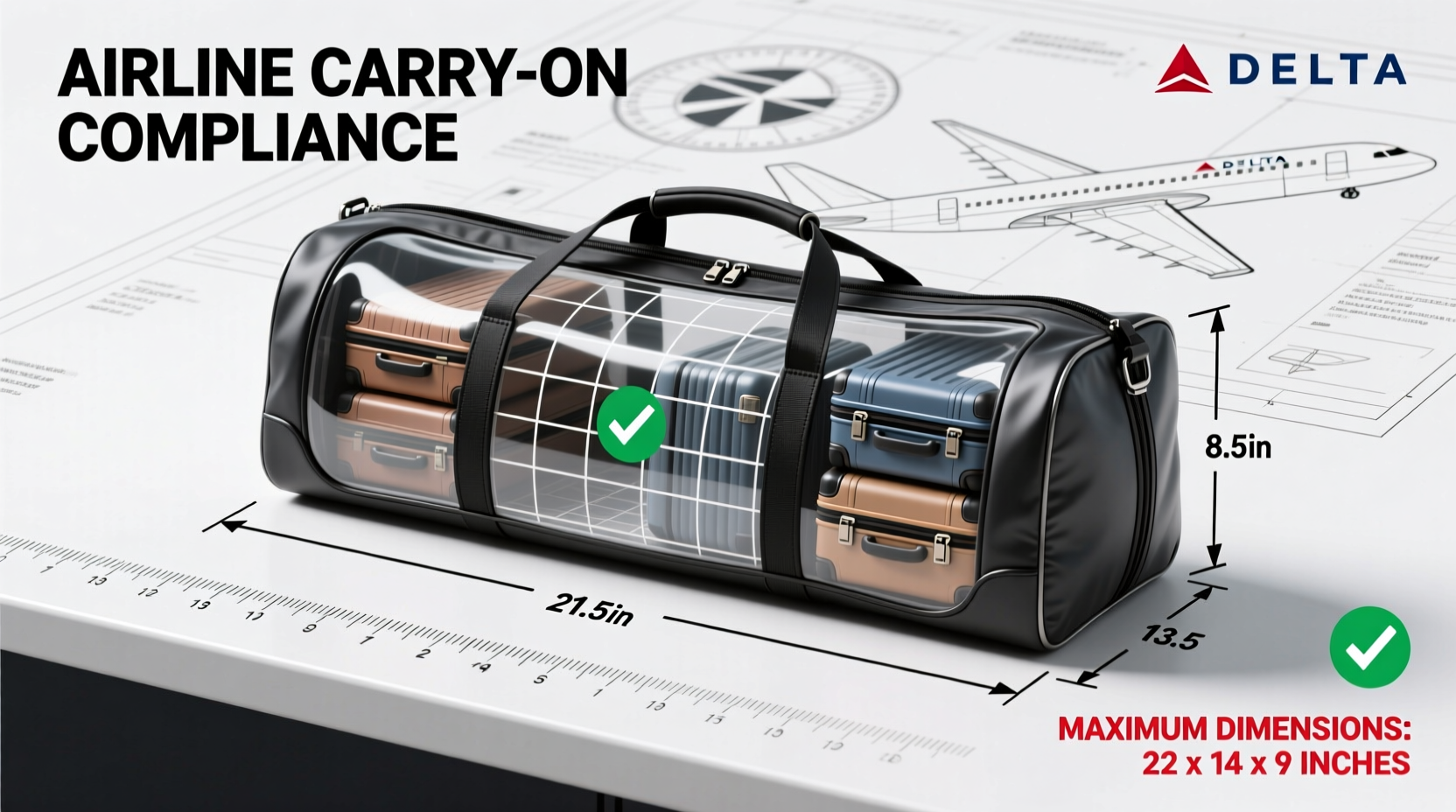
Airlines define carry-on luggage by linear dimensions (length + width + height) and sometimes by weight. While most U.S. carriers allow a maximum of 45 linear inches (114 cm), international airlines may differ. For example:
| Airline | Max Linear Inches | Weight Limit (Lbs) | Notes |
|---|---|---|---|
| Delta Airlines | 45\" | 25 | Includes wheels and handles |
| United Airlines | 45\" | 25 | Fits under seat or overhead bin |
| American Airlines | 45\" | 25 | One personal item allowed additionally |
| Southwest Airlines | 50\" | Not enforced strictly | Free checked bag included |
| Lufthansa (International) | 40\" | 18 | Strict enforcement on European routes |
It's critical to note that \"capacity\" isn’t just about volume—it’s about physical footprint. A large-capacity duffle might still exceed limits due to bulging sides or extended handles. Always measure the exterior dimensions when the bag is fully packed as you intend to carry it.
How to Accurately Measure Duffle Bag Capacity
Duffle bags are rarely rigid, making standard cubic-inch calculations misleading. To determine actual carry-on compliance, follow this step-by-step process:
- Pack the bag as you would for travel – Include clothing, toiletries, electronics, and any accessories you typically bring.
- Close all zippers and straps – Ensure no fabric is flaring out unnaturally, but don’t compress beyond normal use.
- Measure length – From the back end to the front, including wheels if present.
- Measure width – Across the widest point, usually near the middle.
- Measure height – From the base to the highest point, including raised handles or pockets.
- Add the three numbers – This total must be equal to or less than your airline’s limit.
For volume estimation (useful for comparing models), multiply length × width × height and divide by 1,728 to convert cubic inches to cubic feet. Most compliant carry-on duffels range from 2,000 to 3,500 cubic inches (33–60 liters).
“Many travelers assume their ‘carry-on-sized’ duffle will fit, but soft-sided bags expand easily. Always measure post-packing.” — Sarah Lin, Travel Gear Analyst at JetGear Review
Common Pitfalls and How to Avoid Them
Even experienced travelers make mistakes when assessing duffle bag suitability. Here are frequent errors and solutions:
- Trusting manufacturer claims alone: Brands often list “ideal” dimensions without accounting for padding or stitching. Always verify independently.
- Ignoring handle and wheel inclusion: These add 2–4 inches to height. Airlines count them—so should you.
- Measuring an empty bag: Fabric walls collapse when empty, giving false readings. Test with typical contents.
- Overlooking airline-specific sizers: Some airports have physical carry-on test frames. Bring your loaded bag early to test it.
Do’s and Don’ts When Measuring for Compliance
| Do | Don't |
|---|---|
| Use a soft tape measure on a packed bag | Rely solely on product label specs |
| Include protruding parts like handles | Measure only the main compartment |
| Check the airline’s website before departure | Assume all domestic carriers have the same rules |
| Test fit using airport sizer cages | Wait until security to discover non-compliance |
Real-World Example: Avoiding a Gate Check Disaster
Jamal planned a weekend trip to Chicago with only a duffle bag. His bag was labeled “carry-on friendly” and advertised at 44 linear inches. Confident, he arrived late and skipped checking the Delta sizer cage. At the gate, staff measured his loaded bag—including extended top handles—and recorded 47 inches. Jamal had to pay $35 for a last-minute check and lost access to his laptop during the flight.
After researching, he realized the manufacturer measured only the body, excluding functional components. He now uses a retractable handle duffle that stays within 43 inches even when full, and always tests it against a doorway frame at home set to 22” x 14” x 9”.
Checklist: Pre-Flight Duffle Bag Compliance Verification
Before every flight, run through this checklist to ensure hassle-free boarding:
- ✅ Packed to typical travel load (not empty or overstuffed)
- ✅ All zippers closed, straps tightened
- ✅ Measured length, width, and height including wheels and handles
- ✅ Total linear inches ≤ airline limit (e.g., 45\")
- ✅ Weight under carrier restriction (usually 25 lbs for domestic flights)
- ✅ Verified current policy on airline’s official website
- ✅ Tested against physical sizer if available at airport
Frequently Asked Questions
Can I bring a 40-liter duffle as a carry-on?
Yes, most 40-liter duffels fall within 45 linear inches when packed reasonably. However, shape matters—long, narrow designs often comply better than wide, boxy ones. Always measure actual dimensions rather than relying on volume alone.
What happens if my duffle exceeds carry-on size?
You’ll likely be asked to check it at the gate for a fee, typically $35–$50 on domestic U.S. flights. In some cases, especially on international or budget carriers, refusal to check may result in denied boarding for oversized items.
Does a foldable duffle count as a personal item?
If it fits under the seat in front of you (typically 18” x 14” x 8”), yes. When expanded, even slightly, it may exceed personal item allowances and require overhead space, competing with your main carry-on.
Final Tips for Stress-Free Travel
Compliance isn’t just about avoiding fees—it’s about control. A properly sized duffle keeps your essentials accessible, reduces dependency on checked baggage systems, and speeds up your journey from curb to destination. Invest time in measuring once, and you’ll save frustration on every trip. Remember, consistency beats guesswork: keep a log of your bag’s packed measurements and update it after any changes in packing habits.
“The best travel gear doesn’t just look good—it works reliably within real-world constraints.” — Marcus Reed, Senior Editor at Nomadics Magazine




 浙公网安备
33010002000092号
浙公网安备
33010002000092号 浙B2-20120091-4
Comments
No comments yet. Why don't you start the discussion?