
Healthcare costs continue to rise, making smart financial planning essential. One of the most powerful tools available to Americans with high-deductible health plans (HDHPs) is the Health Savings Account (HSA). Often overlooked or misunderstood, an HSA offers triple tax advantages: contributions are tax-deductible, earnings grow tax-free, and withdrawals for qualified medical expenses are tax-free. When used strategically, it becomes more than just a way to pay for doctor visits—it transforms into a long-term health and retirement asset.
Understanding How HSAs Work
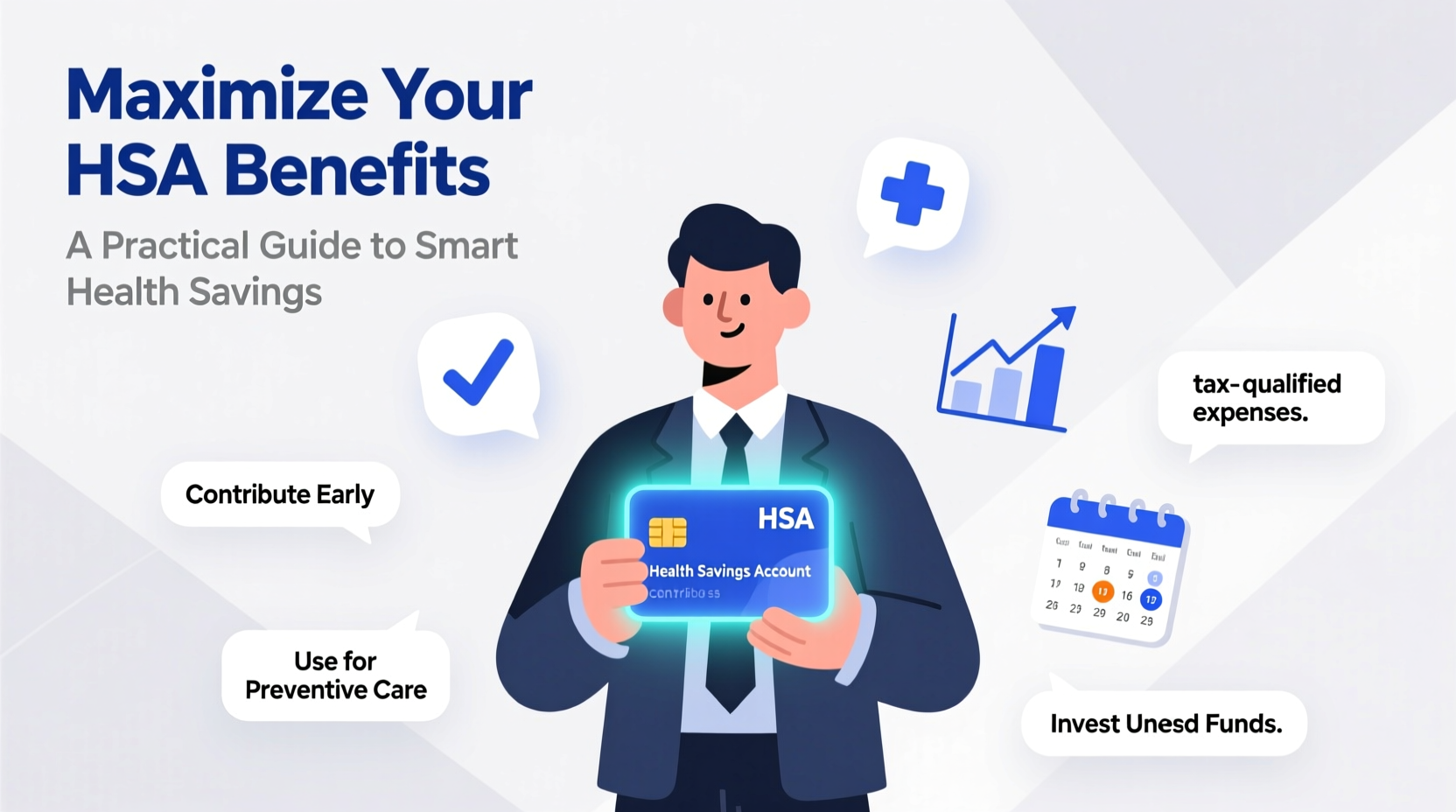
An HSA is a tax-advantaged savings account designed to help individuals enrolled in HDHPs save for current and future medical expenses. Unlike Flexible Spending Accounts (FSAs), HSAs are portable, meaning the funds roll over year after year and remain yours even if you change jobs or retire.
To qualify for an HSA, you must be enrolled in an IRS-approved HDHP. For 2024, the IRS defines an HDHP as a plan with a minimum deductible of $1,600 for individual coverage or $3,200 for family coverage. Additionally, out-of-pocket maximums cannot exceed $8,050 (individual) or $16,100 (family).
“HSAs are the only account in the U.S. tax code with triple tax advantages. That makes them one of the most efficient savings vehicles available.” — Sarah Johnson, Certified Financial Planner and Healthcare Finance Advisor
Step-by-Step Guide to Opening Your HSA
Opening an HSA is straightforward, but timing and provider choice matter. Follow this timeline to get started correctly:
- Confirm HDHP eligibility: Check with your employer or insurance provider that your health plan qualifies as an HDHP under IRS rules.
- Choose a provider: You can open an HSA through your employer (if offered), a bank, credit union, or investment platform. Compare fees, investment options, and user experience.
- Open the account: Complete the application online or through payroll deduction if your employer sponsors the plan.
- Fund the account: Decide whether to contribute via pre-tax payroll deductions, direct deposits, or annual lump-sum payments.
- Start using it: Pay for eligible medical expenses using the HSA debit card, checks, or online bill pay.
Maximizing Your HSA Benefits Beyond Medical Bills
Most people use their HSA like a medical checking account—spending funds immediately. But the real power lies in treating it like a long-term investment vehicle.
You are not required to withdraw funds in the same year you incur a medical expense. This means you can pay for qualified costs out of pocket today, keep receipts, and reimburse yourself years later—even decades down the line—while allowing your HSA balance to grow through investments.
- Tax-free growth: Once your balance reaches a certain threshold (often $1,000–$2,000), many providers allow you to invest in mutual funds, ETFs, or index funds within the HSA.
- Roth-like retirement savings: After age 65, you can withdraw funds for any reason without penalty (though non-medical withdrawals are taxed as income). Used for healthcare, they remain completely tax-free.
- Estate planning benefit: If you name your spouse as beneficiary, the HSA becomes theirs with full tax advantages. For non-spouse beneficiaries, the account loses its tax-advantaged status but can still be used to cover final medical bills.
Real Example: The Power of Delayed Reimbursement
Consider Maria, a 35-year-old software engineer with a family HDHP. She contributes the maximum $8,300 annually and pays her medical bills from her checking account. She keeps digital records of all receipts—co-pays, prescriptions, dental work, vision exams.
By age 65, her HSA has grown to $150,000 due to consistent contributions and compound growth. Instead of spending along the way, she now reimburses herself for decades’ worth of saved receipts—totaling $40,000—all tax-free. The remaining $110,000 continues growing or covers future long-term care needs.
Smart HSA Do’s and Don’ts
| Do’s | Don’ts |
|---|---|
| Contribute up to the annual IRS limit ($8,300 family / $4,150 individual in 2024) | Forget to verify your HDHP eligibility before contributing |
| Invest excess funds once the minimum balance is met | Use the HSA for non-qualified expenses before age 65 (20% penalty + income tax) |
| Keep detailed records of all medical expenses and receipts | Assume all over-the-counter items are eligible (only those prescribed or listed qualify) |
| Consider making catch-up contributions if you’re 55 or older (+$1,000/year) | Miss the deadline—contributions for a tax year can be made until April 15 of the following year |
Common Questions About HSAs
Can I have an HSA if I’m self-employed?
Yes. Self-employed individuals can open an HSA as long as they are covered by an HDHP and not enrolled in Medicare. Contributions are tax-deductible on your federal return, even without employer involvement.
What happens to my HSA if I switch to a non-HDHP?
You can no longer make new contributions, but you retain full access to your existing balance for qualified medical expenses. The funds continue to grow tax-free and can be withdrawn tax-free at any time for eligible costs.
Are there penalties for non-medical withdrawals?
Yes—if you're under 65 and use HSA funds for non-qualified expenses, you’ll owe income tax plus a 20% penalty. After 65, the penalty is waived, though taxes apply for non-medical use.
Action Plan: Your HSA Maximization Checklist
- ☑ Confirm your health plan is HSA-eligible
- ☑ Open an HSA with a low-fee provider offering investment options
- ☑ Set up automatic contributions (preferably through payroll)
- ☑ Contribute up to the IRS annual limit—or at least enough to earn any employer match
- ☑ Save all medical receipts digitally for future reimbursement
- ☑ Once balance allows, invest surplus funds in low-cost index funds
- ☑ Review account annually and adjust contributions as income changes
Final Thoughts: Turn Healthcare Spending Into Wealth Building
An HSA isn’t just about covering deductibles or prescription costs. It’s a rare financial instrument that combines tax efficiency, flexibility, and long-term growth potential. By funding your account consistently, preserving receipts, and investing early, you transform what starts as a tool for managing high deductibles into a strategic pillar of your financial wellness.
The earlier you begin, the greater the compounding effect. Even modest contributions, when invested and left untouched for decades, can grow into a substantial fund dedicated to healthcare in retirement—a period when medical expenses typically rise.




 浙公网安备
33010002000092号
浙公网安备
33010002000092号 浙B2-20120091-4
Comments
No comments yet. Why don't you start the discussion?