
Starting a business is more than just an idea—it’s a commitment to solving real problems, creating value, and building something sustainable. While the journey can be challenging, the right preparation dramatically increases your chances of success. From validating your concept to navigating legal requirements and securing early customers, every step counts. This guide walks you through the essential phases of launching a company that not only survives but thrives.
Validate Your Business Idea First
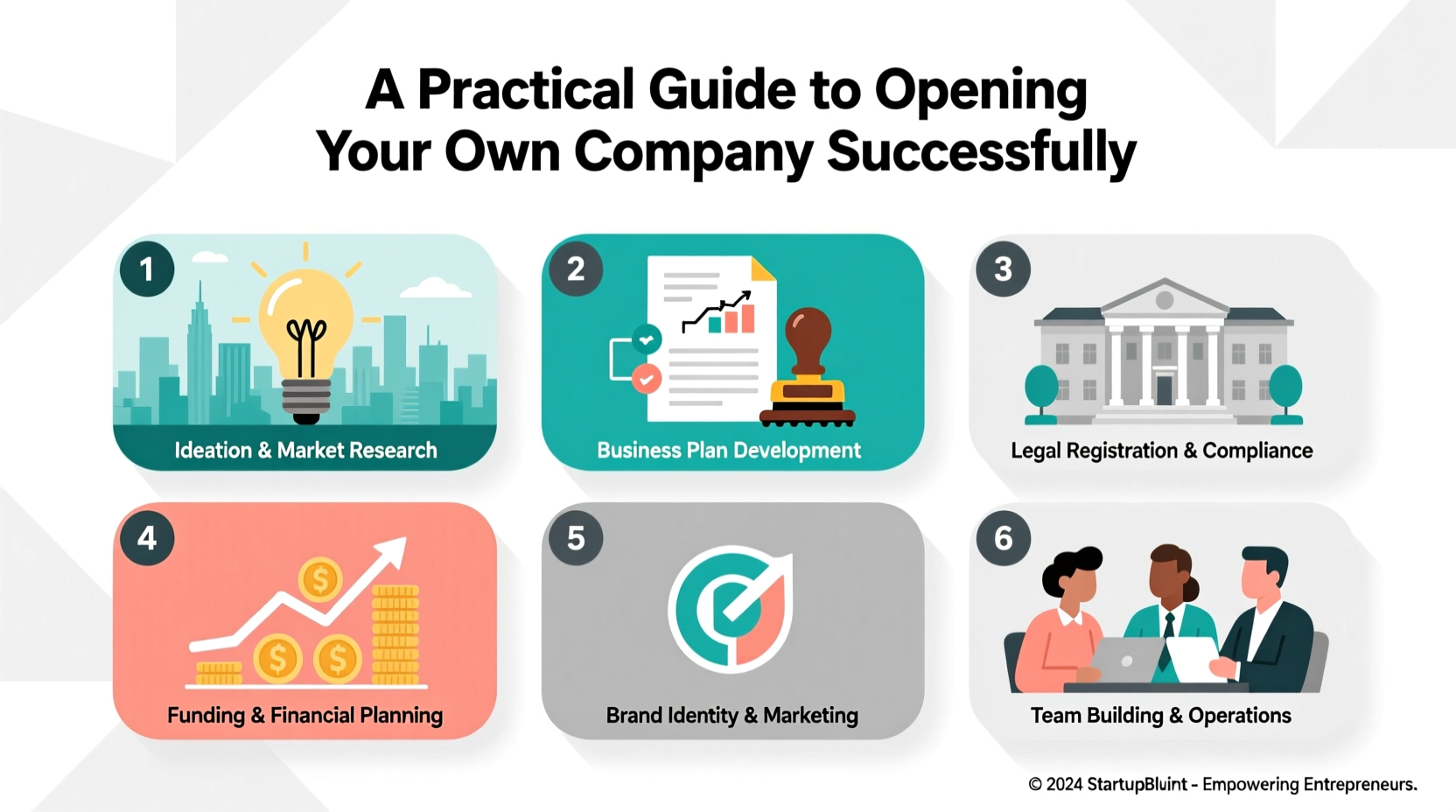
Before investing time and money, ensure there's actual demand for your product or service. Many startups fail because they assume people want what they’re offering without testing it. Validation involves research, customer interviews, and prototyping.
Start by identifying your target audience. Who are they? What pain points do they experience? Then, test your solution with minimal effort—this could mean conducting surveys, running low-cost ads to gauge interest, or offering pre-orders. The goal is to collect evidence that people are willing to pay for what you plan to sell.
“We launched our MVP with just three core features based on direct user requests. That focus helped us gain traction fast.” — Lena Torres, Founder of FlowTrack Solutions
Create a Lean Business Plan
A business plan doesn’t need to be hundreds of pages long. A lean version focuses on clarity and actionability. It should outline your mission, target market, revenue model, key expenses, and growth strategy in a concise format.
Include these core elements:
- Problem & Solution: Clearly define the issue you're addressing and how your product/service solves it.
- Target Market: Describe your ideal customer segment with demographics, behaviors, and needs.
- Revenue Model: Will you charge subscriptions, one-time fees, commissions, or use freemium pricing?
- Competitive Advantage: What makes your approach unique? Speed, cost, quality, or innovation?
- Financial Projections: Estimate first-year income, costs, and break-even point conservatively.
Do’s and Don’ts When Planning
| Do | Don't |
|---|---|
| Keep projections realistic and data-backed | Overestimate sales or underestimate costs |
| Focus on customer acquisition channels | Assume marketing will “just happen” |
| Outline key milestones for the first 6–12 months | Create vague goals like “get more users” |
| Identify risks and mitigation plans | Ignore potential obstacles |
Choose the Right Legal Structure and Register Your Business
Selecting the correct legal entity affects taxes, liability, fundraising, and operations. Common options include:
- Sole Proprietorship: Simple to set up but offers no personal liability protection.
- LLC (Limited Liability Company): Combines liability protection with flexible taxation. Ideal for most small businesses.
- S-Corporation: Offers tax advantages for profitable companies planning to grow.
- C-Corporation: Best if seeking venture capital or planning to go public later.
Once decided, register your business name with your state, obtain an EIN from the IRS, and open a dedicated business bank account. Skipping this step risks mixing personal and business finances—a common pitfall for early-stage founders.
Step-by-Step Launch Timeline (First 90 Days)
Clarity in execution separates successful launches from stalled ideas. Follow this timeline to stay on track:
- Week 1–2: Finalize business idea, conduct market validation, choose business name.
- Week 3–4: Select legal structure, register business, secure domain name and social handles.
- Week 5–6: Build basic website or landing page, set up accounting software (e.g., QuickBooks), apply for necessary licenses/permits.
- Week 7–8: Develop minimum viable product (MVP) or initial service offering; begin outreach to early adopters.
- Week 9–10: Launch soft release to friends, family, or beta testers; gather feedback.
- Week 11–12: Refine offering, implement improvements, launch publicly with targeted marketing campaign.
“Your first 90 days should be about learning, not perfection. Get visible, get feedback, iterate fast.” — Marcus Reed, Small Business Advisor
Funding and Financial Management
Most startups begin with self-funding or support from friends and family. As you grow, other options become available:
- Bootstrapping: Using personal savings or revenue to fund operations. Gives full control but limits speed.
- Small Business Loans: Offered by banks or SBA programs. Require solid credit and a repayment plan.
- Angel Investors: Individuals who invest early in exchange for equity.
- Crowdfunding: Platforms like Kickstarter help validate and fund consumer products.
Regardless of funding source, maintain strict financial discipline. Track all expenses, separate business and personal accounts, and review cash flow weekly. Even profitable companies fail when they run out of operating cash.
Essential Financial Checklist
- Open a dedicated business bank account
- Set up accounting software (e.g., Xero, Wave, or FreshBooks)
- Register for state and federal taxes
- Establish a budget for first six months
- Monitor burn rate and runway monthly
Real Example: How Maya Launched Her Organic Skincare Brand
Maya Rodriguez wanted to start a clean skincare line targeting sensitive skin. Instead of spending thousands on inventory, she began by formulating samples and offering them to local yoga studios for feedback. She collected testimonials and pre-orders via a simple Shopify site.
With $3,000 in pre-sales, she produced her first batch, registered as an LLC, and obtained health department compliance. Within four months, she was selling online and in two boutique stores. By focusing on real customer input and starting small, she avoided overproduction and built trust early.
Her advice? “Don’t wait for perfection. Start where you are, use what you have, and improve as you go.”
Frequently Asked Questions
How much does it cost to start a company?
Costs vary widely. Service-based businesses can launch for under $1,000 (website, licensing, tools). Product-based ventures may require $5,000–$50,000+ depending on inventory, manufacturing, and compliance needs. Aim to start as lean as possible.
Do I need a business license?
Yes, most cities and states require a general business license. Additional permits may apply if you handle food, health products, or construction. Check your local government website for specifics.
Can I start a company while working full-time?
Absolutely. Many founders build their businesses part-time during the first year. Just ensure your employment contract doesn’t restrict side ventures, and manage your time wisely to avoid burnout.
Build With Purpose, Grow With Discipline
Opening your own company is a bold step—one that combines vision with daily execution. Success isn’t determined by a single decision but by consistent choices: listening to customers, managing finances responsibly, adapting quickly, and staying focused on value creation. The path won’t always be smooth, but with a clear plan and resilience, you can turn an idea into a sustainable enterprise.




 浙公网安备
33010002000092号
浙公网安备
33010002000092号 浙B2-20120091-4
Comments
No comments yet. Why don't you start the discussion?