
Digital watches are built for durability, but their water resistance can degrade over time due to wear, temperature changes, or accidental impacts. While manufacturers assign water resistance ratings—such as 30m, 50m, or 100m—these numbers don’t always reflect real-world performance after months of use. Rather than risking damage during swimming or showering, you can perform careful, non-invasive tests at home to assess whether your watch still holds up against moisture. This guide walks you through safe, reliable methods to evaluate your watch’s integrity using everyday tools and smart precautions.
Understanding Water Resistance Ratings
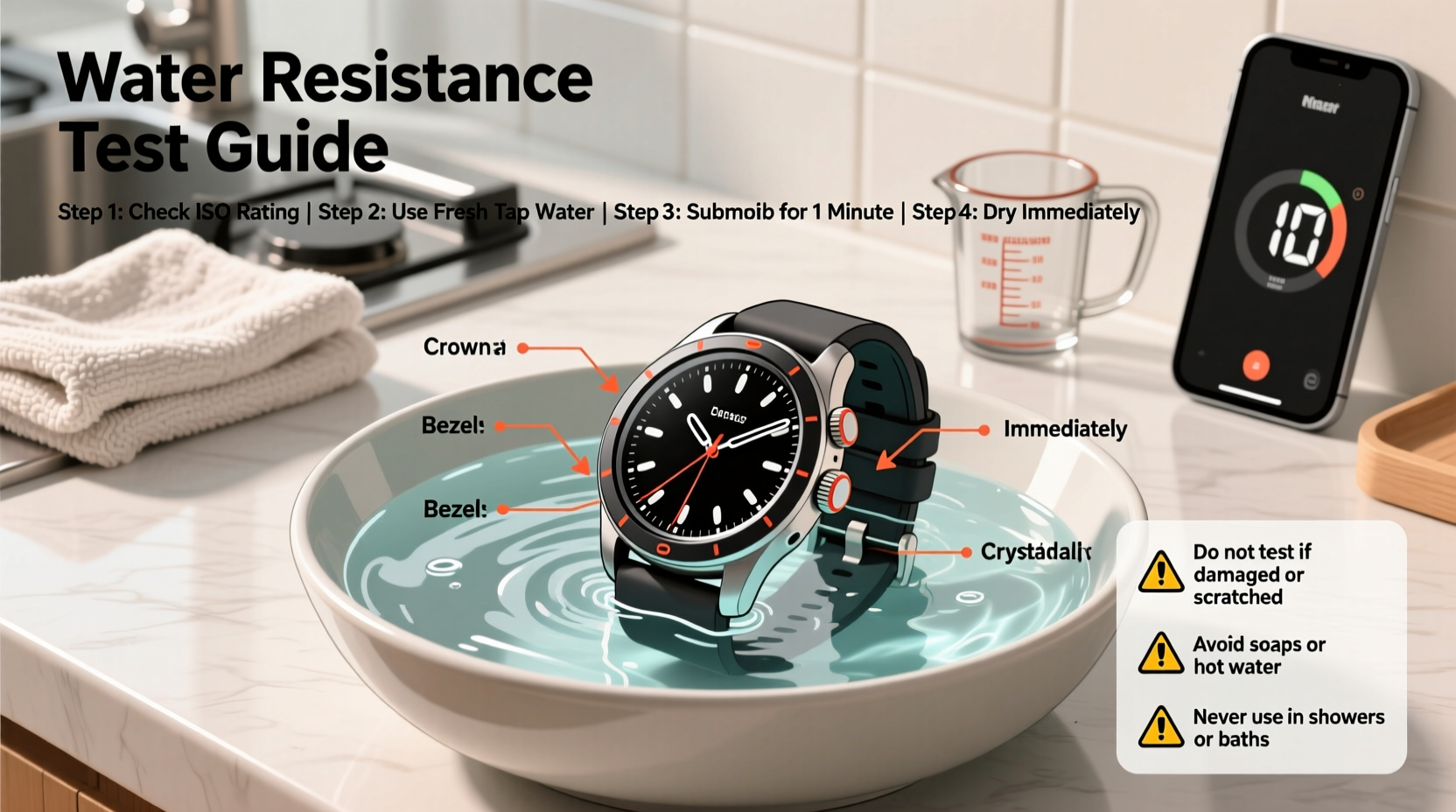
Before testing, it's essential to understand what water resistance labels actually mean. Many people assume that a \"100m\" rating means the watch can be used for diving, but in reality, these figures refer to static pressure in laboratory conditions—not dynamic movement, temperature shifts, or long-term exposure.
| Label | What It Actually Means | Suitable For |
|---|---|---|
| 30 meters | Resists splashes and rain | Daily wear, handwashing |
| 50 meters | Withstands brief immersion | Shallow swimming, snorkeling prep |
| 100 meters | Designed for pool and snorkel use | Swimming, surface water sports |
| 200+ meters | Built for scuba diving | Professional diving activities |
It's also important to note that no watch is truly “waterproof.” Over time, gaskets dry out, case backs loosen, and crystal seals weaken. Even a minor crack near the crown or button can compromise protection. Testing helps catch issues before they lead to costly internal damage.
Step-by-Step: How to Test Your Watch Safely at Home
The goal of any home test is not to submerge the watch unnecessarily but to detect early signs of vulnerability. The following five-step process uses condensation and controlled exposure to identify leaks without aggressive immersion.
- Inspect the exterior: Check for cracks in the crystal, misaligned buttons, or dents around the case back. Ensure the crown (the knob used to set time) screws down tightly if applicable.
- Clean the watch: Use a soft cloth dampened with fresh water to wipe away salt, chlorine, or grime. Dry thoroughly with a lint-free towel.
- Perform the condensation check: Breathe onto the glass surface to create fog. If moisture lingers inside the crystal after wiping the outside, water may have already penetrated.
- Conduct the cup test: Fill a glass with cold water. Hold the watch face-down just above the surface for 30 seconds. Listen closely for bubbles—if present, air is escaping from within, indicating a compromised seal.
- Monitor post-exposure: After any contact with water, leave the watch on a dry towel for 1–2 hours. Wipe again and recheck for fogging or sluggish button response.
Do’s and Don’ts When Handling Water-Resistant Watches
Even with high ratings, improper handling remains the leading cause of water damage. Follow these guidelines to preserve your device’s integrity between tests.
| Do’s | Don’ts |
|---|---|
| Rinse after saltwater exposure | Press buttons underwater unless rated for it |
| Tighten screw-down crowns fully | Use in saunas or hot showers (steam penetrates easily) |
| Check seals annually if frequently exposed | Assume water resistance lasts forever |
| Dry with a soft cloth after wet contact | Submerge vintage or damaged watches |
Real Example: A Cautionary Story
Mark, an outdoor enthusiast, relied on his digital sports watch for trail runs and weekend kayaking. His model was rated to 100 meters, so he assumed it could handle river crossings. After six months, he noticed slight fogging under the screen after heavy rain. He ignored it until the chronograph buttons began sticking. By the time he took it to a repair shop, corrosion had damaged the circuit board. The technician found a tiny gap near the side button—a flaw invisible to the naked eye—that allowed slow seepage. A simple cup test performed monthly could have caught this early, saving him $120 in repairs.
“Water damage is rarely sudden—it creeps in gradually. Regular low-risk checks are far smarter than waiting for visible failure.” — Lena Torres, Watch Repair Technician, Precision Timeworks
When to Seek Professional Testing
Home methods are excellent for preliminary screening, but they cannot replicate the precision of professional pressure testing. Service centers use machines that simulate depth while monitoring for micro-leaks by detecting volume changes in sealed chambers.
If your watch fails any part of the home test—especially persistent fogging, bubble formation, or delayed button response—you should stop exposing it to moisture immediately. Take it to an authorized service provider for vacuum and pressure evaluation. Most technicians offer this diagnostic for a small fee, often waived if you proceed with repairs.
Note: Replacing worn gaskets every 1–2 years significantly extends water resistance life, especially if you live in a humid climate or swim regularly.
Frequently Asked Questions
Can I test my watch in the shower?
No. Showers combine hot water and steam, both of which expand metal and rubber components temporarily, increasing the chance of moisture intrusion. Even watches rated for swimming aren’t designed for prolonged exposure to heated water vapor.
My watch says ‘water-resistant’—does that mean it’s safe underwater?
Not necessarily. “Water-resistant” is a general term. You must check the specific depth rating and understand that daily wear reduces effectiveness over time. A watch labeled only as “splash-resistant” should never be submerged.
Is there a way to test without using water?
Yes. One alternative is the humidity chamber method: place the watch in a sealed container with a damp sponge for 20 minutes. If internal fog appears afterward, the seal has failed. However, this method is less reliable than surface tension checks and should be followed up with professional inspection.
Maintaining Long-Term Protection
Prevention is more effective than testing alone. Build these habits into your routine:
- After swimming, rinse your watch with fresh water and dry it completely.
- Avoid adjusting the time or using functions while the watch is wet.
- Store it away from chemicals like solvents, perfumes, and cleaning agents that degrade rubber gaskets.
- Have pressure tested professionally every 12–18 months if used frequently in water.
Final Thoughts
Your digital watch is engineered to endure challenging conditions, but its defenses diminish subtly over time. Relying solely on factory ratings leaves you vulnerable to unexpected failures. By incorporating regular, cautious assessments into your maintenance routine, you gain peace of mind and extend the functional lifespan of your device. These home tests aren’t about pushing limits—they’re about staying ahead of problems before they escalate.




 浙公网安备
33010002000092号
浙公网安备
33010002000092号 浙B2-20120091-4
Comments
No comments yet. Why don't you start the discussion?