
Open ear Bluetooth earbuds have redefined personal audio by offering a safer, more comfortable listening experience without blocking ambient sounds. Ideal for runners, commuters, office workers, and anyone who values situational awareness, these earbuds transmit sound through conduction or directional audio while leaving the ear canal unobstructed. But with dozens of models flooding the market, how do you choose one that balances comfort, sound fidelity, and durability? This guide cuts through the noise to help you make an informed decision based on real-world performance and user needs.
Why Open Ear Design Matters
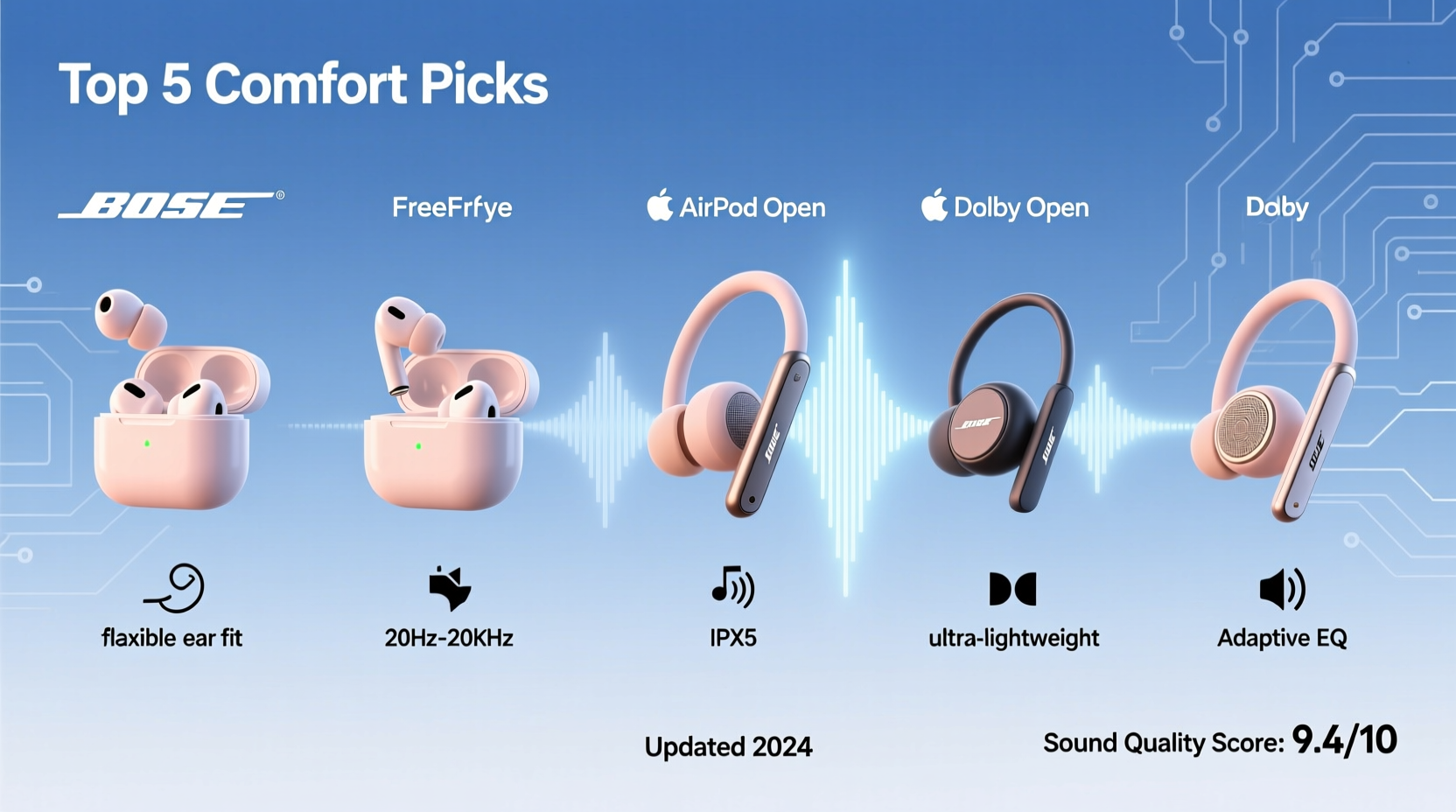
Unlike traditional in-ear or over-ear headphones, open ear earbuds rest just outside the ear canal—typically around the ear’s outer ridge (the auricle). This design allows users to hear their surroundings clearly, reducing the risk of accidents during outdoor activities. It also eliminates ear fatigue caused by prolonged pressure from sealed ear tips.
The technology behind most open ear models includes bone conduction or air conduction. Bone conduction sends vibrations through the cheekbones directly to the inner ear, bypassing the eardrum. Air conduction models use directed speakers aimed at the ear opening, preserving natural hearing while delivering audio clarity.
Key Factors in Choosing the Right Model
Selecting the best open ear earbuds isn’t just about brand reputation or price. Real satisfaction comes from matching technical features with your lifestyle and auditory expectations.
Comfort and Fit
Fundamental to long-term use is fit. Since open earbuds rely on stable placement near the ear, poor ergonomics can lead to slippage or pressure points. Look for lightweight designs (under 15g per bud) with flexible titanium or polymer frames that conform to various head shapes.
Adjustability matters too. Some models allow arm length or angle adjustments, which can significantly improve stability during movement. For example, athletes benefit from wrap-around styles with secure temple and neck support.
Sound Quality Considerations
Because open earbuds don’t seal the ear, bass response is naturally weaker than in closed-back headphones. However, advancements in driver tuning and spatial audio processing have narrowed this gap.
Focus on frequency range (ideally 20Hz–20kHz), codec support (AAC, SBC, LDAC, or aptX), and stereo separation. Higher-end models now incorporate beamforming drivers that focus sound into the ear canal, minimizing leakage and improving perceived loudness without increasing volume.
“Open ear audio will never match studio headphones in depth, but modern engineering has made it surprisingly immersive—especially for podcasts and spoken word.” — Dr. Lena Patel, Audio Ergonomics Researcher, MIT Media Lab
Battery Life and Charging
Most open earbuds offer between 6 and 12 hours of continuous playback. Frequent travelers or all-day users should prioritize models with fast charging (e.g., 10 minutes for 2 hours) and portable charging cases. USB-C is now standard; avoid micro-USB unless necessary.
Connectivity and Controls
Bluetooth 5.2 or higher ensures stable connections, lower latency, and better power efficiency. Multipoint pairing—connecting to two devices simultaneously—is invaluable for professionals switching between laptops and phones.
Touch controls are common, but physical buttons often provide more reliable feedback, especially with gloves or sweaty hands.
Comparison Table: Top Features Across Leading Models
| Model | Weight (per bud) | Battery Life | Bluetooth Version | Water Resistance | Price Range |
|---|---|---|---|---|---|
| Shokz OpenRun Pro | 29g (total) | 10 hours | 5.1 | IP55 | $179 |
| Clearview SportBuds X1 | 22g (total) | 8 hours | 5.2 | IP67 | $129 |
| Sony XB-B100 | 32g (total) | 7 hours | 5.0 | IP66 | $149 |
| Jaybird Vista X | 25g (total) | 9 hours | 5.3 | IP68 | $199 |
| AfterShokz Aeropex (Legacy) | 26g (total) | 8 hours | 5.0 | IP55 | $139 |
Note: While Shokz dominates the bone conduction space, newer entrants like Clearview and Jaybird are pushing innovation in air conduction and ruggedization.
Step-by-Step Selection Process
Follow this sequence to narrow down your ideal pair:
- Define your primary use case: Running? Office calls? Cycling? Each scenario demands different priorities—safety, mic clarity, sweat resistance.
- Determine fit compatibility: Measure head width if possible; consult sizing charts. Try demo units if available at retail stores.
- Test sound preferences: Sample tracks with layered vocals and bass lines to evaluate clarity. Bone conduction tends to emphasize mid-tones.
- Evaluate battery and charging: Match runtime to your daily usage. Prioritize quick charge if you forget to recharge nightly.
- Check firmware and app support: Some brands offer EQ customization, firmware updates, and find-my-bud features via companion apps.
- Assess after-sales service: Warranty length (2 years preferred), availability of replacement parts (ear cushions, bands), and customer support responsiveness.
Real-World Example: A Runner’s Experience
Maya, a long-distance runner from Portland, switched from in-ear buds to Shokz OpenRun Pro after repeated ear pain and failing to hear traffic warnings during trail runs. “I used to stop every mile to adjust my earbuds,” she said. “Now they stay put, even in rain. I still get full music immersion, but I can hear cars, cyclists, and people calling out—which has made me feel safer than ever.”
Her only critique? The bass lacks punch compared to her old wireless earbuds. But for safety and endurance, the trade-off was worth it.
Common Pitfalls to Avoid
- Ignoring fit because of brand loyalty: Even top-tier models may not suit your anatomy.
- Overlooking microphone quality: Essential for calls or voice assistants in windy environments.
- Assuming waterproof means fully submersible: IPX7 means 30 minutes under 1m of water—but not for swimming unless specified.
- Prioritizing flashy features over core performance: RGB lights or AI noise cancellation won’t help if the buds fall off during a jog.
Checklist: Before You Buy
- ✅ Have I determined my main use (sports, commuting, work)?
- ✅ Does the weight feel balanced when worn?
- ✅ Is Bluetooth 5.1 or higher supported?
- ✅ What is the actual battery life under mixed usage?
- ✅ Are controls intuitive and accessible?
- ✅ Is there a warranty or trial period?
- ✅ Can I return them if the fit isn’t right?
- ✅ Does it support firmware updates?
Frequently Asked Questions
Can open ear earbuds be used for phone calls?
Yes, many models include dual noise-canceling microphones designed to filter wind and background noise. Call quality varies—higher-end models like the Shokz OpenComm excel in noisy environments due to targeted mic placement and AI-based filtering.
Are open earbuds safe for long-term use?
Absolutely. Because they don’t insert into the ear canal, they reduce the risk of ear infections, wax buildup, and pressure-related discomfort. Bone conduction models are often recommended for users with certain types of hearing loss affecting the outer ear.
Do open ear earbuds leak sound?
All models leak some sound, especially at high volumes. However, newer designs with directional drivers or closed-loop acoustic chambers minimize leakage significantly. At moderate levels, nearby listeners typically won’t hear anything beyond a foot away.
Final Thoughts and Next Steps
Choosing the best open ear Bluetooth earbuds requires balancing innovation with individual needs. Comfort shouldn’t be sacrificed for sound, nor safety for style. By focusing on fit, battery reliability, audio clarity, and real-world usability, you can find a pair that enhances your daily routine without compromise.




 浙公网安备
33010002000092号
浙公网安备
33010002000092号 浙B2-20120091-4
Comments
No comments yet. Why don't you start the discussion?