
Sanrio backpacks are more than just functional school accessories—they’re expressions of personality, style, and comfort. From Hello Kitty to My Melody and Cinnamoroll, these cheerful designs bring joy to students of all ages. But no matter how charming the print, a poorly sized backpack can lead to discomfort, poor posture, or even long-term back issues. Choosing the right size isn’t just about aesthetics; it’s about ergonomics, durability, and practicality. This guide walks through everything students and parents need to know to select the ideal Sanrio backpack size for everyday school use.
Understanding Backpack Sizing: What “Size” Really Means
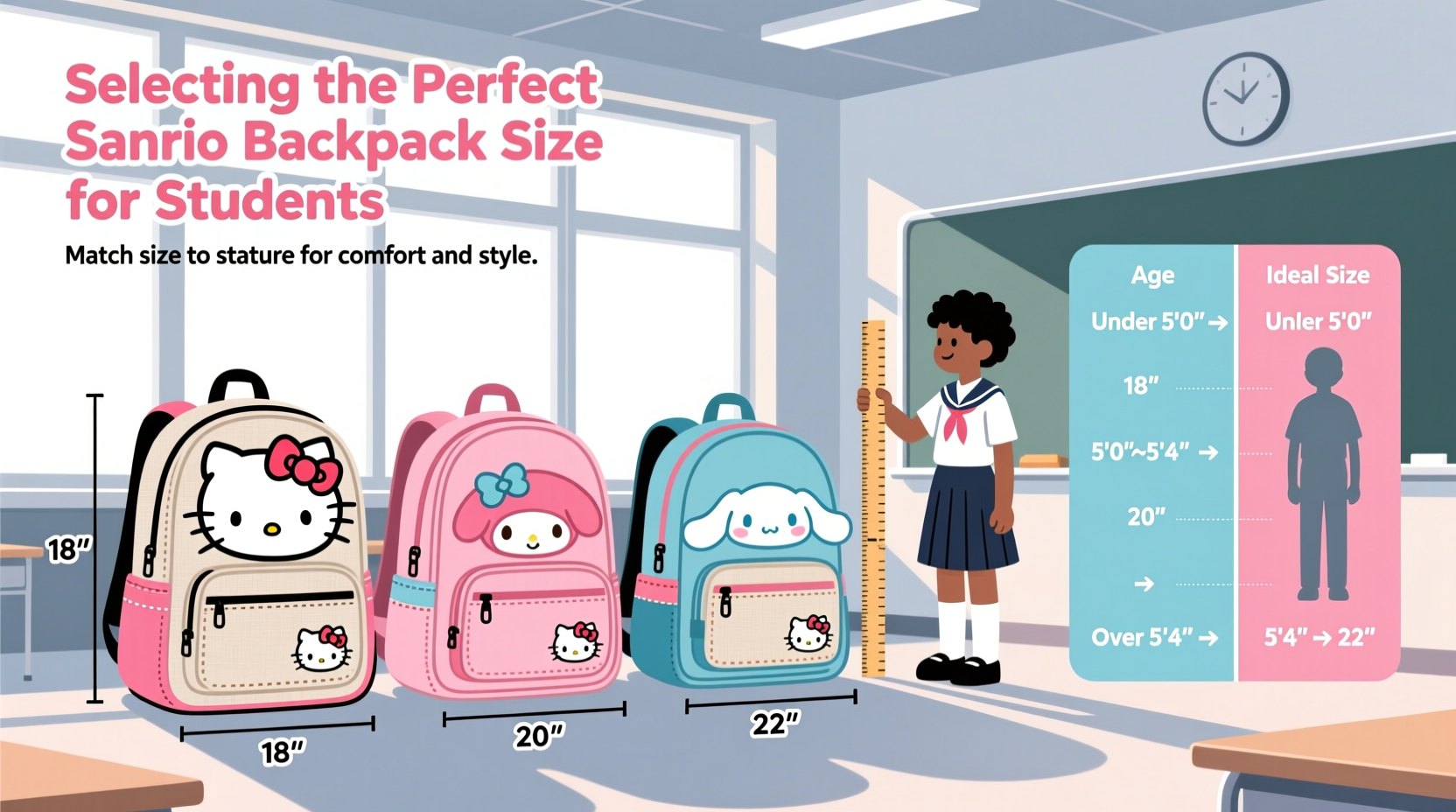
Backpack size is typically measured in liters (L), which indicates volume capacity, or by dimensions—height, width, and depth—usually in inches or centimeters. For students, capacity ranges from 10L to 30L, but not every size fits every student or academic level.
The key is matching the backpack’s physical dimensions and storage capacity to the student’s body frame and daily load. A preschooler carrying only snacks and a change of clothes doesn’t need a 25L bag, while a high school student with multiple textbooks may quickly outgrow a 12L model.
Sanrio offers backpacks across various sizes, often categorized as:
- Toddler/Preschool (ages 3–6): 8–12L, compact design, shorter straps
- Elementary School (ages 7–10): 14–18L, moderate compartments, lightweight build
- Middle & High School (ages 11–18): 20–28L, structured frames, padded straps, laptop sleeves
Selecting the correct category ensures both comfort and functionality.
Matching Backpack Size to Academic Level and Daily Load
Different educational stages demand different organizational needs. A kindergartener might carry a coloring book and lunchbox, while a high school sophomore lugs around a laptop, notebooks, and a water bottle. Here's how to align backpack size with real-world demands.
Early Learners (Ages 3–7)
For young children, small is better. Oversized bags can throw off balance and strain developing spines. Look for Sanrio mini-backpacks in the 10–14L range. These usually feature soft padding, easy-zip closures, and fun prints that appeal to younger fans.
Avoid models with excessive pockets or heavy frames. At this age, simplicity and lightness matter most.
Grades 3–6: Building Independence
Students in upper elementary grades start managing more materials—binders, art supplies, library books. A 16–20L Sanrio backpack provides enough room without being overwhelming. Look for features like:
- Two main compartments (one for books, one for personal items)
- Side mesh pockets for water bottles
- Padded shoulder straps for comfort
- Reflective details for safety during early mornings or late afternoons
Many Sanrio collaborations with brands like JanSport or Loungefly offer durable, mid-sized options perfect for this age group.
Middle and High School: Function Meets Fashion
Older students need more space and better support. A 22–28L backpack allows room for textbooks, laptops (if under 15 inches), stationery, and lunch. At this stage, prioritize structure over cuteness—even if the design is adorable, the backpack must support heavier loads.
Look for:
- Adjustable, padded shoulder straps with chest or sternum straps
- Back ventilation panels to reduce sweating
- Dedicated padded laptop/tablet sleeves
- Front organizer pockets for quick access to pens, phones, or keys
Some Sanrio x Kipling or Sanrio official store models include these ergonomic upgrades while maintaining beloved character themes.
“Backpacks should not exceed 10–15% of a student’s body weight. Proper sizing prevents musculoskeletal strain.” — Dr. Lena Torres, Pediatric Orthopedic Specialist
How to Test Fit a Sanrio Backpack: A Step-by-Step Guide
Even the best-rated backpack won’t help if it doesn’t fit properly. Follow these steps to ensure optimal fit and function:
- Have the student wear the empty backpack and adjust the shoulder straps so the bottom of the bag rests between the shoulder blades and waistline—not sagging below the hips.
- Check strap positioning: Straps should lie flat on the shoulders without digging in. If they press deeply or slip, the bag is too wide or improperly adjusted.
- Add typical daily items (books, lunch, pencil case) and reassess fit. The total weight should feel balanced, not pulling backward or to one side.
- Observe posture: The student should stand upright without leaning forward or to one side. Hunching is a red flag.
- Test mobility: Have them walk, climb stairs, and bend slightly. The backpack should stay secure and not bounce excessively.
If shopping online, refer to the brand’s size chart and compare it to a current well-fitting bag. Many Sanrio retailers provide detailed dimension charts for each model.
Sanrio Backpack Comparison: Size vs. Use Case
| Backpack Type | Capacity | Best For | Key Features | Recommended Age |
|---|---|---|---|---|
| Mini Drawstring Pack | 8–10L | Field trips, preschool | Lightweight, easy carry, no padding | 3–6 |
| Classic Youth Backpack | 14–18L | Elementary school daily use | Padded straps, front pocket, water bottle side | 6–10 |
| Junior Student Backpack | 20–24L | Middle school, light laptop use | Laptop sleeve, organizer panel, breathable back | 10–14 |
| Teen/Tween Sanrio Model | 24–28L | High school, full-day load | Reinforced stitching, sternum strap, USB port (select models) | 13–18 |
Real-Life Example: Picking the Right Bag for Mia, Age 11
Mia is in sixth grade and recently transitioned from elementary to middle school. Her old Sanrio backpack—adorable with a glittery Hello Kitty motif—only holds 15L and lacks a dedicated section for her tablet. She started complaining of shoulder pain after just two weeks of school.
Her parents researched and switched to a 22L Sanrio-themed backpack from a reputable school gear brand. It featured adjustable padded straps, a ventilated back panel, and a cushioned tablet sleeve. The new fit aligned perfectly with her torso, and the weight distribution improved dramatically. Within days, her discomfort faded, and she loved the updated design that still reflected her personality.
This scenario underscores a crucial point: growing students need evolving solutions. Sentimental attachment to a favorite bag shouldn’t override health and practicality.
Essential Checklist Before Buying a Sanrio Backpack
Before finalizing your purchase, go through this checklist to ensure you’re making a smart, sustainable choice:
- ✅ Measure the student’s torso length and compare it to the backpack’s back panel height
- ✅ Confirm the backpack’s volume matches typical daily items (e.g., 3–5 textbooks + lunch + tech)
- ✅ Check for padded, adjustable shoulder straps and consider a chest strap for larger models
- ✅ Verify material durability—water-resistant polyester or ripstop fabric is ideal
- ✅ Ensure easy-access pockets for essentials like masks, hand sanitizer, or transit cards
- ✅ Confirm washability instructions—many Sanrio bags have wipe-clean interiors
- ✅ Evaluate design longevity—will the student still like the theme in six months?
Frequently Asked Questions
Can a Sanrio backpack be both stylish and supportive?
Absolutely. Many modern Sanrio collaborations with established luggage brands include ergonomic features like contoured straps, airflow backs, and reinforced bases—proving that cute and comfortable aren’t mutually exclusive.
How do I know if the backpack is too heavy?
If the student struggles to put it on, leans forward while walking, or complains of numbness or tingling in the arms, the load is too heavy. Reassess contents and consider using lockers or rotating books to reduce daily weight.
Are smaller Sanrio backpacks suitable for high schoolers?
Only if used as secondary bags. A mini 12L Sanrio tote might work for gym clothes or weekend outings, but it’s insufficient for daily academic loads. Prioritize function for primary school bags.
Final Thoughts: Style Shouldn’t Come at the Cost of Comfort
Choosing the right Sanrio backpack size is an investment in both well-being and confidence. When a student feels physically supported and emotionally connected to their bag, it becomes more than a container—it becomes a trusted companion through the school year.
Don’t let nostalgia or impulse override practicality. Take measurements, assess needs, and involve the student in the decision. With the right fit, a Sanrio backpack can deliver charm, comfort, and lasting durability—all in one delightful package.




 浙公网安备
33010002000092号
浙公网安备
33010002000092号 浙B2-20120091-4
Comments
No comments yet. Why don't you start the discussion?