
Onions are among the most ubiquitous ingredients in global cuisine—found sizzling in skillets, layered on sandwiches, or pickled atop tacos. Yet for all their culinary dominance, few pause to consider what a single slice of onion actually contributes nutritionally. Is it merely flavor, or does that thin translucent disc carry measurable health value? The answer lies beyond taste: even a modest portion delivers bioactive compounds, trace nutrients, and metabolic support that accumulate meaningfully over daily meals. Understanding the nutritional reality of one onion slice empowers cooks and eaters alike to appreciate not just its pungency, but its role in long-term wellness. This detailed analysis breaks down the science behind a typical serving, explores its functional components, and demonstrates how such a small element can exert an outsized influence on diet quality.
Definition & Overview
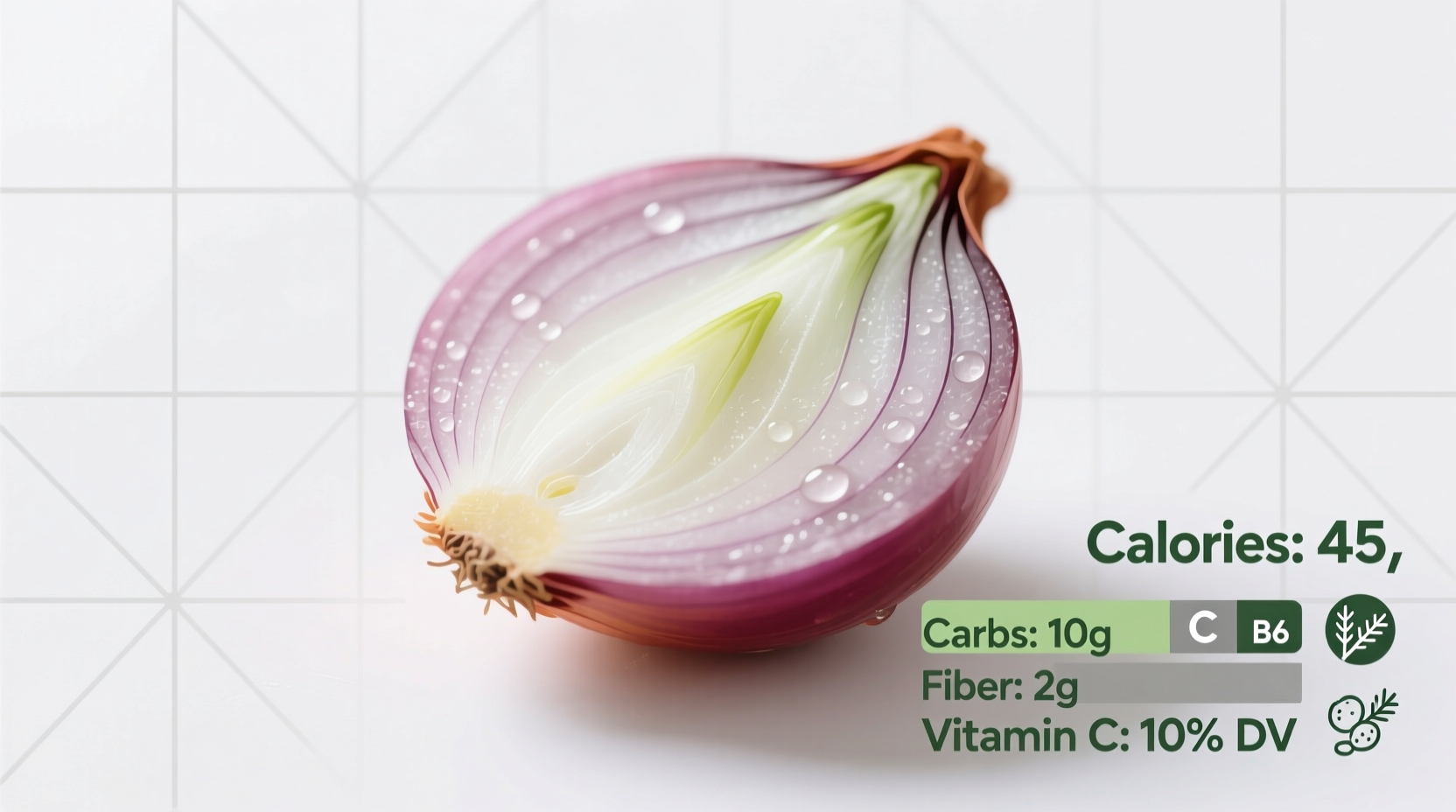
An onion (Allium cepa) is a bulbous vegetable belonging to the Allium genus, which includes garlic, leeks, and chives. It grows underground as a cluster of layered fleshy scales surrounding a central bud, protected by a papery outer skin. Onions vary widely in color—white, yellow, red, and shallot—and each type offers subtle differences in sweetness, sulfur content, and culinary application. A \"single slice\" typically refers to one cross-sectional cut approximately 1/8 to 1/4 inch thick, weighing between 10 and 15 grams depending on diameter and variety.
Nutritionally, onions are classified as non-starchy vegetables. They contribute minimal calories while offering water, fiber, and an array of phytonutrients. Though often used in small quantities due to strong flavor, their cumulative intake across meals adds up. More importantly, onions contain organosulfur compounds and flavonoids—particularly quercetin—that have been studied for anti-inflammatory, cardiovascular, and antimicrobial effects. While no one eats an entire meal composed solely of onion slices, recognizing the biochemical richness within each layer reveals why this ingredient transcends mere seasoning.
Key Characteristics
| Characteristic | Description |
|---|---|
| Flavor Profile | Pungent, sharp, slightly sweet when raw; develops deeper umami and caramelized notes when cooked. |
| Aroma | Sharp, sulfurous; caused by volatile compounds released upon cell disruption (e.g., cutting). |
| Color/Form | Translucent white to pale yellow in flesh; red varieties show anthocyanin pigmentation. Sliced form is semi-transparent with concentric rings. |
| Heat Level | Not spicy in the chili sense, but induces eye irritation and nasal burn due to syn-propanethial-S-oxide gas release. |
| Culinary Function | Aromatic base (mirepoix, sofrito), textural component, acidity balancer, natural preservative via antimicrobial properties. |
| Shelf Life (raw, sliced) | 3–5 days refrigerated in sealed container; degrades faster at room temperature. |
| pH Level | Mildly acidic (~5.3–5.8), contributing to balance in savory dishes. |
Practical Usage: How One Slice Fits Into Daily Nutrition
A single slice of onion may seem negligible—especially when measured against heartier vegetables like broccoli or carrots—but its contribution should not be dismissed. Consider that many diets incorporate onions multiple times per day: in omelets, salads, soups, stir-fries, and condiments. Over time, these micro-portions aggregate into significant nutrient exposure.
In practical terms, a 12-gram slice of raw yellow onion contains approximately:
- Calories: 4–5 kcal
- Carbohydrates: 1 g (including 0.3 g dietary fiber)
- Sugars: 0.5 g (natural fructose, glucose, sucrose)
- Protein: 0.1 g
- Fat: Negligible (<0.05 g)
- Vitamin C: ~1 mg (1–2% of RDI)
- Folate (B9): ~2 mcg (0.5% of RDI)
- Potassium: ~25 mg (0.5% of RDI)
- Calcium & Magnesium: Trace amounts
While percentages appear low, the real value emerges in two areas: phytochemical activity and functional synergy. Quercetin, concentrated in the outer layers of onions (especially red and yellow), acts as a potent antioxidant. Studies suggest regular consumption of quercetin-rich foods correlates with reduced oxidative stress and lower risk of chronic inflammation. Just one slice provides about 1–2 mg of quercetin, and since average daily intake in Western diets ranges from 15–30 mg, frequent use of onions helps meet this threshold.
Culinarily, a single slice exemplifies precision in seasoning. For instance:
- In raw applications: Thinly sliced red onion adds color and mild heat to salads. Soaking in cold water for 10 minutes reduces bite without sacrificing crunch.
- As a flavor foundation: Even one sautéed slice enhances sauces, stews, or grain bowls by releasing aromatic volatiles during cooking.
- For digestive balance: Raw onion stimulates gastric secretions. A small amount before meals may aid digestion in healthy individuals.
- Pairing guidance: Combine with fats (olive oil, avocado) to increase absorption of fat-soluble antioxidants; pair with vitamin C-rich foods (bell peppers, citrus) to stabilize quercetin.
Pro Tip: Never discard the outermost layers after peeling. These contain the highest concentration of quercetin. If too fibrous for eating, simmer them in stocks or broths to extract beneficial compounds without affecting texture.
Variants & Types: Nutritional Differences Across Onion Forms
Not all onion slices are nutritionally identical. Varietal differences affect sugar content, pigment levels, and sulfur compound profiles. Here's how common types compare based on a standard 12–15 gram raw slice:
| Type | Flavor | Key Nutrients | Best Uses |
|---|---|---|---|
| Yellow Onion | Sharp, pungent raw; deeply sweet when caramelized | Highest quercetin content (~2–3 mg/slice); moderate sulfur | Sautéing, roasting, soups, mirepoix |
| Red Onion | Bright, mildly spicy with floral notes | Rich in anthocyanins (antioxidants); slightly more fiber | Raw applications: salads, salsas, pickling, garnishes |
| White Onion | Clean, crisp, less lingering aftertaste | Higher water content; lower phenolic content than yellow/red | Mexican cuisine, pico de gallo, quick-cook dishes |
| Shallot | Delicate, garlicky-sweet complexity | More allicin-like compounds; higher mineral density | Vinaigrettes, reductions, fine dining sauces |
| Green Onions (Scallions) | Mild, fresh, grassy (bulb more intense) | Good source of vitamin K (green tops); lower sulfur | Garnish, stir-fries, Asian dishes, raw finishes |
Dried onion flakes or powder represent concentrated forms. A single slice equivalent in dried form (~1 gram) retains similar nutrients per weight but lacks moisture and some volatile actives. These are useful for shelf-stable seasoning blends but do not replicate the full sensory or physiological impact of fresh onion.
Comparison with Similar Ingredients
Onions are frequently confused with related Alliums, though key distinctions exist in both nutrition and function:
| Ingredient | Differences from Onion Slice | When to Substitute? |
|---|---|---|
| Garlic Clove (1 small) | Higher allicin content; stronger antimicrobial action; more pungent; ~4x more calories per gram | No direct substitution—use 1/2 clove minced for depth where onion isn’t desired |
| Leek (1 slice, 1/4” thick) | Milder, sweeter; higher vitamin A; requires thorough cleaning; more fibrous | Yes, in soups/stews needing subtlety; not ideal raw |
| Chives (1 tbsp chopped) | Herb-like delicacy; no layered structure; rich in vitamin K; negligible quercetin | Only as garnish replacement; never for foundational flavor |
| Shallot (same size slice) | More complex aroma; naturally sweeter; acceptable 1:1 substitute in most cases | Yes—especially in vinaigrettes or delicate sauces |
The takeaway: while interrelated, each Allium serves distinct roles. A single onion slice cannot be fully replicated by another, particularly in applications requiring structural integrity, enzymatic browning, or sulfur-driven aroma development.
Practical Tips & FAQs
Does cooking destroy nutrients in onions?
Some loss occurs, particularly with water-soluble vitamin C and heat-sensitive thiosulfinates. However, cooking increases the bioavailability of quercetin aglycones—the form most readily absorbed by the body. Light sautéing (3–5 minutes) preserves benefits while enhancing antioxidant uptake. Avoid boiling for extended periods, which leaches compounds into water.
Why do onions make me cry, and can I prevent it?
Cutting ruptures cells containing sulfoxides and the enzyme alliinase, producing syn-propanethial-S-oxide—a volatile irritant gas. To minimize tears: chill onions for 30 minutes before slicing, use a sharp knife (cleaner cuts = fewer ruptured cells), work near running water or under a vent hood, or wear kitchen goggles.
Are there any risks to eating raw onion?
For most people, no. However, those with irritable bowel syndrome (IBS) may experience bloating or discomfort due to fructans (a fermentable carbohydrate). Cooking reduces FODMAP content slightly, but low-FODMAP diets often limit onion entirely. In such cases, infused oils (e.g., onion-infused olive oil, strained) offer flavor without triggering symptoms.
How should I store sliced onions?
Place in an airtight container and refrigerate immediately. Use within 3–4 days. Do not leave at room temperature for more than 2 hours, as they spoil quickly and may promote bacterial growth. Contrary to myth, storing cut onions near other produce will not “spoil” them—it’s safe if properly contained.
Can I freeze onion slices?
Yes, though texture changes significantly upon thawing—they become soft and mushy, unsuitable for raw use. Best reserved for cooked dishes like soups, casseroles, or sauces. Flash-freeze slices on a tray first, then transfer to freezer bags to prevent clumping.
Is organic onion worth the extra cost?
Onions rank low on the Environmental Working Group’s “Dirty Dozen” list due to protective outer skins that shield inner layers from pesticide residue. Conventional onions are generally safe. However, choosing organic supports sustainable farming practices and avoids synthetic sprout inhibitors used in storage.
Storage Hack: Extend freshness by wrapping uncut onions in paper towels and placing them in a mesh bag in a cool, dark, well-ventilated area. Never store near potatoes, which emit moisture and ethylene gas, accelerating decay.
\"We underestimate the power of repeated micro-exposures. An onion slice here, another there—they’re not isolated events. They build a matrix of protective phytochemicals over time. That’s preventive nutrition in action.\" — Dr. Elena Torres, Food Biochemist & Nutritional Epidemiologist
Summary & Key Takeaways
A single slice of onion, though modest in volume and caloric load, plays a disproportionately important role in nutritional health and culinary performance. Far from being just background flavor, it delivers measurable amounts of antioxidants like quercetin, supports gut microbiota through prebiotic fibers, and enhances the absorption of nutrients in accompanying foods. Its sulfur compounds contribute to detoxification pathways and immune modulation, while its low glycemic impact makes it suitable even for carbohydrate-conscious diets.
From a practical standpoint, understanding how varietal choices—yellow, red, white, or shallot—affect nutrient delivery allows for intentional cooking. Whether eaten raw for maximum flavonoid retention or gently cooked to develop sweetness and digestibility, onions remain one of the most versatile and scientifically supported vegetables in the kitchen.
To harness the full potential of this everyday ingredient:
- Use outer layers in stocks to extract hidden nutrients.
- Prefer fresh over powdered forms when possible for broader phytochemical profiles.
- Combine with healthy fats and acidic components to boost nutrient synergy.
- Store properly to maintain quality and reduce food waste.
- Recognize that cumulative intake matters—small portions add up across meals and weeks.
Final Thought: Next time you reach for an onion, remember—you're not just adding flavor. You're incorporating a biologically active food with centuries of traditional use and modern scientific validation. One slice may be small, but its impact is anything but.




 浙公网安备
33010002000092号
浙公网安备
33010002000092号 浙B2-20120091-4
Comments
No comments yet. Why don't you start the discussion?