
Facebook remains one of the most widely used social platforms globally, connecting billions through shared updates, photos, and interactions. However, with convenience comes responsibility—especially when it comes to managing personal information. Many users are unaware of how much data is accessible or who can see their posts, profile details, and activity. Taking a few minutes to review and customize your Facebook privacy settings can significantly enhance your digital safety and peace of mind.
This guide walks you through every essential privacy setting on Facebook, explaining what each option does and how to adjust them for maximum control. Whether you're new to the platform or have been using it for years, these steps will help you protect your identity, limit exposure, and tailor your experience to your comfort level.
Understanding Why Privacy Matters on Facebook
Social media platforms collect vast amounts of user data, from location history to behavioral patterns. While Facebook uses this information to personalize ads and content, unmanaged privacy settings can expose sensitive details to strangers, advertisers, or even malicious actors. Oversharing—even unintentionally—can lead to identity theft, targeted scams, or reputational risks.
According to the Pew Research Center, 74% of adult Facebook users are not confident that the platform protects their data adequately. Yet, only a fraction regularly check their privacy configurations. The good news? Facebook offers robust tools to limit visibility and manage permissions—you just need to know where to look.
“Most privacy breaches on social media stem from default settings, not hacking. Users who take 10 minutes to adjust their controls reduce their exposure by over 80%.” — Dr. Lena Torres, Digital Security Researcher at CyberSafe Institute
Step-by-Step: How to Access Your Facebook Privacy Settings
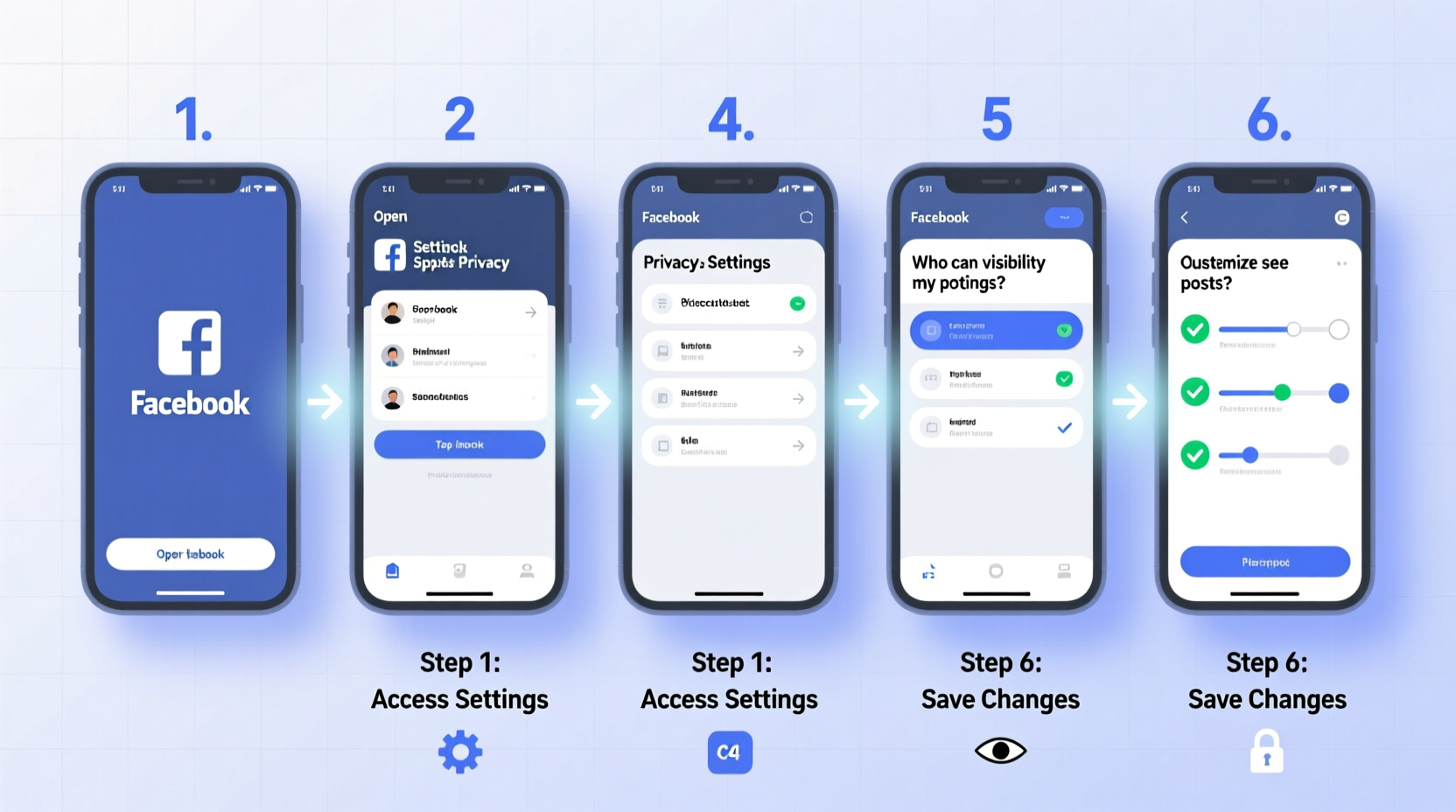
Navigating Facebook’s interface can be overwhelming, but accessing privacy controls is straightforward once you know the path. Follow these steps whether you're using a mobile device or desktop browser:
- Log in to Facebook using your credentials on the app or website.
- Click the downward-facing arrow in the top-right corner (desktop) or tap the menu icon (three horizontal lines) on mobile.
- Select Settings & Privacy, then click Privacy Checkup.
- If Privacy Checkup doesn’t appear, go directly to Settings and select Privacy from the left-hand menu.
This central hub allows you to review key aspects of your account's visibility and data usage. Let’s break down each critical section and how to configure it properly.
1. Who Can See Your Future Posts?
This setting determines the audience for all new posts unless manually changed later.
- Public: Anyone on or off Facebook can view.
- Friends: Only people you’ve accepted as friends.
- Only Me: Private; visible solely to you.
- Custom: Choose specific friends or lists.
2. Limit Past Post Visibility
If you've previously shared content publicly, this tool lets you retroactively restrict access.
- In Privacy Settings, find \"Limit the audience for posts you've shared with friends of friends or Public?\"
- Click Limit Past Posts.
- Confirm the action. All prior posts set to “Public” or “Friends of Friends” will now only be visible to your current friends.
Note: This does not affect posts tagged by others or content shared externally.
3. Review Profile Information Visibility
Your profile contains personal details like birthday, hometown, education, and workplace. Each field has its own audience selector.
- Go to your profile and click Edit Profile.
- Hover over any section (e.g., About, Contact Info).
- Click the audience icon (globe, silhouette, lock) next to each item.
- Select desired visibility: Public, Friends, Only Me, or Custom.
Be especially cautious with birth year and location details, which can aid identity fraud if exposed.
Managing Tagging and Timeline Controls
Tags allow others to link you in photos, posts, or comments. Without proper oversight, unwanted associations may appear on your timeline.
Enable Review Before Tags Appear
- Go to Settings & Privacy > Settings > Profile and Tagging.
- Turn on \"Review posts you're tagged in before they appear on your timeline\".
- Optionally enable \"Review tags people add to your posts before friends see them\".
Once enabled, you’ll receive notifications whenever someone tries to tag you. You can then approve, reject, or remove the tag.
Control Who Can Add You in Posts
- Everyone – Any user can mention or tag you.
- Friends – Recommended for most users.
- Friends except acquaintances – More restrictive.
- Only Me – Prevents tagging entirely.
Adjusting Ad and Data Permissions
Facebook personalizes ads based on your activity both on and off the platform. While you can't eliminate ads, you can limit data tracking.
Manage Off-Facebook Activity
- Navigate to Settings > Your Facebook Information > Off-Facebook Activity.
- Click Clear History to disconnect past behavior from your profile.
- Toggle off \"Future Collection\" to stop logging activity from other apps and websites.
This reduces ad targeting accuracy but enhances privacy. Some features may function less effectively as a result.
Opt Out of Personalized Ads
- Go to Ads Settings under the main Settings menu.
- Under Ad Preferences, select Hide ad topics to block certain categories.
- Choose Limit ad targeting using your activity on Facebook Company Products.
| Setting | Recommended Option | Risk of Default |
|---|---|---|
| Future Posts Audience | Friends | Public exposure |
| Tagging Approval | On | Unapproved tags visible |
| Off-Facebook Activity | Turned Off | Extensive tracking |
| Birthday Visibility | Only Month/Day (not year) | ID theft vulnerability |
Mini Case Study: Recovering Control After a Privacy Incident
Sarah, a 32-year-old teacher, discovered that a photo from a college party—tagged years ago—was appearing in search engine results. A parent recognized her and questioned her professionalism. Upset, Sarah realized she had never reviewed her privacy settings.
She followed the steps outlined here: limited past posts, restricted tagging, hid her birth year, and cleared her off-Facebook activity. Within days, the photo disappeared from public view. She also enabled two-factor authentication for added security. By dedicating less than 30 minutes, Sarah regained control of her digital footprint and avoided further complications.
Frequently Asked Questions
Can I make my entire profile private?
You can’t make your entire profile invisible, but you can restrict nearly every element. Set future posts to “Only Me,” hide personal details, disable tagging, and limit searchability under Settings > Privacy > How People Find and Contact You. Note: Your name and profile picture remain visible to friends of friends unless adjusted individually.
Does limiting audience delete my old posts?
No. Using “Limit Past Posts” only changes who can see them—it doesn’t erase content. The posts stay on your timeline but become invisible to anyone outside your current friend list.
Will changing privacy settings affect my ability to connect with others?
Not significantly. Friends can still message, comment, and interact normally. The changes primarily prevent strangers and algorithms from accessing your personal content. You maintain full functionality within your trusted network.
Essential Privacy Checklist
- ✅ Run Privacy Checkup tool
- ✅ Set future posts to \"Friends\"
- ✅ Limit past post visibility
- ✅ Review and restrict profile info (birthday, email, phone)
- ✅ Enable tag review before approval
- ✅ Disable future off-Facebook activity tracking
- ✅ Opt out of personalized ad targeting
- ✅ Restrict who can send friend requests (set to \"Friends of Friends\")
Take Charge of Your Digital Identity Today
Your online presence should reflect your values—not default assumptions made by a platform. Facebook gives you powerful tools to safeguard your information, but they require proactive use. Spending less than half an hour adjusting your privacy settings can prevent years of regret.
Start today. Revisit these settings every few months, especially after major life events or platform updates. Encourage friends and family to do the same. In an age where data is currency, privacy isn’t optional—it’s essential.




 浙公网安备
33010002000092号
浙公网安备
33010002000092号 浙B2-20120091-4
Comments
No comments yet. Why don't you start the discussion?