
Wearing a Casio watch is more than just keeping track of time—it’s about personal style, durability, and practicality. Whether you own a classic F-91W, a rugged G-Shock, or a sleek Edifice model, the strap plays a crucial role in both comfort and appearance. Over time, straps wear out, stretch, or simply no longer match your wardrobe. Fortunately, adjusting or replacing a Casio watch strap doesn’t require professional help. With basic tools and a little patience, you can customize your watch to fit perfectly or give it a fresh new look in under 15 minutes.
Why Adjusting or Replacing Your Strap Matters
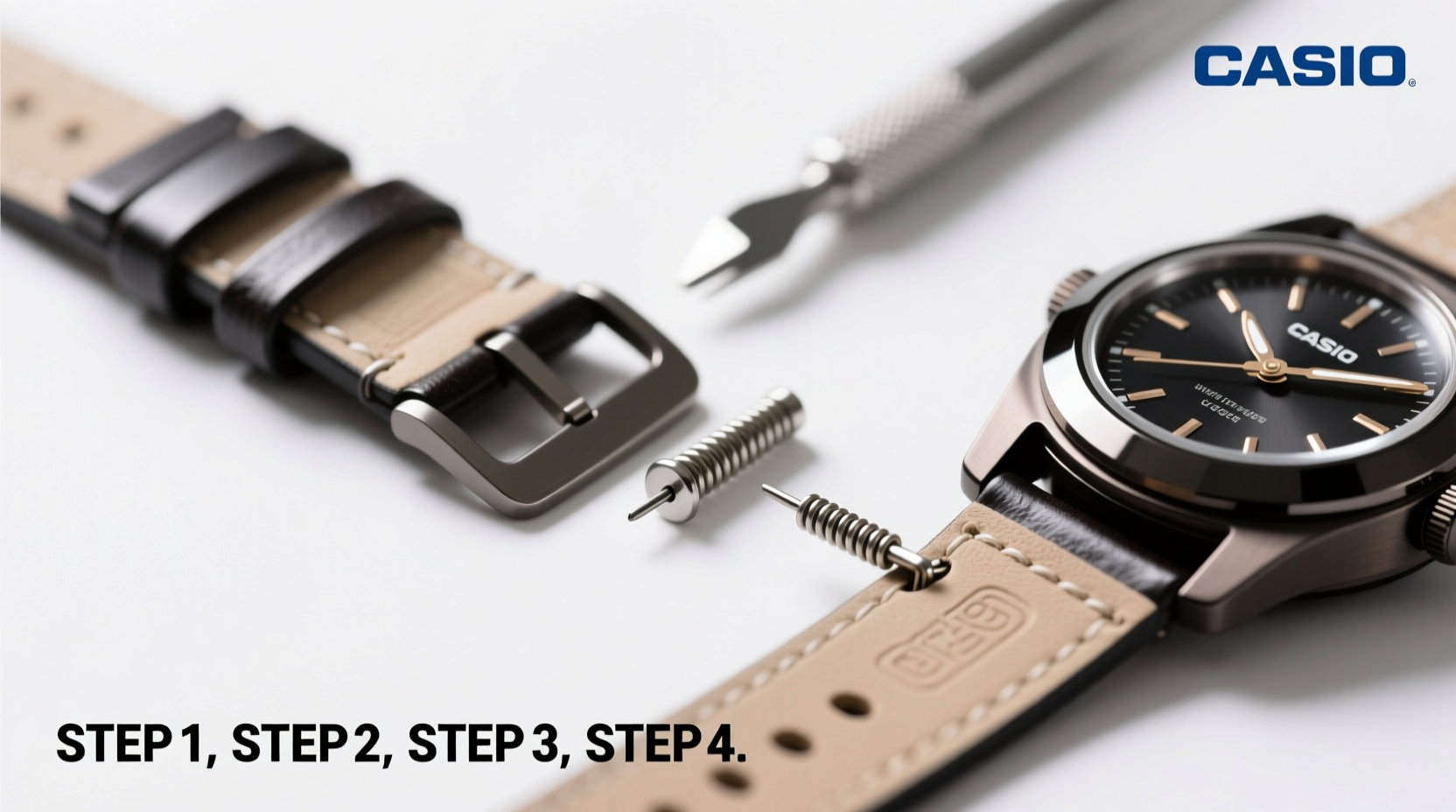
The right strap ensures your Casio stays securely on your wrist during daily activities, sports, or outdoor adventures. A loose strap can lead to accidental drops, while an overly tight one may cause discomfort or skin irritation. Beyond function, the strap influences aesthetics. Swapping a worn-out resin band for a stainless steel bracelet or a stylish NATO strap instantly elevates your look. Regular maintenance also extends the life of your watch case by reducing strain on the spring bars and lugs.
Tools You’ll Need
Most Casio watches use standard spring bars that connect the strap to the watch case via lugs. To adjust or replace the strap, gather these essential tools:
- Spring bar removal tool (or small flathead screwdriver) – Used to compress the spring bar pins.
- Soft cloth or mat – Protects your watch face during handling.
- New strap (if replacing) – Ensure it matches your watch’s lug width (common sizes: 16mm, 18mm, 22mm).
- Tweezers (optional) – Helpful for retrieving small parts.
- Magnifying glass (optional) – Useful for seeing tiny mechanisms clearly.
Many Casio models, especially digital ones like the F-91W, feature integrated straps that allow pin adjustments without removing the entire band. For full replacements, however, accessing the spring bars is necessary.
Step-by-Step Guide to Adjusting a Casio Resin Strap
Resin straps are common on entry-level and sport-focused Casio watches. They’re durable and adjustable using built-in holes and removable links. Follow this process to achieve a snug fit:
- Lay your watch on a soft surface – Prevent scratches by placing it face-down on a microfiber cloth.
- Locate the adjustment holes – Most resin bands have multiple perforations along both sides. Choose the hole closest to your ideal wrist size.
- Remove excess links – Use a small pin pusher or paperclip to press out the metal pins securing the unwanted sections. Push gently from the inner side of the strap until the pin slides out.
- Reattach the remaining strap – Align the shortened end with the watch case and reinsert the pin. Make sure it clicks into place securely.
- Test the fit – Slide the watch onto your wrist. It should sit firmly without pinching or sliding excessively.
How to Replace a Casio Watch Strap: Full Removal and Installation
If you're switching to a different style—like leather, metal, or nylon—or replacing a damaged strap, follow this detailed sequence:
- Position the watch correctly – Place it face-down on a soft pad. Avoid pressing on the crystal or buttons.
- Identify the spring bar ends – Look between the lugs where the strap connects. You’ll see two narrow metal rods (spring bars) protruding slightly on each side.
- Insert the removal tool – Slide the forked end of the spring bar tool over the bar, aligning the notches with the pin. Apply gentle inward pressure to compress the spring bar into the strap.
- Slide the strap off – While holding pressure, pull the strap away from the watch. Repeat on the other side.
- Prepare the new strap – Confirm the lug width matches your watch. Insert the spring bar into the new strap if not pre-installed.
- Attach the new strap – Hold one end of the spring bar against the watch lug hole. Angle the strap upward and press the bar into the hole until it snaps into place. Repeat on the opposite side.
- Check stability – Gently tug on the strap to ensure it won’t detach unexpectedly.
| Action | Do | Don't |
|---|---|---|
| Removing spring bars | Use proper tool; work slowly | Apply excessive force |
| Installing new strap | Align spring bar straight | Force misaligned bar |
| Handling tools | Work over a tray to catch parts | Work over carpet or open space |
Mini Case Study: Upgrading a G-Shock DW-5600E
Jamal owned a Casio G-Shock DW-5600E for five years. The original black resin strap had become stiff and cracked at the bends. He wanted a more modern look without buying a new watch. After measuring the lug width (20mm), he purchased a two-tone stainless steel bracelet online. Using a $5 spring bar tool, he replaced the strap in 12 minutes. Not only did the watch feel more premium, but the adjustable clasp provided a better fit over his jacket sleeves. “It looks like I upgraded the whole watch,” he said. “And it cost less than $15.”
“Replacing a watch strap is the easiest way to refresh your timepiece. A well-fitted strap enhances both comfort and longevity.” — Daniel Reyes, Watch Repair Technician with 14 years of experience
Choosing the Right Replacement Strap
Casio offers compatibility across many models, but always verify dimensions before purchasing. Common lug widths include:
- F-91W: 16mm
- G-Shock series (e.g., DW-5600): 20mm
- Edifice analog-digital models: 18–22mm
Popular strap types include:
- Resin/Plastic: Lightweight, water-resistant, ideal for casual or athletic wear.
- Stainless Steel: Durable and polished; great for formal settings.
- NATO or Perlon: Textile straps that lie flat, offer backup loops for safety, and come in vibrant colors.
- Leather: Best for dressier Casio models like the MTP series; avoid prolonged water exposure.
FAQ
Can I adjust my Casio strap without any tools?
Yes, for minor sizing on resin straps with multiple holes, you can use a paperclip or nail to push out the pins. However, a proper spring bar tool reduces the risk of damage and slipping.
Are all Casio watch straps interchangeable?
No. Straps must match the lug width and be compatible with the attachment system. Some vintage or specialty models have unique fittings, so always double-check specifications.
How often should I replace my watch strap?
Every 1–2 years for frequent wearers, depending on material. Inspect for cracks, fraying, or stretched holes. Immediate replacement is recommended if the spring bar feels loose or the strap detaches easily.
Conclusion
Adjusting or replacing your Casio watch strap is a simple yet powerful way to enhance comfort, extend your watch’s lifespan, and express your personal style. Whether you’re tightening a loose band or transforming a classic digital model with a sleek metal bracelet, the process is accessible to anyone willing to try. With minimal investment in tools and time, you gain greater satisfaction from a watch that fits perfectly and reflects your taste.




 浙公网安备
33010002000092号
浙公网安备
33010002000092号 浙B2-20120091-4
Comments
No comments yet. Why don't you start the discussion?