
Purchasing a property to rent out can be one of the most effective ways to build long-term wealth. However, turning a rental into a profitable venture requires more than just buying a house and listing it on Airbnb or Craigslist. Success lies in strategic planning, market analysis, financial discipline, and active management. This guide walks through every critical phase—from initial research to scaling your portfolio—with actionable insights to help you maximize returns.
Step 1: Define Your Investment Goals and Strategy
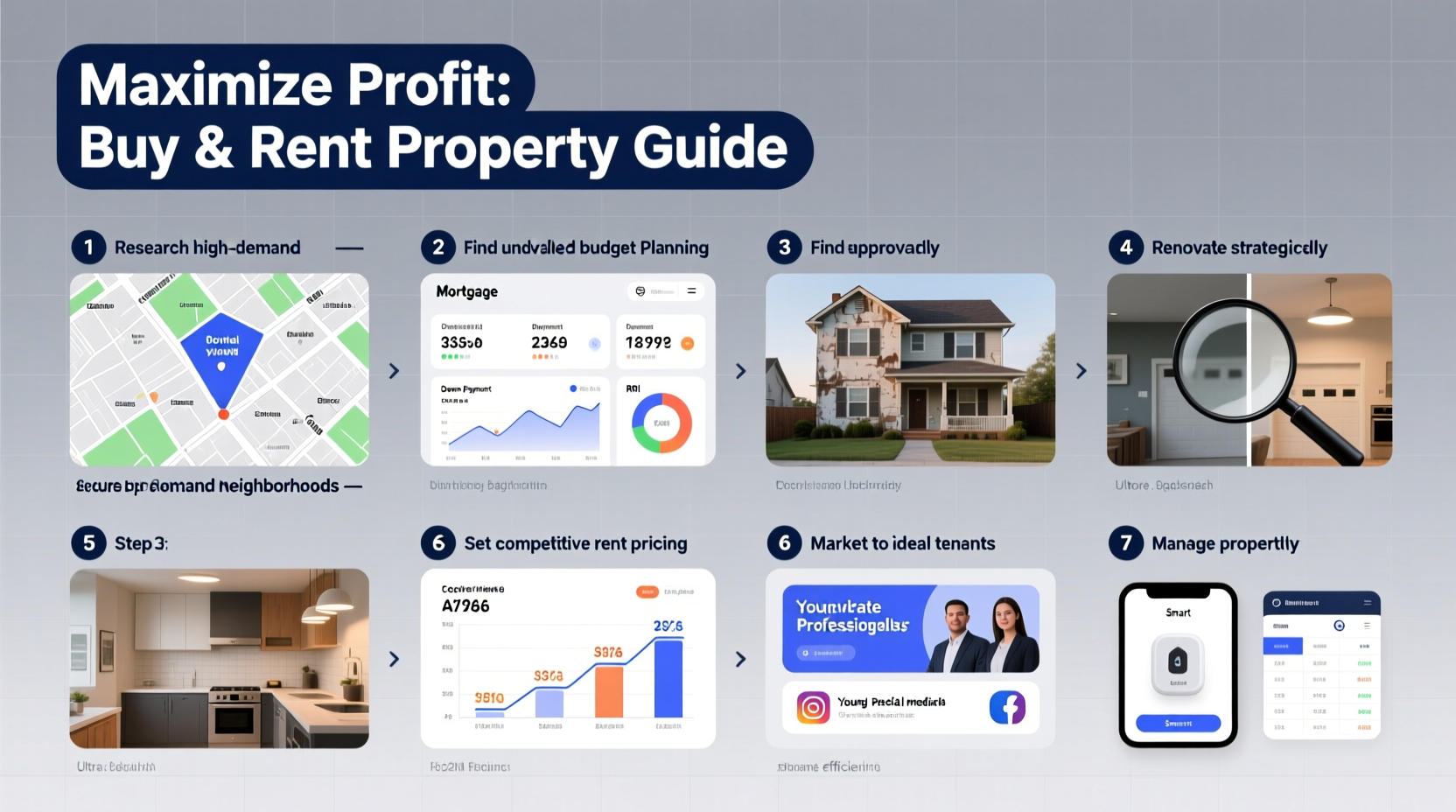
Before viewing a single property, clarify your objectives. Are you aiming for steady monthly cash flow, long-term appreciation, or both? Your answer shapes your entire approach. Investors typically follow one of three strategies:
- Cash Flow Focus: Prioritize properties in high-demand rental areas with strong tenant demand and low vacancy rates.
- Growth Markets: Target up-and-coming neighborhoods where property values are expected to rise significantly over time.
- Short-Term Rentals: Buy in tourist-heavy or business-travel hubs to leverage platforms like Airbnb or Vrbo for higher nightly rates.
Step 2: Research and Select the Right Location
Location remains the most influential factor in real estate profitability. A well-maintained home in a declining area will struggle to generate consistent returns. Look for markets with:
- Stable or growing population
- Low crime rates
- Access to employment centers, schools, and public transport
- Rising median rents and low vacancy rates
Use tools like Zillow, Redfin, and local Multiple Listing Service (MLS) databases to compare price-to-rent ratios. A general rule: if the annual rental income is at least 1% of the purchase price per month (e.g., $1,000 rent on a $120,000 home), it’s a solid starting point.
“Location isn’t just about today’s numbers—it’s about tomorrow’s potential. I look for cities with expanding infrastructure and job growth.” — Marcus Reed, Real Estate Investor with 15+ years of experience
Step 3: Secure Financing and Determine Budget
Most investors don’t pay cash. Understanding financing options helps preserve capital and boost return on investment (ROI). Consider these paths:
| Financing Type | Down Payment | Interest Rate | Best For |
|---|---|---|---|
| Conventional Loan | 15–25% | Competitive | Primary investors with strong credit |
| FHA Loan (with occupancy) | 3.5% | Lower | First-time buyers living in one unit |
| Portfolio Loan | 20–30% | Higher | Non-traditional properties or multiple units |
| Hard Money Loan | 20–50% | High (short-term) | Fix-and-flip investors |
Beyond the mortgage, budget for closing costs (3–5%), repairs, property management, insurance, taxes, and vacancies. A common mistake is underestimating operating expenses, which can erode profits quickly.
Step 4: Acquire and Prepare the Property for Tenants
Once financing is approved, focus shifts to acquisition and preparation. The goal is to attract quality tenants while minimizing turnover and maintenance costs.
- Negotiate the Purchase: Work with a buyer’s agent experienced in investment properties. Aim to buy below market value through off-market deals or motivated sellers.
- Inspect Thoroughly: Hire a licensed inspector to uncover structural, electrical, plumbing, or pest issues. Use findings to renegotiate price or request seller repairs.
- Make High-ROI Upgrades: Focus on improvements that increase rentability without overspending. Examples: fresh paint, modern fixtures, energy-efficient appliances, and landscaping.
- Set Competitive Rent: Analyze comparable listings in the area. Pricing slightly below market can reduce vacancy and attract reliable tenants faster.
Mini Case Study: Turning a Fixer-Upper into a Cash Cow
In 2021, Sarah bought a two-bedroom house in Indianapolis for $135,000—$15,000 below market due to outdated interiors. She invested $22,000 in renovations: new flooring, kitchen update, and HVAC replacement. After leasing it for $1,650/month, her gross annual income reached $19,800. With expenses totaling $9,200/year, her net cash flow was $10,600—a 6.5% return on her total investment. Within five years, appreciation and rent increases pushed her ROI above 10%.
Step 5: Optimize Management and Scale Your Portfolio
Passive income doesn’t mean passive management. Effective oversight ensures tenant satisfaction, timely rent collection, and property upkeep.
- Hire a Property Manager: If you lack time or live far from the property, a manager (typically costing 8–12% of rent) handles maintenance, screening, and communications.
- Screen Tenants Rigorously: Run credit checks, verify income, call references, and require security deposits. Quality tenants reduce damage and late payments.
- Automate Finances: Use platforms like Stessa or BiggerPockets to track income, expenses, and taxes. Set up direct deposit for rent collection.
- Reinvest Profits: Use positive cash flow to save for down payments on future properties or fund upgrades that justify rent increases.
To scale efficiently, consider transitioning from single-family homes to multi-unit buildings. A fourplex, for example, generates four rental streams under one roof, reducing management overhead per unit.
Checklist: Key Actions Before Renting Out Your Property
- ✅ Obtain landlord insurance
- ✅ Comply with local rental laws and safety codes
- ✅ Install smoke and carbon monoxide detectors
- ✅ Conduct lead-based paint disclosure (if pre-1978)
- ✅ Draft a legally sound lease agreement
- ✅ Take move-in photos and document condition
- ✅ Set up a separate bank account for rental income/expenses
Common Pitfalls to Avoid
Even seasoned investors make mistakes. These missteps can turn a promising asset into a financial drain:
- Over-leveraging: Taking on too much debt leaves you vulnerable during downturns or unexpected repairs.
- Underpricing or overpricing rent: Both hurt profitability—underpricing wastes income; overpricing causes vacancies.
- Skipping tenant screening: One bad tenant can cost thousands in damages and legal fees.
- Ignores maintenance: Deferred repairs lead to larger, more expensive problems later.
FAQ
How much should I charge for rent?
Research similar properties in your neighborhood. Aim for 1–1.5% of the property’s value per month as a benchmark. Adjust based on amenities, condition, and local demand.
Do I need an LLC for my rental property?
While not required, forming an LLC offers liability protection and may provide tax advantages. Consult a real estate attorney or CPA to determine if it makes sense for your situation.
Is now a good time to invest in rental property?
It depends on your market and goals. While interest rates have risen since 2023, many areas still offer strong rental demand and appreciation potential. Focus on fundamentals—location, cash flow, and long-term outlook—rather than timing the market perfectly.
Conclusion: Build Wealth One Property at a Time
Buying a rental property isn’t a get-rich-quick scheme—it’s a disciplined, long-term strategy for building equity and generating passive income. By following a structured approach, conducting thorough research, and managing operations effectively, you can create a self-sustaining asset that pays you monthly while appreciating in value. The key is to start small, learn continuously, and reinvest wisely. Whether you're aiming for one rental or a full portfolio, each step forward brings you closer to financial independence.




 浙公网安备
33010002000092号
浙公网安备
33010002000092号 浙B2-20120091-4
Comments
No comments yet. Why don't you start the discussion?