
Making international calls from the United States used to be complicated and expensive. Long-distance charges, confusing dialing codes, and unreliable connections made staying in touch with family, friends, or business contacts abroad a chore. Today, technology has transformed the landscape. With the right approach, you can make clear, reliable calls across borders for just pennies per minute—or even free.
This guide walks you through every essential step, from understanding international dialing formats to choosing affordable calling methods. Whether you're contacting a relative overseas or managing global clients, these strategies will help you communicate efficiently without draining your wallet.
Understanding International Dialing Format
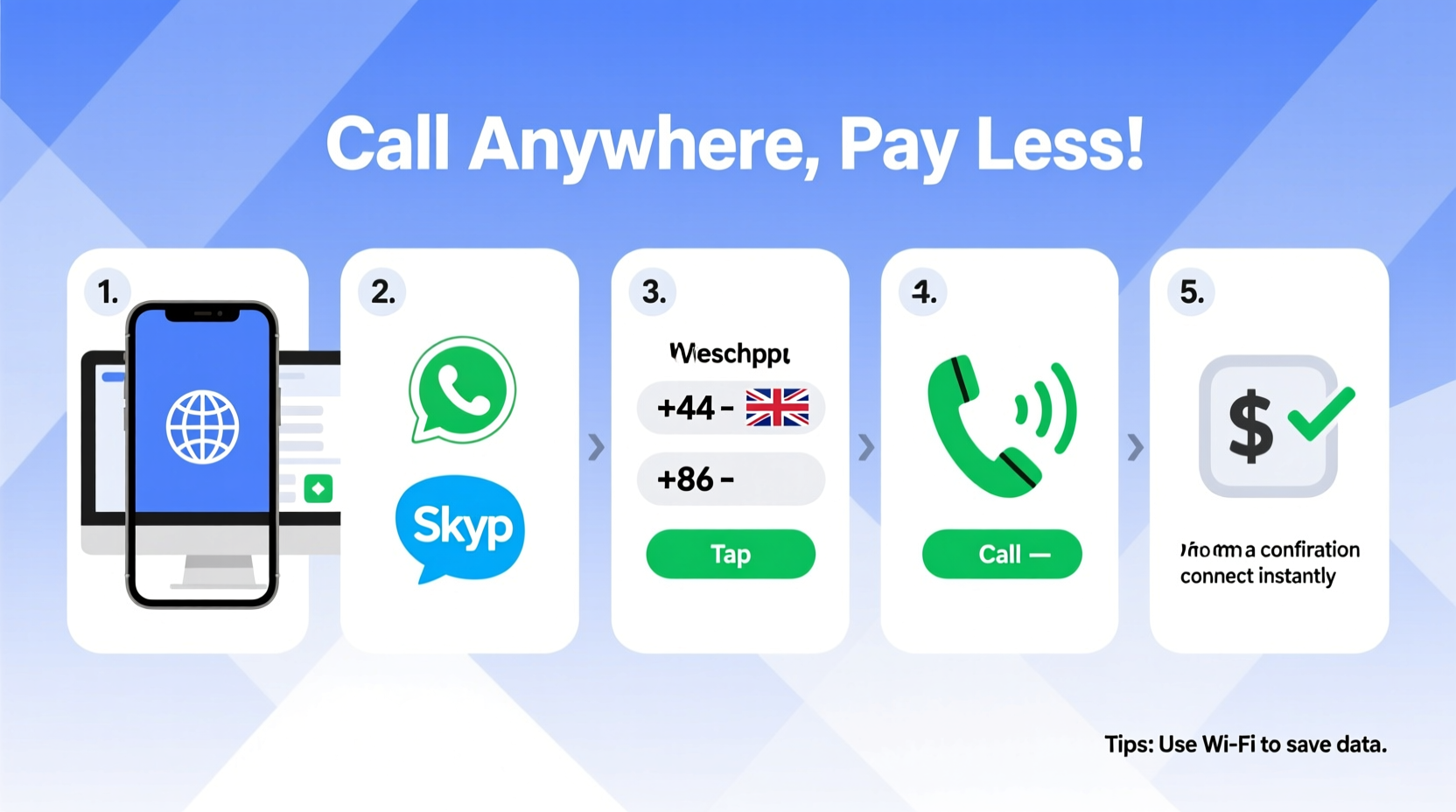
To call another country from the U.S., you must follow a standardized sequence of numbers. The format ensures your call is routed correctly through international networks. Here's how it works:
- Exit Code (011): This signals that your call is leaving the U.S. and entering an international system.
- Country Code: A unique number assigned to each country (e.g., 44 for the UK, 33 for France).
- Area or City Code: Regional identifier within the destination country (often omitting the leading zero used domestically).
- Local Phone Number: The recipient’s actual phone number.
For example, to call London, UK: Dial 011 + 44 + 20 + XXXX XXXX (011 = U.S. exit code | 44 = UK country code | 20 = London area code)
Step-by-Step Guide to Making an International Call
Follow this five-step process to place an international call successfully and affordably:
- Verify the Recipient’s Number Format
Confirm the full number including country and city codes. Misplaced digits can lead to wrong numbers or failed connections. - Determine the Best Time to Call
Check the time difference using tools like WorldTimeBuddy.com to avoid calling too early or late. - Choose Your Calling Method
Decide whether to use your mobile carrier, VoIP app, calling card, or Wi-Fi-based service based on cost and quality needs. - Dial Using Correct Sequence
Enter: 011 + [Country Code] + [City Code] + [Local Number]. Alternatively, use \"+\" instead of \"011\" on most smartphones. - Monitor Call Quality and Duration
Keep track of connection stability and length, especially if paying per minute.
Affordable Calling Options Compared
Not all calling methods are created equal. Costs vary widely depending on provider and technology. Below is a comparison of common options available to U.S. residents:
| Method | Cost Per Minute | Call Quality | Best For |
|---|---|---|---|
| Traditional Mobile Carrier (AT&T, Verizon) | $0.25 – $2.00 | High | Occasional calls, no setup needed |
| Google Voice | $0.01 – $0.10 | Very High | Regular callers, computer users |
| Skype Out | $0.02 – $0.15 | High | Precise budgeting, global reach |
| Viber Out | $0.01 – $0.12 | Good | Mobile-first users |
| International Calling Cards | $0.05 – $0.25 | Variable | Prepaid control, limited tech access |
| WhatsApp / FaceTime Audio | Free (Wi-Fi required) | Excellent | Smartphone users with internet |
As shown, internet-based services offer dramatic savings over traditional carriers. However, they require stable internet access and compatible devices.
Mini Case Study: Maria’s Weekly Call to Colombia
Maria, a nurse in Miami, used to spend over $60 monthly calling her parents in Medellín via her cellular plan at $1.50 per minute. After learning about VoIP alternatives, she switched to Google Voice linked to her Gmail account. She now pays just $0.09 per minute—less than 6% of her previous rate. Her total bill dropped to under $10 per month, and call clarity improved due to data compression technology.
She schedules calls during off-peak hours (7–9 AM EST), which corresponds to late afternoon in Colombia, minimizing disruption. By using Wi-Fi at home, she avoids data usage entirely. Maria also taught her parents to use WhatsApp so they can initiate free audio calls whenever convenient.
Expert Insight on Modern Communication Trends
“Today’s most cost-effective international communication isn’t about minutes—it’s about data. Leveraging apps like WhatsApp, Skype, or Google Voice turns voice calls into data transmissions, bypassing legacy telecom pricing structures.” — Dr. Alan Zhou, Telecommunications Analyst at MIT Media Lab
This shift underscores the importance of viewing international calling not as a phone service but as a digital communication task. As long as both parties have internet access—even intermittent—voice-over-data platforms provide superior value.
Essential Tips for Reliable and Low-Cost Calls
- Use Wi-Fi whenever possible to avoid roaming charges and conserve mobile data.
- Save frequently called numbers with the correct international prefix in your contacts.
- Download offline language translation apps to assist during miscommunication.
- Avoid peak calling hours (evenings local time in the destination country) to reduce network congestion.
- Enable call recording features (where legal) for business discussions or complex personal matters.
Common Mistakes to Avoid
Even experienced callers make errors that result in failed connections or inflated bills:
- Forgetting to remove the domestic trunk code: In many countries, local numbers start with \"0\" when dialed domestically. When calling internationally, omit this zero after the country code.
- Using outdated calling cards: Some prepaid cards charge high connection fees or have expiration dates. Always read terms carefully.
- Calling from a mobile network abroad: Roaming charges while traveling can exceed $5/minute. Use Wi-Fi calling or local SIMs instead.
- Assuming all apps are free: While WhatsApp and FaceTime are free between users, “out” services like WhatsApp Calling to landlines may incur fees.
Checklist: Preparing for Your Next International Call
- ✅ Confirm the correct country and city codes
- ✅ Check current time in the destination country
- ✅ Choose the most cost-effective platform (VoIP, app, carrier)
- ✅ Test your device’s microphone and internet connection
- ✅ Save the full international number in your contacts
- ✅ Inform the recipient of expected call time and method
- ✅ Have a backup communication option ready (e.g., text or email)
Frequently Asked Questions
Can I use my cell phone plan to call internationally?
Yes, most major U.S. carriers (Verizon, AT&T, T-Mobile) include international calling in select plans or offer add-ons. However, rates can be high unless you have an unlimited international package. Check your plan details before dialing.
Is it really free to call other countries using WhatsApp?
Yes, if both parties have WhatsApp installed and are using internet-connected devices. You can make voice or video calls at no additional cost beyond data usage. Note: Calling non-app phone numbers via WhatsApp Out is not free and requires credit purchase.
What should I do if my international call keeps dropping?
Poor connection usually stems from weak internet or network congestion. Try switching to a stronger Wi-Fi signal, closing bandwidth-heavy apps, or calling at a different time. If using a calling card, consider switching providers with better routing infrastructure.
Start Saving on International Calls Today
Calling another country from the U.S. doesn’t need to be expensive or technically challenging. With a basic understanding of dialing formats and access to modern communication tools, anyone can stay connected globally at a fraction of traditional costs. The key is shifting from legacy phone networks to internet-powered solutions that prioritize efficiency and affordability.
Whether you’re reaching out to loved ones overseas or collaborating with international partners, applying these steps will improve reliability, reduce expenses, and streamline your communication process. Don’t let outdated methods limit your global connections—explore today’s smarter alternatives and make your next call count.




 浙公网安备
33010002000092号
浙公网安备
33010002000092号 浙B2-20120091-4
Comments
No comments yet. Why don't you start the discussion?