
Turning 16 is a milestone for many teenagers—not just because it often marks eligibility for a driver’s permit, but also because it’s the earliest age most states allow minors to apply for an official state-issued identification card. A state ID is essential for everyday activities: proving identity at banks, applying for jobs, boarding domestic flights, or even attending certain events. Unlike a driver’s license, a state ID doesn’t grant driving privileges, but it carries the same legal weight as photo identification. For teens, obtaining one responsibly and correctly the first time saves time, stress, and repeated trips to the DMV.
This guide walks you through each stage of acquiring your state ID at 16, covering required documents, parental involvement, fees, and smart preparation tips. Whether you're preparing for work, travel, or simply want independent proof of identity, this information ensures you’re fully equipped before stepping into any Department of Motor Vehicles (DMV) office.
Understanding State ID vs. Driver’s License
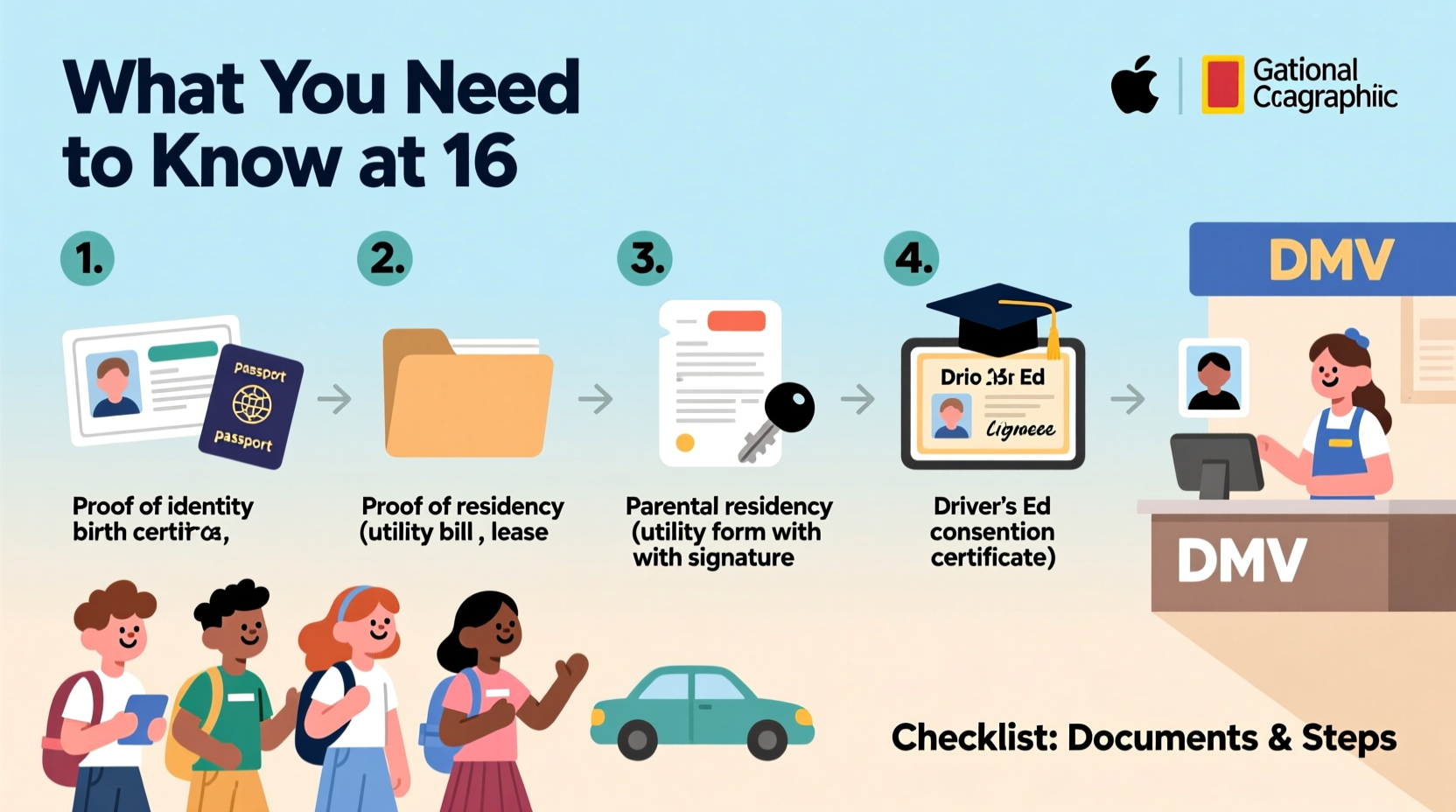
Many teens assume that turning 16 automatically means they must get a driver’s license. However, not every 16-year-old is ready—or able—to drive. A non-driver state ID offers the same government-recognized identification without the driving component. It includes your full name, date of birth, photograph, address, and unique identification number.
Both IDs and licenses are issued by your state’s DMV (or equivalent agency, such as BMV, RMV, or DPS). The application process for a state ID closely mirrors that of a learner’s permit, with similar documentation requirements. However, since no road test or written driving exam is required, the process is generally faster and less intensive.
“Having a state ID gives teens autonomy in managing their personal affairs—from opening bank accounts to verifying age at concerts—without relying on a parent’s ID.” — Sarah Lin, Youth Advocacy Coordinator, National Civic Access Initiative
Step-by-Step Guide to Applying for Your State ID at 16
The process varies slightly by state, but the core steps remain consistent across most jurisdictions. Follow this timeline to ensure a smooth experience.
- Check your state’s minimum age policy: While most states allow 16-year-olds to apply, some require applicants to be 15 or even 14 with parental consent. Confirm eligibility via your state’s DMV website.
- Gather required documents: You’ll need proof of identity, residency, Social Security Number, and parental consent. More on this below.
- Obtain parental consent: Most states mandate that a parent or legal guardian sign the application form and appear in person with the teen.
- Schedule an appointment: Many DMVs offer online booking, which reduces wait times significantly compared to walk-ins.
- Visit the DMV: Bring all original documents, complete forms, have your photo taken, and pay the fee.
- Receive your ID: Some states issue temporary paper IDs on-site; permanent cards arrive by mail within 7–14 days.
Required Documents Checklist
Each state requires specific documents, but the following checklist covers the typical categories accepted nationwide. Always verify with your local DMV, as rules can change.
- Proof of Identity (one primary document):
- U.S. Birth Certificate
- U.S. Passport
- Certificate of Citizenship or Naturalization
- Proof of Social Security Number:
- SSN card (original or certified copy)
- W-2 form or tax return listing SSN (if card unavailable)
- Proof of State Residency (two different documents):
- Utility bill (gas, electric, water) under parent/guardian’s name
- Lease agreement or mortgage statement
- Bank statement with current address
- School ID or report card with address
- Parental Consent Form:
- Most states provide a downloadable form requiring a parent’s signature and valid ID.
- At least one parent must accompany the teen to the DMV.
Document Tips for Teens
- Bring originals—photocopies are rarely accepted.
- If your name differs from your birth certificate (e.g., due to spelling changes), bring legal documentation of the change.
- Adoptive or foster teens should contact the DMV ahead of time to confirm acceptable guardianship documentation.
Do’s and Don’ts When Applying for Your State ID
| Do’s | Don’ts |
|---|---|
| ✅ Schedule an appointment during weekday mornings when offices are less busy. | ❌ Assume you can use a school ID as proof of identity—it’s not sufficient. |
| ✅ Wear plain clothing and avoid heavy makeup or accessories for your photo. | ❌ Wear hats, sunglasses, or headphones during the photo session (exceptions for religious headwear). |
| ✅ Bring exact change or check the DMV’s accepted payment methods. | ❌ Bring expired documents—even if they’re only a few days past the date. |
| ✅ Have your parent bring their own valid photo ID and proof of relationship (e.g., birth certificate). | ❌ Try to apply without parental consent—your application will be denied. |
Real Example: How Mia Got Her ID in Time for Summer Work
Mia, a 16-year-old from Columbus, Ohio, wanted to apply for a job at a local amusement park. She knew she needed a state ID to complete her employment paperwork but wasn’t sure where to start. After researching the Ohio Bureau of Motor Vehicles (BMV) website, she printed the minor ID application and parental consent form. Her mother gathered the family’s lease agreement, utility bills, and Mia’s birth certificate.
They scheduled an appointment for a Tuesday morning, avoiding weekend crowds. At the BMV, Mia wore a simple shirt and left her earrings at home to comply with photo guidelines. The process took less than 30 minutes. She received a temporary ID immediately and her permanent card arrived two weeks later—just in time for orientation.
“I thought it would be stressful,” Mia said, “but having everything ready made it easy. Now I feel more grown-up carrying my own ID.”
Frequently Asked Questions
Can I get a state ID if I don’t have a Social Security Number?
Most states require an SSN to issue an ID. If you don’t have one, you may need to complete a declaration form stating you were never issued a number. Check with your state’s DMV for alternatives.
How much does a state ID cost for a 16-year-old?
Fees vary by state but typically range from $10 to $35. Some states offer reduced or waived fees for low-income applicants or those receiving public assistance. Payment is usually required at the time of application.
Can my ID be used for domestic air travel?
Yes. As long as your state ID is REAL ID-compliant (marked with a star in the upper corner), it meets TSA requirements for flying within the U.S. Non-compliant IDs will not be accepted after May 7, 2025.
Final Steps and Moving Forward
Once you’ve secured your state ID, treat it like any important document: keep it in a safe place, avoid lending it out, and report loss or theft immediately. Consider making a digital scan (stored securely) for backup purposes, though never share images of your ID online.
Your state ID opens doors—literally and figuratively. It supports financial independence, enhances safety when traveling, and builds confidence in handling adult responsibilities. By approaching the process with preparation and attention to detail, you set a strong foundation for future interactions with government systems, employers, and institutions.




 浙公网安备
33010002000092号
浙公网安备
33010002000092号 浙B2-20120091-4
Comments
No comments yet. Why don't you start the discussion?