
Adding a crystal car ornament to your rearview mirror can elevate the ambiance of your vehicle’s interior with elegance and subtle sparkle. However, many drivers install these decorative pieces without considering legal restrictions, safety implications, or long-term effects on visibility. When improperly installed, even small crystals can obstruct vision, become hazardous during sudden stops, or violate local traffic laws.
This comprehensive guide walks you through every critical phase—from choosing the right ornament to secure attachment—ensuring your crystal accessory enhances your driving experience without introducing risk.
Selecting the Right Crystal Ornament
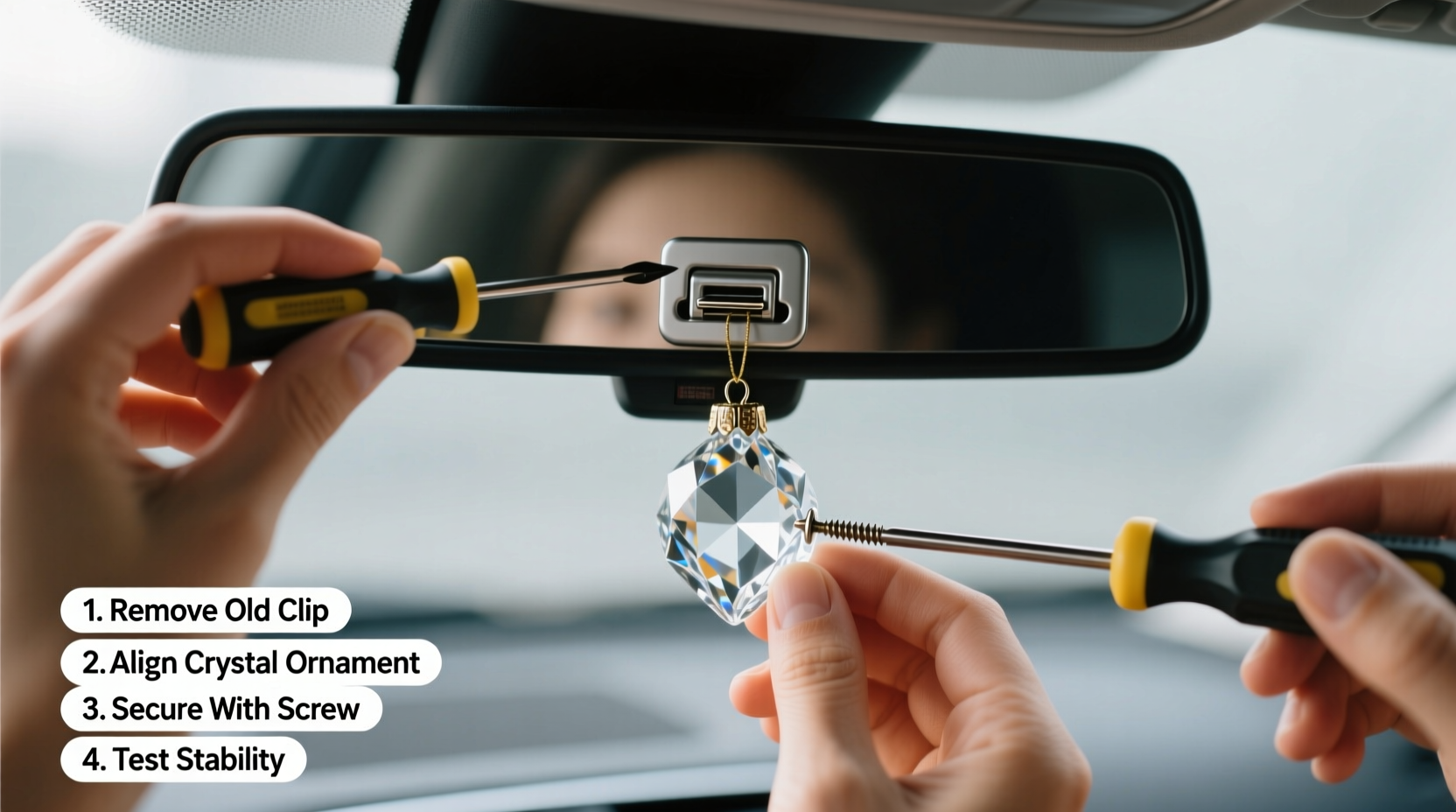
Not all crystals are suitable for use in vehicles. The size, weight, and shape play crucial roles in both safety and effectiveness. A large, heavy pendant may sway excessively while driving, distracting the driver or blocking sightlines. Conversely, a well-chosen piece adds charm without compromise.
Consider the following when selecting your crystal:
- Size: Opt for ornaments under 2 inches in length to minimize visual obstruction.
- Weight: Lightweight materials like quartz, amethyst chips, or glass ensure minimal strain on the mirror mount.
- Shape: Avoid sharp edges or protruding elements that could pose injury risks in an accident.
- Attachment style: Look for models with integrated loops, chains, or flexible cords designed for hanging.
Understanding Legal and Safety Guidelines
Before installation, verify whether your local jurisdiction permits hanging objects from the rearview mirror. In several U.S. states—including California, New York, and Massachusetts—obstructing the driver’s view is a citable offense. Penalties vary but often include fines ranging from $50 to $200.
The core principle across most regulations is unobstructed forward and rearward visibility. Even if enforcement is rare, prioritizing safety ensures you're not caught off guard during a traffic stop or, worse, impaired during emergency maneuvers.
“Anything dangling from the mirror should be small enough that it doesn’t enter the primary line of sight when the vehicle is in motion.” — Officer Daniel Reyes, Traffic Safety Division, Austin PD
Do’s and Don’ts of Crystal Ornament Use
| Do’s | Don’ts |
|---|---|
| Use lightweight, compact crystals (under 2\") | Hang oversized pendants or multi-tiered designs |
| Ensure free movement of the rearview mirror | Attach anything rigid that limits mirror adjustment |
| Check reflection clarity after installation | Allow the ornament to swing into the windshield view |
| Secure knots or clasps tightly | Use adhesives directly on mirrors (risk of damage) |
Step-by-Step Installation Process
Proper installation ensures longevity, safety, and aesthetic appeal. Follow this timeline-based procedure carefully.
- Prepare your tools and space: Park your car in a shaded area with good lighting. Gather scissors, a soft cloth, and the crystal with its cord or chain.
- Clean the mirror surface: Wipe around the base of the rearview mirror with a microfiber cloth to remove dust and oils. This prevents slipping during attachment.
- Test positioning: Hold the crystal against the mirror stem (not the glass) to visualize how it hangs. Adjust until the bottom rests at least 4 inches above the mirror housing.
- Wrap and secure the cord: Loop the cord around the thickest part of the mirror arm. Tie a double knot snugly against the metal. For added security, apply a single drop of fabric-safe glue to the knot (avoid cyanoacrylate/super glue).
- Adjust length if needed: If the crystal swings too low, shorten the cord before finalizing the knot. Ideal hang height allows full visibility even when the car accelerates or brakes.
- Test stability: Gently shake the mirror. The ornament should sway slightly but remain securely fastened. Drive slowly around the block to observe motion dynamics.
Real-Life Scenario: Sarah’s Commute Upgrade
Sarah, a graphic designer from Portland, wanted to personalize her daily commute. She purchased a rose quartz pendant believing it would promote calmness during rush hour. Initially thrilled, she soon noticed the crystal bounced into her field of vision whenever she braked suddenly.
After reading about distracted driving statistics, she reinstalled the ornament higher on the mirror shaft and shortened the chain by one-third. The new setup allowed gentle swaying without obstruction. “It catches the morning sun perfectly now,” she says, “and I don’t have to swat it away at red lights.”
Her experience underscores the importance of post-installation testing and willingness to adjust for optimal performance.
Maintenance and Long-Term Care
Once installed, your crystal requires occasional upkeep to maintain appearance and function.
- Dust regularly: Use a dry microfiber cloth weekly to prevent grime buildup.
- Recheck knots monthly: Vibration from driving can loosen connections over time.
- Remove during extreme conditions: In freezing temperatures, moisture trapped in porous stones (like selenite) may expand and crack them.
- Store properly when not in use: Keep in a soft pouch away from direct sunlight to preserve luster.
“Crystal ornaments aren't just decoration—they're extensions of personal intention. But their power means nothing if they compromise safety.” — Lena Torres, Holistic Lifestyle Coach & Automotive Wellness Advocate
Frequently Asked Questions
Can I hang a crystal on any type of rearview mirror?
Most standard mirrors allow safe attachment, but caution is needed with electronic features such as built-in cameras, rain sensors, or auto-dimming systems. Avoid wrapping cords around delicate housings or pressing against sensor panels. When in doubt, consult your vehicle manual or dealership.
Are there alternatives to tying the crystal directly to the mirror?
Yes. Some drivers use non-slip silicone clips that grip the mirror base without scratching. These are removable and leave no residue. Another option is placing the crystal on the dashboard where it reflects light—but never in front of airbags.
Does the type of crystal matter for driving safety?
While metaphysical properties vary, from a physical standpoint, harder stones like quartz (Mohs hardness 7) are less likely to chip or degrade than softer ones like calcite. Also, avoid crystals with metallic coatings that may flake off and scratch interior surfaces.
Final Checklist Before Driving
- ✅ Is the crystal securely fastened?
- No wobbling or slipping when tugged gently.
- ✅ Does it obstruct any part of your view?
- Check all angles: straight ahead, left/right glances, and rearview reflection.
- ✅ Can the mirror still tilt freely?
- Verify full range of motion isn’t limited by the ornament.
- ✅ Have you tested it at different speeds?
- Drive cautiously in a safe area to assess swinging behavior.
Conclusion: Beauty Meets Responsibility
A crystal car ornament can transform your vehicle into a sanctuary of peace and personal expression. But true elegance lies not just in appearance, but in thoughtful execution. By choosing the right piece, respecting legal boundaries, and installing it with precision, you create harmony between aesthetics and responsibility.
Your car is more than transportation—it's a reflection of who you are. Make every detail count, especially those that affect safety. Take a moment today to evaluate your current setup or install your first crystal with confidence. Share your journey with others looking to blend mindfulness with modern mobility.




 浙公网安备
33010002000092号
浙公网安备
33010002000092号 浙B2-20120091-4
Comments
No comments yet. Why don't you start the discussion?