
Normal saline solution—also known as 0.9% sodium chloride—is a sterile mixture widely used in medical settings for wound cleaning, nasal irrigation, and eye or contact lens rinsing. While commercially prepared saline is readily available, there are situations where making it at home becomes practical: remote locations, supply shortages, or frequent use that makes store-bought options costly. However, creating a safe, effective saline solution requires strict attention to sterility, measurement accuracy, and proper storage. This guide walks you through the process with precision and safety in mind.
Understanding Normal Saline: What It Is and Why It Works
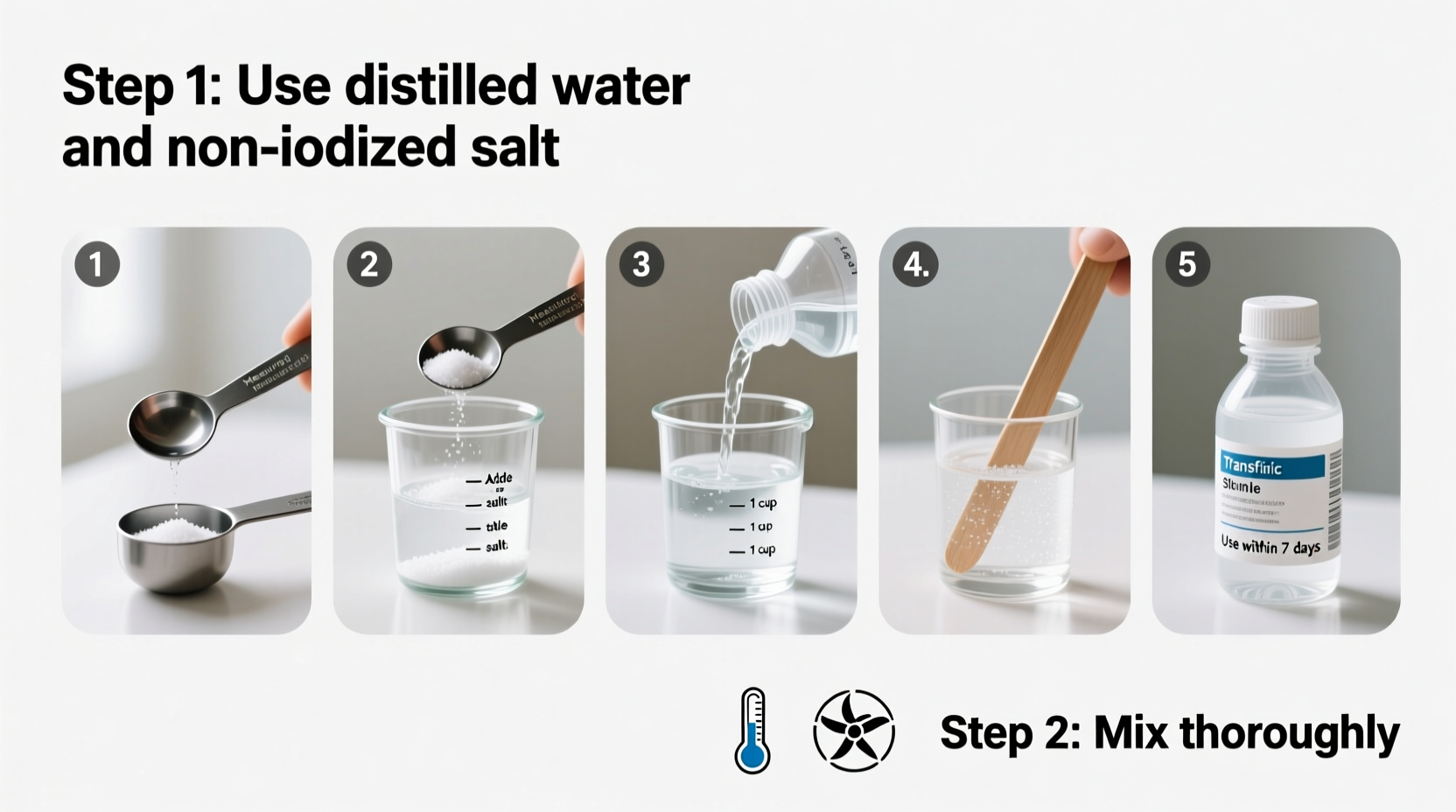
Normal saline is an isotonic solution, meaning it has the same concentration of salts as human blood and bodily fluids (approximately 0.9 grams of sodium chloride per 100 milliliters of water). This balance prevents irritation when applied to tissues like skin, nasal passages, or eyes. Unlike hypertonic solutions (which draw fluid out) or hypotonic ones (which can cause cells to swell), normal saline supports gentle cleansing without damaging cells.
Common uses include:
- Rinsing minor cuts and scrapes
- Nasal irrigation for congestion or allergies
- Rehydrating dry nasal passages
- Rinsing contact lenses (if no preservatives are needed)
- Emergency eye flushing
While these applications seem simple, contamination or incorrect concentrations can lead to infections or tissue damage. That’s why homemade saline must be treated not as a casual kitchen experiment, but as a precise, hygiene-sensitive procedure.
“Even small deviations in salt concentration or microbial load can compromise tissue health. When preparing saline at home, precision and cleanliness are non-negotiable.” — Dr. Lena Patel, Clinical Microbiologist
Step-by-Step Guide to Preparing Sterile Normal Saline at Home
Making safe saline involves more than mixing salt and water. The goal is to replicate clinical-grade conditions as closely as possible using household tools. Follow this timeline carefully:
- Gather Supplies (5 minutes): Ensure all equipment is clean and ready.
- Sterilize Containers and Tools (15 minutes): Use boiling or oven methods.
- Boil Water (10–15 minutes): Achieve complete pathogen kill.
- Mix Salt Precisely (2 minutes): Accuracy ensures isotonicity.
- Cool and Store Properly (30+ minutes): Prevent condensation and contamination.
Step 1: Gather Your Materials
You’ll need:
- Distilled or previously boiled water – 1 liter (4 cups)
- Non-iodized table salt (pure sodium chloride) – 9 grams (~1.5 teaspoons)
- Heat-resistant glass container (e.g., mason jar) with lid
- Measuring spoons or digital scale (preferably)
- Pot for boiling water
- Tongs or ladle (sterilized)
- Aluminum foil or clean cloth (for covering during cooling)
Step 2: Sterilize All Equipment
Contamination often occurs from unclean tools. Sterilization is essential:
- Wash jars, lids, spoons, and funnels in hot, soapy water.
- Rinse thoroughly.
- Place in a pot of boiling water for 10 minutes, or heat in an oven at 325°F (160°C) for 20 minutes.
- Remove with sterilized tongs and let air-dry on a clean towel—do not wipe.
Step 3: Boil the Water
Use only distilled or tap water brought to a rolling boil for at least 10 minutes to kill bacteria, viruses, and spores. Do not use filtered water alone—filtration doesn’t guarantee sterility.
Step 4: Dissolve the Salt
While the water is still hot (but removed from heat), add exactly 9 grams of non-iodized salt per liter. Iodized salt contains additives that may irritate tissues; kosher or pickling salt (without anti-caking agents) can work if labeled pure NaCl.
Stir gently with a sterilized spoon until fully dissolved. No visible granules should remain.
Step 5: Cool and Store
Cover the container with foil or a sterilized lid while cooling to room temperature. Never refrigerate while covered tightly—condensation introduces moisture and risk of mold.
Once cooled, seal and label with preparation date. Store in the refrigerator.
Do’s and Don’ts of Homemade Saline Preparation
| Do’s | Don’ts |
|---|---|
| Use non-iodized, additive-free salt | Use sea salt or Himalayan salt (impurities vary) |
| Boil water for at least 10 minutes | Assume filtered or bottled water is sterile |
| Sterilize containers and tools | Touch the inside of bottles or lids with hands |
| Store in refrigerator and use within 24 hours | Keep at room temperature for more than a few hours |
| Label solution with date and time | Reuse old saline bottles without sterilizing |
Real-World Example: Emergency Nasal Irrigation During Allergy Season
Sarah, a nurse living in a rural area, experienced severe seasonal allergies. With local pharmacies frequently out of saline spray, she began making her own. She followed a strict protocol: weekly batch preparation using boiled water, measured salt by weight, stored in sterilized 8-ounce mason jars in the fridge. Each morning, she warmed a small portion in a clean bowl before using a neti pot.
After three months, she reported reduced sinus infections and better symptom control. Her key insight? “I treat it like medication—not a DIY project. If I skip sterilization, I don’t make it.”
Her routine prevented contamination-related sinusitis, which she had previously experienced after using improperly stored homemade solutions.
Frequently Asked Questions
Can I use tap water if I boil it?
Yes, boiling tap water for at least 10 minutes kills most pathogens and makes it safe for saline preparation. However, if your water supply is known to have heavy metals or chemical contaminants (e.g., lead), use distilled water instead.
How long does homemade saline last?
When refrigerated in a sterilized, sealed container, homemade saline remains safe for up to 24 hours. Beyond that, bacterial growth—even in sterile conditions initially—becomes likely due to handling exposure. Discard any unused solution after one day.
Is it safe to use homemade saline for contact lenses?
Only if your lenses require simple rinsing and do not need preservatives or disinfectants. Most modern contact solutions contain agents that kill microbes over time. Homemade saline lacks these, so it should never replace multipurpose solutions for soaking or disinfecting lenses. Use it only for immediate rinsing under clean conditions.
Final Checklist Before You Begin
Before preparing saline at home, confirm you’ve completed each step below:
- ✅ Gather non-iodized salt and distilled or boilable water
- ✅ Acquire a clean, heat-safe container with lid
- ✅ Sterilize all tools and containers via boiling or oven
- ✅ Measure 9 grams of salt per liter of water (use a scale if possible)
- ✅ Boil water for 10+ minutes
- ✅ Mix salt into hot water, stir until dissolved
- ✅ Cool uncovered or under foil, then cap and refrigerate
- ✅ Label with date and time
- ✅ Discard after 24 hours
- ✅ Never use if cloudy, discolored, or smelling off
Conclusion: Safety First, Always
Making normal saline at home is feasible and cost-effective, but only when done correctly. The simplicity of the ingredients belies the importance of precision and hygiene. A poorly made solution can introduce infection, irritate sensitive tissues, or fail to deliver the intended benefit.
If you're immunocompromised, treating open wounds, or using saline for children or elderly individuals, consider relying on commercially sterile products unless absolutely necessary. But when circumstances demand a homemade approach, following this guide ensures you maintain medical-grade standards in your kitchen.




 浙公网安备
33010002000092号
浙公网安备
33010002000092号 浙B2-20120091-4
Comments
No comments yet. Why don't you start the discussion?