
Accessing your Social Security account online is essential for managing benefits, reviewing earnings history, and planning retirement. However, as cyber threats grow more sophisticated, ensuring secure login practices is critical. Millions of Americans use the Social Security Administration’s (SSA) mySocialSecurity portal each year, making it a prime target for phishing scams and identity theft. This guide walks you through every phase of securely accessing your account—safeguarding your personal data while maximizing the benefits of digital access.
Why Secure Login Matters
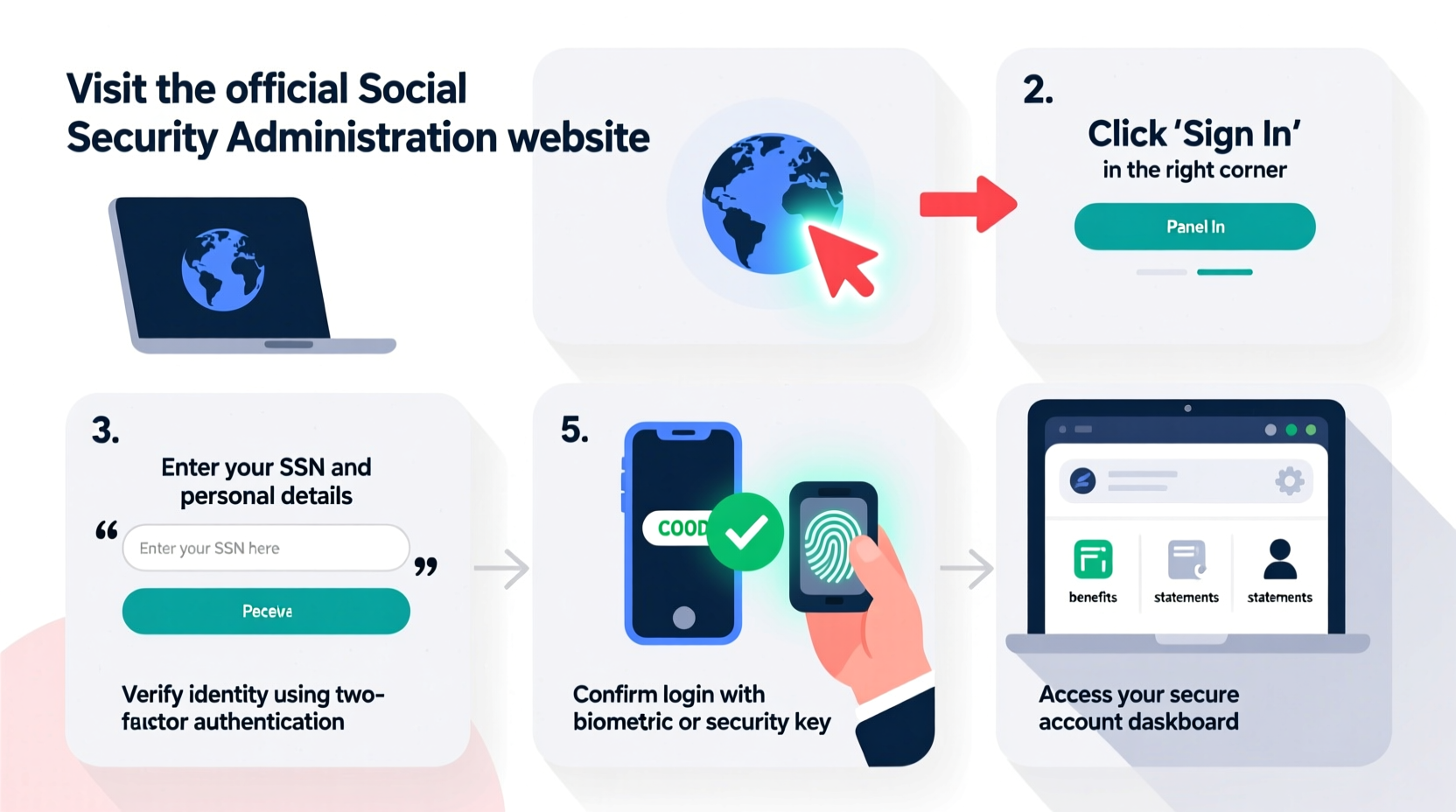
Your Social Security number is one of the most sensitive pieces of personal information. When linked to an online account containing your employment history, tax records, and benefit projections, unauthorized access can lead to identity theft, fraudulent claims, or financial loss. The SSA has implemented multi-layered security protocols, but user behavior plays a crucial role in maintaining protection.
According to the Federal Trade Commission, impersonation scams involving government agencies—including the SSA—increased by 35% between 2022 and 2023. Many of these begin with fake login pages designed to steal credentials. Understanding how to authenticate the real site and protect your login process reduces risk significantly.
“Your Social Security account contains lifelong financial data. Treat its access like you would a bank vault: with caution, verification, and strong digital hygiene.” — Lisa Nguyen, Cybersecurity Advisor at the U.S. Department of Health and Human Services
Step-by-Step Guide to Secure Login
Follow this verified sequence to safely log in to your mySocialSecurity account without exposing yourself to fraud or malware.
- Use a Trusted Device and Network
Always log in from a personal device using a secure, private internet connection. Avoid public Wi-Fi networks at libraries, cafes, or airports, which are vulnerable to eavesdropping. - Navigate Directly to the Official Website
Typehttps://www.ssa.gov/myaccount/directly into your browser’s address bar. Do not click links from emails, texts, or search results—even if they appear legitimate. - Verify Site Authenticity
Check that the URL begins withhttps://and displays a padlock icon in the address bar. Click the padlock to confirm the certificate is issued to “socialsecurity.gov” by a trusted authority. - Enter Your Username and Password
Type your credentials carefully. If you’ve enabled two-factor authentication (2FA), proceed to the next step. Never save passwords in browsers on shared devices. - Complete Two-Factor Authentication (2FA)
The SSA may send a one-time security code via text message or voice call to your registered phone. Enter the code promptly. For added security, consider using an authenticator app if supported in future updates. - Review Recent Activity
Once logged in, go to “Account Settings” and check “Recent Login Activity” for unfamiliar locations or timestamps. Report anomalies immediately. - Log Out and Clear Session
Always click “Log Out” when finished. On shared devices, close the browser completely to terminate active sessions.
Essential Security Checklist Before You Log In
Before entering any credentials, ensure your environment is secure. Use this checklist every time:
- ✅ Confirm you’re on
https://www.ssa.gov/myaccount/ - ✅ Check for the padlock symbol and valid SSL certificate
- ✅ Ensure your device has updated antivirus software and operating system
- ✅ Disable autofill for usernames and passwords on public or shared computers
- ✅ Verify your phone is nearby to receive 2FA codes
- ✅ Close other browser tabs, especially those related to banking or email
- ✅ Use a strong, unique password not reused across other accounts
Common Pitfalls and How to Avoid Them
Even cautious users can fall victim to subtle traps. Below is a comparison of recommended actions versus risky behaviors.
| Do’s | Don’ts |
|---|---|
| Use a password manager to generate and store complex passwords | Write down passwords on sticky notes or save them in unencrypted files |
| Enable 2FA and keep contact info up to date | Ignore prompts to verify your phone or email |
| Log out after each session, especially on mobile devices | Stay logged in “for convenience” on shared or public devices |
| Report suspicious emails to OIG.Webmaster@ssa.gov | Click “verify account” links in unsolicited messages |
| Regularly review your Social Security statement for errors | Assume everything is accurate without periodic checks |
Real Example: How One User Prevented Identity Theft
In early 2023, Maria R., a federal retiree from Arizona, received a text claiming her Social Security benefits were suspended due to “suspicious login attempts.” The message included a link to “verify identity.” Instead of clicking, she called the SSA’s national toll-free number and learned no such alert had been issued. She then visited the official website directly and discovered no unusual activity. By avoiding the phishing attempt, Maria prevented potential account takeover and financial fraud.
This case underscores the importance of skepticism and direct verification. Scammers often exploit urgency to bypass rational judgment. Always pause, double-check, and use only known, trusted channels.
Frequently Asked Questions
What should I do if I forget my password?
Click “Forgot Password?” on the login page. You’ll be guided through identity verification using your recovery email or phone number. The system may ask security questions based on your credit history or past account activity. Never share these details with anyone.
Is it safe to log in from a smartphone?
Yes, provided you use the official SSA website (not third-party apps) and have screen-lock protection enabled. Avoid saving login details in mobile browsers. Consider using a trusted password manager with biometric access instead.
Can someone else create an account using my Social Security number?
No legitimate account can be created without verifying identity through multiple data points, including address history, credit records, and phone validation. However, if you suspect fraud, place a fraud alert with the three major credit bureaus and contact the SSA immediately at 1-800-772-1213.
Strengthening Long-Term Account Security
Beyond the login process, ongoing vigilance ensures lasting protection. Update your contact information whenever you move or change phone numbers. Monitor your annual Social Security statement for unreported income or incorrect employment records. Enroll in email alerts if available, so you’re notified of changes to your account status.
Additionally, consider placing a security freeze on your Social Security record through the SSA’s Rapid Identity Verification and Entry (RIDE) system if you’re not actively applying for benefits. This prevents new accounts from being created in your name without additional verification.
Conclusion: Take Control of Your Digital Identity
Logging into your Social Security account securely isn’t just a technical task—it’s an act of personal responsibility. With rising cyber threats and increasingly convincing scams, every login should be approached with awareness and discipline. By following this guide, you protect not only your benefits but your entire financial identity.




 浙公网安备
33010002000092号
浙公网安备
33010002000092号 浙B2-20120091-4
Comments
No comments yet. Why don't you start the discussion?