
Applying for disability benefits can feel overwhelming, especially when you're already dealing with health challenges. The process is complex, often slow, and denial rates are high—nearly two-thirds of initial applications are rejected. But success is possible with the right strategy. Understanding the system, preparing thoroughly, and presenting a strong case significantly increase your chances of approval. This guide walks you through every phase of the application process, offering practical steps, expert insights, and proven tactics to help you secure the benefits you need.
Understanding Disability Benefits: What You Need to Know
In the United States, Social Security Disability Insurance (SSDI) and Supplemental Security Income (SSI) are the primary federal programs that provide financial support to individuals unable to work due to a qualifying disability. SSDI is based on your work history and contributions to Social Security, while SSI assists low-income individuals regardless of employment background.
To qualify, the Social Security Administration (SSA) requires proof that:
- Your medical condition prevents you from performing substantial gainful activity (SGA).
- The disability has lasted or is expected to last at least 12 months or result in death.
- You cannot adjust to other types of work due to your medical limitations.
The SSA uses a strict definition of disability—not all conditions qualify, even if they severely impact daily life. Conditions like chronic pain, mental health disorders, heart disease, and neurological impairments are commonly approved when well-documented.
“Many people assume their doctor’s diagnosis alone is enough. It’s not. The SSA needs objective medical evidence that shows how your condition limits your ability to work.” — Dr. Linda Reeves, Disability Adjudicator (retired)
Step-by-Step Application Process
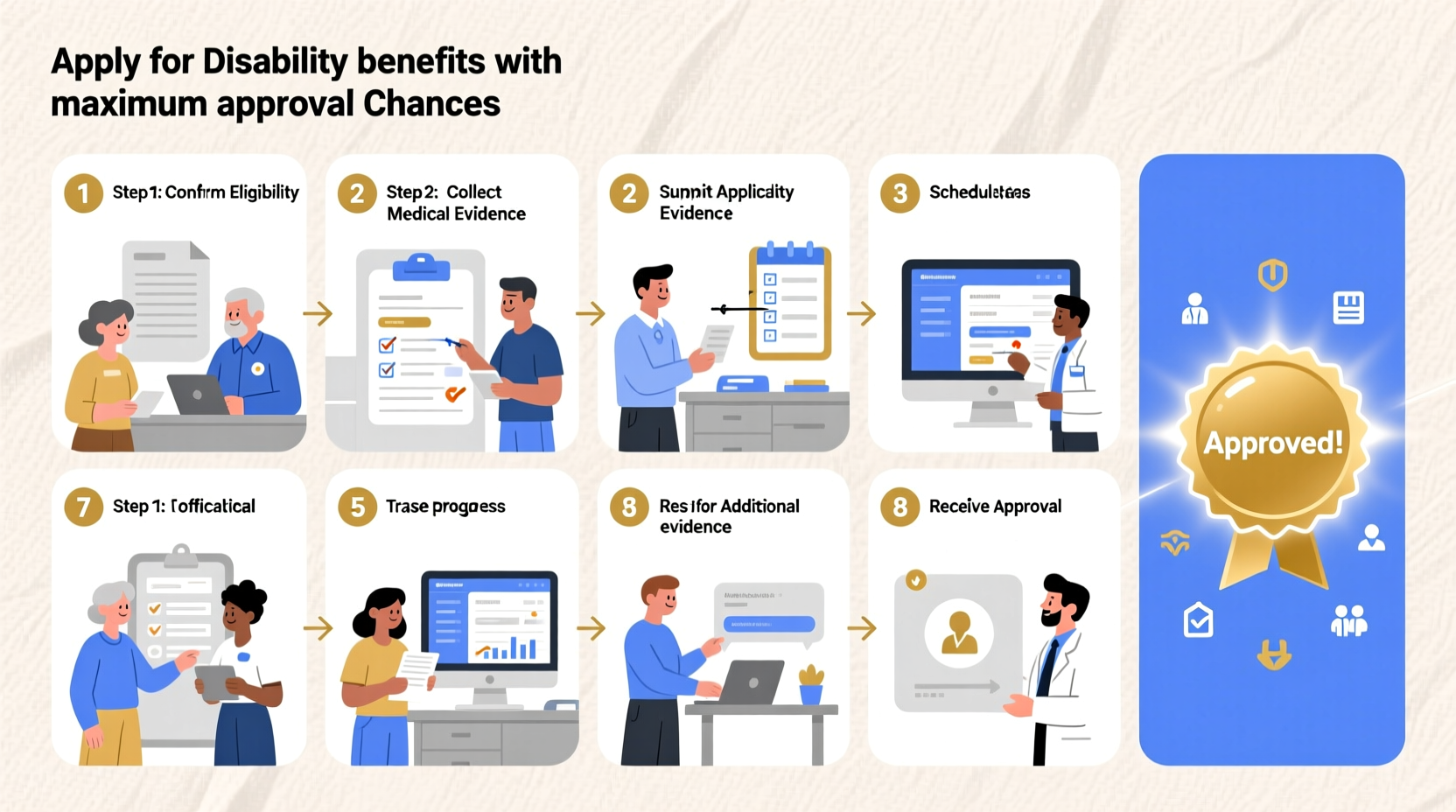
Navigating the disability application requires careful planning. Follow this timeline-based approach to build a compelling case from start to finish.
- Assess Eligibility (Week 1): Confirm whether you meet SSDI or SSI criteria. Check your work credits for SSDI or income/assets for SSI via the SSA website.
- Gather Medical Records (Weeks 2–3): Request complete records from all treating physicians, hospitals, labs, and therapists. Include diagnoses, test results, treatment plans, and notes on functional limitations.
- Complete the Application (Week 4): Apply online, by phone, or in person. Fill out the Disability Report and Function Report accurately—these forms assess how your condition affects daily living and work skills.
- Submit and Monitor (Ongoing): After submission, track your case status monthly. Respond promptly to any requests for additional information.
- Prepare for Appeals (If Denied): Most claims are denied initially. File a Request for Reconsideration within 60 days, then request a hearing if needed. Representation by a disability attorney at this stage increases approval odds.
Maximizing Approval Chances: Key Strategies
Success depends less on having a serious condition and more on how effectively you present your case. Use these strategies to strengthen your application.
Maintain Consistent Medical Treatment
Regular visits to healthcare providers create a documented history of your condition. Gaps in treatment suggest improvement, which can hurt your claim. Even if you can’t afford private care, seek services at community clinics or public hospitals.
Detail Functional Limitations
The SSA doesn’t just look at diagnoses—they assess what you can’t do. In your Function Report, describe specific difficulties: lifting objects, standing for 10 minutes, concentrating for an hour, or managing stress. Use concrete examples like “I cannot walk more than 200 feet without resting” or “I forget instructions after being told once.”
Secure a Support Letter from Your Doctor
A detailed statement from your physician outlining your diagnosis, treatment, prognosis, and functional restrictions carries significant weight. Ask your doctor to complete a Residual Functional Capacity (RFC) form, which outlines physical and mental limitations.
| Do’s | Don’ts |
|---|---|
| Keep a symptom journal with dates, severity, and impact on activities | Quit seeing doctors because you feel discouraged |
| List all medications and side effects in your application | Exaggerate symptoms—consistency matters more than intensity |
| Apply as soon as you’re disabled and expect to be out of work for a year | Wait months to apply; delays extend processing time |
| Hire a disability attorney if denied | Represent yourself at a hearing without legal guidance |
Checklist: Preparing a Strong Disability Application
- ✔️ Confirm eligibility for SSDI or SSI
- ✔️ Collect medical records from the past two years
- ✔️ List all treating doctors, hospitals, and therapists
- ✔️ Complete the Disability Report and Function Report truthfully
- ✔️ Write a personal statement describing daily challenges
- ✔️ Obtain a Residual Functional Capacity (RFC) letter from your doctor
- ✔️ Track application status and respond to SSA requests immediately
- ✔️ Appeal within 60 days if denied, preferably with legal representation
Real Example: Maria’s Successful SSDI Claim
Maria, a 52-year-old former warehouse worker, developed severe degenerative disc disease after years of heavy lifting. She could no longer stand for long periods or lift anything over 10 pounds. Her initial application was denied because her file lacked recent imaging and a detailed RFC from her doctor.
After consulting a disability attorney, she gathered updated MRIs, obtained a comprehensive RFC letter stating she could only sit for two hours a day and required frequent position changes, and submitted a personal journal documenting her pain levels and inability to complete household tasks. At her hearing, the judge reviewed the new evidence and approved her claim, citing consistent treatment and credible functional limitations.
Maria’s case illustrates that persistence and proper documentation make the difference between denial and approval.
Frequently Asked Questions
How long does the disability application process take?
The initial decision typically takes 3 to 6 months. If you appeal, reconsideration may add another 2–3 months. A hearing before an administrative law judge can take 12 to 18 months due to backlogs. Total processing time from application to final decision often exceeds two years in contested cases.
Can I work while applying for disability?
You can engage in limited work, but earnings must stay below the Substantial Gainful Activity (SGA) threshold—$1,550 per month in 2024 for non-blind applicants. Exceeding this limit may disqualify you. However, the SSA offers trial work periods allowing you to test your ability to work without losing benefits immediately.
Do I need a lawyer to get approved?
No, but it helps significantly. According to SSA data, applicants represented by attorneys are nearly three times more likely to win at a hearing. Lawyers typically work on contingency—no fees unless you win—and their expertise in presenting evidence and cross-examining vocational experts improves outcomes.
Final Steps and Moving Forward
Winning disability benefits isn’t about luck—it’s about preparation, consistency, and clarity. The system favors those who document thoroughly, follow procedures, and persist through denials. Every piece of medical evidence, every completed form, and every timely appeal builds a stronger case.
If you’ve been denied, don’t give up. Most approvals happen during the appeals process, especially at the hearing level. Seek help from a qualified disability attorney, continue treatment, and refine your narrative to reflect the true impact of your condition.




 浙公网安备
33010002000092号
浙公网安备
33010002000092号 浙B2-20120091-4
Comments
No comments yet. Why don't you start the discussion?