
Securing permanent residency (PR) in Australia is a goal for thousands of skilled professionals, students, and families seeking long-term stability, career growth, and access to world-class healthcare and education. While the process can appear complex due to evolving immigration policies and competitive point systems, a structured approach significantly increases your chances of success. This comprehensive guide walks you through each stage—from eligibility assessment to post-approval settlement—with practical advice and real-world insights.
1. Determine Your Eligibility and Preferred Visa Pathway
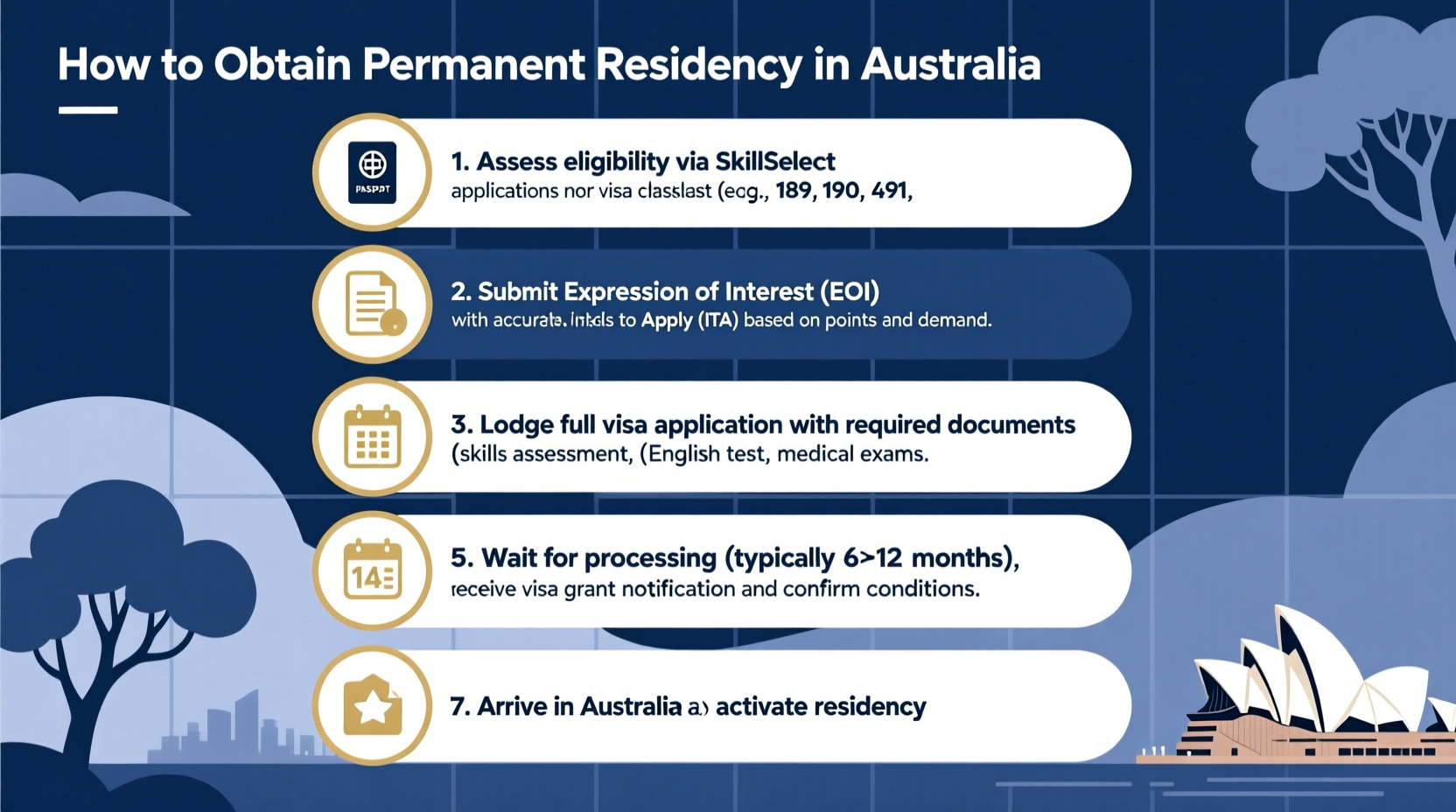
Australia offers multiple pathways to permanent residency, each with distinct requirements. The most common include:
- Skilled Independent Visa (Subclass 189): For individuals not sponsored by an employer, state, or family member but who meet points-based criteria.
- Skilled Nominated Visa (Subclass 190): Requires nomination by an Australian state or territory based on local labor market needs.
- Skilled Work Regional (Provisional) Visa (Subclass 491): A stepping-stone visa leading to PR after living and working in designated regional areas for three years.
- Employer-Sponsored Visas (Subclass 186 or 494): For those offered full-time employment by approved Australian employers.
- Partner/Family Visas: Available for spouses, de facto partners, or eligible relatives of Australian citizens or permanent residents.
To qualify under skilled migration, applicants must be under 45 years old, meet English language requirements (usually IELTS 6.0 or equivalent), and score at least 65 points on the Australian points test—though competitive scores often exceed 80.
2. Prepare and Submit an Expression of Interest (EOI)
Once you’ve identified your preferred visa subclass, submit an Expression of Interest (EOI) through SkillSelect, Australia’s central immigration portal. Your EOI includes personal details, qualifications, work experience, English proficiency, and other factors that contribute to your points total.
It's important to note that submitting an EOI does not guarantee an invitation to apply. Invitations are issued periodically based on government priorities, demand for specific occupations, and your competitiveness within the pool.
“An accurate and complete EOI is critical. Even minor discrepancies between your EOI and later submitted documents can delay processing or result in rejection.” — James Reed, Migration Agent Registered with MARA
Timeline of Key Steps After EOI Submission
- Wait for Invitation: Processing times vary; high-demand occupations may receive invitations within weeks, while others wait months.
- Receive Invitation to Apply: You’ll be notified via your ImmiAccount if selected.
- Submit Visa Application Within 60 Days: Late submissions are automatically rejected.
3. Gather Required Documentation
After receiving an invitation, compile all necessary documents. Incomplete or poorly authenticated paperwork is one of the top reasons for delays or refusals.
| Document Type | Required For | Notes |
|---|---|---|
| Passport & Identity Documents | All applicants | Clear scanned copies, certified if required |
| Skills Assessment | Skilled visas | Must come from the relevant assessing authority (e.g., Engineers Australia) |
| English Language Test Results | Most skilled and partner visas | IELTS, PTE, TOEFL, or OET accepted |
| Police Clearance Certificates | All applicants over 16 | From every country lived in for 12+ months |
| Medical Examination Reports | All applicants | Conducted by panel physicians approved by Home Affairs |
| Employment References | Work experience claims | On company letterhead with contact details |
4. Navigate State Nomination and Occupation Lists
If applying for Subclass 190 or 491, you must be nominated by a state or territory government. Each has its own occupation list, criteria, and priority sectors. For example, South Australia prioritizes healthcare workers, while Western Australia seeks mining engineers and IT specialists.
Some states require job offers or prior residence; others prioritize higher points or regional study in Australia. Researching state-specific requirements thoroughly improves your odds.
Checklist: Before Applying for State Nomination
- Confirm your occupation is on the state’s skilled list
- Check if a job offer is mandatory
- Ensure your skills assessment aligns with the nominated role
- Review minimum points and English requirements set by the state
- Prepare evidence of ties to the region (e.g., past study or work)
5. Real Example: From EOI to PR Approval
Rajiv, a software developer from India, began his journey in 2022. With five years of experience and an IELTS score of 7.5, he scored 85 points. He submitted an EOI for the Subclass 189 visa but didn’t receive an invitation after six months. He then applied for New South Wales nomination under Subclass 190, highlighting his advanced coding certifications and volunteer tech outreach work. NSW invited him within four weeks. His application was lodged promptly, and after a routine health check and document verification, he received PR approval in just 10 weeks.
Rajiv’s success came from adaptability—he shifted focus from federal to state sponsorship when needed—and meticulous preparation of employment references and project portfolios to support his skills claim.
6. Post-Application Process and Settlement Planning
Once your PR application is approved, you’ll receive a visa grant notice. This allows you to live, work, and study anywhere in Australia indefinitely. You’re also eligible for Medicare and can apply for citizenship after four years of residency.
Before relocating, consider:
- Opening an Australian bank account remotely
- Researching housing options in your target city
- Transferring qualifications for local recognition (e.g., AHPRA for healthcare)
- Understanding tax obligations through the Australian Taxation Office (ATO)
“Many new permanent residents underestimate the importance of understanding rental markets and school zones. Planning ahead reduces stress during the first few months.” — Lisa Nguyen, Settlement Services Coordinator at AMEP
Frequently Asked Questions
Can I include my family in my PR application?
Yes, you can include your spouse or de facto partner and dependent children in your initial application. All members must meet health and character requirements. Adding family members later can be more costly and time-consuming.
How long does it take to get PR in Australia?
Processing times vary by visa type. Subclass 189 and 190 applications typically take 6–12 months, though some are finalized in under four months. Employer-sponsored and partner visas may have shorter or longer timelines depending on complexity.
Does studying in Australia improve my PR chances?
Yes. Graduates from Australian institutions receive up to five additional points. Completing two academic years (92 weeks) of study also qualifies you for a post-study work visa, giving you time to gain skilled experience and improve your PR eligibility.
Final Steps and Moving Forward
Obtaining permanent residency in Australia is both a logistical and strategic endeavor. Success depends not only on meeting technical requirements but also on proactive planning, responsiveness, and staying informed about policy changes. Immigration rules evolve frequently—subscribing to official updates from the Department of Home Affairs ensures you remain compliant and prepared.
The journey may take months or even years, but with careful preparation, accurate documentation, and persistence, thousands achieve their goal each year. Whether you're aiming to build a career, raise a family, or enjoy a higher quality of life, Australian permanent residency opens doors to lasting opportunity.




 浙公网安备
33010002000092号
浙公网安备
33010002000092号 浙B2-20120091-4
Comments
No comments yet. Why don't you start the discussion?