
When your air conditioner fails to cool your home, one of the most telling signs is a fan that refuses to spin. The outdoor condenser fan plays a crucial role in releasing heat from your home, and without proper airflow, your entire cooling system suffers. A non-spinning AC fan can stem from simple issues like power interruptions to more complex mechanical failures. Understanding the root causes—and knowing how to diagnose them—can save you time, money, and discomfort during hot weather.
Common Reasons Why an AC Fan Isn’t Spinning
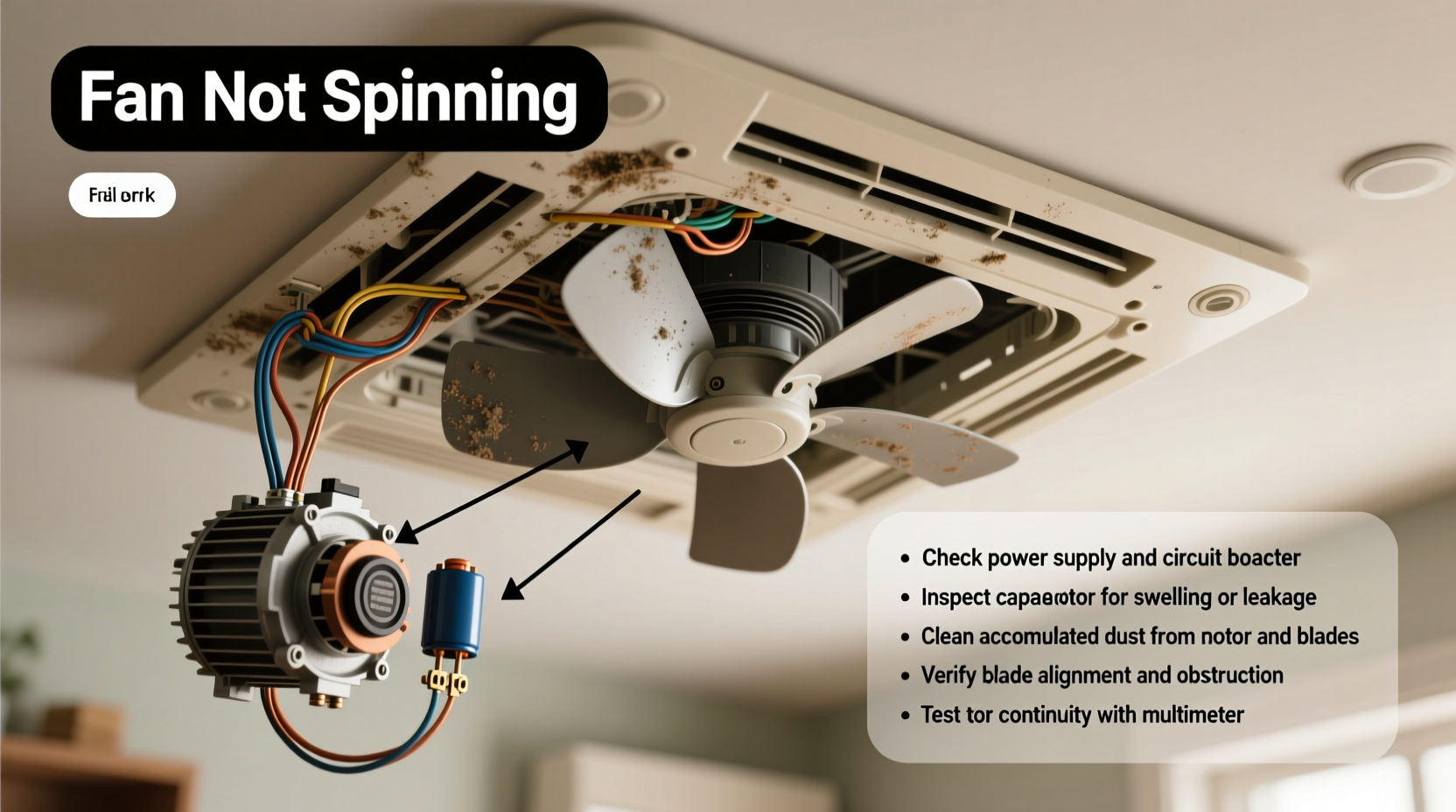
The outdoor unit of your air conditioning system relies on a fan motor to draw air through the condenser coils. When this fan stops working, the system overheats, efficiency drops, and eventually shuts down. Several mechanical, electrical, and environmental factors can prevent the fan from turning.
- Faulty Capacitor: The start capacitor provides the initial jolt needed to get the fan motor running. If it’s weak or failed, the motor may hum but won’t spin.
- Bad Fan Motor: Over time, motors wear out due to heat, dirt, or bearing failure. A seized or burnt-out motor will not turn at all.
- Power Supply Issues: Tripped breakers, blown fuses, or a malfunctioning disconnect switch can cut power to the unit.
- Obstructed Fan Blades: Debris like leaves, twigs, or even small animals can jam the fan, preventing rotation.
- Wiring Problems: Corroded, loose, or damaged wires interrupt the electrical circuit needed for operation.
- Contactor Failure: The contactor is an electrical relay that sends power to the fan and compressor. If it’s stuck open or pitted, the fan won’t receive voltage.
- Thermostat or Control Board Malfunction: If the signal to turn on the outdoor unit isn’t sent, the fan remains idle.
Step-by-Step Troubleshooting Guide
Before calling a technician, you can perform several checks to identify the cause of a non-spinning fan. Follow this logical sequence to isolate the issue:
- Check the Thermostat Settings: Ensure the thermostat is set to “Cool” and the temperature is lower than the current room reading. Verify the system is calling for cooling.
- Inspect the Circuit Breaker: Go to your electrical panel and check if the AC breaker has tripped. Reset it if necessary, but investigate recurring trips with a professional.
- Examine the Disconnect Box: Locate the outdoor disconnect switch (usually a gray box near the unit) and ensure it’s fully engaged. A partially pulled disconnect cuts power.
- Listen for Sounds: Turn the system on and listen. A humming noise often indicates a bad capacitor or seized motor. Silence suggests no power is reaching the unit.
- Manually Spin the Fan Blade: With power OFF, gently try to rotate the fan blade by hand. If it’s stiff or won’t move, there may be mechanical binding or motor seizure.
- Test the Capacitor: Use a multimeter to check the microfarad (µF) rating. If it’s outside the ±6% tolerance marked on the capacitor, replace it.
- Verify Voltage at the Contactor: With power on and the thermostat calling for cooling, use a multimeter to test for 24V across the control terminals and 230V on the load side. No voltage indicates a control issue.
Troubleshooting Checklist
- ✅ Confirm thermostat is set correctly
- ✅ Check for tripped breaker or blown fuse
- ✅ Inspect disconnect switch position
- ✅ Look for visible debris around the fan
- ✅ Listen for humming or clicking sounds
- ✅ Test capacitor with multimeter
- ✅ Manually rotate fan blade (with power off)
- ✅ Call HVAC professional if issue persists
Do’s and Don’ts When Handling AC Fan Issues
| Do’s | Don’ts |
|---|---|
| Turn off power before inspection | Never force a stuck fan blade |
| Clean debris from around the unit regularly | Ignore repeated breaker trips |
| Replace capacitors with exact specifications | Use water to clean electrical components |
| Hire licensed technicians for complex repairs | Bypass safety switches to test the fan |
| Schedule annual maintenance | Delay repairs when the fan makes grinding noises |
Real-World Example: A Summer Breakdown
In Phoenix, Arizona, homeowner Maria noticed her house wasn’t cooling despite the thermostat running continuously. She went outside and saw the condenser fan was motionless, though she could hear a faint hum. After checking the breaker (which was fine), she turned off the power and removed the top grille. A buildup of desert dust and a small bird nest had jammed the fan blades. Once cleared, she tried to spin the blade manually—it moved freely. Still, the fan didn’t start. Suspecting the capacitor, she took it to a local HVAC supply store for testing. It read 7µF below the rated 35µF. After replacing the capacitor, the fan spun up normally, and cooling resumed. This case highlights how multiple factors—obstruction and component failure—can combine to disable a system.
Expert Insight on Preventive Maintenance
“Over 60% of emergency AC calls during peak summer involve failed capacitors or seized fan motors. Most could be prevented with biannual maintenance and early symptom recognition.” — James Lin, HVAC Technician with 18 years of field experience
Regular system care extends the life of critical components. Dust accumulation increases motor strain, while moisture and heat degrade capacitors over time. Simple habits like keeping the area around the unit clear and scheduling professional tune-ups make a significant difference.
Frequently Asked Questions
Can I replace the AC fan motor myself?
While technically possible for someone with electrical and mechanical experience, replacing a fan motor involves matching voltage, RPM, shaft size, and mounting dimensions. Incorrect installation can damage the system or create safety hazards. For most homeowners, hiring a licensed HVAC technician is the safer and more reliable option.
Why does my AC fan start then stop immediately?
This behavior often points to an overheating motor, failing capacitor, or short cycling due to low refrigerant. The system starts, runs briefly until internal safety limits are reached, then shuts off. Immediate inspection is recommended to prevent further damage.
How much does it cost to fix a non-spinning AC fan?
Repair costs vary: capacitor replacement typically ranges from $100–$250, while a new fan motor can cost $300–$600 including labor. If the issue is simply a tripped breaker or debris blockage, the fix may be free. Early diagnosis helps avoid costly compressor damage.
Final Thoughts and Action Steps
A non-spinning AC fan disrupts comfort and stresses the entire cooling system. While some fixes—like resetting a breaker or clearing debris—are within reach of cautious homeowners, electrical and mechanical components require expertise. Ignoring early warning signs like sluggish startup, strange noises, or intermittent operation only leads to bigger problems down the line.
Start by performing basic safety and visual checks. Use the troubleshooting steps outlined to narrow down the cause. If you’re unsure or uncomfortable working with high-voltage equipment, don’t hesitate to call a professional. Routine maintenance isn’t just about fixing problems—it’s about preventing them before they leave you in the heat.




 浙公网安备
33010002000092号
浙公网安备
33010002000092号 浙B2-20120091-4
Comments
No comments yet. Why don't you start the discussion?