
The duel between Achilles and Hector stands as one of the most iconic moments in Western literature. Set against the backdrop of the Trojan War, their confrontation in Book 22 of Homer’s *Iliad* is more than a clash of warriors—it’s a collision of values, destiny, and mortality. While the Greeks ultimately sack Troy, the real question isn’t just who won the war, but who emerged as its true moral or symbolic victor. And more than three millennia later, that question still echoes in how we understand courage, grief, and the cost of glory.
The Duel That Never Should Have Happened
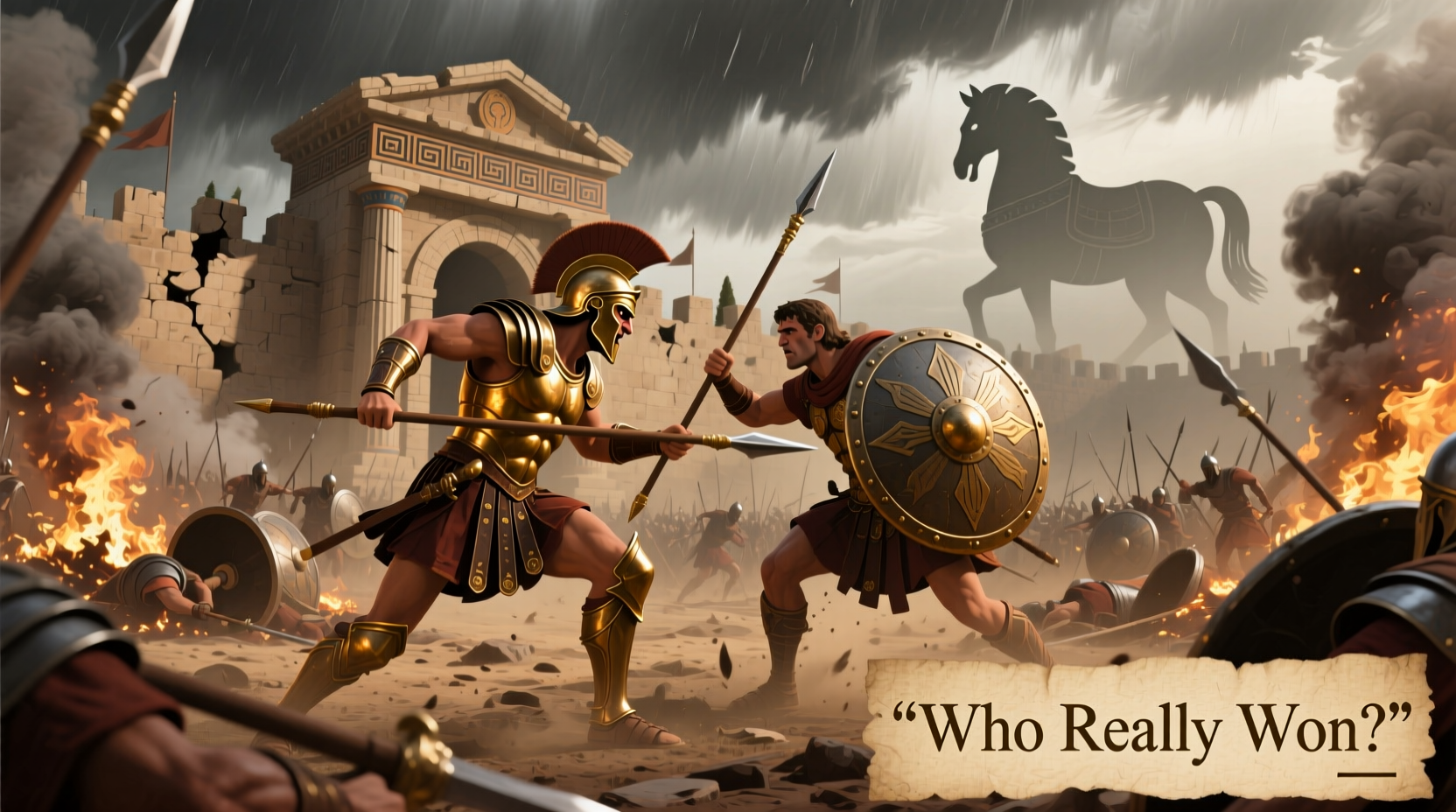
Hector, prince of Troy and defender of his city, was no mere warrior. He was a husband, a father, and a leader burdened by duty. When he faced Achilles outside the walls of Troy, he did so knowing the odds were insurmountable. Achilles, fueled by rage over the death of Patroclus—his closest companion—was nearly invincible, protected by divine armor forged by Hephaestus.
Their battle was not evenly matched. Hector hesitated at first, even fleeing around the walls of Troy in a desperate spiral. But when Athena deceived him into standing his ground, the confrontation became inevitable. In a brutal exchange, Achilles struck Hector down with a fatal blow to the throat. What followed—the dragging of Hector’s body behind Achilles’ chariot—shocked even the gods.
“Even in victory, Achilles showed the face of grief-stricken rage; in defeat, Hector wore the dignity of a man who knew he fought for something greater than himself.” — Dr. Elena Markopoulos, Classical Philologist
Who “Won” the Trojan War?
Militarily, the Greeks won. Troy fell. The wooden horse trick sealed the city’s fate. But if victory is measured in lasting legacy, honor, or moral weight, the answer becomes far less clear.
Achilles achieved unmatched battlefield glory, but at a terrible personal cost. His triumph was fleeting—he died shortly after, felled by Paris’ arrow guided by Apollo. Hector, though defeated, died defending his home, family, and people. His final moments, begging for proper burial rites, evoke a profound humanity that Achilles initially denies.
In many ways, Hector emerges as the tragic hero—flawed, mortal, yet noble. Achilles, despite his godlike strength, is consumed by wrath, pride, and sorrow. The *Iliad* doesn’t celebrate war; it mourns it. And in that mourning, Hector gains a quiet victory in the court of human empathy.
The Legacy of Two Warriors: A Comparative View
| Aspect | Achilles | Hector |
|---|---|---|
| Motivation | Personal glory, vengeance | Duty, protection of family and city |
| Divine Favor | Thetis (mother), Athena | Limited; opposed by most Olympians |
| Humanity | Intense emotion, but often cruel | Compassionate, familial, self-aware |
| Fate | Chose short life with eternal fame | Accepted doom for the sake of honor |
| Cultural Legacy | Symbol of martial excellence | Archetype of the noble defender |
The contrast is stark. Achilles embodies the warrior ideal: unbeatable, feared, legendary. Hector represents the civic ideal: responsible, loving, courageous in the face of certain death. Over time, especially in modern retellings, Hector has gained stature as the more relatable, morally grounded figure.
Why Does This Still Matter Today?
The conflict between Achilles and Hector transcends mythology. It reflects enduring tensions in human society: individual ambition versus communal responsibility, vengeance versus mercy, fame versus legacy.
Modern soldiers, leaders, and even athletes grapple with the same questions. Is success defined by dominance, or by integrity? Can one be both great and good? The story forces us to confront the cost of victory—especially when it’s built on suffering.
In literature and film, characters like Hector appear in figures such as Boromir in *The Lord of the Rings* or Captain Miller in *Saving Private Ryan*—men who die not in triumph, but in service. Achilles lives on in antiheroes like Macbeth or Tony Soprano—powerful, tormented, unforgettable.
A Real Example: The Vietnam War Memorial
Consider the Vietnam Veterans Memorial in Washington, D.C. Unlike traditional monuments glorifying battle, it lists names—quietly, somberly. There’s no statue of a triumphant general. Instead, it honors sacrifice without celebration. In this way, it mirrors Hector’s legacy: dignity in loss, respect in remembrance. Visitors don’t leave feeling victorious; they feel reflective, humbled. That emotional response aligns more with Hector’s end than Achilles’.
What We Can Learn: A Modern Checklist
The story of Achilles and Hector isn’t just for scholars. It offers practical wisdom for leadership, ethics, and personal growth. Here’s how to apply its lessons today:
- Value duty over ego. Hector fought for others; Achilles fought for himself. Which legacy do you want?
- Recognize the cost of anger. Achilles’ rage led to greatness—but also to cruelty and isolation.
- Honor your opponents. Even in competition, respect the humanity of those on the other side.
- Seek meaning, not just victory. Winning a debate, a deal, or an election means little if it damages your integrity.
- Prepare for your own end. Both men knew they would die. How are you living as if your time matters?
Timeline of Key Events in Their Conflict
- Early War: Hector leads Trojan forces in multiple successful defenses.
- Patroclus’ Death: Wearing Achilles’ armor, Patroclus is killed by Hector.
- Achilles’ Return: Grief-stricken, Achilles rejoins the war, driven by vengeance.
- Duel at the Scaean Gates: Achilles kills Hector in single combat.
- Desecration and Redemption: Achilles drags Hector’s body; later returns it for burial after Priam’s plea.
- Fall of Troy: After Achilles’ death, the Greeks use the Trojan Horse to conquer the city.
The final act—Priam’s secret visit to Achilles’ tent to beg for his son’s body—is among the most powerful scenes in literature. Achilles, finally moved by the old king’s grief, weeps for his own father and returns Hector’s corpse. In that moment, the cycle of rage is broken. Compassion wins where war could not.
FAQ
Did Achilles regret killing Hector?
Initially, no—he desecrated the body. But after King Priam’s emotional appeal, Achilles shows remorse and returns the body for proper burial, suggesting a moment of profound human connection and regret.
Could Hector have won the duel?
Only if the gods intervened on his behalf, which they did not. His armor was mortal, his strength inferior. His bravery wasn’t about winning—it was about facing destiny with honor.
Was the Trojan War worth it?
From a Homeric perspective, the war brought fame to heroes but devastation to families and cities. The aftermath—seen in works like Virgil’s *Aeneid*—shows survival, not triumph. The cost far outweighed any gain.
Conclusion: The True Victor Was Humanity
In the end, neither Achilles nor Hector “won” in the conventional sense. Troy burned. The Greeks returned home broken or lost. Achilles died young. Hector left behind a grieving widow and orphaned son. Victory, as the *Iliad* reminds us, is hollow when measured in blood.
Yet something enduring survived: the story itself. Through poetry, art, and reflection, we keep asking what these men stood for—and what we should stand for. Hector’s courage in defense of home, Achilles’ struggle with rage and mortality—they speak to universal truths about love, loss, and the search for meaning.
If the Trojan War still matters, it’s because we still fight our own versions of it—in politics, in relationships, in personal battles. And each time we choose compassion over conquest, duty over domination, we honor the quieter, deeper victory: the one Hector embodied, and the one Achilles eventually recognized.




 浙公网安备
33010002000092号
浙公网安备
33010002000092号 浙B2-20120091-4
Comments
No comments yet. Why don't you start the discussion?