
Choosing between acrylic and oil paints can be one of the first major decisions a new painter faces. Both mediums have passionate advocates and distinct advantages, but for someone just starting out, the differences in technique, drying time, and maintenance can significantly impact the learning experience. While oil painting has long been associated with classical mastery, acrylics have emerged as a modern alternative praised for their accessibility. Understanding how each behaves—on canvas, on brushes, and over time—is essential for making an informed choice that supports early progress rather than frustration.
Drying Time and Workflow Flexibility
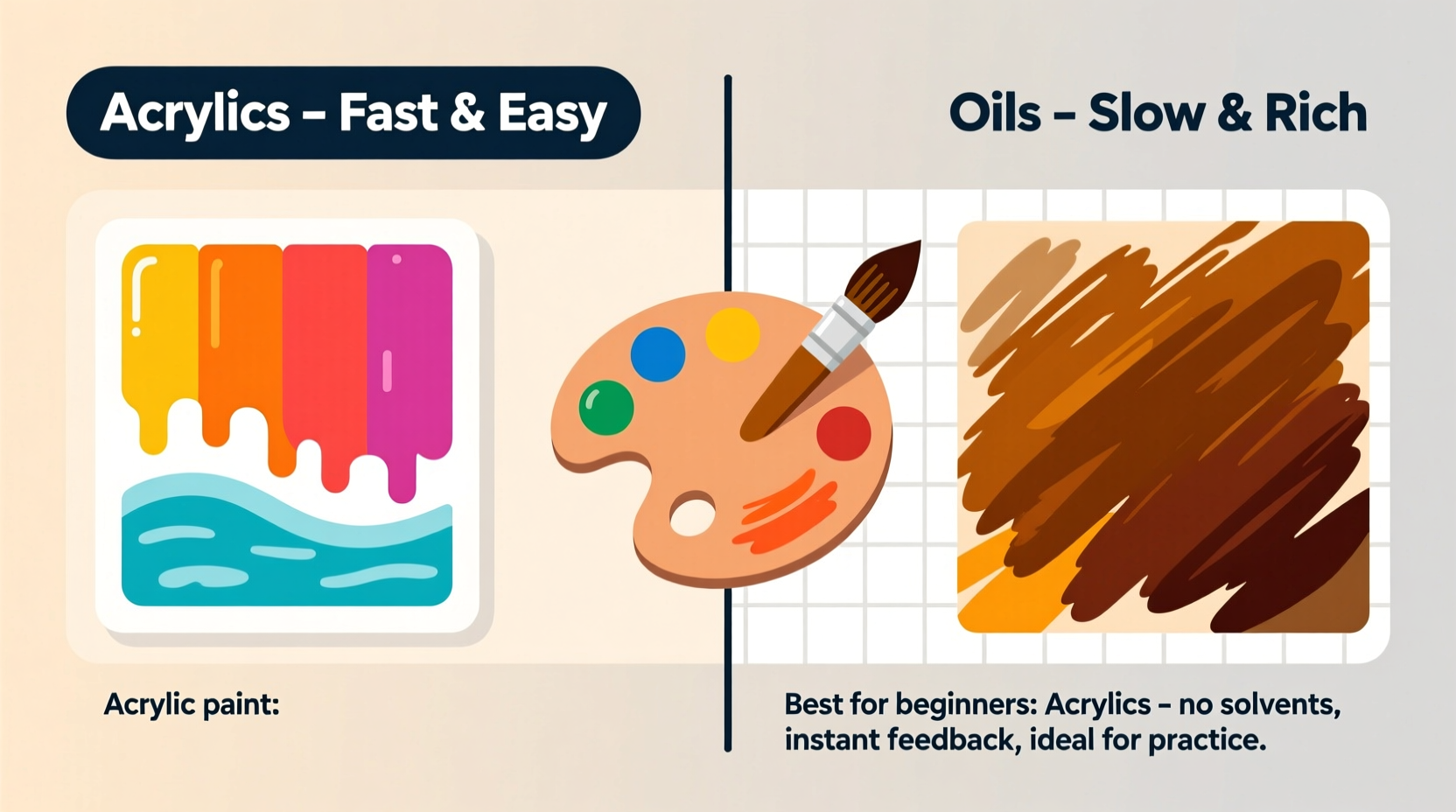
The most immediate difference between acrylic and oil paints lies in how quickly they dry. Acrylics are water-based and typically dry within minutes to an hour, depending on thickness and environmental conditions. This fast-drying nature allows artists to layer colors rapidly and complete a piece in a single session. However, it also means there’s little time to blend or adjust once the paint hits the surface.
In contrast, oil paints can stay workable for days, even weeks. This extended drying window gives beginners more room to correct mistakes, smooth transitions, and experiment with blending directly on the canvas. For learners still developing hand-eye coordination and color mixing skills, this forgiving timeline can reduce pressure and encourage exploration.
That said, the rapid drying of acrylics isn’t always a drawback. It encourages decisiveness and helps build confidence in brushwork. Artists who prefer structured, step-by-step approaches may find the quick progression from one layer to the next more satisfying than waiting for oils to cure.
Cleanup and Safety Considerations
One area where acrylics clearly win for beginners is in cleanup and safety. Acrylic paints clean up easily with soap and water. Brushes, palettes, and hands can be washed without harsh solvents, making the process safer, especially in homes without proper ventilation.
Oil paints, on the other hand, require mineral spirits or turpentine for thinning and cleaning. These solvents emit strong fumes and can irritate skin and lungs. While odorless mineral spirits exist, they still require careful handling and disposal. For someone painting in a small apartment or shared space, the need for chemical solvents can be a significant deterrent.
Additionally, oil paint residue must be disposed of properly to avoid environmental contamination. Rags soaked in linseed oil can even pose a fire hazard if not stored correctly due to spontaneous combustion. Acrylics eliminate these concerns entirely, making them a lower-risk option for inexperienced artists.
“Beginners often underestimate how much workflow affects morale. The ability to clean up with water alone removes a psychological barrier to painting regularly.” — Lena Torres, Art Instructor at Portland Community Arts Center
Materials and Setup Cost
Starting with oil paints usually requires a larger initial investment. Beyond the paints themselves, beginners need brushes suitable for oils (typically natural bristle), solvent containers, palette knives, drying racks, and proper ventilation solutions. Odorless mineral spirits and linseed oil add to the cost, as do storage systems for wet canvases.
Acrylics, by comparison, are far more economical to begin with. Synthetic brushes work well, water serves as the primary thinner, and no special ventilation is needed. A beginner can start with a basic set of paints, a few brushes, a plastic palette, and some water cups—totaling under $30 in many cases.
This affordability makes acrylics ideal for trial and error, a crucial phase in artistic development. When materials are low-cost and easy to replace, experimentation becomes less intimidating.
Learning Curve and Technique Development
Technique plays a major role in determining which medium is easier to learn. Acrylics behave differently from oils in nearly every aspect—from opacity to texture to blending capability.
Acrylics tend to darken slightly as they dry and can become streaky if applied too thinly. They also form a “skin” quickly, making reworking older layers difficult without disturbing the underlying paint. Beginners often struggle with achieving smooth gradients or realistic shadows until they learn to work quickly or use retarders.
Oils offer richer pigments and buttery consistency that glide easily across the canvas. Their slow drying time allows for seamless blending, subtle tonal shifts, and fine detail work. Techniques like glazing and scumbling—layering transparent or broken color—are more intuitive in oils because the paint remains malleable.
However, mastering oil techniques requires understanding fat-over-lean rules (applying more flexible layers over less flexible ones to prevent cracking) and patience with drying times. Missteps here can lead to cracked surfaces or yellowing over time—issues acrylics largely avoid.
For those aiming to replicate traditional realism, oils provide a closer match to historical methods. But for expressive, abstract, or illustrative styles, acrylics offer versatility and speed that align better with contemporary practices.
Step-by-Step: Getting Started with Each Medium
Starting with Acrylics (Beginner-Friendly Path)
- Gather supplies: student-grade acrylic set, synthetic brushes (round and flat), water container, palette, canvas pad.
- Set up a workspace near a sink or with paper towels for spills.
- Mix paint with water sparingly—too much dilutes pigment and adhesion.
- Work in stages: sketch lightly with pencil, block in base colors, then add details before paint dries.
- Clean brushes immediately after use with warm, soapy water.
- Allow painting to dry completely (1–2 hours) before varnishing or storing.
Starting with Oils (More Involved Process)
- Acquire paints, natural bristle brushes, odorless mineral spirits, linseed oil, glass palette, easel.
- Ensure good airflow—open windows or use a fan; avoid confined spaces.
- Prepare your canvas with a toned ground if desired.
- Start with a sketch, then apply thin underpainting using diluted paint (lean layer).
- Build up thicker, oil-rich layers gradually (fat-over-lean principle).
- Store wet brushes in a jar with solvent or wrap in foil to preserve them between sessions.
- Allow weeks for full drying before varnishing.
Comparison Table: Acrylic vs Oil for Beginners
| Feature | Acrylic Paint | Oil Paint |
|---|---|---|
| Drying Time | Minutes to hours | Days to weeks |
| Cleanup | Water and soap | Solvents required |
| Toxicity/Fumes | Low (non-toxic when dry) | Moderate to high (solvent fumes) |
| Initial Cost | Low | Moderate to high |
| Blending Ease | Challenging (fast drying) | Easy (long open time) |
| Layering | Quick, sequential layers | Slow, requires planning |
| Varnishing | After 7–14 days | After 6–12 months |
| Suitability for Small Spaces | High | Low (due to fumes) |
Real Example: Sarah’s First Painting Journey
Sarah, a college student with no prior art experience, decided to try painting during winter break. She bought a starter acrylic kit for under $25 and began practicing in her dorm room. Within a week, she completed three small landscapes, learning how to mix greens and create depth with layering. The ability to paint for 30 minutes, let the canvas dry, and continue the next day fit perfectly with her schedule.
Curious about oils, she later borrowed supplies from a friend. Excited by the rich texture, she started a portrait—but grew frustrated when her brushes hardened overnight due to improper cleaning, and the lingering turpentine smell bothered her roommate. After two sessions, she returned to acrylics, appreciating their convenience and low maintenance.
Sarah’s experience reflects a common pattern: while oils offer technical rewards, their logistical demands can hinder consistent practice—a key factor in skill development.
Frequently Asked Questions
Can I mix acrylic and oil paints?
You can apply oil over dried acrylic (a common practice), but never acrylic over oil. Doing so will cause flaking because acrylic cannot adhere properly to oily surfaces. Use acrylics as a base if combining mediums.
Do I need an easel to start?
No. Many beginners successfully paint on a flat table or taped canvas on a wall. An easel becomes more useful as you advance and want to work vertically, but it's not essential at the start.
Are student-grade paints good enough for learning?
Absolutely. Student-grade acrylics and oils contain less pigment than professional lines but are formulated for consistency and ease of use. They’re ideal for practice. Upgrade to artist-grade only when you’ve developed specific needs.
Which Medium Should You Choose?
The answer depends on your priorities. If you value simplicity, speed, safety, and low cost, **acrylic paint is easier for beginners**. Its forgiving setup, minimal cleanup, and rapid results support regular practice—the most important ingredient in artistic growth.
If you’re drawn to traditional techniques, deep color blending, and don’t mind a steeper logistical curve, oils can be deeply rewarding. But they demand more time, space, and attention to detail before yielding satisfying results.
Many instructors recommend starting with acrylics to build foundational skills—color theory, composition, brush control—and transitioning to oils later. This approach allows beginners to focus on creativity without being overwhelmed by technical constraints.
“The best medium for a beginner is the one they’ll actually use. Consistency beats perfection every time.” — Marcus Reed, Founder of BeginnerPainters.org
Final Checklist: Getting Started Right
- ✅ Choose acrylics if you want low setup effort and fast results.
- ✅ Opt for oils only if you have space, ventilation, and time to manage drying.
- ✅ Invest in basic tools: brushes, palette, surface, and appropriate thinner.
- ✅ Clean brushes immediately—especially with acrylics, which ruin tools if left to dry.
- ✅ Practice daily or weekly, even for short sessions, to build muscle memory.
- ✅ Don’t fear mistakes—they’re part of the learning rhythm in any medium.
Conclusion
When weighing acrylic paint vs oil paint for beginners, the balance tips decisively toward acrylics. Their accessibility, safety, and ease of use remove common barriers to entry, allowing new artists to focus on what matters most: creating, experimenting, and improving. While oil painting holds undeniable allure, its demands often slow down the early momentum critical for long-term engagement.
Start with acrylics. Learn to mix colors, handle brushes, and compose compelling images. Once you’ve built confidence and routine, you can explore oils with greater purpose and preparedness. The goal isn’t to pick the “best” medium—it’s to pick the one that keeps you painting.




 浙公网安备
33010002000092号
浙公网安备
33010002000092号 浙B2-20120091-4
Comments
No comments yet. Why don't you start the discussion?