
Choosing between acrylic and watercolor paint as a beginner can feel overwhelming. Both mediums offer unique creative possibilities, but they differ significantly in handling, drying time, correction potential, and—critically—cleanup. For someone just starting out, understanding these differences isn’t just about technique; it’s about sustainability, confidence, and whether you’ll want to return to your paints after that first session.
This guide breaks down the practical realities of using acrylics and watercolors from a beginner’s perspective, focusing on what truly matters when you're learning: simplicity, forgiveness, and how easy it is to clean up after a painting session without feeling discouraged or overwhelmed.
Understanding the Core Differences
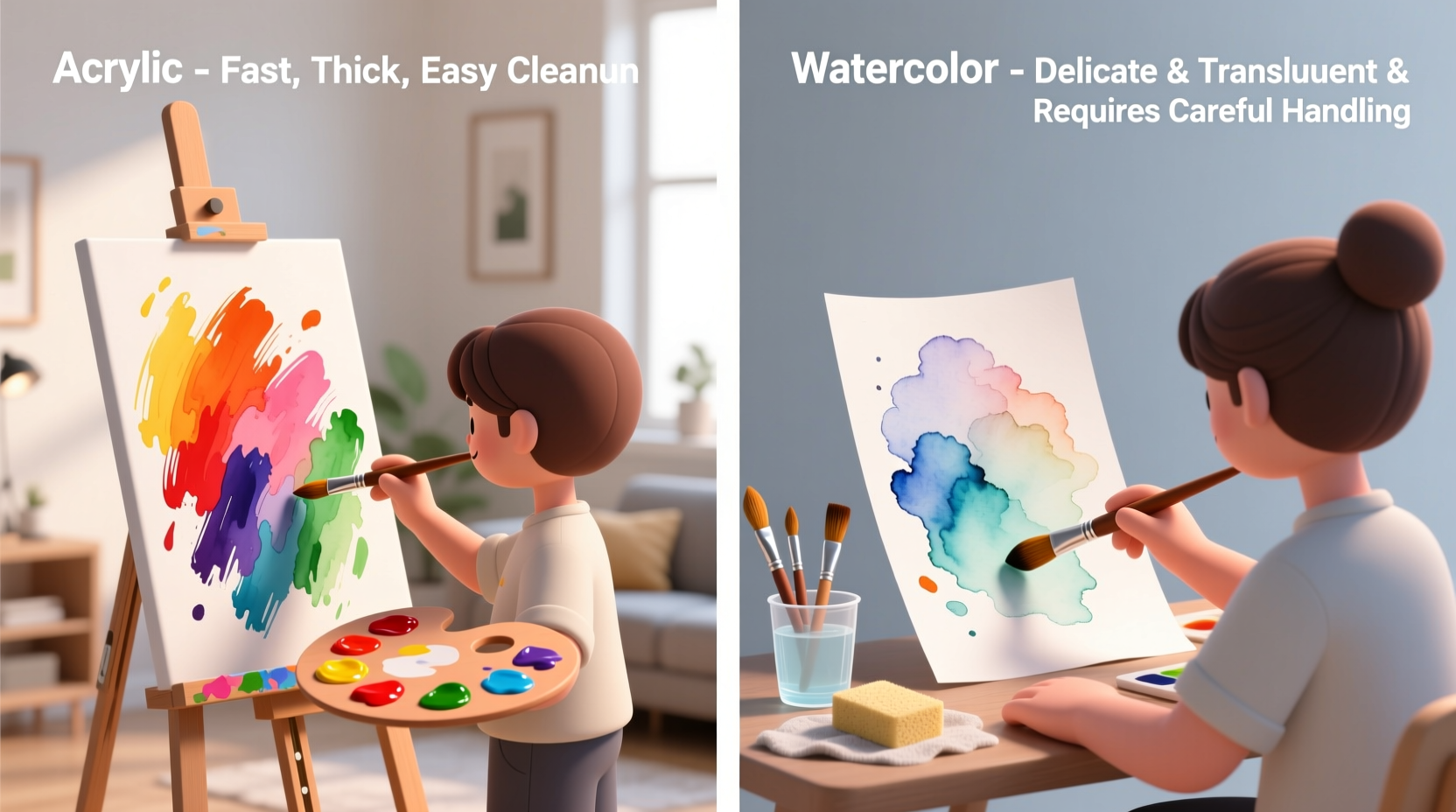
Before diving into ease of use and cleanup, it's essential to understand how acrylic and watercolor paints behave fundamentally.
Acrylic paint is a synthetic, water-based medium made from pigment suspended in an acrylic polymer emulsion. It dries quickly into a durable, water-resistant film. Once dry, it cannot be reactivated with water. This fast-drying nature affects everything from blending techniques to how long you can work on a single layer.
Watercolor paint, by contrast, is transparent and traditionally made from pigment mixed with a water-soluble binder (usually gum arabic). Its hallmark is luminosity—the ability to let light reflect off the white paper through translucent layers. Watercolor relies heavily on water control and works best when applied in thin glazes, building depth gradually.
These core behaviors influence not only artistic outcomes but also how accessible each medium is to someone new to painting.
Ease of Use: Which Medium Is More Forgiving?
Forgiveness is crucial for beginners. When mistakes happen—and they will—a medium that allows corrections or adjustments helps maintain motivation and reduces frustration.
Watercolor: The Challenge of Control
Watercolor is notoriously difficult to control. Because it depends on water-to-paint ratios, brush saturation, and paper absorbency, small variations can lead to blooms, backruns, or muddy colors. Lifting color once applied is possible but limited, especially on lower-quality paper.
However, watercolor excels in spontaneity and fluid expression. A beginner who enjoys loose, impressionistic styles may find joy in its unpredictability. But those seeking precision or layered corrections may struggle.
Acrylic: More Predictable, Less Reactive
Acrylic paint offers greater predictability. You can layer opaque colors over dried layers without disturbing the base. Mistakes are easily painted over. This makes acrylic ideal for illustrative styles, geometric designs, or subjects requiring defined edges.
The main challenge with acrylics is their rapid drying time. On a palette, they begin to skin over within minutes. Brushes left uncleaned stiffen quickly. Some artists use retarders or stay-wet palettes to extend working time, but these add complexity for beginners.
In terms of sheer usability, acrylic wins for structured learners who prefer control. Watercolor appeals to intuitive creators comfortable with uncertainty.
“Beginners often gravitate toward acrylic because it mimics the familiarity of markers or colored pencils—paint goes where you put it. Watercolor demands surrender to the medium.” — Lena Torres, Art Educator & Workshop Leader
Cleanup: Time, Tools, and Effort Required
Cleanup is one of the most underrated factors in choosing a beginner-friendly medium. If setting up and cleaning feels like a chore, consistency suffers.
Acrylic Paint Cleanup: Fast Drying = Urgency
Because acrylic dries into a permanent plastic-like film, brushes and tools must be cleaned immediately. Letting a brush sit for even 20 minutes can ruin it. Cleaning requires warm water, mild soap, and thorough scrubbing. Palettes harden quickly unless sealed in airtight containers or used with wet palette systems.
While acrylic is non-toxic and safe for home use, spilled paint on clothes or furniture becomes nearly impossible to remove once dry. Rinsing generates murky wastewater that shouldn't go directly into drains in large quantities.
Watercolor Cleanup: Simpler, Gentler Process
Watercolor cleanup is notably gentler. Since the paint remains water-soluble even when dry, brushes can be rehydrated and cleaned later if needed. Leftover paint in wells of a palette can be rewetted days later. There’s no need for special solvents or aggressive scrubbing.
Rinsing involves clear or lightly pigmented water, posing less environmental concern. Most supplies—brushes, jars, palettes—can air-dry naturally without damage. Paper towels usually suffice for wiping excess paint.
For a busy beginner with limited time, this low-pressure cleanup process lowers the barrier to regular practice.
Side-by-Side Comparison: Practical Factors for Beginners
| Factor | Acrylic Paint | Watercolor |
|---|---|---|
| Drying Time | Fast (5–20 mins) | Moderate (10–30 mins), reactivatable |
| Ease of Correction | High – paint over mistakes easily | Low – lifting color risks paper damage |
| Cleanup Speed | Urgent – immediate rinsing required | Flexible – delayed cleaning acceptable |
| Setup Complexity | Medium – may need retarder, palette seal | Low – water, brush, paper, palette |
| Beginner-Friendly Learning Curve | Moderate – forgiving but fast-paced | Steeper – requires patience and water control |
| Storage of Supplies | Tricky – open paint dries fast | Easy – pans or tubes reseal well |
Step-by-Step Setup and Cleanup Routine
A consistent routine minimizes stress and maximizes focus on creativity. Here’s a recommended workflow for each medium.
For Acrylic Paint
- Lay down a protective surface (plastic sheet or silicone mat).
- Squeeze small amounts of paint onto a stay-wet palette or mist a regular palette with water.
- Have two water cups ready—one for initial rinse, one for clean water. <4>Keep paper towels within reach for blotting brushes.
- Work efficiently; remix dried paint with a few drops of water if caught early.
- Immediately after painting, rinse brushes under warm water.
- Wash with mild soap, reshape bristles, and lay flat or hang to dry.
- Scrape palette residue and store in an airtight container if reusable.
For Watercolor Paint
- Place watercolor paper on a board; secure edges with tape if desired.
- Fill two jars with water—one for washing, one for clean application.
- Use a round or flat brush suited to your technique.
- Moisten pan colors gently; avoid overloading the brush.
- Work from light to dark, allowing layers to dry between applications.
- After painting, rinse brushes until water runs clear.
- Shake out excess water and lay flat to dry—no soap needed daily.
- Close palette lid; no special storage needed.
Real Example: Maya’s First Painting Experience
Maya, a 32-year-old office worker, decided to try painting as a way to unwind. She bought a basic acrylic set and canvas panel, excited to recreate a sunset she’d seen on vacation. Her first attempt started strong, but as the orange sky began to dry, she realized she’d forgotten to blend the red transition. By the time she squeezed more paint, the original layer had hardened. She tried layering on top, but the texture became lumpy.
Frustrated, she set it aside for a week. Then she borrowed a friend’s watercolor travel kit. This time, she approached with caution. She practiced washes on scrap paper first. When she accidentally flooded a section of her mountain scene, she blotted it with a tissue and turned the bloom into a cloud. The ability to reactivate and adjust gave her confidence. Though the result wasn’t perfect, she felt progress.
She now uses both: acrylics for bold, graphic pieces when she has uninterrupted time, and watercolors for quick, meditative sessions during weekends.
Beginner Checklist: Getting Started the Right Way
- Choose one medium to start—don’t mix supplies initially.
- Invest in mid-grade materials (student-level paints, proper brushes).
- Set up a dedicated, well-lit space with easy access to water.
- Keep cleaning supplies visible: soap, rags, two water cups.
- Start with small formats (5x7” or A5) to reduce pressure.
- Practice basic techniques separately: gradients, layering, drying times.
- Label unfinished work clearly to avoid confusion.
- Allow time for cleanup immediately after painting—don’t delay.
Frequently Asked Questions
Can I use the same brushes for acrylic and watercolor?
Yes, but not interchangeably without thorough cleaning. Acrylic residue can compromise watercolor transparency. It’s best to designate separate sets or deep-clean brushes before switching mediums. Natural hair brushes (like sable) are better for watercolor; synthetic bristles handle acrylic’s abrasiveness better.
Which is cheaper to start with?
Watercolor generally has a lower startup cost. A compact pan set, a pad of paper, and one good brush can cost under $30. Acrylics require larger quantities of paint, a larger palette, and often primed surfaces, pushing initial costs higher. However, student-grade options exist for both.
Do I need special ventilation for either medium?
No, neither acrylic nor watercolor requires ventilation under normal use. However, some acrylic additives (retarders, mediums) may emit mild fumes. Work in a well-ventilated room if using these. Always avoid inhaling dry pigment dust when mixing powders.
Conclusion: Choose Based on Your Lifestyle, Not Just Preference
The choice between acrylic and watercolor isn’t just about artistic style—it’s about your daily rhythm. If you have short bursts of time and value low-maintenance cleanup, watercolor’s gentle process may suit you better, despite its technical challenges. If you prefer control, opacity, and the ability to correct freely, acrylic offers more structure, though it demands prompt cleanup and organization.
There’s no universal “easier” medium. There’s only the one that fits your habits, patience level, and available time. Many artists eventually explore both. Starting with awareness of these practical differences increases the likelihood you’ll keep painting—not quit out of cleanup fatigue or frustration.




 浙公网安备
33010002000092号
浙公网安备
33010002000092号 浙B2-20120091-4
Comments
No comments yet. Why don't you start the discussion?