
Most people assume that listening is passive—that if someone is speaking and you’re not interrupting, you’re doing it right. But real communication isn’t about silence; it’s about presence. The truth is, hearing and listening are fundamentally different acts. Hearing is biological: sound waves enter your ears, and your brain registers noise. Listening—especially active listening—is intentional, emotional, and relational. It’s the difference between waiting for your turn to speak and truly seeking to understand.
In a world saturated with distractions—phones buzzing, mental to-do lists, internal judgments—genuine connection in conversation has become rare. Yet it remains one of the most powerful tools for building trust, resolving conflict, and deepening relationships. Whether in personal relationships, professional settings, or casual interactions, mastering the art of active listening can transform how you relate to others.
The Fundamental Difference: Hearing vs. Active Listening
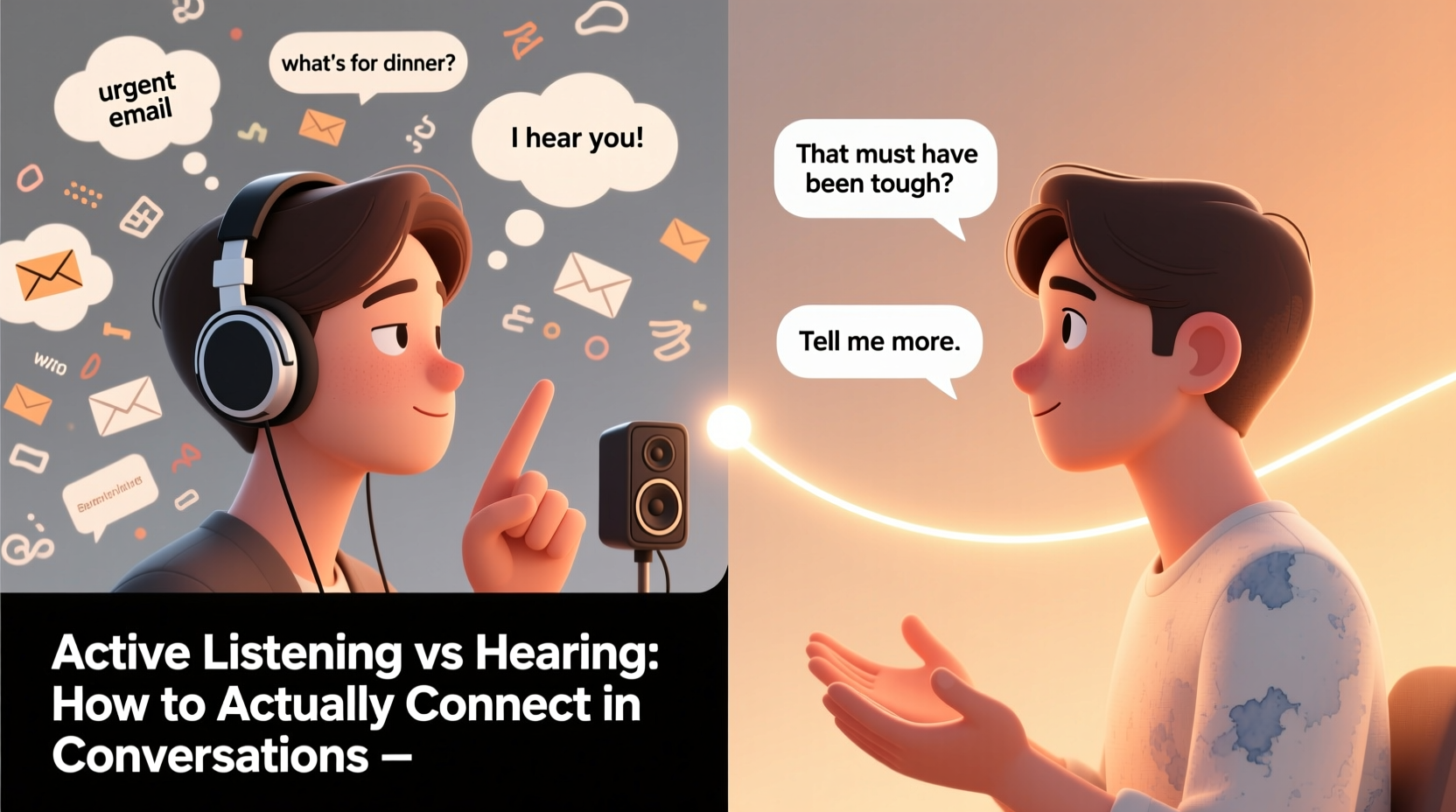
Hearing is automatic. You hear traffic outside your window, a colleague’s voice in a meeting, or music playing in the background. But hearing does not require engagement. It doesn’t demand empathy or reflection. It simply acknowledges auditory input.
Active listening, on the other hand, is a deliberate practice. It involves full concentration, emotional attunement, and verbal and nonverbal feedback. When you actively listen, you’re not just absorbing words—you’re interpreting tone, observing body language, and sensing underlying emotions. You’re present, not just physically but mentally and emotionally.
Consider this: two people can be in the same room, one speaking from the heart about a recent loss, while the other hears the words but mentally rehearses an email they need to send. The speaker feels unseen. The listener may believe they’ve “listened,” but no real connection occurred. That gap is where misunderstandings grow and relationships weaken.
Why Most Conversations Lack Real Connection
Modern communication is fast, fragmented, and often transactional. We prioritize efficiency over depth. Texts replace calls. Emails substitute for face-to-face dialogue. Even in live conversations, many people listen with an agenda: to respond, to fix, to prove a point, or to move on to the next task.
Psychologist Carl Rogers, a pioneer in humanistic therapy, emphasized that being truly heard is as vital to emotional well-being as food and shelter. Yet in daily life, few feel deeply understood. This deficit leads to frustration, disconnection, and even conflict.
Common barriers to genuine connection include:
- Mental distractions: Internal chatter, stress, or multitasking.
- Assumptions: Projecting your own experiences onto someone else’s story.
- Interrupting: Cutting in before the speaker finishes their thought.
- Problem-solving prematurely: Jumping to advice without first validating feelings.
- Emotional defensiveness: Reacting personally when feedback is offered.
These habits stem not from malice, but from ingrained patterns. We weren’t taught how to listen—we were taught how to reply.
Core Components of Active Listening
Active listening isn’t just about staying quiet. It’s a skill composed of specific, observable behaviors. Mastering these components builds trust and invites openness.
- Full Attention: Put away distractions. Turn off notifications. Make eye contact. Face the speaker directly. Your body language should say, “You have my full focus.”
- Nonverbal Feedback: Nod occasionally. Use facial expressions that mirror the speaker’s emotion—concern when they’re upset, smiles when they share joy. These subtle cues signal engagement.
- Minimal Encouragers: Use small verbal affirmations like “I see,” “Mm-hmm,” or “Go on.” These keep the speaker feeling supported without derailing their flow.
- Paraphrasing: Reflect back what you’ve heard in your own words. For example: “So what I’m hearing is that you felt overlooked during the team meeting?” This confirms understanding and gives the speaker a chance to clarify.
- Asking Open-Ended Questions: Instead of “Did that make you mad?” try “How did that situation affect you?” Open questions invite deeper sharing.
- Withholding Judgment: Suspend evaluation. Don’t rush to agree, disagree, or offer solutions. Let the speaker express themselves fully before responding.
“Listening is an act of love. It says, ‘I value you enough to set aside my own agenda and enter your world.’” — Dr. Brené Brown, Research Professor and Author
Practical Steps to Shift from Hearing to Active Listening
Changing lifelong habits takes awareness and consistent effort. Here’s a step-by-step guide to help you transition from passive hearing to meaningful listening.
Step 1: Prepare Mentally Before Conversations
Before entering any important discussion, take 30 seconds to clear your mind. Ask yourself: What’s my intention here? If it’s to understand, not to win or perform, you’ll approach the exchange differently.
Step 2: Eliminate Distractions
Put your phone face-down or in another room. Close unnecessary browser tabs. If in person, choose a quiet space. If virtual, close unrelated applications. Signal that this conversation matters.
Step 3: Listen to Understand, Not to Respond
Notice when your mind starts drafting a reply. Gently redirect your focus to the speaker’s words. Wait until they pause naturally before speaking. Silence is not your enemy—it gives space for deeper thoughts to emerge.
Step 4: Validate Before Advising
When someone shares a problem, resist the urge to fix it immediately. First, acknowledge their feelings: “That sounds really frustrating. I’d feel overwhelmed too.” Validation builds trust far more than quick fixes.
Step 5: Summarize and Confirm
At key moments, summarize what you’ve heard: “Let me make sure I got this right. You’re saying X, and it made you feel Y. Is that accurate?” This prevents misinterpretation and shows care.
Real Example: A Manager Transforms Team Communication
Sarah, a project manager at a mid-sized tech firm, noticed rising tension within her team. Deadlines were missed, and morale dipped. In one-on-one meetings, employees gave short answers and avoided eye contact.
She realized she’d been approaching these talks transactionally—focused on tasks, timelines, and deliverables. So she decided to experiment with active listening.
In her next meeting with Alex, a senior developer who had seemed disengaged, Sarah began by asking, “How have things been going for you lately—not just work-wise, but overall?” She put her notebook aside, made eye contact, and listened without interruption.
Alex hesitated, then shared that he’d been struggling with anxiety due to family health issues. He hadn’t spoken up because he didn’t want to seem unreliable. Sarah responded with empathy: “Thank you for trusting me with that. It makes sense you’d feel stretched. How can we adjust your workload to support you right now?”
That single conversation changed their dynamic. Alex felt seen. Over time, other team members also opened up. Sarah didn’t solve every problem, but by listening first, she built a culture of psychological safety. Productivity improved—not because of tighter oversight, but because people felt valued.
Do’s and Don’ts of Active Listening
| Do’s | Don’ts |
|---|---|
| Maintain eye contact and open posture | Cross arms or look at your phone |
| Use phrases like “Tell me more” or “What was that like for you?” | Interrupt or finish the speaker’s sentences |
| Paraphrase to confirm understanding | Dismiss feelings with “It’s not a big deal” |
| Allow pauses; don’t rush to fill silence | Change the subject to your own experience |
| Ask clarifying questions gently | Challenge or argue prematurely |
Frequently Asked Questions
Isn’t active listening just agreeing with the other person?
No. Active listening is about understanding, not agreement. You can fully grasp someone’s perspective—even if you disagree—without compromising your own views. In fact, being heard often makes people more open to hearing opposing opinions.
How do I practice active listening if the speaker is unclear or rambling?
You can gently guide the conversation with summarizing statements: “So far, I’m hearing three main points: A, B, and C. Is that accurate?” Or ask, “What’s the core concern you’d like me to understand?” This keeps you engaged while helping structure the dialogue.
Can active listening be faked?
Superficial mimicry—like nodding without paying attention—can be detected. Authenticity matters. If you can’t give full attention, it’s better to say, “I want to give you my full focus—can we talk in 10 minutes?” Forced listening erodes trust more than honest delay.
Building a Habit of Connection
Active listening isn’t reserved for therapy sessions or conflict resolution. It’s a daily practice that enriches every interaction. When you listen actively, you send a powerful message: “You matter. Your experience is valid. I am here with you.”
Start small. Choose one conversation per day to approach with full presence. Notice the shift—not just in the other person’s openness, but in your own sense of connection. Over time, this habit reshapes your relationships, enhances collaboration, and fosters emotional intelligence.
Remember: people forget facts, but they remember how you made them feel. Did they feel rushed? Judged? Interrupted? Or did they leave the conversation feeling lighter, clearer, and respected?
Conclusion: Listen Like It Matters—Because It Does
In a culture obsessed with being heard, few take the time to truly listen. Yet listening is the quiet superpower behind strong relationships, effective leadership, and emotional intimacy. The choice between hearing and active listening isn’t minor—it defines the quality of our human connections.
You don’t need special training to begin. You only need intention, presence, and the courage to stay silent long enough to understand.




 浙公网安备
33010002000092号
浙公网安备
33010002000092号 浙B2-20120091-4
Comments
No comments yet. Why don't you start the discussion?