
In a world where distractions are constant—commuting on crowded trains, working from noisy cafes, or trying to focus in a bustling household—noise control has become essential. Many people turn to headphones with either active noise cancellation (ANC) or passive isolation to regain peace. But when it comes to blocking one of the most persistent and complex sounds we encounter—human voices—which method works better? And more importantly, does ANC actually block voices as advertised?
The short answer: ANC helps reduce voices, but not completely. Passive isolation often plays a more critical role in muting speech than many realize. To understand why, we need to explore how both technologies function, their strengths and limitations, and how they interact with the unique acoustic properties of human speech.
How Active Noise Cancellation Works
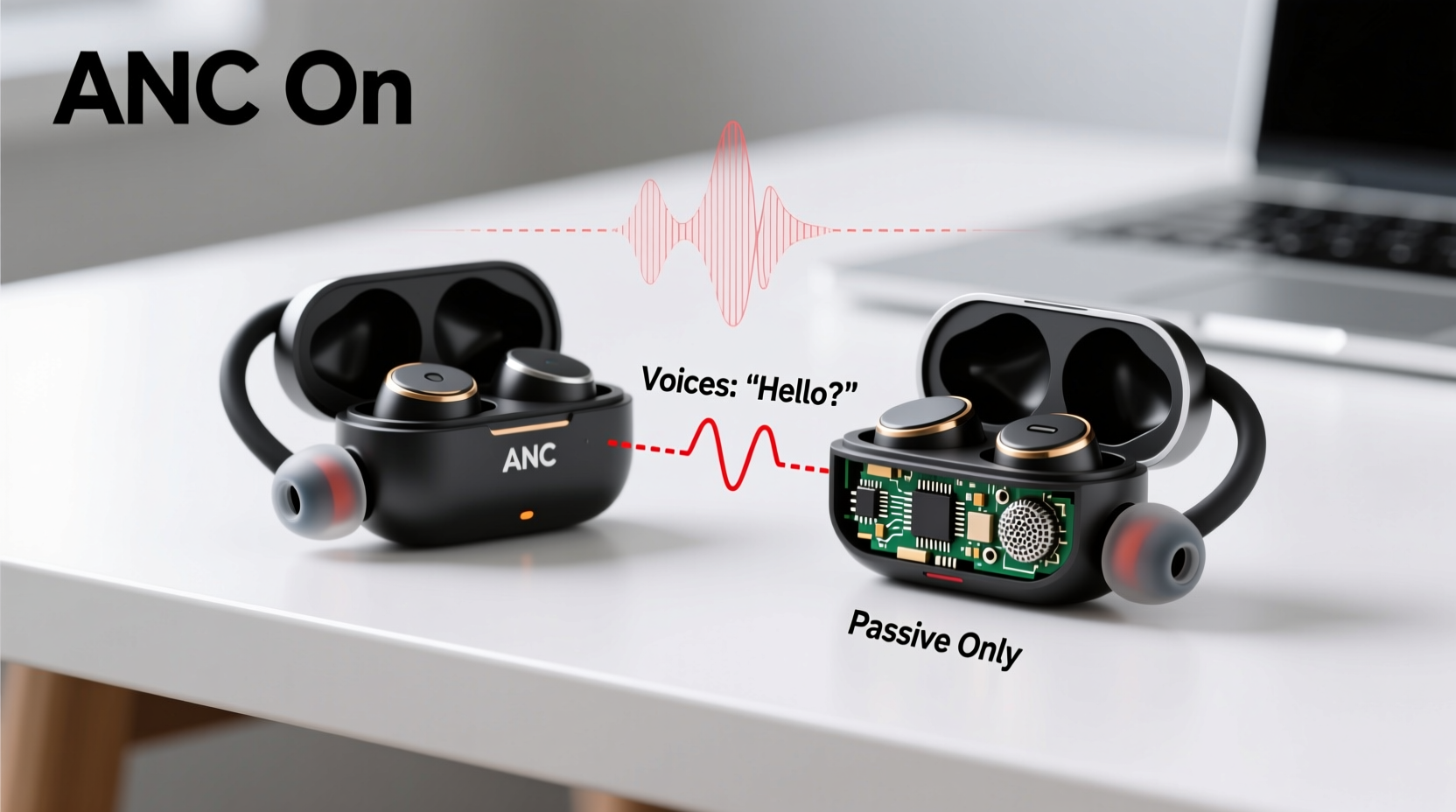
Active noise cancellation is a technological solution that uses microphones, digital signal processing, and inverse sound waves to counteract incoming noise. Here’s how it functions step by step:
- Microphones capture ambient noise — External mics on the earcups pick up environmental sounds before they reach your ears.
- A processor analyzes the sound wave — The system identifies the frequency and amplitude of the incoming noise in real time.
- An inverse wave is generated — The headphones produce a sound wave that is 180 degrees out of phase with the ambient noise, effectively canceling it through destructive interference.
- The result is reduced perceived noise — When the original and inverted waves meet, they cancel each other out, especially for consistent, low-frequency sounds.
This process excels at neutralizing predictable, continuous noises such as airplane engine hum, HVAC systems, or traffic rumble. These are typically low-frequency sounds below 1,000 Hz, which have long wavelengths and steady patterns—ideal for ANC algorithms to predict and counteract.
Why ANC Struggles with Human Voices
Human speech presents a challenge for ANC due to several key characteristics:
- Frequency range: Speech spans a broad spectrum, from about 85 Hz (low male voices) to over 8,000 Hz (high-pitched consonants). ANC is most effective below 1,000 Hz, meaning higher frequencies in speech pass through largely unaffected.
- Irregular patterns: Unlike a constant drone, voices are dynamic—changing pitch, volume, and rhythm unpredictably. ANC systems struggle to keep up with rapid shifts, limiting their ability to generate accurate counter-waves.
- Sudden onset: Conversations start abruptly. By the time the ANC system detects and responds, the initial syllables may already be audible.
- Directionality and proximity: Voices directly beside or in front of you arrive with high clarity and intensity. ANC can’t eliminate close-range speech entirely, especially if it's loud or emotionally charged.
“ANC is excellent for reducing background droning, but it was never designed to make conversations disappear. Expect attenuation, not elimination.” — Dr. Lena Torres, Audio Acoustics Researcher, MIT Media Lab
In practical terms, ANC might lower the volume of distant chatter or muffled office talk by 10–20 decibels, making it less intrusive. But if someone is speaking directly to you or loudly nearby, you’ll still hear them—just slightly quieter.
Passive Isolation: The Unsung Hero of Noise Blocking
Passive isolation, also known as sound isolation or sound attenuation, relies purely on physical barriers to block noise. It doesn’t require batteries or electronics—just well-designed materials and fit.
This method works by creating an airtight seal between the ear and the outside environment. The effectiveness depends on:
- Ear cup design (for over-ear headphones): Thick, memory foam cushions with high-density materials absorb and reflect sound waves.
- Tips and fit (for in-ears): Silicone or foam ear tips that conform to the ear canal prevent sound leakage.
- Headphone material and structure: Denser shells and layered construction enhance sound-blocking capabilities.
Unlike ANC, passive isolation is effective across a broader frequency range, including mid and high frequencies where speech dominates. A properly sealed pair of in-ear monitors (IEMs), for example, can block 20–35 dB of external sound—even without any ANC technology.
Consider this: high-fidelity musician earplugs use only passive isolation to protect hearing during live performances, proving that physical barriers alone can significantly reduce vocal-level noise.
Real-World Example: The Commuter’s Dilemma
Jamal takes the subway daily and recently upgraded from basic earbuds to premium ANC headphones. Before, he could hear every conversation around him, making focus impossible. Now, the train’s rumble is nearly gone—but he still catches snippets of nearby phone calls.
After adjusting the ear tips for a tighter seal, the improvement is dramatic. Voices become muffled, almost indistinct. He realizes the ANC helped with the low-end noise, but it was the improved passive seal that finally blocked the speech.
This scenario illustrates a common misunderstanding: ANC gets the marketing spotlight, but passive isolation often does the heavy lifting when it comes to blocking voices.
ANC + Passive Isolation: The Best of Both Worlds
Top-tier headphones don’t rely on just one method—they combine both ANC and superior passive isolation for maximum effect. This hybrid approach delivers the deepest noise reduction possible in consumer audio gear.
For example, models like the Sony WH-1000XM5 or Apple AirPods Pro use advanced ANC processors alongside ergonomic designs that ensure a tight seal. The ANC handles low-frequency background noise, while the physical fit blocks higher-frequency sounds like voices, keyboard clicks, and ringing phones.
| Technology | Best At Blocking | Limited With | Power Required? |
|---|---|---|---|
| Active Noise Cancellation (ANC) | Low-frequency drones (airplanes, engines, AC units) | Voice, sudden sounds, high-pitched tones | Yes |
| Passive Isolation | Broad spectrum, especially mid-to-high frequencies (voices, clatter) | Very low rumbles without good seal | No |
| ANC + Passive Combined | Nearly all ambient noise, including moderate speech | Loud, close-range conversations | Yes (for ANC component) |
The synergy between these two methods is why “good fit” is emphasized so heavily in headphone reviews. No amount of ANC can compensate for poor sealing. In fact, a gap as small as 1mm in an ear tip can reduce isolation by up to 25 dB at higher frequencies.
What Science Says About Voice Reduction
Independent lab tests from organizations like RTINGS.com and SoundGuys measure noise attenuation across frequencies. Their data consistently shows that while ANC improves low-frequency suppression by 15–30 dB, passive fit contributes more significantly to mid-frequency (1,000–4,000 Hz) attenuation—the core range of human speech.
In one study comparing identical earbuds with and without ANC, the difference in voice blocking was minimal when fit was poor. However, when users achieved a proper seal, both versions performed similarly in speech reduction—proving that isolation matters more than ANC for voices.
Additionally, newer ANC systems now incorporate “adaptive” or “transparency” modes that use AI to detect speech and adjust cancellation accordingly. Some even prioritize reducing speech frequencies, though results vary widely by brand and firmware.
Checklist: How to Maximize Voice Blocking
To get the most out of your headphones when trying to block voices, follow this checklist:
- ✅ Choose over-ear or in-ear models with strong passive isolation ratings.
- ✅ Use memory foam or double-flange ear tips for a deeper seal (especially with IEMs).
- ✅ Ensure the headband or stem fits snugly without causing discomfort.
- ✅ Activate ANC only after confirming a proper seal—otherwise, it won’t perform optimally.
- ✅ Test fit by playing quiet music and checking if external voices fade when you wiggle the earbud.
- ✅ Consider custom-molded earpieces for maximum isolation (popular among pilots and studio engineers).
Frequently Asked Questions
Does ANC block voices completely?
No. ANC reduces background noise and may soften distant voices, but it cannot eliminate speech entirely. Close or loud conversations will still be audible, especially their higher-frequency components like sibilance (“s,” “sh” sounds).
Are in-ear headphones better than over-ear for blocking voices?
It depends on fit and design. High-end over-ear models with ANC offer excellent low-end noise reduction, but well-sealed in-ears often provide superior mid-to-high frequency isolation—making them more effective against voices. For pure voice blocking, tightly fitting in-ears with passive isolation are usually the better choice.
Can software updates improve ANC performance over time?
Yes. Many modern headphones receive firmware updates that refine ANC algorithms, adapt to new environments, or enhance speech detection. Brands like Bose, Sony, and Apple have released updates that noticeably improved voice noise handling months after launch.
Conclusion: Managing Expectations for Real-World Results
ANC is a powerful tool, but it’s not magic. It was engineered to combat constant, low-pitched noise—not to erase human conversation. If your primary goal is to block voices, don’t rely solely on ANC. Instead, prioritize headphones with excellent passive isolation and a secure, comfortable fit. Combine that with ANC for a comprehensive noise-reduction solution.
Understanding the limits of each technology empowers you to make smarter choices—whether you're shopping for new headphones, optimizing your current pair, or simply trying to focus in a noisy world. Voice blocking isn’t about one feature; it’s about synergy between engineering, design, and proper usage.




 浙公网安备
33010002000092号
浙公网安备
33010002000092号 浙B2-20120091-4
Comments
No comments yet. Why don't you start the discussion?