
Traveling with a baby, or simply sitting next to one on a flight or train, can turn a peaceful journey into an endurance test. Many rely on headphones to escape the high-pitched wails, but not all noise reduction methods are created equal. The difference between active noise cancelling (ANC) and passive noise isolation matters—especially when it comes to unpredictable, emotionally charged sounds like a crying baby. Understanding how these technologies function, their limitations, and where they excel can help you make smarter choices about which headphones to use—and manage expectations when silence is the goal.
How Noise Isolation Works: The Physics of Passive Blocking
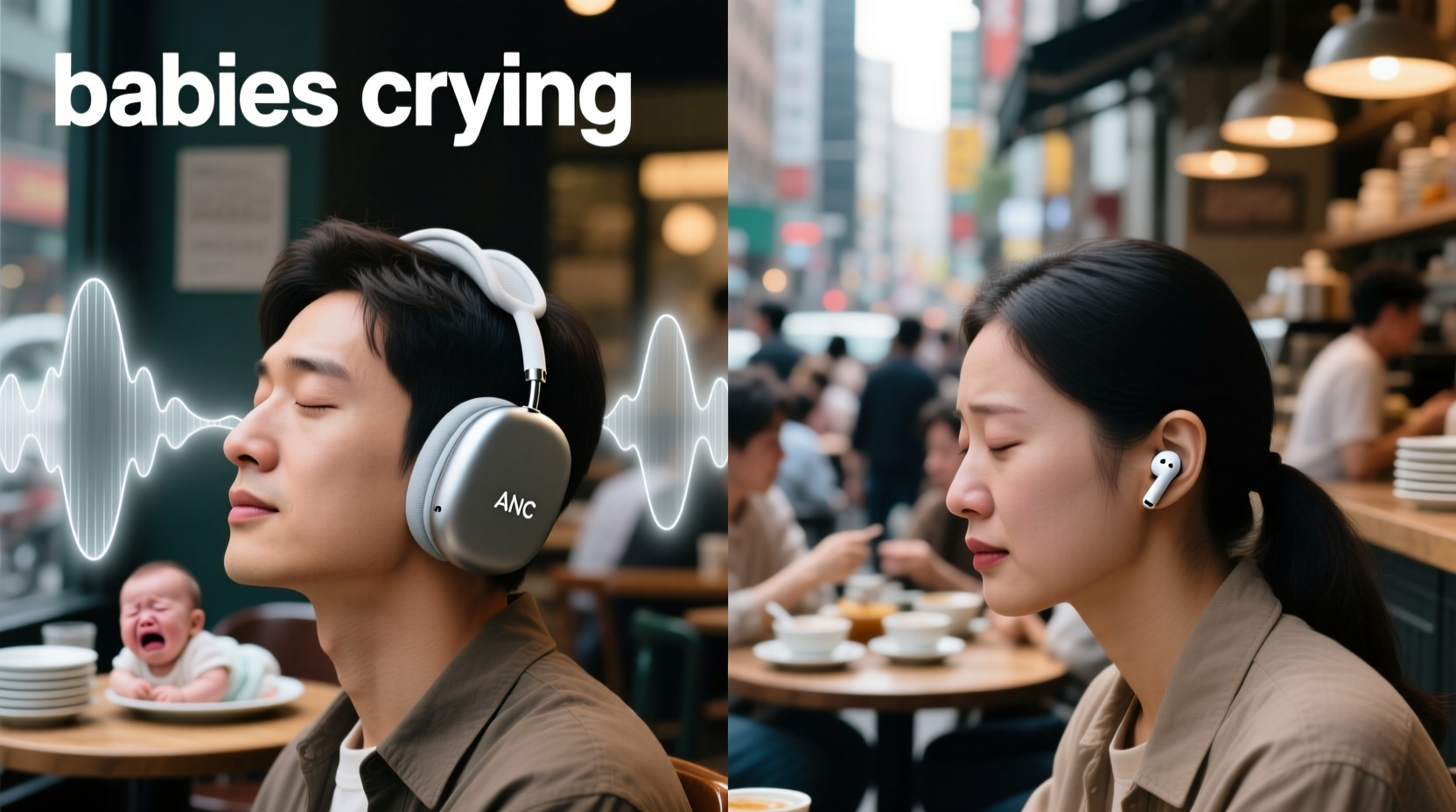
Noise isolation, also known as passive noise reduction, relies on physical barriers to keep sound out. This method doesn’t involve electronics or software—it’s purely mechanical. When you put on over-ear headphones with thick, memory foam earcups or insert snug-fitting earbuds, you’re creating a seal that blocks external sound waves from reaching your eardrums.
The effectiveness of noise isolation depends on several factors:
- Fit and Seal: A proper fit is essential. Even a small gap around the earcup or in the ear canal significantly reduces isolation.
- Material Density: Thicker ear cushions and deeper ear tips made from silicone or foam improve blocking, especially for mid-to-high frequency sounds.
- Design: Over-ear models generally offer better isolation than on-ear or open-back designs due to full coverage around the ear.
Noise isolation excels at reducing consistent ambient noise like chatter, traffic hum, or air conditioning—but struggles with sudden, sharp sounds. A baby’s cry, which often starts abruptly and contains both low and piercing high frequencies, can still penetrate even well-sealed earbuds.
Active Noise Cancelling: How It Silences the World
Active noise cancelling goes beyond physical blocking by using microphones, processors, and anti-noise signals. Here’s how it works: tiny microphones on the outside of the headphones pick up incoming sound waves. The internal processor analyzes these sounds in real time and generates an “inverse” waveform—a mirror image of the noise—that cancels it out when played through the speakers.
This process, called destructive interference, is most effective against predictable, continuous low-frequency sounds such as airplane engines, train rumble, or office HVAC systems. These are steady-state noises with consistent wavelengths, making them easier for ANC algorithms to predict and neutralize.
However, ANC has limitations when dealing with irregular, non-repetitive sounds—like a baby crying. Cries vary in pitch, volume, and duration, often spiking into high frequencies that ANC systems aren’t optimized to handle. While some high-end models now include adaptive ANC that adjusts to changing environments, they still cannot eliminate sudden, sharp noises completely.
“ANC is brilliant for constant background noise, but it's not magic. Sudden, high-frequency sounds like screams or clattering cutlery will always get through.” — Dr. Lena Patel, Audio Engineer at Sound Dynamics Lab
Comparing ANC and Noise Isolation: What Blocks a Baby’s Cry?
To understand which technology performs better against a crying baby, consider the nature of the sound. A baby’s cry typically ranges from 600 Hz to above 3000 Hz, peaking in the upper midrange and treble frequencies—exactly where passive isolation tends to perform better than ANC.
ANC systems are strongest below 1000 Hz. Above that range, their cancellation power drops off sharply. Meanwhile, well-designed earbuds with deep insertion and soft silicone tips can attenuate higher frequencies more effectively through physical sealing.
In practical terms, this means:
- You might barely notice engine noise with ANC turned on.
- But a nearby baby’s scream will still register clearly, even with top-tier ANC.
- Combining both ANC and strong passive isolation offers the best possible reduction.
Real-World Performance Comparison
| Feature | Noise Isolation | Active Noise Cancelling (ANC) |
|---|---|---|
| Mechanism | Physical barrier (ear seal) | Electronic signal cancellation |
| Best Against | Mid-to-high frequency sounds (e.g., voices, crying) | Low-frequency droning (e.g., planes, trains) |
| Effectiveness on Baby Cries | Moderate to good (if seal is tight) | Poor to moderate (limited high-frequency cancellation) |
| Battery Required? | No | Yes |
| Comfort Over Long Periods | Depends on fit; may cause ear pressure | Slight \"pressure\" sensation reported by some users |
| Average Noise Reduction | 15–30 dB (depending on seal) | Up to 40 dB (mostly below 1 kHz) |
The takeaway? Neither system fully blocks a crying baby. But together, they reduce its impact significantly. Premium headphones like the Sony WH-1000XM5 or Apple AirPods Pro combine advanced ANC with excellent passive sealing, offering the closest thing to relief in noisy environments.
Mini Case Study: A Transatlantic Flight with a Crying Baby Nearby
Emily, a frequent business traveler, booked a red-eye flight from New York to London. She brought her Bose QuietComfort 45 headphones, known for industry-leading ANC. Midway through the flight, a baby two rows ahead began crying—intermittently at first, then in prolonged bursts.
With ANC engaged and jazz playing at moderate volume, Emily noticed the plane’s engine drone disappeared entirely. However, every time the baby cried, the sound pierced through, slightly muffled but unmistakable. She switched to her AirPods Pro, which she uses for workouts and appreciates for their secure fit. Though the ANC was less powerful, the deep silicone tips created a tighter seal. The cries were quieter—not gone, but less jarring.
She later commented: “I expected ANC to make the crying vanish. It didn’t. But having good isolation made it bearable. I realized it wasn’t about total silence—it was about reducing the emotional spike each time the baby screamed.”
Her experience highlights a key insight: managing expectations is as important as choosing the right gear. Complete sound elimination isn’t realistic. The goal should be stress reduction, not perfection.
Can Any Headphones Truly Block Out a Crying Baby?
The short answer: no headphone on the market today can completely eliminate a nearby crying baby. But some come closer than others by combining multiple technologies.
Modern premium models now feature:
- Adaptive ANC: Sensors detect changes in environment and adjust cancellation profiles in real time.
- Transparency Mode: Allows selective amplification of human voices—useful for parents, but counterproductive when trying to ignore a cry.
- Customizable EQ: Boosting bass or lowering treble can mask certain aspects of a cry.
- Wider Frequency Cancellation: Newer chips aim to extend ANC effectiveness into higher ranges, though results remain limited.
Even with these advancements, physics remains the limiting factor. High-frequency transients—short, sharp bursts of sound—are inherently difficult to cancel because they change too quickly for digital processing to react in time. Most ANC systems operate with a slight delay (measured in microseconds), which is negligible for steady noise but critical when dealing with abrupt sounds.
Step-by-Step Guide: Maximizing Noise Reduction Against Baby Cries
- Choose the Right Fit: Opt for over-ear headphones with plush earcups or earbuds with multiple tip options to ensure a tight seal.
- Enable ANC: Turn on active noise cancellation to reduce low-frequency background noise that amplifies stress.
- Use Noise-Masking Audio: Play white noise, pink noise, or ambient music with consistent low tones to cover residual crying sounds.
- Adjust Volume Wisely: Increase playback volume slightly—not enough to risk hearing damage, but sufficient to mask intermittent cries.
- Position Yourself Strategically: If possible, move away from the source or angle your body to use your head or seat as a partial sound barrier.
- Combine with Physical Barriers: On planes, lower the window shade and lean toward the window to add mass between you and the sound.
Frequently Asked Questions
Does ANC work on human voices and crying?
Only partially. ANC is optimized for constant, low-frequency noise. Human voices and crying contain dynamic, high-frequency components that ANC struggles to cancel. Passive isolation plays a larger role in reducing vocal sounds.
Are over-ear headphones better than earbuds for blocking baby cries?
Generally, yes. Over-ear models provide superior passive isolation due to full ear coverage and thicker padding. However, some high-end earbuds (like AirPods Pro or Sennheiser Momentum True Wireless 3) with deep-fit tips can rival mid-tier over-ears in noise attenuation.
Can I damage my hearing by turning up volume to drown out a baby’s cry?
Yes. Consistently listening at high volumes (above 85 dB) for extended periods can lead to noise-induced hearing loss. Instead of cranking volume, focus on improving passive seal and using ANC effectively. The World Health Organization recommends keeping audio levels below 80 dB for up to 40 hours per week.
Final Verdict: Managing Expectations and Maximizing Results
Active noise cancelling is a remarkable innovation, but it’s not a force field. It won’t make a crying baby disappear from your auditory world. Noise isolation, while less glamorous, often plays a more crucial role in blocking the very sounds people want to escape—especially high-pitched, erratic ones.
The most effective strategy combines both technologies: high-quality ANC to eliminate background stressors like engine noise, and a secure physical seal to dampen sudden cries. Pair this with smart listening habits—using masking audio, maintaining safe volume levels, and positioning yourself wisely—and you’ll achieve the best possible outcome.
Ultimately, no headphone can promise total silence in the face of a distressed infant. But with the right tools and realistic expectations, you can reclaim a sense of calm—even in the middle of a crowded cabin.




 浙公网安备
33010002000092号
浙公网安备
33010002000092号 浙B2-20120091-4
Comments
No comments yet. Why don't you start the discussion?