
The stereotype that Black people are “lazy” is not only false—it is deeply rooted in centuries of systemic oppression, misinformation, and racial bias. This damaging myth has been used historically to justify slavery, segregation, economic disenfranchisement, and ongoing discrimination in education, employment, and media representation. Today, confronting this stereotype requires more than denial; it demands understanding its origins, recognizing its modern-day consequences, and actively working to dismantle it through education, allyship, and policy change.
The Historical Roots of the \"Lazy\" Stereotype
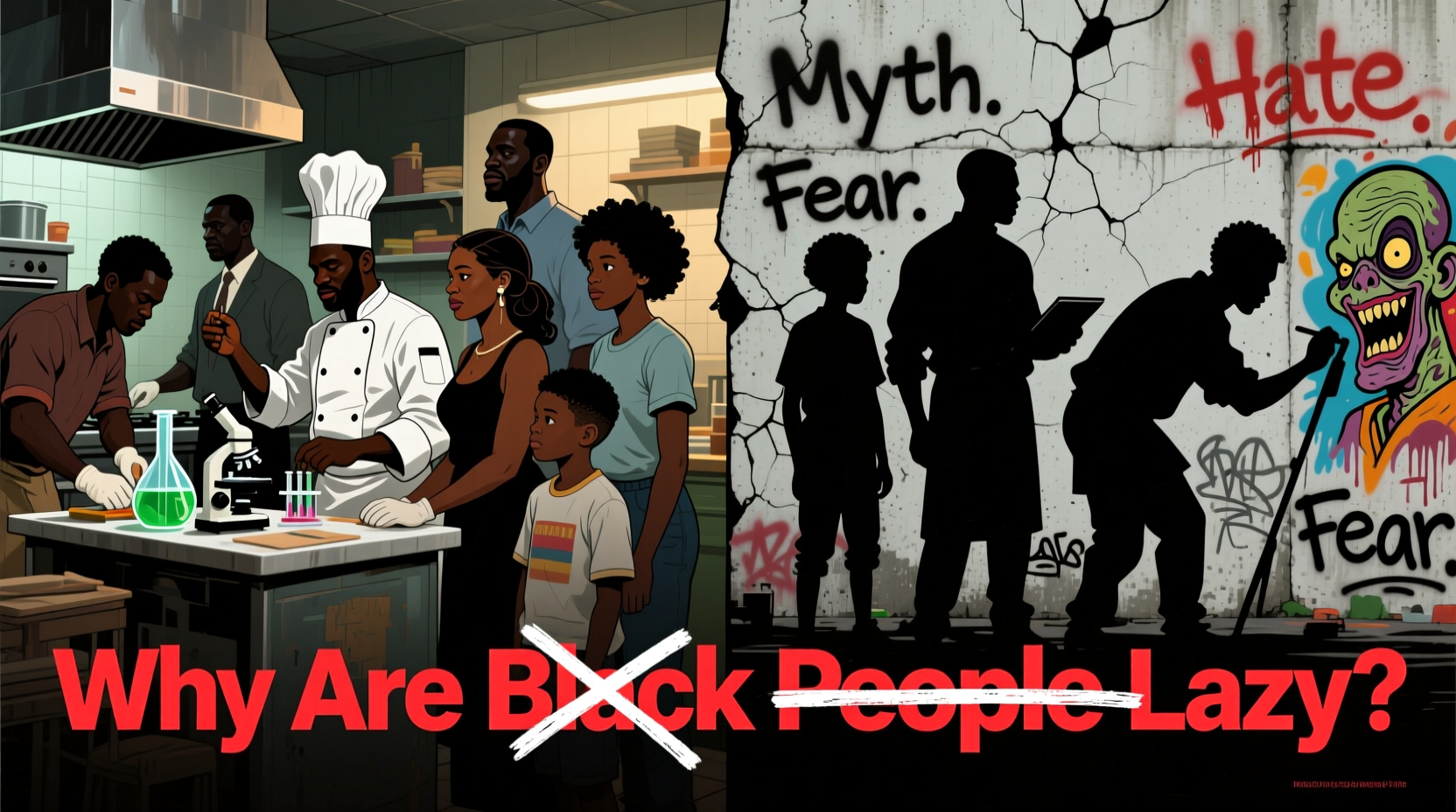
The idea that Black people are inherently lazy emerged during the transatlantic slave trade as a tool of psychological control. Enslavers promoted this falsehood to rationalize the brutal exploitation of African labor. By portraying enslaved Africans as unwilling workers who needed coercion, slaveholders obscured the reality: millions were forced into relentless, backbreaking labor under threat of violence.
After emancipation, the stereotype evolved. During Reconstruction and Jim Crow eras, white supremacist narratives painted freed Black citizens as unfit for self-governance or hard work, despite overwhelming evidence to the contrary. Black communities built schools, churches, businesses, and mutual aid societies amid widespread poverty and violence. Yet media and political rhetoric often ignored these achievements, instead amplifying isolated anecdotes to reinforce prejudice.
In the 20th century, welfare policies and urban displacement further distorted public perception. Terms like “welfare queen” emerged in the 1970s and 1980s, disproportionately targeting Black women and implying they exploited social systems rather than responded to structural inequities such as job discrimination and lack of affordable childcare.
“Racial stereotypes are not accidents. They are tools—crafted over time to maintain power structures.” — Dr. Keisha Blain, historian and author of *Set the World on Fire*
Modern Manifestations and Systemic Impact
Today, the “lazy” stereotype persists in subtle but harmful ways. It influences hiring decisions, performance evaluations, school discipline, and even healthcare outcomes. Studies show that Black professionals are often perceived as less competent or motivated than their white peers, even when qualifications are identical.
In schools, Black students—especially boys—are more likely to be labeled as “unmotivated” or “disengaged,” leading to lower expectations from teachers and fewer opportunities for advanced placement. This phenomenon, known as implicit bias, shapes real-world outcomes: lower graduation rates, reduced access to mentorship, and diminished career trajectories.
In the workplace, microaggressions rooted in this stereotype include comments like “You’re so articulate” (implying surprise at intelligence) or assumptions that Black employees were hired due to diversity quotas rather than merit. These attitudes contribute to higher stress levels, burnout, and attrition among Black professionals.
Dismantling the Myth: A Fact-Based Perspective
The truth is clear: Black communities have consistently demonstrated resilience, innovation, and dedication across generations. From civil rights leaders organizing mass movements to entrepreneurs building wealth in underserved neighborhoods, the evidence contradicts the stereotype entirely.
Consider these realities:
- Black Americans have higher labor force participation rates than white Americans in several age groups, according to U.S. Bureau of Labor Statistics.
- Black women have the highest workforce participation rate of any demographic group in the U.S.
- Despite facing disproportionate barriers, Black-owned businesses grew by 38% between 2014 and 2019—more than double the national average.
Economic disparities often mistaken for “laziness” are better explained by historical disinvestment, wage gaps, redlining, and unequal access to capital. For example, the median white household holds nearly eight times the wealth of the median Black household—a gap rooted in policies, not productivity.
Do’s and Don’ts When Addressing Racial Stereotypes
| Do | Don't |
|---|---|
| Listen to lived experiences without judgment | Dismiss concerns as “oversensitivity” |
| Educate yourself on systemic racism | Rely on stereotypes to form opinions |
| Speak up when you hear biased remarks | Remain silent to avoid discomfort |
| Support Black-led organizations and businesses | Tokenize individuals or expect them to represent entire groups |
Real Example: Overcoming Bias in the Workplace
Jamal Thompson, a project manager in Chicago, was repeatedly passed over for promotions despite strong performance reviews. Colleagues assumed he was “coasting” because he rarely stayed late. What they didn’t know was that Jamal relied on public transit and had to leave by 6 PM to care for his younger siblings after his mother’s passing.
When a new supervisor took time to understand his situation and restructured team deadlines to accommodate different schedules, Jamal led a successful client campaign that increased revenue by 22%. His story highlights how assumptions about work ethic can overshadow actual contributions—and how inclusive leadership makes space for diverse forms of dedication.
Actionable Steps to Counter the Stereotype
Changing perceptions requires sustained effort at individual, institutional, and societal levels. Here’s what you can do:
- Examine your own biases. Take free implicit association tests (IATs) from Harvard University to uncover unconscious assumptions.
- Amplify Black voices. Share achievements of Black professionals, artists, scientists, and community leaders in your networks.
- Advocate for equitable policies. Support pay transparency, anti-bias training, and hiring practices that reduce subjectivity.
- Correct misinformation. When someone repeats the “lazy” stereotype, respond calmly with facts: “Actually, data shows Black workers are highly engaged. Let me share what I’ve learned.”
- Mentor or sponsor talent. Offer guidance, visibility, and advocacy for emerging Black professionals in your field.
☐ Reflect on personal beliefs about race and work
☐ Educate others using credible sources
☐ Call out discriminatory language when safe to do so
☐ Support policies promoting equity in your organization
☐ Follow and engage with Black thought leaders and creators
Frequently Asked Questions
Isn’t calling someone “lazy” just about individual behavior?
When applied to individuals based on performance, it may be a personal critique. But when generalized across a racial group, it becomes a harmful stereotype disconnected from facts. Individual accountability should never be conflated with collective defamation.
What if I’ve heard this stereotype from family or media growing up?
Many people absorb racial myths unconsciously. The key is recognizing them as learned beliefs, not truths. Unlearning starts with curiosity, humility, and a willingness to listen to those affected.
How can employers combat this bias in hiring?
Use blind resume screening, standardize interview questions, train hiring panels on implicit bias, and set measurable diversity goals. Data-driven processes reduce reliance on subjective impressions that often reflect stereotypes.
Conclusion: Building a More Just Narrative
The stereotype that Black people are lazy is not only inaccurate—it is a legacy of dehumanization designed to uphold inequality. Challenging it means replacing myth with history, bias with empathy, and silence with action. Every person has a role in reshaping narratives, whether by questioning assumptions, supporting equitable institutions, or simply treating others with dignity and fairness.
Change begins with awareness, but it only lasts through commitment. Learn the truth. Speak against injustice. Stand beside those fighting for recognition and equity. In doing so, we move closer to a world where character is judged not by skin tone or stereotype, but by integrity, effort, and humanity.




 浙公网安备
33010002000092号
浙公网安备
33010002000092号 浙B2-20120091-4
Comments
No comments yet. Why don't you start the discussion?