
When selecting a ring—whether for everyday wear, a special occasion, or as a symbol of commitment—durability is often just as important as style. One of the most common decisions buyers face is choosing between an adjustable ring and a fixed-size ring. While both have their advantages, understanding how each type holds up over time can help you make a smarter, longer-lasting investment. The answer isn’t always straightforward, as durability depends on materials, construction, usage habits, and environmental exposure.
Understanding Ring Construction: Fixed vs Adjustable
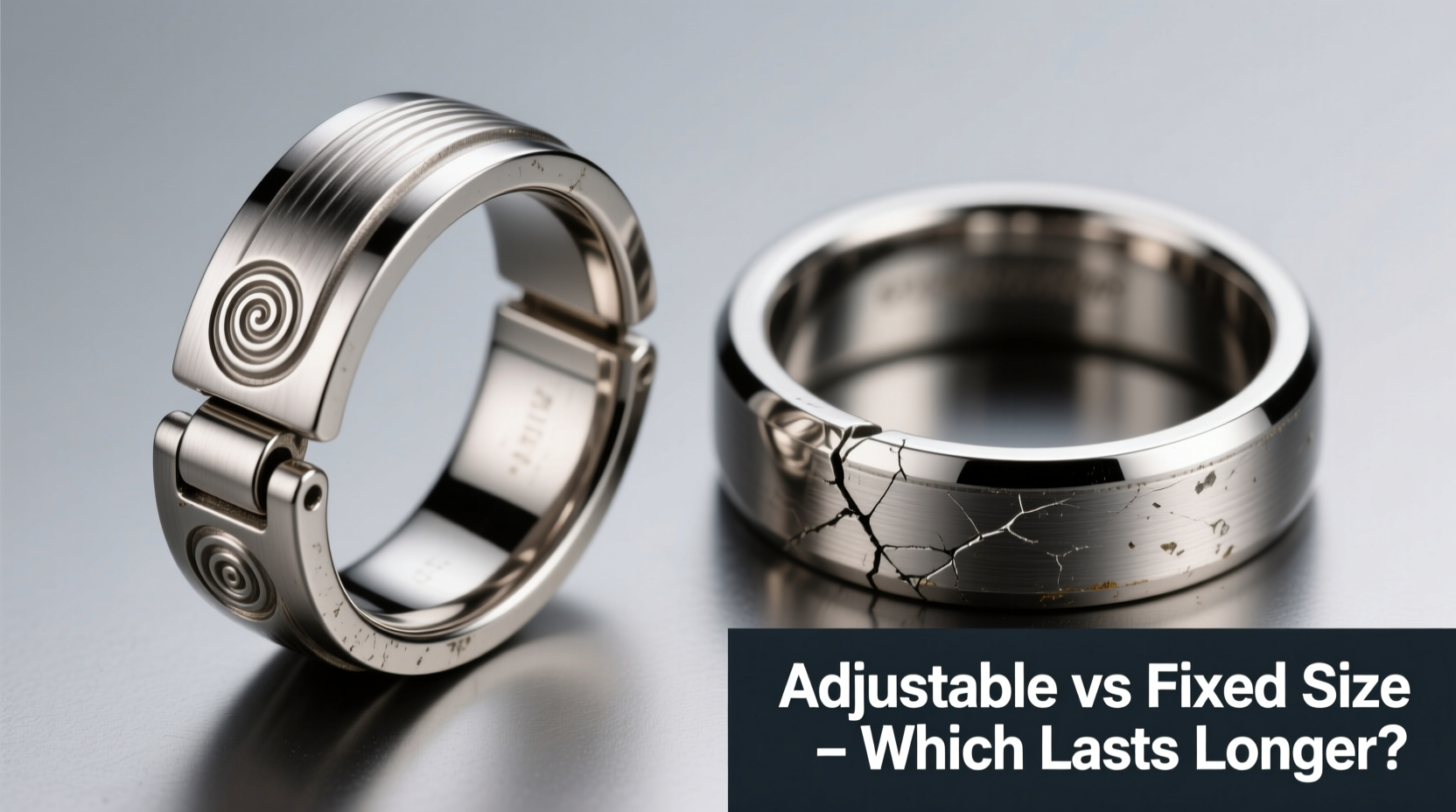
A fixed-size ring is crafted in a closed loop with a precise inner diameter, designed to fit one specific finger size. These rings are typically soldered at the band’s end during manufacturing, creating a seamless, solid structure. Because of this, they maintain consistent strength across the entire band and are less prone to deformation from regular use.
In contrast, adjustable rings feature an open band—either fully open-ended or slightly flexible—with mechanisms like sliding bands, twist designs, or expandable joints that allow the wearer to modify the fit. This flexibility comes at a structural cost: the weakest point in any adjustable ring is usually where the metal bends or connects. Over time, repeated adjustments increase stress on these areas, raising the risk of cracking, warping, or breakage.
“While adjustable rings offer convenience, they inherently sacrifice some structural integrity. For long-term wear, especially with heavier stones or frequent use, a well-crafted fixed ring remains the more resilient option.” — Daniel Reyes, Master Goldsmith & Jewelry Designer
Material Matters: How Metals Impact Durability
The choice of metal significantly influences how well a ring withstands daily wear, regardless of its adjustability. However, certain metals perform better in fixed designs than in adjustable ones due to their malleability and tensile strength.
| Metal | Durability (Fixed Ring) | Durability (Adjustable Ring) | Notes |
|---|---|---|---|
| Platinum | Excellent | Fair | Heavy and strong, but too rigid for safe adjustment; best in fixed form. |
| 14K Gold | Very Good | Good | Balances strength and slight flexibility; suitable for minimal-adjust designs. |
| Titanium | Excellent | Poor | Extremely durable when fixed, but cannot be resized or bent safely. |
| Sterling Silver | Good | Fair | Softer metal; adjustable versions may bend out of shape quickly. |
| Stainless Steel | Excellent | Poor | Highly scratch-resistant when fixed, but not designed for bending. |
As shown, even durable metals lose performance in adjustable formats. Platinum and titanium, prized for their resilience in wedding and engagement rings, are rarely used in adjustable styles because their density resists bending—making them prone to snapping if forced. Softer metals like sterling silver may seem ideal for adjustability, but they deform easily under pressure, leading to misshapen bands within months of regular use.
Wear Patterns and Real-World Longevity
Daily activities play a crucial role in determining how long a ring lasts. Typing, lifting objects, washing hands, and exercising all expose rings to friction, impact, and moisture. Fixed rings distribute these forces evenly around the band, minimizing stress concentration. Adjustable rings, however, focus pressure at the gap or hinge points, accelerating fatigue in those zones.
Consider the case of Maria, a graphic designer who purchased a delicate adjustable silver ring for its trendy stacked look. Within four months, she noticed the band had widened unevenly, no longer staying snug on her finger. After six months, the connection point cracked during routine handwashing. A jeweler confirmed that constant micro-movements from typing and cleaning caused metal fatigue—a common issue with thin, frequently adjusted bands.
In contrast, her partner’s fixed 14K gold band, worn continuously for five years, showed only minor surface scratches and maintained its original shape despite similar lifestyle demands. This real-world example illustrates how design stability contributes directly to lifespan.
Step-by-Step Guide: Maximizing Your Ring’s Lifespan
Whether you own an adjustable or fixed ring, proactive care can extend its life. Follow this timeline to maintain durability:
- Weekly: Clean your ring with mild soap and warm water. Use a soft toothbrush to remove buildup around settings or joints.
- Monthly: Inspect for loose stones, sharp edges, or visible gaps—especially in adjustable mechanisms.
- Every 6 Months: Take your ring to a professional jeweler for tightening, polishing, and structural check.
- Annually: Evaluate wear patterns. If an adjustable ring requires frequent readjustment or shows warping, consider replacing it with a fixed version in your correct size.
- During Physical Activity: Remove rings before exercise, gardening, or household chores to prevent impact damage.
Which Is More Durable? A Direct Comparison
When comparing durability head-to-head, fixed-size rings consistently outperform adjustable ones for several reasons:
- Structural Integrity: No weak points from gaps or moving parts.
- Resistance to Deformation: Uniform thickness and closed-loop design resist bending.
- Long-Term Fit Stability: Does not loosen or stretch with use.
- Ease of Repair: Can be resized, polished, or reinforced without compromising safety.
Adjustable rings win in convenience and inclusivity—they’re popular as gifts when exact sizes are unknown and ideal for temporary swelling (e.g., during pregnancy or travel). But they are generally not built for decades of wear. Their lifespan averages 1–3 years under regular use, compared to 10+ years for quality fixed rings with proper maintenance.
Checklist: Choosing the Most Durable Ring for Your Needs
- ☐ Prioritize fixed-size rings for engagement, wedding, or heirloom pieces.
- ☐ Avoid adjustable rings if you work with your hands or live an active lifestyle.
- ☐ Choose high-karat gold (14K or 18K) or platinum for maximum longevity.
- ☐ Inspect adjustable mechanisms for thick, reinforced joints—not thin wire bends.
- ☐ Get professionally sized before purchasing a fixed ring to ensure comfort and fit.
- ☐ Store rings separately to prevent scratching and mechanical stress.
FAQ
Can adjustable rings be repaired if they break?
Yes, but repairs are often temporary. Soldering a broken adjustable band can restore function, but the repaired area remains weaker than the original. Repeated fixes compromise the metal further, making replacement the better long-term solution.
Are there durable adjustable rings on the market?
Some high-end brands use spring-loaded mechanisms or double-band systems to enhance strength. These perform better than simple bendable bands but still can't match the durability of a solid fixed ring. Look for models with lifetime warranties and reinforced joints if you must go adjustable.
Do temperature changes affect adjustable rings more than fixed ones?
Yes. Metal expands in heat and contracts in cold, and adjustable rings may shift fit more noticeably with temperature swings. This constant expansion and contraction accelerate fatigue in the bending zones, especially in cheaper alloys.
Conclusion
While adjustable rings offer undeniable convenience and versatility, they are inherently less durable than fixed-size rings. The structural compromises required for adjustability—gaps, hinges, or thin bands—create natural weak points that degrade faster under daily stress. For jewelry meant to last—such as engagement rings, anniversary bands, or family heirlooms—a properly sized fixed ring made from durable materials like 14K gold or platinum is the superior choice.
If you value both practicality and longevity, consider keeping adjustable rings for fashion statements or short-term use, while reserving solid, fixed designs for meaningful, everyday wear. With thoughtful selection and regular care, your rings can remain beautiful and intact for years to come.




 浙公网安备
33010002000092号
浙公网安备
33010002000092号 浙B2-20120091-4
Comments
No comments yet. Why don't you start the discussion?