
Choosing the perfect fit for a ring is more than just aesthetics—it's about comfort, longevity, and emotional value. Whether you're shopping for an engagement ring, a gift, or a personal accessory, getting the size right matters. Traditionally, ring resizing has been the go-to solution when a band doesn’t fit. But in recent years, adjustable rings have gained popularity as a flexible, cost-effective alternative. So, are they truly a viable substitute? This guide compares both options across key factors like fit, durability, customization, and long-term wearability to help you decide what’s best for your needs.
Understanding Ring Resizing: How It Works
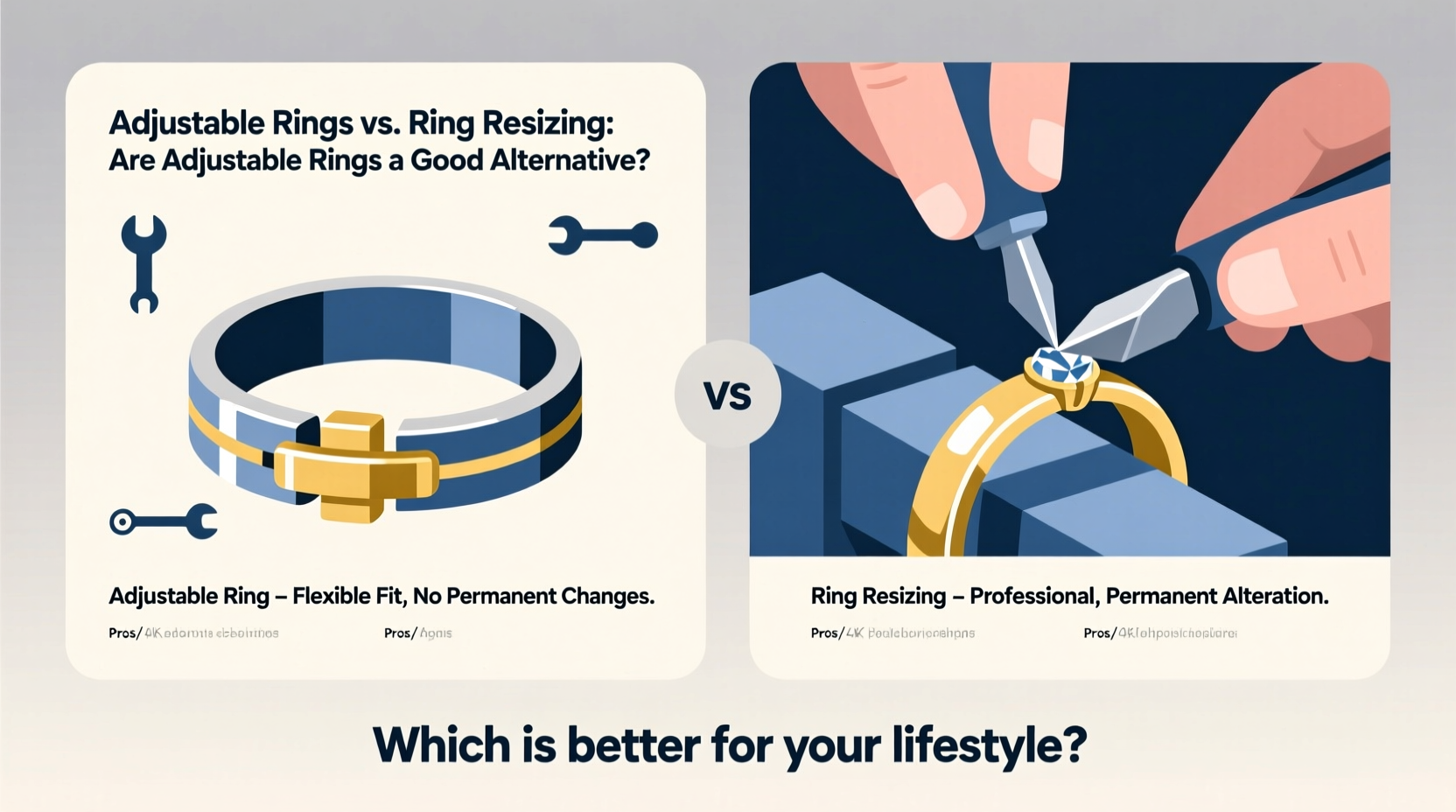
Ring resizing is a common service offered by professional jewelers to alter the diameter of a ring. The process varies depending on whether the ring needs to be made larger or smaller.
To resize a ring down, a jeweler cuts out a small section of the band and rejoins the ends, then solders and polishes the seam. For increasing size, especially by half a size or more, metal must be added—either by stretching (for minor adjustments) or inserting a new segment. This requires precision and skill to maintain structural integrity and appearance.
Not all rings can be resized. Bands with intricate designs, eternity settings (where stones encircle the entire band), or those made from non-metal materials like wood or ceramic are often not suitable. Additionally, frequent resizing weakens the metal over time, particularly near the solder joint.
The Rise of Adjustable Rings: Design and Functionality
Adjustable rings feature a gap in the band that allows slight expansion or contraction. They come in several styles: open-ended bands, twist designs, spiral wraps, or those with built-in sliders. Most are crafted from malleable metals like sterling silver, gold-filled, or sometimes solid gold, allowing users to gently squeeze or pull the ends to achieve a custom fit.
These rings are especially popular for online shoppers who may not have access to professional sizing tools, or for gifts where the recipient’s exact size is unknown. Their flexibility makes them ideal for temporary swelling due to weather, pregnancy, or medical conditions.
However, their open design means they don’t offer a continuous circle around the finger, which some wearers find less secure. Over time, repeated adjustment can cause metal fatigue, leading to breakage if not handled carefully.
Pros and Cons of Adjustable Rings
| Advantages | Disadvantages |
|---|---|
| No need for professional resizing | Less durable under constant adjustment |
| Ideal for fluctuating finger sizes | Limited design complexity (e.g., no full eternity bands) |
| Cost-effective for occasional wear | May not feel as secure during physical activity |
| Great for gifting when size is uncertain | Potential for visible gap affecting aesthetics |
“Adjustable rings serve a niche market well—especially for fashion pieces or transitional periods—but they shouldn't replace well-fitted fine jewelry for lifelong commitments.” — Daniel Reyes, Master Jeweler & GIA Graduate
When Resizing Is the Better Choice
If you own a high-value piece—such as an heirloom, engagement ring, or custom-designed band—resizing is typically the superior option. A properly resized ring maintains its original craftsmanship, symmetry, and strength. Once altered by a skilled artisan, it functions exactly like any other well-fitting ring.
Resizing also preserves resale or sentimental value. Collectors and appraisers prefer rings that haven’t been compromised by makeshift solutions. Furthermore, resized rings sit flush on the finger, reducing snagging risks and ensuring even weight distribution.
That said, resizing comes at a cost—both financially and materially. Each alteration carries a risk of damaging stones or weakening the band. Some jewelers charge $50–$150 per resize, and precious metal loss is permanent. Multiple resizings increase the likelihood of needing a complete band reconstruction later.
Step-by-Step: How to Decide Between Options
- Assess the ring type: Is it fine jewelry, an eternity band, or a simple fashion ring?
- Determine usage frequency: Will it be worn daily or occasionally?
- Evaluate lifestyle factors: Do you experience finger swelling or plan major life changes (e.g., pregnancy)?
- Check resize feasibility: Consult a jeweler to confirm if your ring can be safely resized.
- Compare costs: Factor in initial price, resizing fees, and potential future repairs.
- Make a decision: Choose based on long-term comfort, durability, and emotional significance.
Real-Life Scenario: Choosing for a Gift
Sarah wanted to surprise her sister with a vintage-inspired sapphire ring for her birthday. She didn’t know her sister’s exact ring size and was hesitant to guess. After researching, she considered two options: buying a resizable sterling silver band or opting for an adjustable open-back design.
She consulted a local jeweler, who explained that the chosen style could be resized easily and recommended purchasing one size up to allow room for adjustment. Sarah followed this advice, bought the slightly larger ring, and had it professionally resized within a week. Her sister loved the perfect fit and cherished the thoughtful gesture—even more so knowing the ring was crafted to last.
In contrast, a friend chose an adjustable ring for a similar occasion. While it fit initially, after three months of regular wear, the band began to lose tension and slipped off during a workout. The recipient eventually replaced it with a fixed-size version.
Expert Tips for Long-Term Wearability
- Avoid wearing rings during intense hand activity to prevent bending or loosening.
- Store rings separately to avoid scratches and pressure on adjustable mechanisms.
- Have prongs and settings checked annually, especially after resizing.
- For adjustable rings, minimize frequent adjustments to extend lifespan.
Frequently Asked Questions
Can all rings be resized?
No. Rings made from materials like tungsten, titanium, or ceramic cannot be resized due to their hardness. Eternity bands and rings with embedded stones around the entire circumference are also difficult or unsafe to resize without damaging the setting.
Do adjustable rings look unprofessional?
It depends on the design and context. Sleek, well-crafted adjustable rings can look elegant and modern. However, bulky or poorly finished versions may appear cheap. For formal occasions or professional settings, a traditionally sized ring often conveys greater polish and permanence.
How many times can a ring be resized?
Most rings can be resized 2–3 times safely, depending on the metal thickness and original design. Each resizing removes or adds stress to the band, so excessive alterations increase the risk of cracking or breaking.
Final Thoughts: Making the Right Choice
Adjustable rings and ring resizing serve different purposes and audiences. Adjustable rings offer convenience, affordability, and adaptability—ideal for fashion jewelry, gifts, or transitional phases in life. Ring resizing, while more involved and costly, delivers precision, durability, and authenticity, making it the preferred method for valuable or sentimental pieces.
The best choice depends on your priorities: immediate flexibility or long-term reliability. If you value craftsmanship and intend to wear a ring daily for years, investing in proper sizing through resizing is worth every penny. But if you seek versatility and aren’t committed to a single size, an adjustable ring can be a smart, practical alternative—provided you understand its limitations.




 浙公网安备
33010002000092号
浙公网安备
33010002000092号 浙B2-20120091-4
Comments
No comments yet. Why don't you start the discussion?