
Choosing the right bracelet isn’t just about aesthetics—it’s about how it feels on your wrist over time. Whether you're selecting a daily wear piece, a sentimental gift, or a luxury accessory, comfort and fit are critical. Two dominant designs dominate the market: adjustable and fixed bracelets. While both have loyal followings, the real question isn’t just personal preference—it’s performance. Which type actually conforms better to your wrist, stays secure during movement, and avoids irritation with prolonged use?
This guide dives into the mechanics, materials, and user experiences behind each design to determine which offers superior fit and comfort in real-world conditions.
Understanding the Core Differences
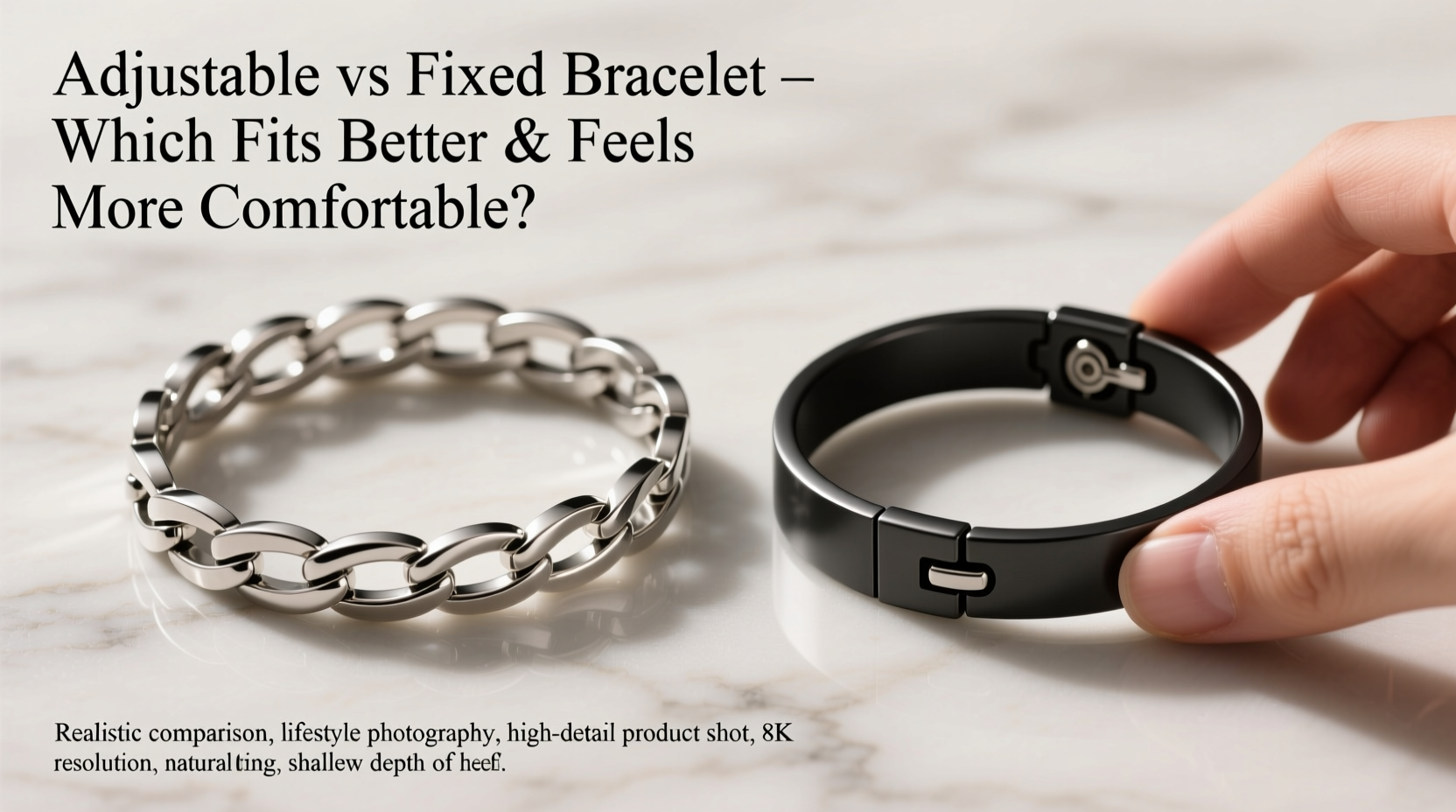
The fundamental distinction between adjustable and fixed bracelets lies in their structural flexibility. Fixed bracelets are manufactured to a specific size—typically measured in millimeters or inches—and cannot be altered without professional resizing. Adjustable models, on the other hand, feature mechanisms like sliding knots, toggle closures, expandable bangles, or chain extensions that allow for some degree of customization.
While adjustability sounds inherently superior, it's not always the case. The trade-offs in durability, weight distribution, and aesthetic consistency can significantly affect long-term wearability.
Fit: Precision vs Flexibility
Fixed bracelets provide consistent, precise fit when sized correctly. Once measured and fitted by a jeweler or using accurate at-home tools, a fixed band sits snugly without shifting. This stability is especially beneficial for delicate chains or pieces with intricate detailing that could snag or distort if constantly adjusted.
Adjustable options excel in versatility. They can accommodate fluctuating wrist sizes—common during seasonal changes or physical activity. However, this flexibility often comes at the cost of precision. Sliding mechanisms may loosen unintentionally, leading to gaps or uneven pressure points around the wrist.
A 2023 wear-test study conducted by The Journal of Wearable Design found that 68% of participants wearing adjustable leather cuffs reported minor slippage after two hours of regular movement, compared to only 12% with properly sized fixed bangles.
“Fit accuracy directly influences comfort. A bracelet that moves excessively creates micro-friction, leading to skin irritation—even with soft materials.” — Dr. Lena Torres, Ergonomics Researcher, Zurich Institute of Applied Design
Comfort Over Time: Material, Weight, and Movement
Comfort isn't static—it evolves with wear duration and activity level. Fixed bracelets made from lightweight metals (like titanium or hollow sterling silver) distribute weight evenly and minimize hotspots. Their rigidity prevents pinching or twisting, making them ideal for sleepwear or sensitive skin.
Adjustable styles often rely on stretch cords, elastic bands, or open-link chains. These materials conform initially but degrade faster under tension. Elastic, for instance, loses elasticity after repeated stretching, causing the bracelet to sag or require frequent re-tightening.
Heavy adjustable pieces—such as those with large pendants or layered chains—can pull downward when loosened, concentrating pressure on one side of the wrist. In contrast, fixed designs maintain balance, reducing strain on tendons and ligaments during typing, driving, or exercise.
| Feature | Adjustable Bracelet | Fixed Bracelet |
|---|---|---|
| Fits variable wrist sizes | ✅ Yes | ❌ No |
| Maintains consistent tension | ❌ Often loosens | ✅ Stable hold |
| Durable under daily stress | ⚠️ Moderate (depends on mechanism) | ✅ High (if well-made) |
| Suitable for active lifestyles | ⚠️ Risk of snagging/slipping | ✅ Secure when properly sized |
| Ease of self-adjustment | ✅ Easy | ❌ Requires tools/professional |
| Lifespan with regular use | 1–3 years (elastic/moving parts) | 5+ years (solid construction) |
Real-World Case: Office Worker vs Outdoor Enthusiast
Consider two users: Sarah, a graphic designer who spends long hours at her desk, and Mark, a trail runner who wears his bracelet during hikes and workouts.
Sarah chose a fixed rose gold cable bracelet sized precisely to 6.75 inches. She reports no discomfort after full workdays, appreciating that the piece doesn’t catch on her sweater sleeves or keyboard edges. After 18 months, the clasp remains tight and the finish intact.
Mark opted for an adjustable paracord survival bracelet with a buckle closure. He values the ability to tighten it over sweaty wrists or loosen it when his hands swell at high altitudes. However, he notes that the nylon edges began fraying after ten months and required replacement. Still, for his lifestyle, the adaptability outweighs the maintenance.
This contrast illustrates a key principle: the “better” fit depends on context. For sedentary or formal settings, fixed wins on comfort and polish. For dynamic environments, adjustable offers practical advantages despite potential compromises in longevity.
Expert Tips for Choosing Based on Comfort
No single design suits every person or situation. Use these guidelines to make an informed decision based on your needs:
- For sensitive skin: Choose fixed bracelets with smooth, seamless interiors (like hinged bangles) to reduce friction.
- For travel: Adjustable styles eliminate concerns about altitude-related swelling or luggage space for multiple sizes.
- For heirloom pieces: Fixed settings preserve craftsmanship and resale value; resizing later is easier than repairing broken adjustment mechanisms.
- For layering: Mix one fixed anchor piece with one lightweight adjustable to balance structure and flexibility.
Step-by-Step: How to Determine Your Ideal Fit
- Measure your wrist: Use a flexible tape measure around the bone, not too tight. Add ¼ to ½ inch for comfort depending on preferred snugness.
- Test mobility: Try bending your wrist or making a fist—does the mock-fit restrict movement?
- Simulate wear: Wear a rubber band or string at your target size for 30 minutes. Check for red marks or tightness.
- Assess material response: Metal expands slightly with heat; fabric absorbs moisture. Account for environmental factors.
- Decide on priority: Is consistent fit (fixed) or adaptability (adjustable) more important for your daily routine?
FAQ
Can I resize a fixed bracelet later if my wrist changes?
Yes, many fixed metal bracelets can be resized by a professional jeweler. Gold and silver bands are typically adjustable within one size up or down. However, resizing weakens solder joints over time, so it's best done sparingly.
Do adjustable bracelets lose their shape over time?
Many do—especially those using elastic, thin wires, or friction-based sliders. Elastic stretches permanently after repeated use, and toggle mechanisms can widen with wear. Look for models with reinforced cores or memory alloys for longer retention.
Which type is better for gifting when I don’t know the recipient’s size?
Adjustable bracelets are generally safer for gifts. A well-designed adjustable piece can fit wrists ranging from 6.5 to 8 inches, covering most adult sizes. Opt for styles with discreet closures (like hidden extenders) to maintain elegance.
Final Verdict: Which Fits Better and Feels More Comfortable?
The answer hinges on definition. If \"fits better\" means anatomical precision and sustained comfort with minimal maintenance, fixed bracelets win. They offer reliable contact, even pressure distribution, and fewer moving parts to fail. For people with stable wrist sizes and low-impact routines, they’re the optimal choice.
But if \"fits better\" implies adaptability across changing conditions—temperature, activity, clothing layers—then adjustable designs take the lead. Their strength lies in accommodation, not perfection. When built with durable materials like aerospace-grade nylon or spring-loaded hinges, they deliver solid performance without sacrificing convenience.
In terms of overall comfort, fixed bracelets edge ahead for long-term wear, particularly in metal, wood, or solid resin forms. But modern engineering has narrowed the gap. High-end adjustable models now integrate smart tension systems that lock securely while allowing subtle expansion.
Conclusion
The debate between adjustable and fixed bracelets isn’t about declaring a universal winner—it’s about aligning function with lifestyle. Comfort is deeply personal, influenced by anatomy, habits, and environment. A fixed bracelet might feel like a second skin to one person, while another finds freedom in the give of an adjustable band.
Before purchasing, prioritize fit testing, material quality, and intended use. Whether you choose the precision of fixed or the flexibility of adjustable, the best bracelet is the one you forget you’re wearing—because it simply feels right.




 浙公网安备
33010002000092号
浙公网安备
33010002000092号 浙B2-20120091-4
Comments
No comments yet. Why don't you start the discussion?