
Choosing the right harness for your dog is about more than just style or convenience—it’s a critical decision that affects their physical comfort, breathing efficiency, joint health, and even behavior on walks. With so many options available, the debate between adjustable and fixed harnesses often centers on one key factor: fit. But does it truly matter? The answer isn’t just yes—it’s essential. A poorly fitted harness, regardless of type, can lead to chafing, restricted movement, tracheal pressure, and long-term musculoskeletal strain. Understanding the differences between adjustable and fixed harnesses, and how fit influences your dog’s daily life, empowers you to make a choice rooted in care and science.
The Role of Fit in Canine Comfort and Safety
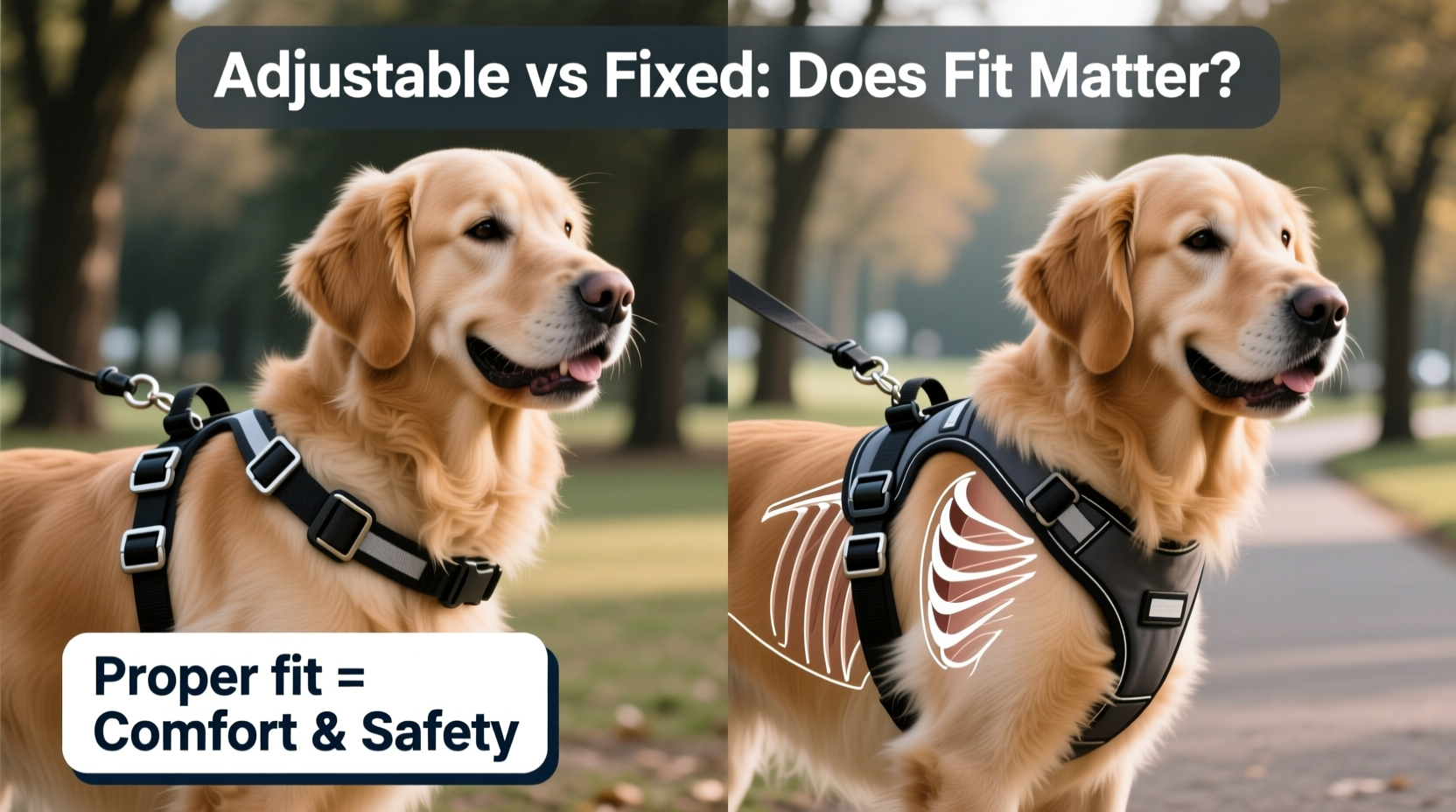
Dogs come in vastly different shapes and sizes—not just between breeds, but within them. A Greyhound’s narrow chest differs dramatically from a Bulldog’s broad frame, and even dogs of the same breed can vary significantly in weight, muscle tone, and posture. This diversity means a “one-size-fits-all” approach rarely works. A harness that fits properly distributes pressure evenly across the chest and shoulders, avoiding sensitive areas like the throat and spine. When fit is off—even by an inch—your dog may experience discomfort that manifests as pulling, reluctance to walk, or even skin irritation.
Proper fit ensures freedom of movement without slipping or pinching. It allows full extension of the front legs during walking or running, supports natural gait patterns, and prevents rubbing under the armpits—a common issue with ill-fitting harnesses. Veterinarians and canine rehabilitation specialists consistently emphasize that improper equipment can contribute to chronic issues, especially in active or aging dogs.
“Just like shoes for humans, a harness must match the body’s structure. A poor fit doesn’t just cause short-term discomfort—it can alter movement patterns and lead to joint stress over time.” — Dr. Lena Patel, Veterinary Rehabilitation Specialist
Adjustable Harnesses: Flexibility and Precision
Adjustable harnesses are designed with multiple points of customization—typically around the neck, chest, and girth. This allows pet owners to fine-tune the fit based on their dog’s unique proportions. These harnesses are particularly beneficial for dogs in growth phases, such as puppies, or breeds that fluctuate in weight seasonally.
The primary advantage of adjustable harnesses lies in adaptability. You can tighten or loosen straps to accommodate changes in body condition, seasonal fur thickness, or even different activity levels (e.g., hiking versus casual strolls). Many models also allow you to reposition the leash attachment point—chest for control, back for relaxed walking—further enhancing functionality.
However, adjustability requires diligence. If not properly secured, straps can loosen during walks, leading to escape risks. Conversely, overtightening can restrict breathing or cause chafing. Owners must learn how to fit the harness correctly—two fingers should fit snugly beneath each strap.
Fixed Harnesses: Simplicity with Limitations
Fixed harnesses come in predetermined sizes with minimal or no adjustment. They’re often marketed as “quick-snap” or “step-in” designs, prioritizing ease of use. For dogs with standard proportions and stable weights, a correctly sized fixed harness can be comfortable and secure.
The main appeal is simplicity: less setup time, fewer parts to manage, and often lighter materials. Some fixed harnesses are tailored to specific breeds, offering a semi-custom fit. However, the lack of adjustability becomes a liability when dealing with non-standard builds, weight changes, or growing puppies.
A fixed harness that’s too tight can dig into the armpits or compress the trachea when pulled. One that’s too loose may slip, rotate, or allow the dog to back out. Unlike adjustable models, there’s no middle ground—once purchased, the fit is locked in.
Comparing Adjustable and Fixed Harnesses: A Practical Breakdown
| Feature | Adjustable Harness | Fixed Harness |
|---|---|---|
| Fitting Precision | High – customizable to exact measurements | Low to moderate – depends on size accuracy |
| Adaptability Over Time | Excellent – suits growing or changing dogs | Poor – requires replacement if dog changes size |
| Ease of Use | Moderate – requires initial setup and periodic checks | High – simple on/off design |
| Safety & Security | High – when properly adjusted | Variable – risk of slippage or escape if ill-fitting |
| Ideal For | Puppies, mixed-breed dogs, dogs with irregular builds | Stable-weight adult dogs with standard proportions |
Real-World Example: How Fit Impacted a Rescue Dog’s Recovery
Consider Max, a two-year-old mixed-breed rescue adopted after months of living outdoors. He was underweight, anxious, and resistant to walking on a leash. His new owner initially used a fixed harness labeled “medium,” assuming it would suffice. Within days, Max developed redness behind his front legs and began refusing to move during walks.
A veterinary technician noticed the harness was too narrow across the chest and too loose around the neck—allowing him to partially twist out of it. Switching to a fully adjustable harness, carefully fitted to his recovering frame, made an immediate difference. After proper adjustment, Max walked farther, breathed easier, and showed fewer signs of stress. The change wasn’t due to the harness brand, but to the precision of fit.
This case underscores a broader truth: behavioral issues during walks are often misinterpreted as disobedience when they’re actually responses to physical discomfort.
How to Measure Your Dog for the Right Fit
Regardless of harness type, accurate measurement is non-negotiable. Follow these steps:
- Gather tools: Use a soft fabric tape measure and have your dog stand naturally on a flat surface.
- Neck girth: Measure around the base of the neck where the collar sits, just before the shoulders.
- Chest girth: Measure around the widest part of the chest, directly behind the front legs.
- Length: From the base of the neck to the start of the tail, especially important for back-clip harnesses.
- Check manufacturer charts: Sizes vary widely between brands—never assume a medium in one equals a medium in another.
Checklist: Ensuring a Proper Harness Fit
- ✅ Two fingers should fit comfortably under each strap.
- ✅ No pinching or visible digging into the skin.
- ✅ The harness doesn’t ride up over the shoulders or slip down the body.
- ✅ Leash attachment sits securely either on the back or chest, depending on design.
- ✅ Your dog moves freely, with no hesitation or limping during walks.
- ✅ Reassess fit every 4–6 weeks, especially for young or active dogs.
Frequently Asked Questions
Can a harness really affect my dog’s breathing?
Yes. A harness that’s too tight around the chest or neck can restrict lung expansion and compress airways. Front-clip harnesses, when properly fitted, reduce pulling and minimize tracheal pressure compared to collars.
Should I size up for a puppy’s harness?
It’s tempting, but avoid oversized harnesses. Excess material can tangle, cause tripping, or allow escape. Instead, choose an adjustable model designed for growing dogs and update the fit monthly.
Is an expensive harness always better?
Not necessarily. Price doesn’t guarantee fit or function. Focus on adjustability, material quality, and ergonomic design rather than branding. Some affordable harnesses offer superior comfort due to thoughtful engineering.
Final Thoughts: Prioritize Fit Over Convenience
In the adjustable versus fixed harness debate, the real winner is fit—not features, not price, not ease of use. A well-fitted harness, whether adjustable or fixed, supports your dog’s physical health, enhances training effectiveness, and makes walks enjoyable for both of you. While fixed harnesses offer simplicity, adjustable models provide the precision needed for most dogs, especially those with unique builds or changing bodies.
Your dog can’t tell you when something hurts—they’ll show you through behavior, reluctance, or subtle shifts in gait. By committing to regular fit checks, understanding your dog’s anatomy, and choosing equipment that adapts to their needs, you’re not just buying a harness. You’re investing in their comfort, mobility, and long-term well-being.




 浙公网安备
33010002000092号
浙公网安备
33010002000092号 浙B2-20120091-4
Comments
No comments yet. Why don't you start the discussion?