
When choosing outerwear, many people face a common dilemma: should they stick with a reliable basic everyday jacket or invest in a high-tech advanced sense jacket? With innovations in smart fabrics, climate adaptation, and biometric integration, the gap between standard and premium jackets has widened significantly. But does that translate into real-world value for the average user?
The answer isn't always straightforward. While advanced sense jackets offer impressive features like temperature regulation, motion tracking, and environmental responsiveness, most consumers still rely on simpler, time-tested designs for daily wear. This article breaks down the differences, evaluates practical benefits, and helps determine whether the upgrade justifies the cost.
Understanding the Core Differences
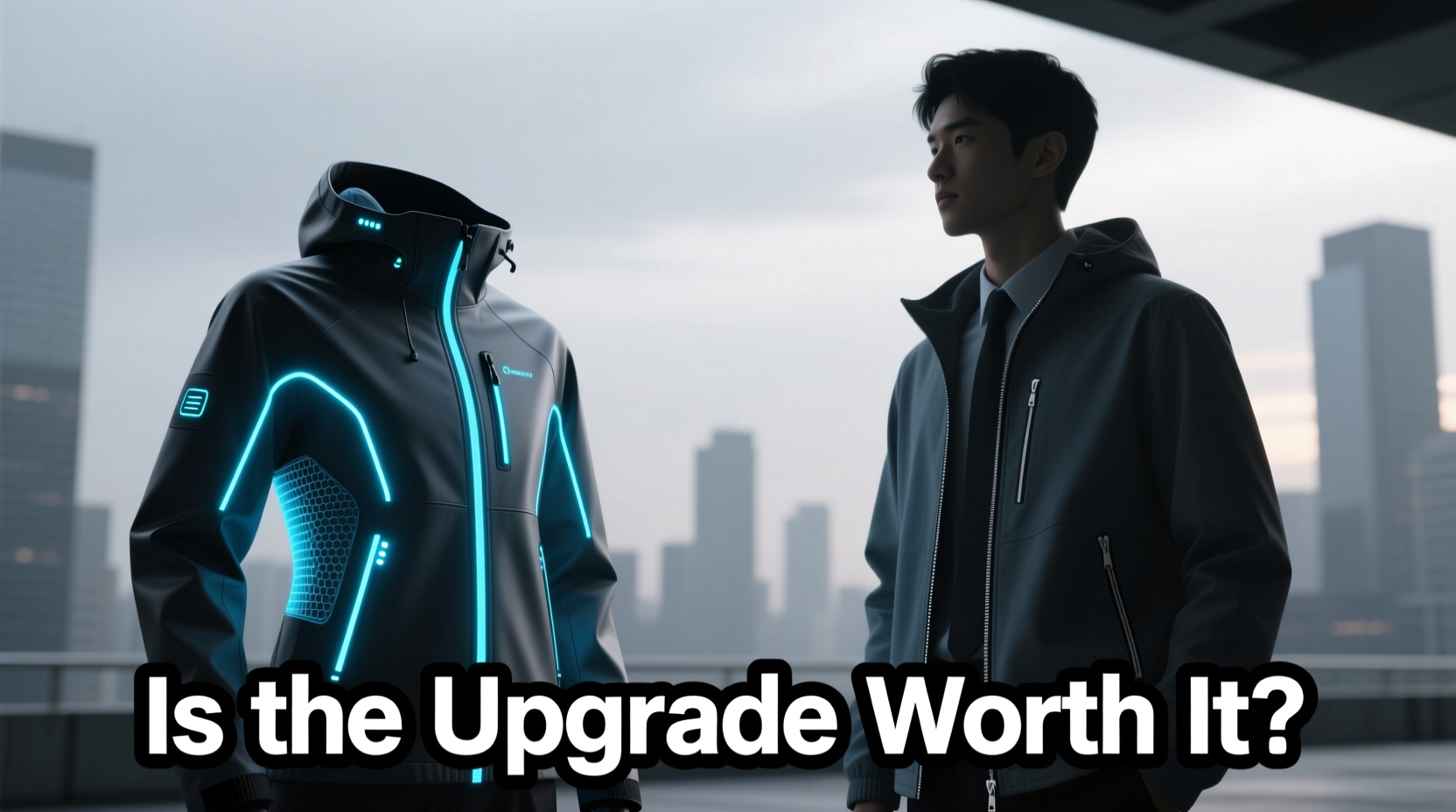
A basic everyday jacket typically serves three primary functions: protection from weather, comfort in moderate temperatures, and casual style. These jackets are made from conventional materials—polyester, nylon, cotton blends—and often include simple insulation or water-resistant coatings. They're affordable, widely available, and require minimal maintenance.
In contrast, an advanced sense jacket integrates technology into its fabric and structure. These garments may include:
- Embedded micro-sensors for body temperature and movement tracking
- Adaptive thermal layers that heat or cool based on ambient conditions
- Moisture-wicking systems responsive to sweat levels
- Connectivity via Bluetooth to smartphone apps for real-time feedback
- UV and air quality detection with alerts
Manufacturers like Ministry of Supply, Athos, and Ralph Lauren (with their Polo Tech line) have pioneered this space, targeting urban professionals, athletes, and tech enthusiasts who want more from their clothing than passive protection.
Performance Comparison: Real-World Scenarios
To assess whether the upgrade is worthwhile, it's essential to examine how each jacket performs under typical use cases.
| Feature | Basic Everyday Jacket | Advanced Sense Jacket |
|---|---|---|
| Weather Resistance | Good (depends on material) | Excellent (adaptive sealing, dynamic ventilation) |
| Thermal Regulation | Passive (fixed insulation) | Active (heating/cooling zones, auto-adjustment) |
| Durability | High (simple construction) | Moderate (electronics can degrade over time) |
| Battery & Power Needs | None | Required (3–8 hours per charge) |
| Maintenance | Machine washable, low effort | Spot clean only; remove electronics before washing |
| Price Range | $40 – $120 | $250 – $600+ |
| User Feedback | Reliable, predictable | Polarized—praised for innovation, criticized for complexity |
The data shows a clear trade-off: increased functionality at the cost of simplicity, durability, and price. For someone commuting in variable weather, the adaptive heating might be a game-changer. For others, especially those seeking no-fuss reliability, the basic jacket remains the smarter choice.
Expert Insight: What Industry Leaders Say
“Smart clothing is evolving fast, but adoption hinges on usability. The best tech disappears into the experience—it doesn’t demand attention.” — Dr. Lena Torres, Wearable Technology Researcher at MIT Media Lab
This quote underscores a critical point: advanced sense jackets introduce cognitive load. Users must manage charging, software updates, app integrations, and troubleshooting. If the benefit doesn’t outweigh the hassle, even the most innovative product fails in practice.
Dr. Torres’ observation aligns with consumer behavior studies showing that nearly 60% of users abandon wearable tech within six months due to inconvenience or lack of perceived value. Jackets are no exception. Unless the intelligence enhances comfort without friction, it risks becoming a novelty rather than a necessity.
Mini Case Study: Urban Commuter Upgrade
James, a 34-year-old project manager in Chicago, upgraded from a basic waterproof windbreaker to an advanced sense jacket with climate control and posture monitoring. His commute involves walking 20 minutes each way, often during extreme temperature swings in spring and fall.
Initially, he praised the jacket’s ability to warm his core during morning walks and cool down as indoor office temperatures rose. The app alerted him when he was slouching during meetings—a subtle nudge toward better ergonomics.
However, after four months, James reverted to his old jacket. Why? The battery died mid-day twice during back-to-back meetings, leaving him cold. He also found the care instructions cumbersome—removing sensor packs before cleaning disrupted his routine. “It felt like I was maintaining a gadget, not wearing a coat,” he said.
This case illustrates a key lesson: context matters. In ideal conditions, the advanced jacket excelled. But real life introduces variables—forgetfulness, urgency, inconsistent routines—that challenge even the most sophisticated design.
Step-by-Step Guide: Should You Upgrade?
Deciding whether to invest in an advanced sense jacket depends on individual needs and lifestyle patterns. Follow this decision framework:
- Evaluate Your Environment: Do you face rapidly changing temperatures, high humidity, or prolonged outdoor exposure?
- Assess Daily Routine: Are you tech-comfortable and willing to charge devices regularly?
- Define Primary Use: Is this for athletic training, professional commuting, or occasional travel?
- Review Budget: Can you justify spending 3–5x more than a standard jacket?
- Test Before Buying: Try renting or demoing one first—many brands offer trial periods.
- Check Return Policy: Ensure you can return it if integration feels burdensome.
This process reduces impulsive purchases and ensures alignment between capability and actual need.
FAQ
Can I wash an advanced sense jacket like a regular one?
No. Most require removal of electronic modules before cleaning, and only spot cleaning or hand washing is recommended. Machine washing can damage sensors and circuitry.
Do advanced jackets last longer than basic ones?
Not necessarily. While materials may be higher grade, the integrated electronics typically degrade faster than traditional fabrics. Average functional lifespan is 2–3 years versus 5+ years for well-maintained basic jackets.
Are there privacy concerns with smart jackets?
Yes. Devices that track biometrics or location collect personal data. Always review the manufacturer’s privacy policy and ensure data encryption is enabled. Disable tracking when not needed.
Final Verdict: Who Should Make the Upgrade?
The advanced sense jacket is not universally superior—it’s situationally advantageous. It makes sense for:
- Frequent travelers navigating diverse climates
- Outdoor professionals working in unpredictable environments
- Tech adopters who already manage multiple connected devices
- Athletes using biofeedback for performance optimization
For everyone else—the casual walker, office commuter, or weekend hiker—the basic everyday jacket continues to deliver unmatched value. It’s durable, affordable, easy to maintain, and gets the job done without complications.
The upgrade is worth it only when the intelligence actively improves your comfort, safety, or efficiency in ways a passive garment cannot. Otherwise, you’re paying for features you won’t fully use—or worse, learn to resent.
“The future of clothing isn’t just smart—it’s appropriately smart.” — Dr. Alan Zhou, Director of Human-Centered Design at Stanford
Conclusion
Choosing between an advanced sense jacket and a basic everyday model comes down to purpose, not prestige. Technology should serve your life, not complicate it. If seamless adaptability and real-time feedback align with your daily challenges, the investment could enhance your experience meaningfully. But if simplicity, reliability, and low maintenance matter more, there’s no shame in sticking with the classics.
Before upgrading, ask yourself: Will this make my days easier, or just different? Let that answer guide your decision—not marketing claims or peer pressure.




 浙公网安备
33010002000092号
浙公网安备
33010002000092号 浙B2-20120091-4
Comments
No comments yet. Why don't you start the discussion?