
In a competitive marketplace, packaging is more than just a container—it’s a first impression, a brand statement, and a functional necessity. Custom boxes offer businesses the chance to stand out while protecting their products during shipping and handling. However, many assume that high durability means high cost. That doesn’t have to be true. With smart material selection, thoughtful design, and strategic sourcing, it's possible to achieve both affordability and resilience in custom packaging.
The key lies in understanding the options available, evaluating trade-offs, and aligning packaging decisions with business goals. Whether you're shipping fragile goods, launching a new product line, or scaling an e-commerce operation, choosing the right box can reduce damage rates, improve customer experience, and even lower long-term expenses.
Understanding Durability vs. Cost in Custom Packaging
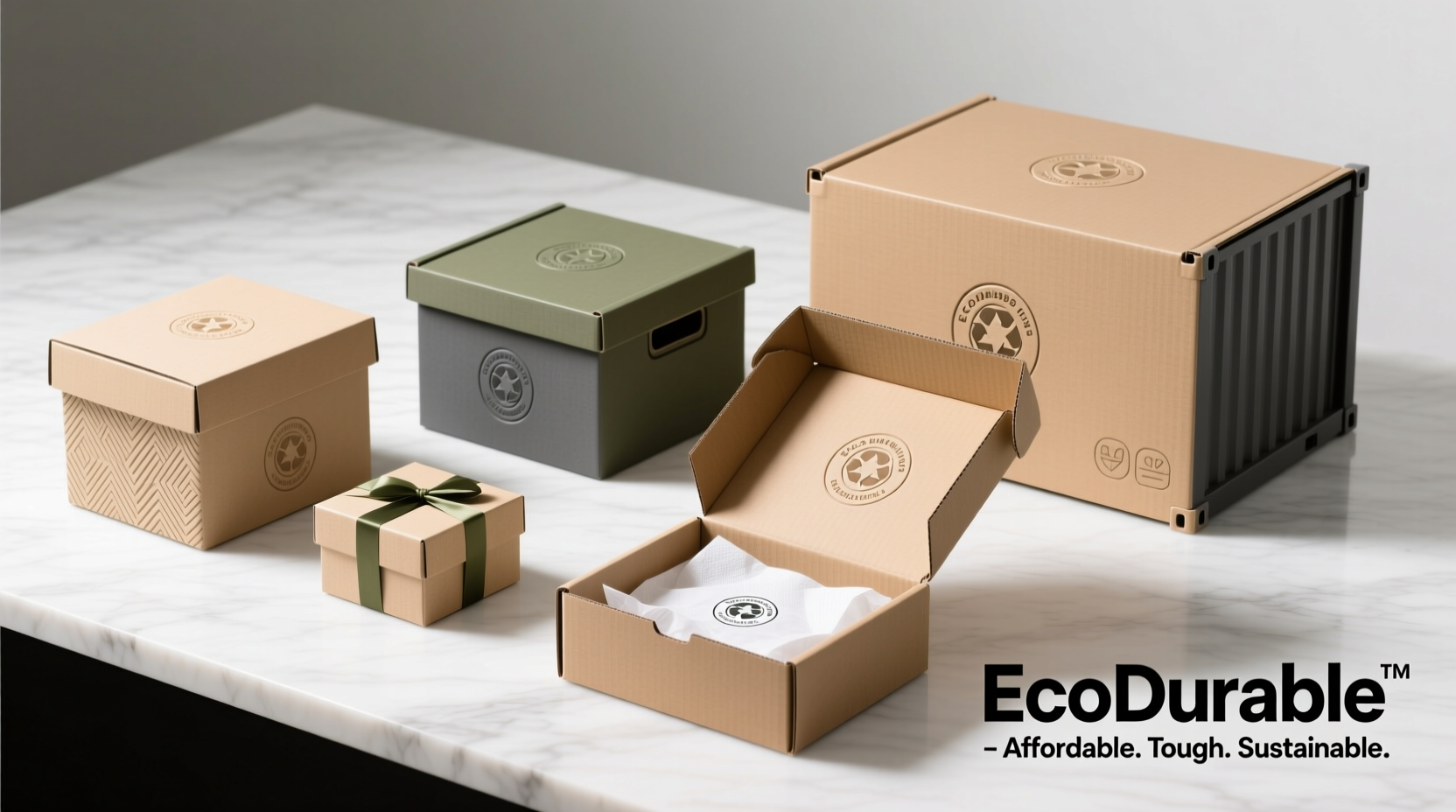
Durability in packaging refers to a box’s ability to withstand pressure, moisture, impact, and repeated handling without compromising its integrity. Factors like material thickness, construction method, and closure type all influence how well a box performs under stress. Affordability, on the other hand, isn't just about the upfront price per unit—it includes storage efficiency, shipping weight, and return rates due to damaged goods.
A truly cost-effective solution balances these elements. For example, a slightly more expensive corrugated box might prevent 30% of product returns, ultimately saving money over time. Conversely, a cheaper kraft paper box may look attractive initially but could fail during transit, leading to higher replacement and customer service costs.
“Durability isn’t a luxury—it’s a logistics strategy. The right box reduces losses and builds trust.” — Marcus Tran, Supply Chain Consultant at PackLogic Solutions
Top Materials for Affordable & Durable Custom Boxes
Not all materials deliver the same performance-to-price ratio. Below are the most practical options for businesses seeking strength without overspending:
- Corrugated Cardboard (Single Wall): The industry standard for shipping. Offers excellent crush resistance, lightweight properties, and recyclability. Ideal for mid-weight items like electronics, apparel, and cosmetics.
- Kraft Paperboard: A budget-friendly option for retail-ready packaging. Stronger than regular cardboard but less impact-resistant than corrugated. Best used for non-shipped point-of-sale displays or light consumer goods.
- Double-Wall Corrugated: For heavy or delicate items. Provides superior stacking strength and shock absorption. Slightly more expensive but often necessary for industrial components or glassware.
- Recycled Fiberboard: Made from post-consumer waste, this eco-conscious choice performs nearly as well as virgin fiberboard. Pricing is typically 10–15% lower, especially in bulk orders.
Design Strategies That Enhance Strength Without Increasing Cost
Smart design can significantly boost durability without raising material costs. Consider these proven approaches:
- Internal Dividers and Inserts: Use molded pulp, corrugated partitions, or folded cardboard inserts to immobilize contents. This prevents shifting and reduces the need for excessive cushioning.
- Reinforced Corners: Add corner boards or edge protectors made from recycled plastic or extra-thick cardboard. These are inexpensive upgrades that dramatically improve drop-test performance.
- Optimal Box Fit: A snug fit reduces movement inside the box. Overly large boxes require more fillers and increase shipping costs due to dimensional weight pricing.
- Die-Cut Handles and Ventilation: Structural features integrated into the box design eliminate the need for additional accessories, maintaining strength while improving usability.
Real-World Example: EcoBloom Skincare Launch
EcoBloom, a startup selling organic skincare kits, needed custom boxes that were sustainable, protective, and low-cost. Their initial prototype used thick rigid boxes, costing $3.20 each—prohibitively expensive for their margins.
After consulting a packaging engineer, they switched to single-wall corrugated boxes lined with molded pulp trays. They added a matte kraft finish with soy-based printing for a premium look. The final cost dropped to $1.15 per unit, passed drop tests from 4 feet, and received positive feedback for its unboxing experience. By optimizing design instead of defaulting to heavier materials, they saved over $40,000 in the first year.
Comparison Table: Material Options at a Glance
| Material | Cost Range (per unit) | Durability Level | Best For | Eco-Friendliness |
|---|---|---|---|---|
| Single-Wall Corrugated | $0.70 – $1.50 | High | Shipping, e-commerce, mixed products | ✅ High (recyclable, biodegradable) |
| Kraft Paperboard | $0.50 – $1.00 | Medium | Retail packaging, gift sets | ✅ High |
| Double-Wall Corrugated | $1.50 – $3.00 | Very High | Heavy items, fragile goods | ✅ High |
| Recycled Fiberboard | $0.60 – $1.30 | High | Bulk shipments, subscription boxes | ✅✅ Excellent (post-consumer content) |
| Rigid Set-Up Boxes | $2.50 – $6.00 | Very High | Luxury goods, gifting | 🟡 Moderate (less recyclable) |
Step-by-Step Guide to Selecting the Right Custom Box
Follow this five-step process to identify the most cost-effective and durable packaging for your needs:
- Assess Your Product Requirements: Note weight, dimensions, fragility, and sensitivity to moisture or temperature.
- Determine Shipping Volume and Frequency: High-volume orders qualify for bulk discounts and allow investment in custom tooling.
- Choose the Base Material: Match product needs with material strengths using the comparison table above.
- Optimize Design Features: Include internal supports, tamper-evident seals, or branding elements that add value without excess cost.
- Request Samples and Test: Conduct real-world trials—stack tests, drop tests, and customer feedback—to validate performance.
Frequently Asked Questions
Can I get durable custom boxes on a tight budget?
Absolutely. Single-wall corrugated boxes with smart design enhancements (like inserts or reinforced flaps) offer excellent protection at low cost. Ordering in bulk further reduces per-unit pricing, making high-quality packaging accessible even for startups.
How do I know if a box is strong enough for shipping?
Check the ECT (Edge Crush Test) and Burst Strength ratings provided by manufacturers. For standard shipping, aim for an ECT of at least 32 lb/in. Also, perform a simple field test: stack typical order quantities and observe compression after 24 hours.
Are eco-friendly boxes less durable?
Not necessarily. Many sustainable materials, such as double-recycled corrugated board or bamboo-reinforced kraft, match or exceed the strength of conventional options. Durability depends more on construction than material origin.
Checklist: Key Criteria for Choosing Affordable & Durable Boxes
- ✅ Material strength matches product weight and fragility
- ✅ Box dimensions minimize empty space and filler use
- ✅ Bulk pricing is available for 500+ units
- ✅ Sample testing confirms structural integrity
- ✅ Printing and branding don’t compromise material strength
- ✅ Supplier offers recyclable or compostable options
- ✅ Closure method (tuck-top, adhesive, tape-ready) ensures security
Final Thoughts: Value Over Price
The cheapest box isn’t always the most economical choice. A slightly higher initial investment in a well-designed, durable custom box can prevent costly damages, reduce waste, and elevate your brand image. The most successful packaging strategies focus not on minimizing cost, but on maximizing value across the entire supply chain—from warehouse to customer’s hands.
Businesses that take the time to evaluate materials, refine designs, and partner with reliable manufacturers consistently report better shipping outcomes, fewer complaints, and stronger customer loyalty. In packaging, as in many areas of business, durability and affordability aren’t opposites—they’re partners in long-term success.




 浙公网安备
33010002000092号
浙公网安备
33010002000092号 浙B2-20120091-4
Comments
No comments yet. Why don't you start the discussion?