
Golfers no longer need access to a country club or pro-grade training facility to improve their game. Thanks to rapid advancements in sensor technology and software, high-quality golf simulators are now accessible at prices under $1,000. These systems offer realistic ball flight tracking, swing analysis, and immersive course play—all from the comfort of your garage, basement, or backyard. Whether you're a weekend player looking to refine your short game or an avid golfer chasing lower scores, an affordable simulator can be a transformative tool.
What Makes a Golf Simulator Worth the Investment?
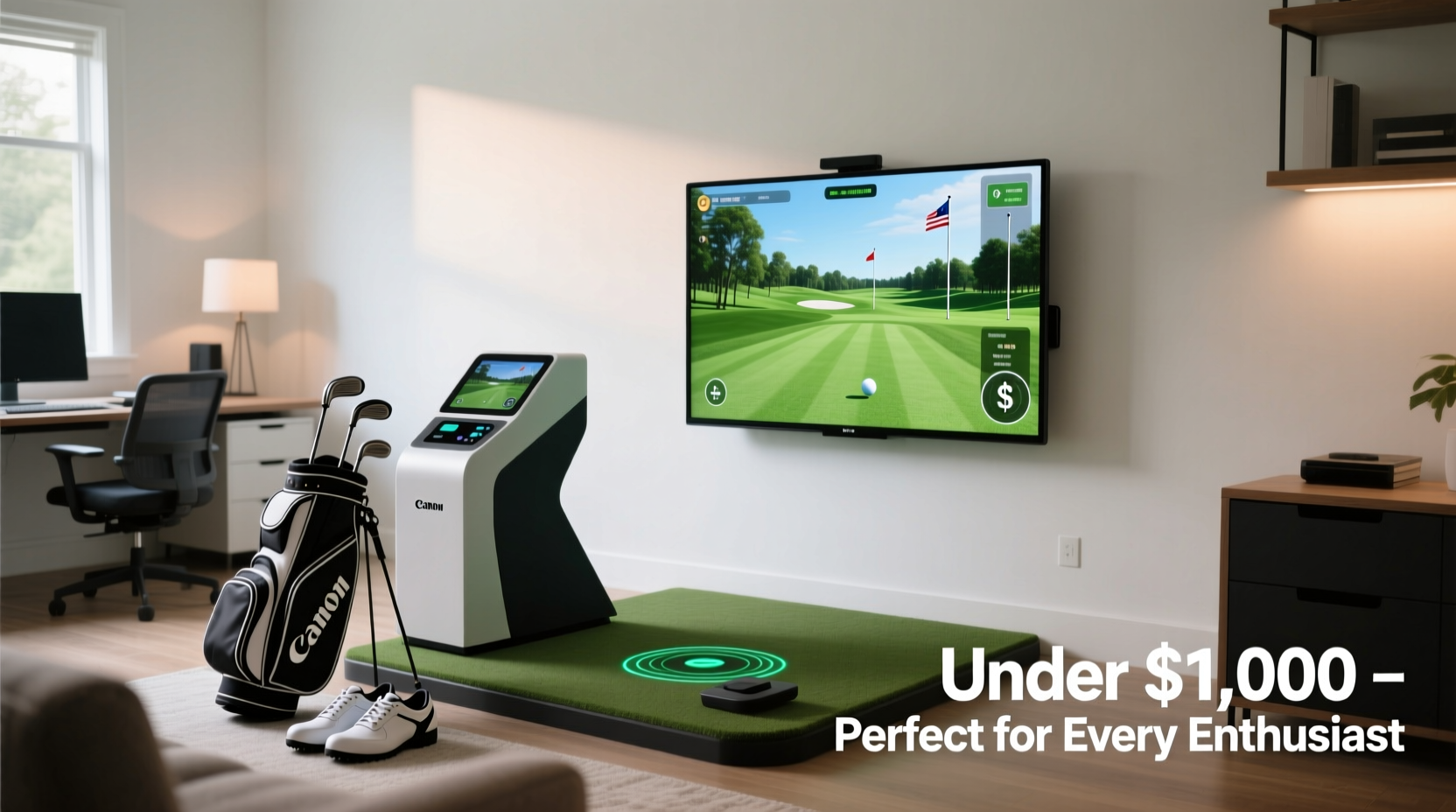
A good golf simulator doesn’t have to cost thousands. The key is balancing accuracy, ease of setup, software features, and compatibility with your space. Modern budget-friendly models leverage infrared sensors, Doppler radar, or camera-based systems to capture data like club speed, ball speed, launch angle, spin rate, and carry distance. While premium units use advanced radar (like TrackMan or Foresight), sub-$1,000 simulators often rely on optical sensors or hybrid tech that still delivers surprisingly reliable feedback.
The best value systems combine hardware precision with engaging software platforms that include virtual courses, practice modes, and online multiplayer options. Some even support integration with popular video games like The Golf Club or EA Sports PGA Tour via PC connection.
Top 5 Affordable Golf Simulators Under $1,000
Below is a curated list of reliable, well-reviewed simulators priced under $1,000. Each offers a strong blend of performance, usability, and long-term value.
| Model | Technology | Price Range | Key Features | Best For |
|---|---|---|---|---|
| Uneekor QED | Infrared + Camera Sensors | $799–$899 | Full-shot tracking, compact design, iOS/Android app, compatible with E6 Connect | Home users with limited space |
| SwingBay Mini | Dual Radar Sensors | $699 | True carry/distance tracking, portable, works with most projector setups | Garage golfers & renters |
| Arccos Caddie Link + Sensors | Sensor-Based (Club Tags) | $599 (bundle) | Auto-shot detection, AI insights, integrates with Arccos app, low ceiling requirement | Data-driven improvement |
| Galaxy Golf Lite | Infrared Grid System | $749 | 30+ virtual courses, beginner-friendly UI, supports left-handed play | Families & casual players |
| OptiShot 2 + Optishot Software | Hybrid Sensor Mat | $595 | PC-only, supports multiple games, DIY-friendly, expandable | Tech-savvy tinkerers |
How to Maximize Performance on a Budget
You don’t need the most expensive system to get meaningful results. With smart setup and consistent usage, even entry-level simulators can dramatically improve your game. Here’s how to make the most of your investment:
- Calibrate regularly: Even minor shifts in mat placement or sensor alignment affect data accuracy. Recalibrate monthly or after moving the unit.
- Use proper lighting: Infrared and camera-based systems struggle with direct sunlight or inconsistent shadows. Use controlled indoor lighting.
- Leverage free software: Platforms like E6 Connect, Creative Golf, and TGC 2019 offer free tiers with full course play and shot modeling.
- Focus on data trends: Instead of obsessing over single-shot numbers, track averages over 10–20 swings to identify real progress.
- Add impact screens gradually: Start with a projector aimed at a blank wall. Upgrade to a retractable screen later as budget allows.
Real-World Example: How Mark Improved His Iron Play at Home
Mark, a 12-handicap golfer from Ohio, installed the Uneekor QED in his attached garage last winter. With only a 10x10 ft space and a secondhand HD projector, he created a functional simulator bay for under $950. Over four months, he used the system three times per week, focusing on distance control with mid-irons.
By reviewing side-by-side shot traces and adjusting his backswing length, Mark reduced his average dispersion by 14 yards. He also discovered a consistent pull tendency with his 7-iron—something his coach hadn’t noticed during outdoor lessons. Using the simulator’s instant replay and data overlay, he corrected his path within six sessions. When spring arrived, Mark shot four straight rounds in the low 80s, crediting 70% of his improvement to off-season simulator work.
“Golfers who train with feedback close to real conditions see faster skill transfer. A $900 simulator with reliable data beats guessing at the range.” — Dr. Alan Lee, Sports Biomechanist, University of Florida
Essential Setup Checklist Before Buying
Before committing to a model, verify your space and technical readiness. Use this checklist to avoid costly mistakes:
- ✅ Minimum ceiling height: 8.5 feet (taller for drivers)
- ✅ Backswing clearance: At least 6 inches behind the tee position
- ✅ Hitting area: 3 ft x 4 ft minimum for safety and sensor coverage
- ✅ Projector or display option: Wall, screen, or monitor setup ready?
- ✅ Lighting control: Can you dim or eliminate glare?
- ✅ Flooring: Impact-resistant mat with shock absorption
- ✅ Computer requirements: Does the system need a Windows PC or iPad?
- ✅ Internet connection: Required for updates and online play
Common Myths About Budget Simulators
Many golfers hesitate to buy sub-$1,000 systems due to outdated assumptions. Let’s clarify a few misconceptions:
- Myth: “They’re only good for putting.”
Reality: Systems like the Uneekor QED and SwingBay Mini track full shots with club and ball data. - Myth: “You need a huge room.”
Reality: Many compact models require just 9 feet of depth for full swings. - Myth: “The ball flight isn’t realistic.”
Reality: Physics engines in modern software (E6, TGC) simulate wind, lie, and elevation accurately.
Frequently Asked Questions
Can I use real golf balls with budget simulators?
Yes—with caveats. Most under-$1,000 systems require a special impact screen and netting to handle real ball speeds. Models like the OptiShot 2 and Uneekor QED support real balls, but always check manufacturer guidelines. Foam practice balls are safer for small spaces and apartment use.
Do these simulators work for left-handed players?
Most do. Systems like Galaxy Golf Lite and Arccos Caddie are fully ambidextrous. Others may require software toggles or sensor repositioning. Always confirm lefty support before purchasing.
How much maintenance do they need?
Very little. Regular dusting of sensors, checking cable connections, and cleaning the mat surface are sufficient. Avoid liquid exposure to sensor units and store cables coiled to prevent damage.
Getting Started: A Simple 4-Step Timeline
Follow this sequence to set up your simulator efficiently:
- Week 1: Measure your space and choose a compatible model based on ceiling height and depth.
- Week 2: Order the simulator and any accessories (projector, screen, PC if needed).
- Week 3: Install the system, calibrate sensors, and test with a few swings using a wedge.
- Week 4: Begin structured practice—start with short irons, then progress to woods and driver.
Final Thoughts: Elevate Your Game Without Breaking the Bank
An affordable golf simulator isn’t a compromise—it’s a smart strategy. For less than the cost of ten range sessions or a single round at a premium course, you gain unlimited access to data-rich practice and world-class virtual courses. The systems available today under $1,000 offer real coaching value, measurable progress tracking, and year-round engagement with the sport you love.
Whether you’re refining your swing mechanics, preparing for tournament season, or simply enjoying a virtual round after work, these tools bring the course to you. The technology has never been more accessible, accurate, or enjoyable.




 浙公网安备
33010002000092号
浙公网安备
33010002000092号 浙B2-20120091-4
Comments
No comments yet. Why don't you start the discussion?